Blogs

Yes, an Asteroid Really Did Wipe Out the Dinosaurs, Study Finds

Tuesday, June 30, 2020

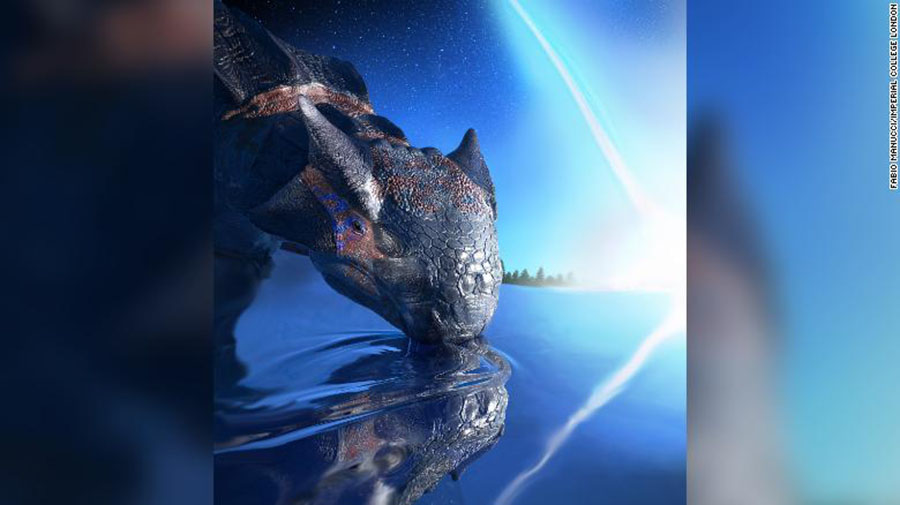
A large armored dinosaur species, Ankylosaurus magniventris, drinks from a watering hole while an asteroid crashes on the Yucatán peninsula in Mexico 66 million years ago.

The age of the dinosaurs ended 66 million years ago with the ultimate bad day, not a prolonged period of climate change wrought by volcanic activity, according to new research.

The city-size asteroid that slammed into Earth would have plunged the planet into a drastic winter, which would have lasted for years, thereby creating a world largely unsuitable for dinosaurs to live in. The new study has poured more cold water on the theory that massive volcanic eruptions in the Deccan Traps, an area that now sits in modern-day India, played a significant role in their demise.

"The relative roles of these two potential kill mechanisms on the timing and magnitude of the extinction have been fiercely debated for decades," said the study.

"We show that only the asteroid impact, particularly with its prolonged consequences, was the real driver of the extinction," said Alessandro Chiarenza, who conducted the research while studying for his doctorate in the department of earth science and engineering at Imperial College London.

"Could it (the volcanic activity) have played a smaller role by making it harder for dinosaurs to thrive prior to the asteroid impact? No, we show that Deccan Traps activity, if anything, might have buffered the 'negative effects' of the impact on climate, potentially boosting the recovery after the extinction event."

Dino ecosystems

To determine whether it was the asteroid that hit off the coast of Mexico or the volcanic activity that unleashed the climate-changing gases, the team combined geological markers of climate and powerful mathematical models with information about what kinds of environmental factors, such as rainfall and temperature, each species of dinosaur needed to thrive.

The scientists were then able to map where these conditions would still exist after either an asteroid strike or a period of massive volcanism. They found that the asteroid strike alone wiped out all potential dinosaur habitats, while volcanism left some viable regions around the equator.

"Instead of only using the geologic record to model the effect on climate that the asteroid or volcanism might have caused worldwide, we pushed this approach a step forward, adding an ecological dimension to the study to reveal how these climatic fluctuations severely affected ecosystems," said Alex Farnsworth, a paleoclimatologist at the University of Bristol and the co-lead author of the study, in a statement.

"The asteroid impact would have created a climate just too difficult for dinosaurs to survive, with globally freezing temperatures over many years not allowing vegetation to grow destabilizing the base of the food webs that the dinosaurs sat on top of," he explained.

The asteroid strike would have released particles and gases high into the atmosphere, blocking out the sun for years and causing extremely cold winters that made it impossible for nearly all dinosaur species, except those that evolved into birds, to survive, the study said.

"In one day, in a blink of a geologic eye, everything ended for them," said Chiarenza.

Eruptions

There have been five mass extinction events on Earth and volcanic activity is thought to have played a role in most of them.

The Deccan Traps eruptions occurred over the course of tens of thousands of years, beginning about 400,000 years before the mass extinction and continuing for about 500,000 years after, but the team said they were unlikely the cause of extinction.

In fact, the research team's models suggested that the volcanic activity could have played a role helping life bounce back from the asteroid strike, restoring habitats and helping the new species that evolved after the asteroid strike survive.

Although volcanoes release gases and particles that can block the sun, they also release carbon dioxide, a greenhouse gas. In the longer term these particles and gases drop out of the atmosphere, while carbon dioxide stays around and builds up, warming the planet and boosting the survival and recovery of animals and plants that made it through the extinction.

"What surprised us most was that contrary to popular theory, Deccan volcanism may well have been the benevolent hero of the time, attempting to ameliorate the effects of the so called 'nuclear winter' caused by the asteroid impact," said Farnsworth.

"Unfortunately for the dinosaurs it couldn't offset enough of the cooling, but perhaps fortunately for us it might have been enough to allow mammals to inherit and eventually dominate the Earth."

Source: https://edition.cnn.com/

Spinosaurus Versus the “African T-Rex”, Carcharodontosaurus: Who Would Win?

Tuesday, July 14, 2020

Spinosaurus vs. Carcharodontosaurus

How did the “new”, aquatic Spinosaurus fare against one of the deadliest predators to ever walk the earth?

Spinosaurus, the legendary bipedal villain of “Jurassic Park 3”, a terrifying man-eater that snapped a T-rex’s neck with its bare claws, just got a makeover, and tongues are wagging. Recent fossils discoveries have revealed that the huge flesh-eater was first and foremost not bipedal. It mainly walked on all fours like a giant crocodile. And, despite its film debut, its diet did not include other dinosaurs for the most part, but rather something far less impressive: fish.

(Franoys. Carcharodontosaurus Saharicus skeletals. Deviantart. 2019)  (Marco auditore. Spinosaurus Aegyptiacus skeletal reconstruction. National geographic. 2020)

But Spinosaurus wasn’t alone. It shared its Cretaceous swamps, lakes and rivers with other huge predators, including the creature popularly known as the “African T. rex”: Carcharodontosaurus. This was a dinosaur as big and bad as the North American Tyrannosaurus, so how did the fish-eating Spinosaurus survive conflicts with its massive meat-eating rival?

Max Hawthorne, author of the bestselling Kronos Rising dinosaur fiction series, and an amateur paleontologist whose theory on plesiosaur swim mechanics may have solved how these four-flippered marine reptiles swam, recently put forth a theory addressing that exact question.

The dinosaur-killing jaws of Carcharodontosaurus compared to the fish-catching jaws of Spinosaurus. (Photo credit: Franko Fonseca, Wikimedia Commons, chart image: Public Doman)

“The thing about Spinosaurus is that it was superbly adapted as a piscivore,” Hawthorne said during a recent interview. “It had long, narrow skull, like a gharial, filled with sharp, conical teeth that were designed to pierce and hold prey. At the end of its jaws was an alcove - a curved section that accommodated slippery fish. It also had foramina on its head – pressure sensors that detected movement in the surrounding water. It could probably snare fish in the dark, like crocodilians can.”

“We also know,” Hawthorne continued, “courtesy of the incredible work by paleontologists Ibrahim, et al, that it had a long, high tail, designed to propel it though the water, like an alligator or newt.” When asked about encounters with its other resident big-bad, Carcharodontosaurus, he added, “There was a price to pay for all those aquatic adaptations. Having a snout like a gharial was great for snapping up fish, but a slender skull isn’t made for combat with other colossi. You don’t pit a fencing foil against a broadsword. Similarly, the comparatively fragile jaws of Spinosaurus would not have fared well against the crushing, slashing jaws of a dinosaur killer like Carcharodontosaurus.”

When asked if “Spino” would have had encounters with the “African T-rex”, and if so, how it might have fared against such a nemesis, Hawthorne was quick to respond. “Confrontations were inevitable. Although Spinosaurus probably spent most of its time in the water, it undoubtedly came ashore to nest, to bask, or, if its lake or river dried up, to relocate (I believe the “sail” was a fat-storing hump like in today’s camels – a defense against dry seasons). Add to that, Carcharodontosaurus had to drink, and a Spino sitting at the river’s edge was a potential meal. We know conflicts happened because one fossilized Spinosaurus neural spine has a healed bite mark on it that matches the bite of Carcharodontosaurus.

Kronos Rising author Max Hawthorne in his study.

But how could Spinosaurus survive such an attack? Hawthorne believes the dinosaur, despite being a primary quadruped, could still rear up on its hind legs like a bear, ground sloth, or giant anteater. In fact, he feels that the anteater is a perfect comparison. “Anteaters have a long, fragile snout, a large tail that helps balance them when they stand up, and they are often preyed upon by jaguars. But anteaters are not helpless,” Hawthorne pointed out. “They have the same weapons that Spinosaurus did: long, curved talons on the forelimbs. And this is how Spino would defend itself against meat-eaters like the 42-foot, 8+ ton Carcharodontosaurus.”

The author pictures Spinosaurus rearing up, two stories high, with its vulnerable head drawn back, and striking the face of any attacker as it came at it. “We know that theropods could not turn their ‘hands’ palm down, but they could move them inwardly in a wide clapping motion. For example, picture the flapping of a bird’s wings. This meant powerful slashes could be directed at anything attacking it. Anteaters have driven off jaguars this way, and you can bet Spinosaurus behaved similarly. Logically, it would’ve first tried escaping into the water, and bluffing if that failed. But, if forced to fight, the world’s largest fisherman would use its lethal talons to make any attacker regret trying to make a meal of it.”

Source: www.einnews.com/

Thylacosmilus Was Not a Saber-Tooth Predator

Tuesday, June 30, 2020

Skulls and life reconstructions of Thylacosmilus atrox (left) and Smilodon fatalis (right). Image credit: Stephan Lautenschlager.

Thylacosmilus atrox, an extinct marsupial that roamed South America between 9 and 3 million years ago (Neogene period), was not the ecological analogue of saber-tooth cats, and likely did not use its impressive canines to dispatch its prey, according to new research led by University of Bristol scientists.

Thylacosmilus atrox, also known as the ‘marsupial saber-tooth,’ is often presented as a classic case of convergent evolution, where animals appear similar in form despite having very different evolutionary relationships.

The ancient creature had huge, ever-growing canines, leading paleontologists to speculate that it was an even more vicious predator than the placental saber-tooths such as the North American species Smilodon fatalis.

The jaguar-sized Thylacosmilus atrox was around half the size (average body mass 117 kg) of Smilodon fatalis, which was lion-sized or larger (245 kg).

But was it really a fierce predator like the extinct saber-tooth cats, which seem to have been much like modern cats but with a different mode of killing their prey?

Thylacosmilus atrox has impressive canines, for sure: but if you look at the whole picture of its anatomy, lots of things simply don’t add up,” said University of Bristol’s Professor Christine Janis, first author of the study.

“For example, it just about lacks incisors, which big cats today use to get meat off the bone, and its lower jaws were not fused together.”

“In addition, the canines of Thylacosmilus atrox were different from the teeth of other saber-toothed mammals, being triangular in shape like a claw rather than flat like a blade.”

In the study, Professor Janis and colleagues compared aspects of the skull and teeth of Thylacosmilus atrox with both present-day big cats and a diversity of extinct saber-toothed cats.

“The skull superficially looks rather like that of a saber-toothed placental. But if you actually quantify things, it becomes clear that Thylacosmilus atrox’s skull was different in many details from any known carnivorous mammal, past or present,” said co-author Dr. Borja Figueirido, a researcher at the University of Málaga.

“Previous studies by other researchers have shown Thylacosmilus atrox to have had a weaker bite than Smilodon fatalis,” said University of Birmingham’s Dr. Stephan Lautenschlager, senior author of the study.

“But what we can show is there was probably a difference in behavior between the two species: Thylacosmilus atrox’s skull and canines are weaker in a stabbing action than those of Smilodon fatalis, but are stronger in a ‘pull-back’ type of action.”

“This suggests that Thylacosmilus atrox was not using its canines to kill with, but perhaps instead to open carcasses.”

Finally, the other teeth of Thylacosmilus atrox also pose problems for the interpretation of this animal as a cat-like predator, whether saber-toothed or not.

Besides the puzzling lack of incisors, the molars are small, and did not wear down along the sides as seen in an animal feeding on meat.

“The molars tend to wear flat from the top, rather like you see in a bone crusher. But if you examine the detailed microwear on tooth surfaces, it’s clear that it was eating soft food. Its wear is most similar to that of cheetahs which eat from fresh carcasses and suggests an even softer diet than fed to captive lions,” said co-author Dr. Larisa DeSantis, a researcher at Vanderbilt University.

Thylacosmilus atrox was not a bone-crusher and may have instead specialized on internal organs.”

“It’s a bit of a mystery as to what this animal was actually doing but it’s clear that it wasn’t just a marsupial version of a saber-toothed cat like Smilodon fatalis,” Professor Janis said.

“In addition to the differences in the skull and the teeth, it was also short-legged and stiff-backed, and lacked retractile claws, so it would have had difficulties in pursuing its prey, pouncing on it and holding on to it. I suspect it was some sort of specialized scavenger.”

“It may have employed those canines to open carcasses and perhaps also used a big tongue to help extract the innards: other mammals that have lost the incisors, like walruses and anteaters, also have big tongues that they use in feeding.”

The study was published in the journal PeerJ.

_____

C. M. Janis et al. 2020. An eye for a tooth: Thylacosmilus was not a marsupial ‘saber-tooth predator.’ PeerJ 8: e9346; doi: 10.7717/peerj.9346

This article is based on text provided by the University of Bristol.

Source: www.sci-news.com/

20 Things You Somehow Missed In Jurassic Park

Tuesday, June 30, 2020

Foreshadowing, a cameo and the Godfather inspired death...

Ironically enough, given that it's all about the preservation of ancient wonders, there have been few films that have aged quite as well as Jurassic Park. Despite its heavy use of special effects that are now 27 years out of date, the movie still holds up against a lot of today's blockbuster fare and, somehow, manages to look a lot better than its own modern sequels.

Few films before or since have gripped audiences of all ages quite like this. The '90s convention of a huge summer blockbuster wasn't invented with this film, but it's arguably where the concept hit a critical and cultural peak. Jurassic Park was, in 1993, was bigger than even the stunningly-realised creatures its marketing was based around.

While its legacy can (and will) be talked about for another 27 years, there's still plenty to be gleaned from a high-definition re-watch. Spielberg's attention to detail was peerless at the time, and the number of incredible odes, references, tributes, and hidden gems he managed to include here is simply extraordinary.

So from his own directorial trademarks to genius motifs of the plot itself, let's take a look an article that's 27 years in the making.

20. Spielberg's Hidden Cameo

Unlike some of his contemporaries who love to write themselves a prominent role in a movie (I'm looking at you, Quentin), Steven Spielberg is very rarely seen in front of the cameras. Austin Powers probably being his most notable on-screen appearance.

He does play a very small part in Jurassic Park though, seen here supervising the unloading of the Velociraptor from early in the movie. He's the one with the beard...

In front of the gate...?

With the white shirt...?

You might have to squint a bit.

19. Mr. DNA Was No More Than Clever Exposition

While receiving the tour of the facility, Dr. Grant, Dr. Sattler, and Ian Malcolm are given a video presentation about how the park was conceived by a very friendly animated strain of acid called Mr. DNA. While it's a bit of a hokey scene and incredibly heavy on the exposition, it was a request made by the filmmakers to try and control the budget.

By having one cheesy scene that explains the entire premise of the film, how they discovered the dinosaurs, and how they subsequently built the park, it saved millions of dollars on the writing and filming required to transmit that information to the audience otherwise. Not to mention keeping the runtime down.

18. "Must Go Faster" Was A Stolen Line

Around half-way through the movie, Dr. Sattler and Muldoon head out into the park to try and find what happened to the two explorers. Dr. Grant and the children are missing, Gennaro is found in multiple pieces, but Ian Malcom is just about still-alive an in need to help. After getting him onto the jeep, they're found by the Rex.

A chase scene (one of the film's best) ensues and, with the Rex quickly gaining ground on the group, Malcolm utters line "must go faster". Director Roland Emmerich liked it so much that when he found himself working with Jeff Goldblum the following year, he had it written into the script of Independence Day.

In that blockbuster, Goldblum says it to Will Smith's Captain Hiller as they attempt to escape the alien mothership.

17. The Dinosaurs Are Barely In It

As well as being the entire premise of the movie, it's hard to argue that dinosaurs aren't also the stars of Jurassic Park. Virtually all of the film's most memorable or iconic moments involve them, and it's hard to recall any major scenes where they don't feature in some capacity.

However, when totted up across the 2 hour, 7 minute runtime, dinosaurs are actually only on screen for a grand total of... 15 minutes. Even more extraordinary, is that for all of the praise over the films digital effects work, CG dinosaurs only make up 6 of those 15 minutes.

16. Laura Dern Cried For Real 

Laura Dern's performance is often picked out as one of the highlights of the entire movie, but her experience of Jurassic Park was also a lot more real than it might have looked.

Firstly, in the scene in which Ellie is attacked by the raptor in the maintenance corridor, the tears streaming down her face were not originally part of the script. She was, in fact, crying for real as the way the shot had been constructed genuinely terrified her.

Slightly more subtly though, her character flirting with Ian Malcolm also had its roots planted in reality, as she began a relationship with Jeff Goldblum after the film as a result of their time together on-set.

15. Nedry's Desk Has Several Easter Eggs

When we're reintroduced to Dennis Nedry in the Jurassic Park control room, his computer is home to veritable treasure trove of movie easter eggs.

One subtle inclusion is a small picture of Robert Oppenheimer, the so-called Father of the Atomic Bomb, who is arguably the poster boy for man's fear of its own creation.

On a lighter note though, a small window on the screen of his computer can clearly be seen playing the movie Jaws. Not only a nod to Steven Spielberg's previous work, but also the first time in his career he worked with animatronic animals.

14. The Storm's Narrative Importance

Jurassic Park's production was plagued by the arrival of Hurricane Iniki onto the movie's sets. This forced a number of changes to the schedule, as well as elements of the operation to be moved back to Los Angeles for the remainder of the shoot. Ironic, really, as the arrival of a major storm is also a plot point of the movie.

However what often passes viewers by is that the storm in the film is not merely there to fill in the narrative holes of the story, but to dramatically illustrate man's inability to effectively control nature.

As well as the creatures in the park running amok, InGen's state-of-the-art facility is entirely undone by, of all things, some weather.

13. The Dilophosaurus Doesn't Move

To get the exact look he was after, Steven Spielberg had to effectively invent new forms of creature design and new ways in which to film them. The advances this movie made in digital effects are still being felt today, as too are the elaborate animatronics that comprised the bulk of the dinosaurs seen on-screen.

However, one thing the production crew wasn't satisfied with, was the Dilophosaurus. Specifically, that they couldn't find a convincing way to make it move on-screen. Every attempt either seemed too light or heavy for its body, so in the end they compromised and had it stand still in every shot.

12. All Of The Gift Shop Merch Was Real

As well as being an enormous success at the box office, Jurassic Park was one of the biggest commercial successes in cinema history. The marketing and merchandise budgets dwarfed the $63m cost of production, but also recouped considerably more than the $83m the film made at the box office in its opening week.

Part of was down to the 100 separate licensing agreements Universal had reached prior to production, and the genius decision to include only official merchandise in the movie's own gift shop.

Everything seen on-screen, from toys, figures, clothes, lunchboxes, even a book titled "The Making of Jurassic Park", could be purchased in real-life.

11. How The Ice Was On The Freezer Floor

During the terrifying game of cat-and-mouse between Tim, Lex, and the two Velociraptors, there's a moment in the kitchen that's usually considered a bit of a plot hole. Tim runs into the freezer room where, somehow, the floor just happens to be covered in ice.

Despite this being very convenient for a small child with rubber-soled sneakers, it's actually a testament to the detail that went into the writing. Prior to this scene, John Hammond is eating the ice cream that would otherwise have defrosted due to the power being out, this would no doubt have caused water to leak from the freezers and onto the floor.

However, after this Dr. Sattler is able to restore power to the park. This would reactivate the freezers and, as a result, cause the water on the floor to freeze back over.

10. The Secret ACGT Message

One of the movie's most iconic visuals sees the Velociraptors stalking Dr. Grant, Dr. Sattler, Tim, and Lex as they attempt to escape through the ceiling crawl space. One of the raptors rears up on its legs, stretches its neck out, and attempts to sniff them out, while the phosphorous green glow of a computer monitor patterns its skin.

This is often incorrectly attributed to being light reflected through the bars of the ceiling grate, but it's actually the letters ACGT. Specifically, an abbreviation of Adenine, Cytosine, Guanine, and Thymine, the four key components of DNA.

9. The Triceratops Is Actually Very Colourful (And Muddy)

Another iconic moment in the film sees Dr. Grant, Dr. Sattler, Ian Malcolm and assorted park employees attempting to treat a Triceratops with a bad stomach. They check it over, inspect its eyes, and Sam Neil even takes a moment to appreciate the miraculous beauty of the creature.

Not in a weird way.

But in a decision that probably went down incredibly badly with the people who designed the creatures, the Triceratops was originally bright and colourful. Purples, greens, yellows, its hide was one of the most visually stunning things in the entire film, until Effects Coordinator Stan Winston took one look at it, decided it didn't match its surroundings well enough, and covered it in mud.

8. The Reworked Picasso Classic

In 1937, Pablo Picasso created "Guernica", an oil painting that's still, to this day, considered to be one of the most moving and powerful anti-war paintings in history.

Depicting the horrendous ariel bombing of the Spanish town of the same name, its ability to invoke horror and anxiety is undisputed in that art world.

Wanting to recreate a slice of said horror and anxiety, Spielberg commissioned a special Dinosaur-themed reworking of the painting to be displayed in the visitor's centre. It can briefly be seen behind John Hammond later in the film and, well, very weird flex but ok?

7. One Death Was Inspired By The Godfather

Despite surviving - and being a far nicer character - in Michael Crighton's novel, Donald Gennaro meets Jurassic Park's grizzliest fate at the hands, and teeth, of the T-Rex.

It's not immediately obvious, but when he initially makes it into the toilet stall he begins to mutter a Hail Mary.

This was, according to actor Martin Ferrero, an idea he took from one of the final scenes of The Godfather: Part II, where Fredo mutters his own Hail Mary prayer prior to Neri killing him on Lake Tahoe.

6. The Raptors Kill For Sport

There's an interesting line in The Lost World: Jurassic Park where the expedition's leader Peter Ludlow reassures the terrified group that "the rex just fed, so he won't be hunting for a while". While that's a callous way to refer to the man whose just been eaten alive, it's also entirely correct.

Which makes the behavior of the Velociraptors in this movie quite curious. In the final act of the movie they kill Robert Muldoon and Ray Arnold - two fully grown adults who would likely feed a pack of Raptors for a number of days - yet continue to hunt Tim, Lex, Dr. Grant, and Dr. Sattler.

While it's never stated on screen, this is because they're not hunting to eat, they're hunting for sport. One of the franchise's many hints at their intelligence.

5. "Why Didn't I Build In Orlando?"

Faced with the impending problems created by the incoming storm, John Hammond reflects on the park's tropical location with the line "why didn't I build in Orlando?"

It's an amusing throw-away line but it's also a little joke being had at the expense of Universal Studios, the movie's distributors.

Universal, you see, had two theme parks all of their own at the time, and both were situated in Orlando. One of them, Universal Orlando Resort, is currently home to the Jurassic Park River Adventure, which incorporates elements of the movie into a log flume ride. They've spared no expense...

4. How The End Is Foreshadowed

Early in the movie, Dr. Sattler comments that "these are aggressive living things that have no idea what century they're in, and they'll defend themselves, violently if necessary". It's a neat line of foreshadowing but it also gives away how they can be defeated.

In Jurassic Park, whenever a character is caught by one of the dinosaurs in the wild, that's the end of them. Gennaro on the toilet, Muldoon in the jungle, even Nedry on the waterfall, all of them are made short work of.

However when they're able to take the creatures into man-man settings, like Tim and Lex in the kitchen, the escape in the jeep, or the final scene of the film, the humans are able to use their environment to survive.

3. The Subtle Eye Level Changes

The movie's smartest visual motif is one you're almost certain to have been oblivious to. In the first half of the movie, whenever a character is looking at a dinosaur on-screen, they are doing so below eye-level. The birth of the raptor eggs, the sick Triceratops, "they do move in herds", all of this is from a high-to-low perspective.

However, the second half of the film flips this entirely, where all shots are now of the characters looking up at the dinosaurs. Everything with the T-Rex goes without saying, but Tim and Lex crawl along the floor in the kitchen, the brachiosaurus looms over Dr. Grant, and even Muldoon crouches down to hunt the raptor. Very simply, this is to represent the changing levels of control in the park.

The big exception to this is the initial scene where Grant and Sattler first encounter the brachiosaurus, as this is used to represent the marvel and wonder at the park's premise.

2. The Seatbelt Foreshadowing

"Life finds a way" is, arguably, Jurassic Park's most enduring quote, but it's only used by Ian Malcolm as a retort when Dr. Wu asks "you're implying that a group composed entirely of female animals will... breed?".

It's a fair question, but one that's smartly foreshadowed slightly earlier in the movie. When making the bumpy descent in the park's helicopter, Dr. Grant frantically fumbles around with his seatbelt only to be left holding the two "female" ends of the buckle. Thinking on his feet he simply ties them together, forming a makeshift belt.

It wasn't life itself on display here but, nonetheless, he found a way.

1. "We Spared No Expense" Is Repeated FIVE Times

Another profound quote from the movie sees John Hammond say "we spared no expense" no less than five times.

First when he's asking Grant and Sattler to visit, then later when they arrive at the park, again when introducing the presentation, later on the electric-cars and, finally, as a bit of hubris while eating the defrosting ice cream.

The irony in this, of course, is that the power outages and the ultimate collapse of the park is down to the actions of Dennis Nedry, a man we discover is only working there because of how low his bid was to run the park's systems.

If Hammond had spared no expense there, none of this would have happened.

Source: https://whatculture.com/

Mukupirna nambensis: Giant Wombat-Like Marsupials Roamed Australia 25 Million Years Ago

Saturday, June 27, 2020

Giant Wombat-Like Marsupials Roamed Australia 25 Million Years Ago

Paleontologists have identified a giant wombat-like marsupial that lived 25 million years ago (Oligocene Epoch) in what is now Australia. Named Mukupirna nambensis, the prehistoric creature was at least five times larger than living wombats and so different that the researchers have had to create a new family to accommodate it.

The fossilized remains of Mukupirna nambensis — a partial skull and most of the skeleton — were found in 1973 in the clay floor of Lake Pinpa in northeastern South Australia by an expedition led by Dr. Richard Tedford from the American Museum of Natural History.

“It was an extremely serendipitous discovery because in most years the surface of this dry lake is covered by sands blown or washed in from the surrounding hills,” said Professor Mike Archer, a scientist in the PANGEA Research Centre at the University of New South Wales.

“But because of rare environmental conditions prior to our arrival that year, the fossil-rich clay deposits were fully exposed to view. And this unexpected view was breathtaking.”

“On the surface, and just below we found skulls, teeth, bones and in some cases, articulated skeletons of many new and exotic kinds of mammals. As well, there were the teeth of extinct lungfish, skeletons of bony fish and the bones of many kinds of water birds including flamingos and ducks.”

“These animals ranged from tiny carnivorous marsupials about the size of a mouse right up to Mukupirna nambensis which was similar in size to a living black bear. It was an amazingly rich fossil deposit full of extinct animals that we’d never seen before.”

Mukupirna nambensis weighed about between 143 and 171 kg, similar in size to a black bear, and that it was probably a strong digger.

An analysis of evolutionary relationships shows that the ancient animal is most closely related to wombats, but it has several unique features.

Mukupirna nambensis clearly was an impressive, powerful beast, at least three times larger than modern wombats,” said Dr. Robin Beck, a researcher at the University of Salford.

“It probably lived in an open forest environment without grasses, and developed teeth that would have allowed it to feed on sedges, roots, and tubers that it could have dug up with its powerful front legs.”

Mukupirna nambensis reveals a fascinating mix of characteristics and provides evidence of a close link between wombats and an extinct group of marsupials called wynyardiids,” said Dr. Pip Brewer, a scientist in the Department of Earth Sciences at the Natural History Museum, London.

“It suggests that adaptations for digging for food may have existed in the very earliest members of the wombat family and likely led to their eventual survival to the present day.”

“Although suggested previously, it had not been possible to test this, as the oldest fossil wombats discovered are only known from teeth and a few skull fragments.”

The team looked at how body size has evolved in vombatiforms, which is the group that includes Mukupirna nambensis, wombats, koalas and their fossil relatives, and showed that body weights of 100 kg or more evolved at least six times over the last 25 million years.

The largest known vombatifom was Diprotodon, which weighed over 2 tons and survived until approximately 50,000 years ago.

Mukupirna nambensis is one of the best-preserved marsupials we know of this age from Australia,” Dr. Beck said.

“It tells us a lot about the evolution of wombats, koalas and their relatives. It is remarkable for its large size — this was clearly an impressive, powerful beast.”

“The description of this new family adds a huge new piece to the puzzle about the diversity of ancient, and often seriously strange marsupials that preceded those that rule the continent today,” said Dr. Julien Louys, a researcher in the Australian Research Centre for Human Evolution at Griffith University.

The study was published in the journal Scientific Reports.

_____

R.M.D. Beck et al. 2020. A new family of diprotodontian marsupials from the latest Oligocene of Australia and the evolution of wombats, koalas, and their relatives (Vombatiformes). Sci Rep 10, 9741; doi: 10.1038/s41598-020-66425-8

Source: www.sci-news.com/

How to Draw a Dinosaur: An Interview with a Paleoartist

Saturday, June 27, 2020

Parasaurolophus was a genus of herbivores from the Late Cretaceous. Image: Danielle Dufault, Royal Ontario Museum

If you’ve ever walked around a museum and explored a dinosaur exhibit, you’ve probably seen a drawing, painting, or illustration of those peculiar beasts that lived millions of years ago. Sometimes, it’s a sketch of the full skeleton of a T. rex or an elaborate scene depicting Triceratops walking among the greenery with other dinosaurs in the background. Behind those brush strokes is a special kind of artist: a paleontological illustrator, a.k.a. a paleoartist.

Danielle Dufault, a research assistant and scientific illustrator at the Royal Ontario Museum in Toronto, is one such artist. It’s her job to take the fossils of dinosaurs and other animals and turn them into a realistic illustration of what they probably looked like. That’s no easy feat since she doesn’t exactly have a live model from which to draw.

Danielle Dufault is a paleoartist. She also participates in digs with paleontologists and once discovered the skull of a Triceratops. Photo: Julie Florio

Dufault, who is also the host of a popular YouTube channel about animals, said she has always been fascinated by the natural world and has been drawing creatures since she was a kid.

“I remember catching bugs and keeping them in little containers and trying to draw them, and I guess it sort of grew into a bigger love for both the art and the biology,” Dufault said.

But today, the subjects of Dufault’s illustrations are a little more, well, dead. Because she works in a lab that studies dinosaurs from the Late Cretaceous period, those animals are most often the subject of her art. (Part of working in that lab, by the way, involves going out on digs. She even found a Triceratops skull a couple of summers ago; learn more about in the video below.)

So how do you draw a dinosaur? Working in the lab, Dufault makes first-hand observations of fossil specimens, generates ideas with the paleontologists she works with, and makes sure everything is anatomically accurate.  

“In terms of trying to draw something that doesn't even exist or can't be observed, you need to kind of make analogues with what exists in the world, what we do have, and what comparisons can be made there, both anatomically and ecologically,” Dufault said. “There's a lot of things that we can learn about the past by just looking at the present.”

Every artist has a style, too. While Dufault sometimes sketches by hand, a lot is done digitally. Much of her work is pretty technical – skeletal reconstructions or sketches of fossils that end up in an academic journal article. But when she gets to do something a bit more creative, such as an illustration that will be displayed in the museum?

“I really enjoy that more expressive illustrative style where you can kind of see some of the texture of the paint or the pencil and try and capture the essence in a little bit more of a simple, visually pleasing way,” she said. “I still try and make them try to look real and believable, but slightly interpretive.”

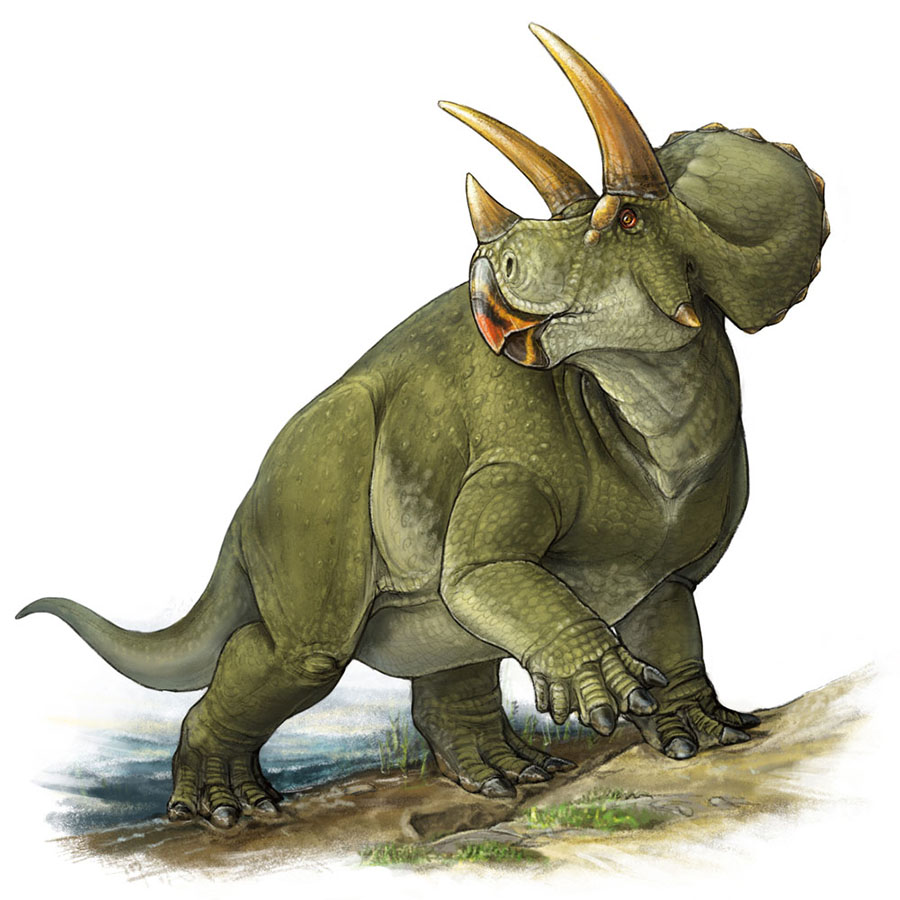
Dufault said an animal’s display structures, such as the frill on a Triceratops, help her determine what colors she wants to use. Image: Danielle Dufault, Royal Ontario Museum

Then there’s the issue of color. Because all that remains of the dinosaurs are their bones, we have no real concept of what their skin might have looked like. Dufault said that choosing colors for the creatures is something that comes later on in the piece, after everything looks anatomically and structurally correct.

“When it comes to choosing color, I get to have a little bit of fun,” Dufault said. I always try to make sure that the vision of what the dinosaur looks like matches whoever’s publishing [work on] a dinosaur. I think that’s pretty important. But beyond my personal preference, it’s really important to consider how color is used by animals in their ecological setting.”

For example, if an animal had a little bit of structural flare to it, like the Triceratops with its frill, Dufault said there’s a good chance they may have had some flashy colors, even if it was just to show off for one another. But smaller animals that would have been more vulnerable? They might look a little bit more drab in order to blend in with their surroundings. As with most of her work, Dufault looks to animals today for inspiration on when and where to add color.

As with color, many of the challenges to drawing long-extinct animals is that there are questions there are no clear answers to. Luckily, Dufault’s creativity serves her well in those instances.

“The beauty of the things that we just don't know is that sometimes new fossils do give us hints as to clarifying these questions, and so there's always going to be new information to try and represent,” she said.

Part of the joy of her job, said Dufault, is that she gets to help the public revel in the mystery of what these animals might have looked like.

“There are these gigantic, strange, and elaborate-looking beasts that have left physical evidence of their existence, and yet we'll never really be able to see them as they were. People are really intrigued by that mystery,” she said. “When a new creature gets described and published on, I literally get to implant that first image of what they looked like in life, and I want people to get excited by that and fascinated by that.”

Dufault also hopes that seeing these creatures will provide the public a connection with the animals of the past as well as the animals walking our planet today.

“Learning how these populations went extinct and also how they recovered is a big focus in paleontology these days, and I think that if people get fascinated by the creatures themselves, then they might also develop a love or interest in preserving what is here today.”

Source: https://interactive.wttw.com/

10 Best Natural History Museums Around The Globe

Friday, June 26, 2020

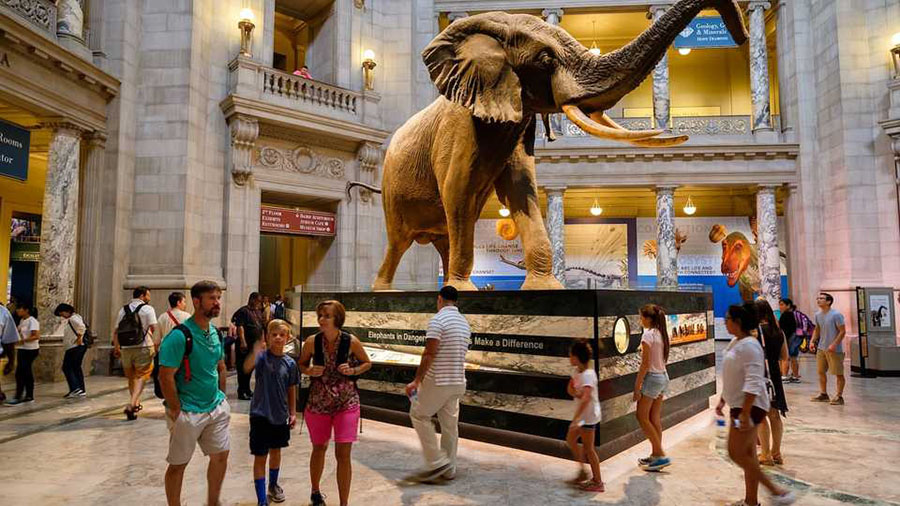
Visitors at the Main Hall of the National Museum of Natural History in Washington D.C. Image credit: Kamira/Shutterstock.com

No travel itinerary is complete without a visit to one of the natural history museums dotted around the globe. From fossils to fungi and climatology to paleontology, these galleries cover it all. Many specimens give a look into the natural history of the region in which they’re located, with most offering an awe-inspiring dinosaurs section – always a crowd-pleaser. Today most natural history museums incorporate the latest in technological features with many offering a 3D cinema for an enhanced experience. Take a look at our list of top natural history museums around the globe for your next urban adventure. 

10. Beijing Museum of Natural History, • Beijing, China

Known as the first large scale natural history museum of its kind in China, Beijing Museum of Natural History is the perfect stop to educate the little ones. Along with specimens of mammals and fossils, the kids are sure to enjoy the dinosaur exhibit, complete with robotic and roaring examples of prehistoric creatures. The learning experience for youngsters continues with an aquarium full of marine life native to South China.  

9. Melbourne Museum • Melbourne, Australia

The Melbourne Museum enables visitors to dive into Australian’s natural history through a wide collection of artifacts. The museum is relatively new, having only opened in 2000. The displays offer everything one would expect in a visit to a natural history museum with additional exhibits about the human body. After a day of touring, visitors can take a relaxing stroll outside through the tropical gardens located on the grounds. 

8. Natural History Museum •Vienna, Austria

Vienna’s Natural History Museum is among the largest museums in Austria offering something for visitors of all ages. The detailed architecture of the building, carved in marble and limestone, is reason enough to tour the institution. The museum offers visitors an array of animals, minerals, insects, mammals, and birds. There is an extensive dinosaurs exhibit to explore along with an informative section about space exploration. 

7. La Plata Museum • La Plata, Argentina

Located outside Buenos Aires, La Plata is home to one of the world’s most intriguing museums. Visitors will be treated to an introduction into the region’s natural history, covering paleontological, anthropological, and archeological studies. La Plata Museum offers exhibits about the indigenous people of Argentina including the aboriginal tribespeople. Of course, there are exhibits about the dinosaurs that once roamed the area. Not all the attractions are indoors, the museum also hosts a Botanical Garden and Zoo. 

6. Field Museum•Chicago, Illinois

Dinosaur enthusiasts of all ages would enjoy a trip to Chicago’s Field Museum to meet Maximo the Titanosaur – the largest dinosaur ever discovered. Maximo isn’t the only dinosaur attraction the museum has on tap. Sue, the world’s most intact Tyrannosaurus Rex is also on display at Field Museum. In addition to the extensive dinosaurs exhibits. Field Museum is home to an impressive display of Egyptian and South American artifacts. Don’t miss the Bug Encounter arena, where visitors can learn all about the insect world. 

5. The French National Museum of Natural History • Paris, France

The French National Museum of Natural History encompasses 14 sites. The main location is located in Paris’s left bank of the River Seine. Founded during the French Revolution, its history dates back to 1793. There are over 60 million specimens for visitors to view covering everything from geology, botany to zoology, and anthropology. 

4. National Museum of Natural History • Washington, DC

This well-known museum is located in the National Mall and is part of the Smithsonian Institution. The gallery holds an extensive collection of historic and human artifacts along with an impressive display of prehistoric creatures. One of the main attractions within the museum is its collection of gems and minerals, featuring the Hope Diamond, a 45.52-carat piece known around the world. National Museum of Natural History is a must-see for any visitor to DC, and admission is free. 

3. Museum of New Zealand (Te Papa Tongarewa) • Wellington, New Zealand

A relatively new cultural experience, Te Papa Tongarewa opened in 1998, after merging with both the National Museum and the National Art Gallery. Appropriately named, Papa Tongarewa it translates to Container of Treasures. The exhibits focus on artifacts indigenous to New Zealand. With an eclectic display of categories, Te Papa Tongarewa offers visitors a look into history, Pacific cultures, natural history, and art. 

2. American Museum of Natural History • New York, New York

The American Museum of Natural History is located on Manhattan’s Upper West Side. This New York City landmark is one of the largest natural history museums in the world. It’s home to such a massive collection that only a small sampling can be displayed at one time. The museum is known worldwide for hosting sleepovers within the museum, where visitors can spend the nite among the dinosaurs. The museum was the inspiration for the 2006 film, Night at the Museum, starring Ben Stiller. 

1. Natural History Museum • London, England

London’s Natural History Museum was once associated with the British Museum. This institution is deeply rooted in British history dating back to 1753. In 1881, the iconic museum moved to its present location. Now located on Exhibition Road in South Kensington, the structure is one of three major museums in the area. The gallery houses a vast collection of life and earth sciences divided into five collections: botany mineralogy, entomology, paleontology, and zoology. A top attraction for visitors is the Charles Darwin collection.

Source: www.worldatlas.com/

MicroCT Reveals Detailed head Morphology of Arthropod, Leanchoilia Illecebrosa

Friday, June 26, 2020

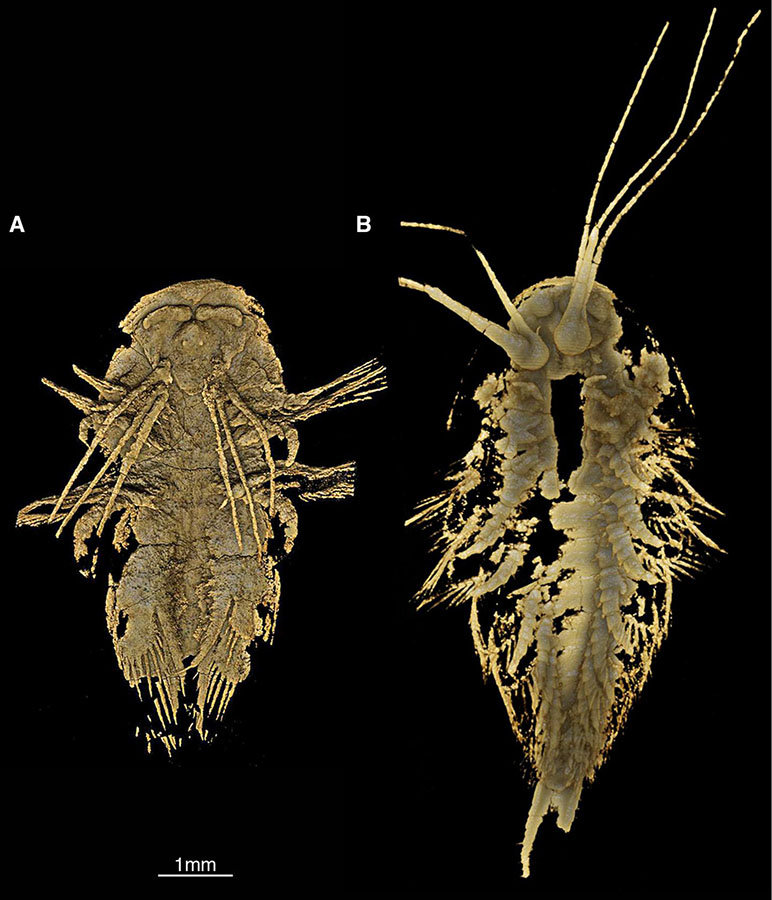
(A) YKLP11423, 5mm-long juvenile, ventral view; (B) YKLP11422, 7mm-long juvenile, ventral view.  CREDIT Javier Ortega-Hernández and Yu Liu

The Chengjiang biota in the Yunnan Province of China contains one of the most species-rich and well-preserved fossiliferous deposits for the early Cambrian (ca. 518 million years old), including numerous arthropod species. However, several Chengjiang arthropods have an unfamiliar morphology, are extremely rare, or are incompletely preserved, which often leads to many of these species being problematic, poorly known, or often both, thus hindering their contribution towards reconstructing the evolution of this major animal group.

Javier Ortega-Hernández, Assistant Professor in the Department of Organismic and Evolutionary Biology and Curator of Invertebrate Paleontology in the Museum of Comparative Zoology at Harvard University, and Yu Liu, Professor of Paleobiology, Yunnan University, China have collaborated for years in the study of Chengjiang arthropods and their evolutionary significance. Their latest paper in Current Biology shows with unprecedented clarity the head morphology of the species Leanchoilia illecebrosa - a member of Megacheira, a major extinct group characterized by distinctively raptorial great appendages. Ortega-Hernández's and Liu's reexamination of Leanchoilia demonstrates the presence of a labrum - a flap-like structure overlying the mouth opening in most modern arthropods - and offers renewed support to the hypothesis that megacheirans are distant relatives of modern chelicerates (e.g. horseshoe crabs, scorpions and spiders).

Ortega-Hernández and Liu used microCT, a technique that uses X-rays to visualize features that are not easily observable on the surface of the fossils, to study the organization of the head in small juveniles of Leanchoilia illecebrosa. With microCT they were able to understand the head in greater detail than ever before, and discover features that refute previously believed hypotheses.

"The biggest surprise came when studying structures close to the mouth," said Ortega-Hernández. "Until now, the very existence of a labrum in megacheirans, and its position relative to the mouth, have been the source of heated debate. In living arthropods the labrum is considered an important feature of the head because of its precise origin during embryonic development. The 3D data on Leanchoilia allowed us to show for the first time and with great clarity that this animal indeed had a labrum. This is a useful discovery because researchers have argued with each other whether a labrum was present or not in this and other closely related species, which has prompted very different interpretations about their evolution and affinities."

The paper is the fifth in a series of publications that represent an ongoing collaboration between the research groups led by Ortega-Hernández and Liu. This study along with others in Current Biology (v29:1, 2019), BMC Evolutionary Biology (v19, 2019, and v20, 2020), and Geological Magazine (March 27, 2020) consists of the study, and often restudy, of exceptional arthropod fossils from the early Cambrian (ca. 518 million years ago) using microCT to reveal exceptional details of the preserved anatomy that are completely inaccessible through conventional preparation tools.

"With microCT we can discern between the iron-rich fossils and the iron-depleted rock matrix to produce highly detailed and informative virtual models in 3D that reveal their affinities, ecology and evolutionary significance," said Ortega-Hernández. "Although each publication is a bit different and tells a distinct story for the early evolution of arthropods, they all follow the same overall goal and structure, and use similar techniques and methodology."

"We have several ongoing projects as part of this collaboration, including many new and exciting species, as well as re-descriptions of some old favorites," said Ortega-Hernández. "There are certainly a few pleasant surprises, and we expect that this collaboration will continue yielding high-quality morphological information for several years, as we have only started to scratch the surface." The ongoing project is partially funded by the Harvard China Fund.

###

Article and author details

Yu Liu, Javier Ortega-Hernández, Dayou Zhai, and Xianguang Hou. 2020. A Reduced Labrum in a Cambrian Great-Appendage Euarthropod. Current Biology 30, .

doi: 10.1016/j.cub.2020.05.085

Corresponding authors

Yu Liu, [email protected]
Javier Ortega-Hernández, [email protected]

Source: www.eurekalert.org/

Tiny Japanese Dinosaur Eggs Help Unscramble Cretaceous Ecosystem

Friday, June 26, 2020

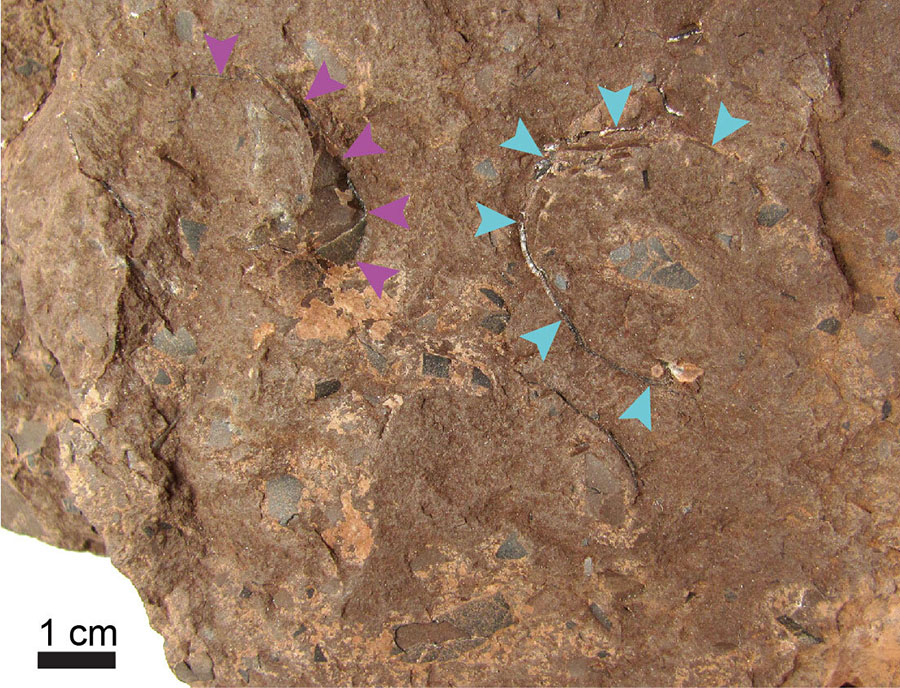
An egg of Himeoolithus murakamii (left), outlined egg with intact eggshell remains (black area) (middle), and reconstruction of Himeoolithus murakamii and their probable parent dinosaur (right). Credit: University of Tsukuba and Museum of Nature and Human Activities,Hyogo

When most of us think of dinosaurs, we envision large, lumbering beasts, but these giants shared their ecosystems with much smaller dinosaurs, the smaller skeletons of which were generally less likely to be preserved. The fossilized egg shells of these small dinosaurs can shed light on this lost ecological diversity.

Led by the University of Tsukuba, researchers scoured an exceptional fossil egg site first discovered in 2015 in Hyogo Prefecture, southwestern Japan, and reported their findings in a new study published in Cretaceous Research.

The Kamitaki Egg Quarry, found in a red-brown mudstone layer of the Ohyamashimo Formation, deposited in an Early Cretaceous (about 110 million years old) river flood plain, was carefully and intensively excavated in the winter of 2019, and yielded over 1300 egg fossils. Most were isolated fragments, but there were a few partial and almost complete eggs.

Lead author Professor Kohei Tanaka says, "Our taphonomic analysis indicated that the nest we found was in situ, not transported and redeposited, because most of the eggshell fragments were positioned concave-up, not concave-down like we see when egg shells are transported."

Most of these fossil eggs belong to a new egg genus and species, called Himeoolithus murakamii, and are exceptionally small, with an estimated mass of 9.9 grams—about the size of a modern quail egg. However, biological classification analysis implies that the eggs belonged not to early birds, but to their cousins, the non-avian theropod dinosaurs (the group that includes well-known carnivores like Tyrannosaurus and Velociraptor). That puts Himeoolithus murakamii among the smallest non-avian theropod eggs reported to date. These tiny eggs were notably elongated in shape—unusual for similarly small eggs among Cretaceous birds, but typical among larger non-avian theropod eggs.

Two partial eggs of Himeoolithus murakamii (cross-sectional outlines indicated by arrows). Credit: University of Tsukuba

In addition to the abundant Himeoolithus murakamii egg shells, five more ootaxa (distinct types of egg fossils) were recognized in the Kamitaki locality. All of these ootaxa belonged to small non-avian theropods.

As Professor Tanaka explains, "The high diversity of these small theropod eggs makes this one of the most diverse Early Cretaceous egg localities known. Small theropod skeletal fossils are quite scarce in this area. Therefore, these fossil eggs provide a useful window into the hidden ecological diversity of dinosaurs in the Early Cretaceous of southwestern Japan, as well as into the nesting behavior of small non-avian theropods."


More information: Kohei Tanaka et al. Exceptionally small theropod eggs from the Lower Cretaceous Ohyamashimo Formation of Tamba, Hyogo Prefecture, Japan, Cretaceous Research (2020). DOI: 10.1016/j.cretres.2020.104519

Journal information: Cretaceous Research 

Provided by University of Tsukuba

Source: https://phys.org/

Court: Montana Family Owns Dinosaur Fossils Worth Millions

Wednesday, June 24, 2020

Dinosaur fossils worth millions of dollars unearthed on a Montana ranch belong to the owners of the land's surface rights, not the owners of the mineral rights, a U.S. appeals court ruled.

The June 17 ruling by the 9th U.S. Circuit Court of Appeals upheld a 2016 decision by U.S. District Judge Susan Watters of Billings that found dinosaur fossils were part of the surface estate, not the mineral estate, in cases of split ownership. The surface rights where the fossils were found are owned by Mary Ann and Lige Murray.

"The composition of minerals found in the fossils does not make them valuable or worthless," Watters wrote. "Instead the value turns on characteristics other than mineral composition, such as the completeness of the specimen, the species of dinosaur and how well it is preserved."

Brothers Jerry and Bo Severson, who owned two-thirds of the mineral rights on property once owned by their father, appealed Watters' decision to the 9th Circuit.

A three-judge panel of the appeals court overturned Watters' ruling in February 2018, but the Murrays asked for a larger panel of judges to hear the case.

In the meantime, the 2019 Montana Legislature passed a bill stating that dinosaur fossils are part of a property's surface estate unless they are reserved as part of the mineral estate.

Before making its decision, the 9th Circuit asked Montana's Supreme Court to rule on whether fossils were minerals under state law because at the time the case was filed, there was not a definitive law. In a 4-3 ruling last month, the Montana justices said dinosaur fossils are not considered minerals under state law.

"Because Mary Ann and Lige Murray are the undisputed owners of the surface estate here ... the (Montana) Supreme Court's decision requires a resolution in their favor," Chief Judge Sidney R. Thomas wrote on behalf of himself and 10 other members of the 9th Circuit.

Eric Nord, the attorney for the Murrays, declined to comment Tuesday. Shane Swindle, an attorney for the Seversons, did not immediately return phone or email messages seeking comment on whether the Seversons plan to appeal to the U.S. Supreme Court.

The dinosaurs unearthed on the ranch include a T. rex found in 2013, a triceratops skull discovered in 2011 and the 2006 discovery of a pair of dinosaurs that appeared to have been locked in battle when they died.

The T. rex was sold for millions of dollars. The so-called dueling dinosaurs drew a bid of $5.5 million in a 2014 auction, but failed to reach the $6 million reserve price.

In a legal effort to clarify the ownership of the dueling dinosaurs before trying to sell them, the Murrays sought a court order saying they owned the fossils, sparking the legal battle.

Source: https://phys.org/

Pages