Blogs

Pseudotherium argentinus: Triassic-Era Mammal Relative Had Saber Teeth

Wednesday, August 28, 2019

An artist’s impression of Pseudotherium argentinus. Image credit: Agencia CTyS-UNLaM.

A new species of cynodont has been identified from a fossilized skull found in the San Juan province, Argentina.

The extinct mammal relative, named Pseudotherium argentinus, lived during the Triassic Period, about 231 million years ago.

Pseudotherium argentinus lived in an environment warmer than today, with abundant flora mostly made up of ferns and conifers, since there were no flowering plants during its time,” said Dr. Ricardo Martínez, a paleontologist with the Institute and Museum of Natural Sciences at the University of San Juan.

The ancient animal was about 10 inches (25 cm) long and had very long fangs.

“The species had a very long, flat, and shallow snout, and its very long fangs located almost at the tip of the snout, so the resemblance to Scrat, the renowned squirrel-like character with saber teeth in the Ice Age movies, is tremendous,” Dr. Martínez said.

“His long fangs could have served him on one hand, to nail and trap insects or prey, but another option is that this animal has been a male and we are in the presence of sexual dimorphism, that is, that the males of this species had developed these great fangs as a way to attract females.”

“But, at this point, you can’t know much, because we only have one specimen.”

Pseudotherium argentinus, incomplete right stapes of Pseudotherium. (A) Anteromedial view of stapes, (B) medial view of footplate of stapes, and (C) semitransparent isosurface render of stapes in situ and skull in oblique-ventral view.

The well-preserved skull of Pseudotherium argentinus was found at the Valle Pintado locality of the Ischigualasto Formation.

Dr. Martínez and colleagues used high-resolution CT scans of the specimen to study its internal structure.

“With these images, we could observe the developed inner ear, the loss of the post-orbital bar, as well as the presence of the turbinals that are like partitions that allowed this animal to heat the air entering its respiratory system, which would indicate that he had hot blood,” Dr. Martínez said.

paper on the discovery was published in the journal PLoS ONE.

_____

R.V.S. Wallace et al. 2019. First record of a basal mammaliamorph from the early Late Triassic Ischigualasto Formation of Argentina. PLoS ONE 14 (8): e0218791; doi: 10.1371/journal.pone.0218791

Source: www.sci-news.com

Paleontologists Set Out To Find Source of Mysterious Dinosaur Footprint in Tibet

Tuesday, August 27, 2019

"Big Footprint" found on a cliff in Qamdo, Southwest Chin's Tibet Autonomous Region. Photo: Xinhua

Paleontologists kicked off an expedition to try to discover which dinosaur had left mysterious footprints found in Southwest China's Tibet Autonomous Region.

Xing Lida, a dinosaur footprint expert at the China University of Geosciences in Beijing, along with his research team arrived at Qamdo, Tibet on Monday, to study the recently discovered dinosaur footprints, Xing told the Global Times.

Xing said members of the Chinese Academy of Sciences (CAS) found the footprints last year. His expedition is being undertaken in cooperation with the CAS. Xing declined to reveal additional details.

After evaluating tips they've received, Xing and his team set off by foot on an expected two-week trek.

Scientists say dinosaurs once lived on the world's highest Qinghai-Tibet Plateau. Deng Tao, from CAS's Institute of Vertebrate Paleontology, proved that dinosaurs once lived in the southeast part of Tibet, the Science and Technology Daily reported in February.

The renowned "Big Footprint" found on a cliff in Qamdo has attracted thousands of tourists.

At least eight pairs of huge footprints were discovered in 1999 when workers used explosives to build a local road. The largest footprint is 1.7 meters long.

Local people call it the footprint left by a god.

After visiting the "Big Footprint," Xing said it was likely left by a Brontosaurus, which lived during the early to middle Jurassic Period.

The "Big Footprint" was the first time dinosaur footprint found in Tibet, which is significant for the study of distribution, and palaeo environment of dinosaurs in the area, according to the Science and Technology Daily.

Xing also found abundant cracks and ripples near the footprints, suggesting Qamdo geography was very different at the time of dinosaurs.

The footprints were likely made when Brontosaurus roamed along a shore of a lake or sea, suggested Xing.

Source: www.globaltimes.cn

Is JURASSIC PARK: TRESPASSER The 'Best' Worst Game Of All Time?

Sunday, August 25, 2019

"That is one big pile of shit"

Bad games have been a blight upon the world for as long as video games have been around. Most likely, they always will be. From broken or bland design to poor technical execution, there are many ways a potentially good game can go bad and an equally long list of reasons for why a game might descend into the realm of endless suck.

Whether fun just wasn't in the budget or over-ambition resulted in under-delivering, the bottom line is that bad games just aren't that much fun. Except when they are.

This is something that can be difficult to pin down. What constitutes a bad game is generally left open to interpretation. Some people say that Deadly Premonition is a bad game, and to those people, I say, “Please don’t talk to me.” What’s art in my eyes might be a tire fire in yours. Can we at least all agree that Carmageddon 64 is an absolute blight?

We can’t even reliably say that bad games equal a bad time because, as I’m about to demonstrate, sometimes a perfect storm of horrible execution can result in something that contains all the hallmarks of a positive experience. There are games out there that have all the ingredients of a horrible concoction, yet somehow manage to not only be perfectly edible but also mindbogglingly delicious.

To illustrate this, I present to you 1998’s Jurassic Park: Trespasser.

There have been a lot of games that have attempted to bridge the gap between movies and video games in terms of experience. Whether that involves making a game 95% FMV footage like Night Trap or by filling in gaps in the story, like Enter the Matrix, the idea of films and games being held in the same esteem has been a carrot dangling in the face of developers. Trespasser was another game reaching for that carrot. Promising to feature an experience that was as real as being in the film itself, it had no shortage of ambition. Among its key features were a fully working dinosaur ecosystem and a real-time physics engine that powers everything from the items you pick up to the way the dinosaurs move.

Unfortunately, ambition is only the first step of the process, and for Trespasser, every other step appears to have been a tumble down the stairs. The ecosystem didn’t really work out, so all the dinosaurs had their moods set to pure malice and are merely scattered about the linear levels. The physics engine, on the other hand, is certainly there, but it feels less like an immersive mechanic to the game and more like a curse has descended upon the island.

You play as Anne, the lone survivor of a plane crash that has left one of her arms broken - I think. The game doesn’t tell you this outright, but Anne never uses her left arm and that’s my only explanation. As luck would have it, the plane crash-landed on Isla Sorna, Site B, the place where The Lost World: Jurassic Park takes place. Since that’s not a good place to be, it’s up to you to get Anne off the island.

It doesn’t take long to see where Trespasser went wrong. You use Anne’s right arm to manipulate everything in the world. Whether you’re moving boxes or picking up a gun, you do it by reaching out and grabbing it with her floppy arm. Did you play Surgeon Simulator 2013 or any of the derivatives that came out after it? Remember how its core concept was that fine motor control with a traditional controller is impossible, so let’s all laugh at it? Well, Trespasser is like that, but it’s not in on the joke.

But this is a Jurassic Park game and the dinosaurs are the stars of the show, and in Trespasser, they’ve been drinking in their trailer all morning before staggering out onto the stage. The dinosaurs are also slaves to the game’s physics engines, and their legs are left to try and figure out how to deal with tricky concepts like momentum. The result is that everything from triceratopses to t-rexes all stagger around, attempting to stay upright. Sometimes they attack each other. Sometimes they attack you. If you can call it attacking.

Eventually, you’ll come face to face with your first raptor, and here’s how combat typically goes: it will stagger in your direction, and when it gets near enough, it will open its mouth and try to rub its teeth on you. If its teeth touch you, you get hurt and the tattoo on your heaving bosom gets progressively filled with more ink. If you’re good, you can swipe frantically at them with a stick in hopes of killing them, or maybe you’re lucky enough to have a gun and can jam it down their throat before you’re killed by gingivitis.

The result of all this is a perfectly fun experience. The game keeps trying to put you into tense situations, but if the physics don’t undermine the moment, a glitch surely will. Dinosaurs will often find their legs pivoting wildly back and forth, and if you catch one unaware, you might see it wildly pirouetting until it launches itself into space. Sometimes you just find dead raptors and can’t help but wonder what happened. On my most recent playthrough, one of the end bosses killed itself by crashing through a pile of crates that crushed it beneath their meager weight.

Jurassic Park: Trespasser is, to sum things up, a beautiful mess. There’s not one aspect of it that it does very well, but all its broken pieces come together in something that is wonderfully entertaining. Despite having so many problems, it's perfectly playable in spite of itself, and the janky physics system is a constant source of entertainment.

Would I recommend playing it? Heck, yes. If you can, that is. The game was optimized for now antiquated hardware, and it doesn’t play nice with new setups. Thankfully, there are fan patches out there that can allow you to run the game on modern machines. It can be a pain to set up, but the effort is worth it.

So, what horrible game would you recommend? What is the "best" worst game you’ve ever played?

Source: www.destructoid.com

Everything We Know About 'Jurassic World 3'

Sunday, August 25, 2019

Jurassic World 3 | Universal Pictures


The adventure that’s 65 million years in the making continues with Jurassic World 3. The Jurassic Park franchise continues with its third installment and will be directed by Colin Trevorrow, who directed the first Jurassic World.

An official title for Jurassic World 3 has not been announced yet and the plot has been kept under wraps, but judging by the events of Jurassic World: Fallen Kingdom, it’s guaranteed to be a wild ride. The fences are down and the dinosaurs have been released into our world. The famous Tyrannosaurus rex is staring down a lion in a zoo. Ptyerodactals swoop around urban landmarks. The world as we know it will never be the same and it seems like it’s up to the main characters of the Jurassic World franchise to make things right.

Here’s what we know about the upcoming Jurassic World 3 so far.

Who is returning for ‘Jurassic World 3’?

Colin Trevorrow confirmed that Bryce Dallas Howard and Chris Pratt will return to reprise their roles as Claire Dearing and Owen Grady, respectively. Trevorrow has also hinted that other characters from Jurassic World: Fallen Kingdom will return to become “major characters.”

It’s likely that Jurassic newbie Isabella Sermon will return to play Maisie Lockwood, the genetically-created clone of John Hammond’s estranged friend and partner, Sir Benjamin Lockwood.

BD Wong may also return to reprise his role as Dr. Henry Wu, the corrupt scientist who is long overdue for some karma.

Every Jurassic Park fan is undoubtedly asking the same question: What about Jeff Goldblum? After all, Goldblum, who plays fan-favorite Dr. Ian Malcolm, has starred in two of the original Jurassic Park films and made a brief, but memorable, appearance in Jurassic World: Fallen Kingdom. So, surely he will at least make a cameo, right? Goldblum hinted at his return in an article by Digital Spy, where he said, “… There’s going to be another one, which some people may or may not be in it. That’s all I can say.”

Rumors have also begun to surface that members of the original cast, like Laura Dern, could return for Jurassic World 3.

What will ‘Jurassic World 3’ be about?

Jurassic World | Universal Pictures

The cast and crew of Jurassic World 3 have been secretive about the plot details of the movie. Even IMDb doesn’t have a logline. Chris Pratt basically confirmed that there will be a time jump in the third film of the new franchise during an interview with MTVJurassic World: Fallen Kingdom takes place three years after the events of Jurassic World, so a time jump would definitely make sense.

“I can’t say anything, but I can tell you when I heard the pitch, I was blown away,” Pratt said in the interview, “I can’t believe that we’re going to make that movie, and I can’t believe they found a way to deliver on the promise of the end of Jurassic World: Fallen Kingdom. Like, ‘Wait, what? The island has blown up. The animals are out, we can’t put them back in the box. What are we going to do? How are not only these dinosaurs but this technology moving forward going to affect the planet?”

No matter where the series goes from here, Pratt confirms that Jurassic World 3 is going to be “pretty epic.”

‘Jurassic World 3’ will be the final film in the franchise

Jurassic World | Universal Pictures

Director Colin Trevorrow has described Jurassic World 3 as “a celebration of everything that has existed in the franchise up until now.” Bryce Dallas Howard has mentioned that the third installment of the Jurassic World franchise will “bring the entire saga together.” At the time, these statements served as mere hints toward the franchise’s conclusion. Then, in February 2018, Trevorrow confirmed that Jurassic World 3 will be the final film in the series.

The park will close once (and perhaps for all) in 2021 with an absolutely epic conclusion.

Jurassic World 3 will hit theaters on June 11, 2021.

Source: www.cheatsheet.com

Jurassic Park And The Dinosaur Explosion, Or Why Your Kids Know More About Dinos Than You

Sunday, August 25, 2019

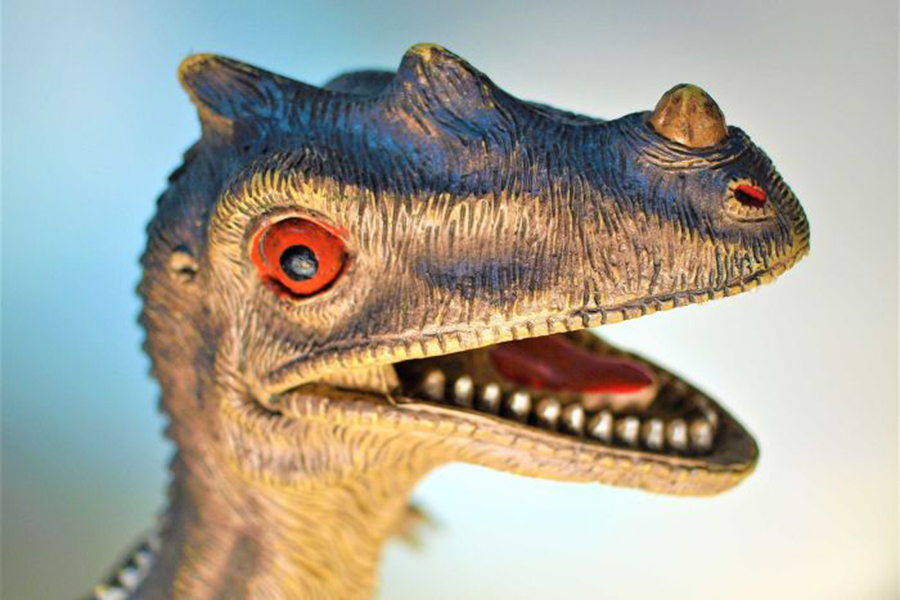
You might need to ask your kids the name of this dinosaur. (Unsplash: Umanoide)

Wanna feel dumb? Try reading a book about dinosaurs with a kid.

This happened to me.

My three-year-old, Finn, is going through a bit of a dinosaur phase. Our apartment looks more like a deleted scene from Jurassic Park than a photo shoot for Vogue Living.

From pyjamas to t-shirts and hoodies (just quietly I'm super jealous of the T. rex hoodie), to night lights, stickers and those iconic plastic figurines, dinosaurs still roam the land at our place.

Oh yeah ... and the books. So. Many. Dinosaur. Books.

I don't know the last time you read a book about dinosaurs, but if you grew up in the 90s (or earlier) you might be in for a bit of a shock when you do.

While Finn and his friends can name pretty much all the dinosaurs in these books ... I can't.

There are so many dinosaurs I just don't recognise. SinosauropteryxGordodon? Giganotosaurus? Eoraptor? Really?

Back in my day, we had old favourites like Tyrannosaurus rex, Stegosaurus, Triceratops, and Brontosaurus, and that was about it. And, like Finn, I was dino-obsessed as a kid. So what's going on?

This is how brontosaurus and diplodocus were depicted in 1897 by Charles R. Knight. (Wikimedia Commons)

Well it turns out I'm not alone. Like me, palaeontologist Steve Brusatte of the University of Edinburgh grew up during the late 80s/early 90s.

"The image of dinosaurs in those books I read as a kid? That image is extinct," Dr Brusatte says.

So why does my three-year-old know so much more about dinosaurs than I ever did?

The golden age of dinosaur discovery is now

In the past few decades there's been an explosion of dinosaur discoveries, Dr Brusatte says.

"It really is a golden age. People are finding more species of dinosaur than ever before."

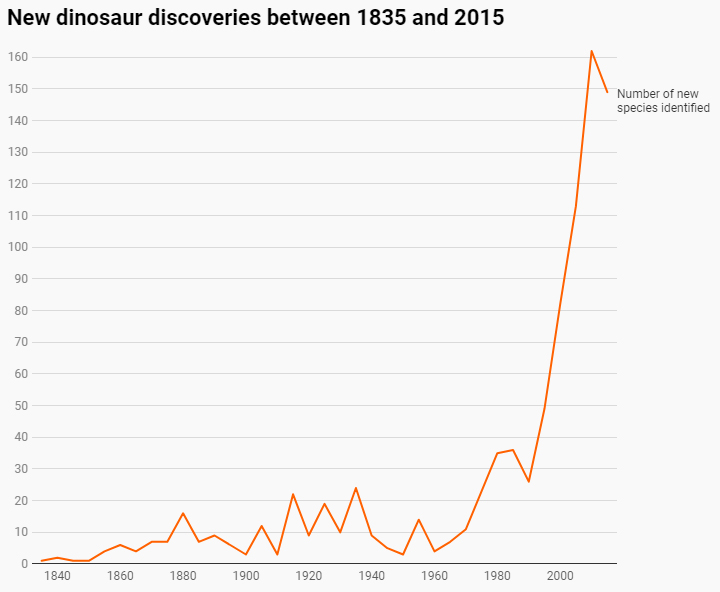
Palaeontologist Jon Tennant's research shows just how dramatic the recent rise in discoveries has been.

Dr Tennant was originally trawling through the Paleobiology database — an electronic record of every fossil documented via publication in an academic journal — looking for evidence of dinosaur extinction events other than the one that wiped non-avian dinosaurs off the planet.

"I was just sort of playing around one day when I decided to see what would happen if we looked at it from a slightly different angle," he recalls.

Instead of considering dinosaur fossils relative to dinosaur history — when in time and where these dinosaurs lived — Dr Tennant began to analyse the discovery of these fossils relative to our own human history.

The records revealed a slow and incremental growth in new discoveries in the 100 years following the first flurry, known as the Great Dinosaur Rush or Bone Wars, in the 1880s.

"But then around the 1990s something strange happened, and we see this this huge explosive growth in the number of discoveries."

EMBED: Dinosaur discoveries by year

That sudden, exponential shift upwards is why I hadn't heard of an eoraptor before Finn pointed one out to me.

So what was driving the rapid and massive increase in the number of new dinosaur species?
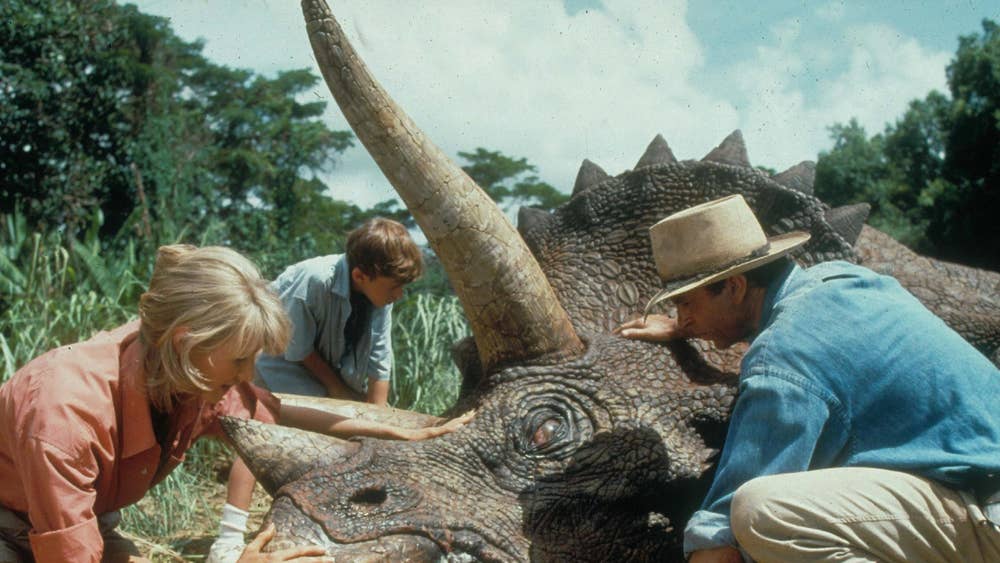
Jurassic Park brought dinosaurs back on the big screen

No kidding, the 1993 smash hit movie Jurassic Park was a big deal for palaeontology.

"It was a little over 25 years ago that that film came out and that changed everything," Dr Brusatte says.

"It brought dinosaurs into pop culture in a way they had never been before."

In turn, the surge in public interest drove a resurgence in palaeontology, Dr Tennant adds.

"People actually used Jurassic Park as leverage to get funding to conduct more dinosaur research in North America because it had such a huge public sway."

But it wasn't just North America, the film's impact was felt worldwide.

"I have colleagues all over the world — the generation of palaeontologists in their 30s — that say Jurassic Park is what got them into dinosaurs," Dr Brusatte says.

And globalisation of palaeontology has driven the explosion of new discoveries.

For much of its life as a discipline, palaeontology was a thing of Europe and North America.
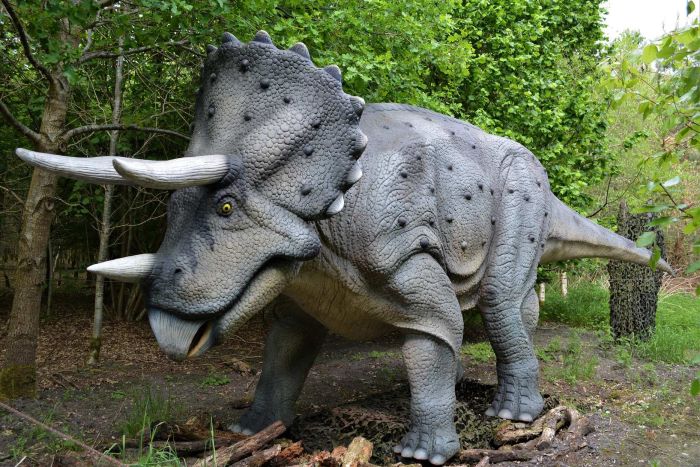
Triceratops was one of the dinosaurs discovered in North America in the 1880s by Othniel Charles Marsh during the Bone Wars. (Pixabay: Insa Osterhagen)

"That has remained embedded in our mind as what is normal," Dr Tennant explains.

"If you think about the most well-known or most loved dinosaurs it's things like T. rex or triceratops. These are animals that come from North America."

But over the past few decades, the hunt for dinosaurs has expanded all over the world.

"There are people in China, in Brazil, in Argentina, in these enormous developing countries that are full of wide, open spaces, full of rocks bursting with dinosaur bones," Dr Brusatte says.

And it's not just that more people in more places are finding more fossils; it's also the type of fossils they're finding.

"Beautiful chocolate brown bones sticking out from this tan coloured limestone," recalls Dr Brusatte, pondering his role in the discovery of the Zhenyuanlong suni fossil in China.
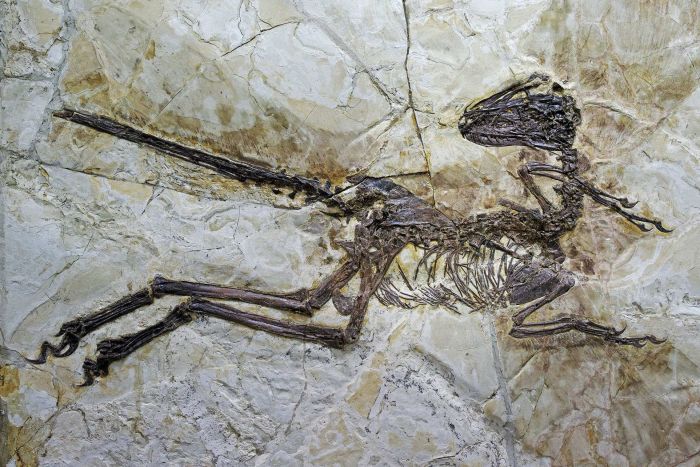
The preserved skeleton of Zhenyuanlong suni discovered in north-eastern China. (University of Edinburgh: Junchang Lü)

"Sharp teeth, sharp claws, looks so much like velociraptor, but covered in feathers. Feathers on the tail, feathers on the body, feathers on the head, feathers on the arms; actual quill feathers forming wings.

"And that drives it home — a fossil like this, that's over 100 million years old, conveys this powerful message that birds evolved from dinosaurs."

The fossils being discovered in new territories — in particular China, and Mongolia — have completely changed how we think about dinosaurs (and birds for that matter).

These feathered fossils have created a kind of gold rush effect as everyone races to find the next new species. This in turn amplifies the rate of new discoveries, pushing the line on Dr Tennant's graph ever steeper.

A lot of these new discoveries are made not by palaeontologists, but by ordinary people.

"We can't be out in the field for six months a year on expeditions like we're Indiana Jones" Dr Brusatte explains.

"We do find our own fossils of course, but so many of these new discoveries are made not by scientists, but by all sorts of people; farmers, construction workers, hikers, sometimes kids out hiking with their parents.

"And that's an amazing thing. Palaeontology, at least the discovery side of palaeontology, is open to everybody."

The dark side of the golden age

But palaeontology's inherent accessibility creates its own problems.

"Poaching is an issue in palaeontology," Dr Brusatte says. "Particularly in certain parts of the world. It's a big issue in Mongolia. And it's also an issue in parts of China."

The black market fossil trade continues to drive fossil poaching. And money often trumps the law.

"There are wealthy folks out there who want to have a T. rex in their living room," explains Dr Brusatte.

"Who doesn't want to have a T. rex in their living room, right?

"But it means that there is a bit of a market for this.

"It's similar in some ways to the art market. Some of these amazing fossils are unique pieces that high-end collectors really want. And that breeds a black market."
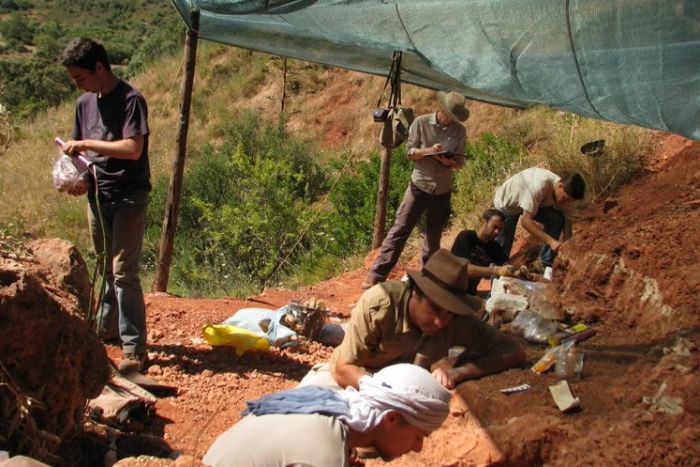
Steve Brusatte and colleagues excavating a site in Portugal. (Supplied: Steve Brusatte)

Dr Brusatte doesn't pull punches when it comes to fossil poaching.

"Simply put, it's wrong because it's against the law," he says. "I'm not saying people can't go out and find fossils, or that you have to be a scientist or academic. What I am saying is, no matter who you are, you've got to follow the law."

Trading in black market fossils also creates problems for researchers and academics as the legitimacy of fossils held in private collections is brought into question.

Peer review is the backbone of modern science. And the concern among some palaeontologists is that fossil specimens held in private collections threaten to undermine the scientific method.

"Most journals these days say if you want to publish on a new specimen, the data — in this case a dinosaur fossil — has to be publicly accessible," Dr Tennant says.

While private fossils might be available to some researchers, there's no guarantee they'll be available in perpetuity to any researchers who want to study them.

"As scientists we have to do repeatable work," Dr Brusatte explains.

"And it's impossible to do proper scrupulous science on a fossil that's not guaranteed to be available to other scientists."

The controversy around a recent paper describing a fossil of a new species of archaeopteryx is a case in point. The fossil, dubbed 'The Phantom' was discovered in the early 1990s in Germany.
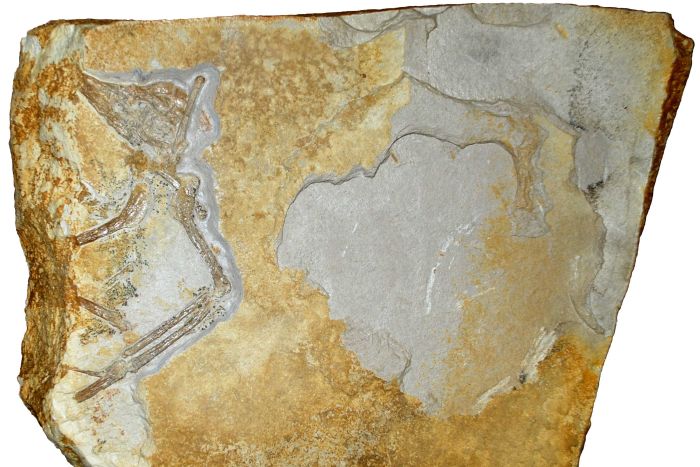
Fossil of the eighth specimen of archaeopteryx known as 'The Phantom'. (Supplied: Martin Kundrat)

Palaeontologists caught a glimpse of a cast of The Phantom in 1996, but it was hidden from view again until after it was sold in 2009 to palaeontologist Raimund Albersdorfer, who made it available in 2011.

"The specimen was housed within a private collection," Dr Tennant explains.

"A lot of people were like, 'You can't publish this because it's a private specimen!' And then people were like, 'Would you rather not know about this or know a little bit but not have access to it?'"

Not everything needs to be in the public domain, but access to rare specimens is critical, Dr Brusatte says.

"Like so many palaeontologists I got my start collecting fossils as a teenager collecting brachiopods, these little shelled creatures," he recalls.

"If we take that away from people, we're taking away the magic of science and discovery. That would be a ridiculous overstep.

"But if a unique, scientifically important fossil disappears into the living room of some wealthy business person never to be seen again, never to be studied, never to be enjoyed by the public, that breaks my heart."

Dr Albersdörfer has given the 'The Phantom' archaeopteryx fossil to a public collection in Munich on long-term loan and has committed not to sell it to a non-public entity.

Will the dino explosion ever end?

There's one final question to ask of this explosion in our dinosaur knowledge: when will it end? Or, indeed, will it end? Could Dr Tennant's graph just keep shooting skywards forever?

"At some point you'd like to think that we would discover every possible dinosaur that's buried in the ground. Right?" Dr Tennant says.

"But at the moment I don't know where that limit is.

"Even in places where people have been discovering dinosaurs for 100 or 150 years, there are still new discoveries all the time."

Dr Brusatte agrees.

"Don't worry, we're not running out of dinosaurs. We are still finding new dinosaurs all over the place," he says.

"Even if we stopped finding dinosaur fossils today — which is not going to happen — there's going be new techniques, new technologies, new types of experiments, instruments and ways of thinking that will help us study dinosaurs we already have in ways we never would have thought possible before."

So, if Finn has children one day, will he be overwhelmed by how few dinosaurs he recognises, like I am?

"Twenty years from now we're going to look back at what we knew about dinosaurs at this moment in time," Dr Brusatte says.

"Things are [not] going to be completely revolutionised; it's not like everything we thought we knew in 2020 is going to be wrong.

"But there's probably going to be a bunch of new, weird groups of dinosaurs that we never could have anticipated. So who knows what's going to be found next."

Or who's going to find it — right Finn?

Source: www.abc.net.au

Jurassic Park: 10 Facts From The Books The Movies Leave Out

Saturday, August 24, 2019

Jurassic Park is a classic, beloved movie and blockbuster franchise. Many people know that it's based on the novels by Michael Crichton. Some are even aware of the differences between the two versions—we've had plenty of time to read the books, after all. We could spend all day listing the differences, but instead we're just going to focus on a few key details of the novels that weren't brought over to the movie versions.

10 DR. MARTIN GUTIERREZ

Dr. Gutierrez actually appeared in both Jurassic Park novels, so it is slightly odd that he didn't make it into the movie (or any of the other movies, for that matter). His role was small but relatively important. He's the doctor that was called in early, when a little girl was injured due to escaped dinosaurs. Without him, it's unlikely that they would have identified the dinosaurs that escaped (or at least, not as quickly as they did).

MANY DINOSAURS LEFT OUT

We can all agree that there were a ton of dinosaurs in Jurassic Park, yes? Some of the dinosaurs shown didn't make much sense when grouped together, but we'll chock it up to artistic license. Still, did you know that not all of the dinosaurs mentioned in the books made it into the movie? Apatosaurus, Microceratops, Othnielia, Styracosaurus. Euoplocephalus, Hypsilophodon, and Maisaura are all dinosaurs that played a part in the novels, yet all were either not present or replaced with other dinosaurs when it came time for the film adaptation.

THE PTEROSAUR ENCLOSURE

If you've seen Jurassic Park III, then you're well aware of the Pterosaur enclosure. This enclosure (and the drama involved with its presence) was all actually part of the original novel. They even went so far as to film some of these scenes for the movie, but ultimately scrapped them.

One of the things that made this enclosure so terrifying was the risk of escape —these guys could easily get off the island and become a danger to the locals. Considering this was an undertone of the entire novel, it made complete sense to have them here. But that whole element was more or less dropped in the movies, and thus this scene was less of a concern.

THE TOXICITY OF DINOSAUR BITES

One thing the movie didn't really show us was just how toxic dinosaur bites were. Then again, any character that got bitten by a dinosaur died during said attack, so there weren't exactly many opportunities to show this.

In the novel, more than one person survived being attacked, only to later succumb to their wounds. Said wounds were described as having a white viscous fluid, implying the secondary risks involved with such a bite.

DINO ESCAPE ARTISTS

As mentioned above, one of the themes for the novel was the concern of dinosaurs getting off the island. One of the first scenes in the book actually proved that this was happening ⁠—the scene shown at the beginning of Jurassic Park: The Lost World actually came directly from the novel.

For reasons not fully explained in the novels, the dinosaurs were successfully breaking free from the island and finding new homes. These included several different species, but most concerning was the potential escape of the raptors.

WU AND HAMMOND'S BACKSTORY

In the novel, Wu and Hammond had much larger backstories. They actually worked quite hard to get to the point they were at, with Wu working on creating many of the processes that made the park possible. Much of this credit was taken away in the films however, and given to a mysterious "them", or past researchers. Not exactly fair, is it?

Meanwhile, Hammond was a visionary, sure, but he was also a very different person than the movie portrayed. Here he was every part the cutthroat businessman you'd expect to see running this venture.

DR. HARDING AND THE VETERINARY BRANCH

One of the characters that had an extremely reduced presence was Dr. Harding. He was the leading veterinarian on the island, capable of caring for all of the dinosaurs, and when needed, the injured humans (to the best of his abilities, that is).

In the movie, Dr. Harding is represented as a technician baffled by a sick dinosaur, not even going so far as to investigate the basics that Dr. Sattler suggested. But in the novels, he spearheaded the entire division. His daughter Sarah Harding was later seen in the movies.

INTENSE POPULATION TRACKING

One of the things the movie seemed to cut back on was the way the dinosaurs were tracked. Obviously, there were some issues with their methods, but on the whole they did their best. They picked up on the increase in dinosaur numbers very early on – well before our dear paleontologist found a nest, certainly.The real problem with the population increase is that it masked the numbers of the dinosaurs escaping. It became impossible for them to guess at how many dinosaurs had vacated – not without seeing the nests themselves (assuming they were perfectly preserved).

CAMOUFLAGE RAPTORS?

Did you know that one of the raptors on the island showed a very unique⁠— and concerning⁠—trait? This raptor showed the ability to alter their coloration, thus effectively having a mild form of camouflage. This whole scene came about while Dr. Sattler was trying to help get the power back on. And while this may not have been quite as iconic as "clever girl" ended up being, it was close.

This may have been a minor point, relatively speaking...though one can argue that it influenced the newest set of movies.

DINO BABIES

Obviously, everyone knows that life...uh...found a way. There were babies on the island. But the novel included several intentional babies that didn't make it into the movies. Most notably, there was a T-Rex baby on the island.

And it might be tempting to assume that the baby would be less of a threat than the adult version, but that would be a fatal mistake to make⁠—as a few of the characters in the novel found out. The baby ended up being an entire subplot and threat in itself, which is fairly impressive.

Source: https://screenrant.com

This Sea Turtle Fossil is 80 Million Years Old!

Saturday, August 24, 2019

Reconstruction of Desmatocheyls padillai by Jorge Blanco.

Understanding and knowing the evolution of the planet, in addition to the living beings that have inhabited it for millions of years, is possible thanks to the discovery of fossils, those remains of organisms that have been preserved in rocks.

Although fossils can undergo transformations caused by changes in each ecosystem, many remains remain in the ideal state to be studied.

Thanks to fossils, paleontologists are able to discover species that lived several million years ago. It is possible to know the physical characteristics he had, the period in which they lived and even arm his body with the remains.

In this context, in 2008 a fossil of a sea turtle was found in Ciudad Jiménez, Coahuila, which had not been described or registered in the species archives … until today.

Ancient giant: The fossil of Desmatochelys padillai sp. (pictured above) measured more than six and a half feet (two metres) long and would have looked remarkably similar to a modern marine turtles

Eleven years after the discovery, paleontologist Oliver Ariel López decided to create the first sea turtle fossil record, which appears to be the largest in Mexico and is now sheltered at the Múzquiz Paleontology Museum.

The fossil belongs to the family “Protostegidae” and is the first turtle of the genus Desmatochelys described in the country, in addition to being the first southern species recorded in the “late Cretaceous” period.

This means that the geographical distribution of the turtle expands towards the inland sea of North America and leaves open the possibility of finding more fossils in the south of the country since so far all fossils of that species are collected in the United States.

This specimen, found in Coahuila, is the largest known in Mexico: it is one meter long and 80 centimeters wide. In addition, bone elements were found that allowed defining the gender to which it belongs.

Also, it was possible to record that the specimen lived 90 million years ago in the Turonian or Cretaceous period and that it opens the folder on these reptiles that were forgotten by Mexican researchers.

The turtle fossil was found complete and this allows paleontologists to describe it 100%. In addition to this, certain elements that can differentiate the sea turtle from the rest of the fossils found in the United States were recorded.

The turtle will be included in the same group of the Dermochelyidae family for belonging to the same period of the other specimens. However, paleontologist Oliver López believes that this species may be a genus-species never described before.

Source: www.christianscroll.org

The Golden Age of Paleontology: New Skeleton Part of a Rich Dinosaur Trove in Southeast Utah

Saturday, August 24, 2019

Researchers from South America work to extract a chunk of rock containing seven dinosaur vertebrae from the quarry — a significant specimen, but still under half the total vertebrae that would make up the full dinosaur. KATE GROETZINGER / KUER

Just south of Blanding, researchers are excavating seven giant dinosaur vertebrae. They are part of a 70-foot-long Diplodocus skeleton that will be on display at the Natural History Museum of Los Angeles County.

Alyssa Bell directs fieldwork for the project, which is spearheaded by Luis Chiappe, the museum's Dinosaur Institute director. Bell leads a team of 12 researchers from around the world, who shout to each other in Spanish over the sound of jackhammers and an electrical generator. The team has been here for four weeks, and they’ve already excavated around 30 bones. 

But the most important ones — those neck vertebrae — are still in the ground. Bell explains they have to get them out by the end of the week so preparators will have time to clean and mount the full skeleton for the opening of the museum’s new Welcome Center in 2022.

Bell refers to the diplodocus skeleton as Gnatalie, after the Gnatalie Quarry, where the bones were found. The quarry is a 150 million year old bone bed discovered in 2007 by a team from the Los Angeles County museum. They came to Utah looking for bones from the Jurassic Period to round out the museum’s collection, and state paleontologist Jim Kirkland directed them to San Juan County. 

A researchers works on covering a chunk of rock containing bones in a protective jacket. The jackets are made of burlap, toilet paper, plaster, and tin foil, and protect the rock from being damaged in transport to Los Angeles. KATE GROETZINGER / KUER

“I knew if we sent someone down there they’d find something good, and without question, immediately they found something exciting,” he said. 

The diplodocus is a genus of dinosaur. They had small heads, long necks and tails, and are some of the longest dinosaurs known to ever exist. The Gnatalie skeleton is made up of bones from a few different species of diplodocus. It isn’t particularly rare to find bones from one of these in Utah, according to Kirkland. But Gnatalie is unique for another reason. The bones from the quarry are green, thanks to a mineral present during the fossilization process. Bell says it may be the first green dinosaur skeleton mounted in the world. 

“This is very particular to this quarry,” she said. “So once we mount Gnatalie, it will be the green dinosaur.”

Another thing that makes Gnatalie unique is the location where the bones were found. According to Kirkland, the Gnatalie Quarry is on the southwest edge of the Morrison Formation, which is a 150 million year-old riverbed that preserved a lot of dinosaur bones. 

“It’s probably the most southern big, Jurassic dinosaur excavated in this part of the world,” he said.

Dr. Alyssa Bell points to where the bone that led to the quarry was discovered. The quarry is the tented area in the background, where researchers dig into the side of a hill to find more bones. CREDIT KATE GROETZINGER / KUER

The Gnatalie Quarry is one of many dinosaur bone excavations going on in the state, according to Kirkland. He says Utah is probably setting a record for the number of sites that are currently active.

“You’d look at Utah as being in its golden age [of] paleontology,” he said. “They’re important discoveries happening almost weekly.”

Kirkland estimates that researchers have discovered over 100 new dinosaur species in Utah in the past quarter century. And the paleontological gold rush isn’t slowing down. According to Kirkland, there are a handful of other museums excavating large dinosaur skeletons in the state right now, and teams are constantly looking for new bone beds. 

“We don’t know much about the state, as it is,” he said. “There’s so much more to learn.” 

Although they will have collected all the bones for the diplodocus skeleton, Bell and her team will return to San Juan County next year. They plan to prospect for bones from the Cretaceous Period, which came after the Jurassic. Kirkland has been working on a Cretaceous site in Southeast Utah, but he says there are more than enough discoveries to go around.

Researchers arrange small and medium jackets containing bones in the bed of a pickup truck. The researchers removed around 30 bones from the quarry this year. CREDIT KATE GROETZINGER / KUER

Source: www.kuer.org

Jurassic Park: 10 Questions We Still Want Answered

Thursday, August 22, 2019

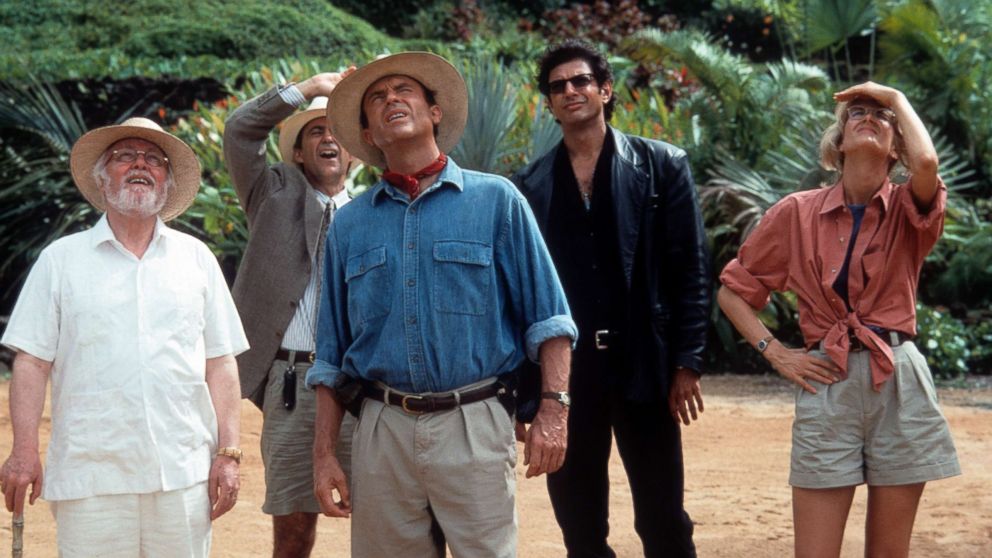
Jurrassic Park cast

One of the most celebrated blockbusters of all time, Jurassic Park not only changed the way we looked at dinosaurs, but it also changed the way we look at movies. When it debuted in 1991, director Stephen Spielberg was fresh off of successes like Jaws, E.T., the Indiana Jones trilogy, and Close Encounters of the Third Kind. Using the fascinating best selling novel by Michael Crichton as the basis for the film, tense cinematography, great casting, and pioneered special effects brought it to life.

Audiences have been able to experience the franchise for the last several decades with countless sequels, but what about the film that started it all? Upon repeat viewings, the action-adventure still provides thrills and chills, and the special effects hold up. But certain plot elements are as confusing as Ian Malcolm's exposed shirt. Here are ten questions we still want answered about Jurassic Park.

10 WHY DID MULDOON, THE RAPTOR EXPERT, DIE?

Robert Muldoon, big game hunter and expert flown in from Kenya, is introduced in the film as the reigning authority on velociraptors. He knows their behavioral patterns as a species, as well as their individual personalities. He's a no-nonsense version of Chris Pratt's character in Jurassic World.

Unlike Pratt's character, his doesn't make it to a sequel. Even though he describes the way raptors hunt to the visitors, he manages to forget years of living among them and dies in the exact way he's warned against. If the death was meant to convey "no one is safe, not even the experts" kill someone else off, not the character who in the book not only survived but did so with an exceptional handlebar mustache and blowing up dinosaurs with rocket launchers.

WHY WERE THE FENCES SET UP TO GO DOWN WITH SECURITY?

Nedry is an annoying character fans can universally state deserved his grisly end, if only because of his sheer stupidity and unwillingness to follow the protocol that might have saved him. He turns off all the security systems to be able to not only get access to the frozen dinosaur embryos but also to get through the park and make it to the ship on the east dock.

Why would the electric fences be attached to all the security in a park like that? If there was some massive power outage (like in a part of the world where storms and hurricanes happen continuously) why wouldn't there be emergency power systems designed to kick in?

IF DINOS DIDN'T COME TO THE FENCE, GUESTS SAW NOTHING?

When the first visitors arrive to the park, the tour in the self-driving cars is underwhelming. The dinosaurs don't come to the fence but are instead derping about in acres of foliage. In order to even see a T-Rex, one of the biggest dinosaurs they've engineered, they have to lure it out of hiding with a goat snack.

How were they ever hoping to succeed if visitors cant see the very creatures they came to see? Is that why they ditched the cars for bubble pods, so that there would be a way for them to have a more immersive experience in the park?

WHERE DID THE 100 FOOT DROP COME FROM?

In the scene involving the cars stopping beside the T-Rex paddock, we see that there's a long section of level ground on the other side of the paddock fence. This is where the goat comes up from the ground and waits to for the T-Rex to make it a snack. We see the T-Rex walking on the ground as it crosses over the divide onto the main road.

However, when it nudges the cars over the side of the fence later, the cars plummet to a 100-foot drop that Dr. Grant has to repel down. Where did this come from? In the books, moats are described as present so the predators can never get too close to the fence, but the film doesn't have any lines of dialogue about the precipice, it just appears out of nowhere.

WHY DIDN'T TIM CLIMB THROUGH THE WIRES?

Halfway through the film Tim, dinosaur enthusiast and very small boy, is forced to climb a very tall electric fence to avoid the T-Rex and head towards the visitor's center. There are just two problems; Tim is afraid of heights, and the electricity in the fences is about to go back online.

Thus begins Tim's harried climb to the top and attempt to climb down the other side. While he's climbing, you have to ask yourself why Tim, half the size of Dr. Grant and his sister Lex (who both are safe on the other side) didn't just squeeze through the fence? It wouldn't have taken any more time and he wouldn't have to move at a snail's pace due to his fear of heights.

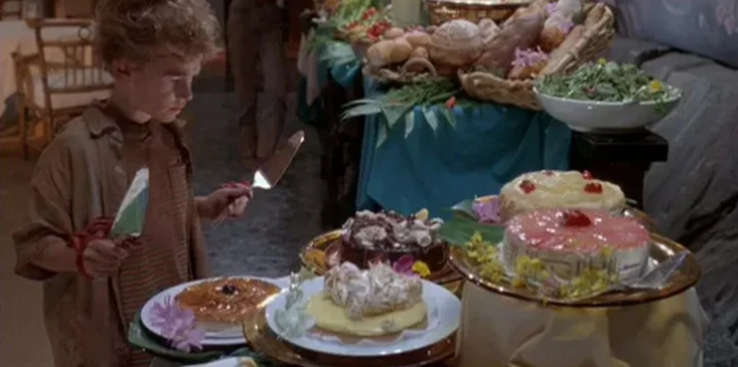
WHERE DID THE HUGE BUFFET COME FROM?

When Tim and Lex finally make it to the Visitor's Center again, they stumble across a HUGE spread in the dining room. We're talking table after banquet table of cakes, pies, jello molds, and everything other kind of food a kid could dream of stuffing into their face holes.

Where did all this food come from? Did Hammond intend to impress his six renowned guests with it? When was it prepared? Everyone's been gone for at least a day, and the majority of the Isla Nublar personnel have been evacuated. Also, were all the chefs Southern grannies? There are a LOT of jello desserts.

WHY DID NO ONE KNOW SOME FROGS COULD CHANGE THEIR SEX?

Dr. Grant, Lex, and Tim stumble upon a recently hatched nest of raptor eggs. Grant was told all the dinosaurs in Jurassic Park are female, and yet they've been able to procreate. This means that some of them can change their sex, allowing life to "find a way".

Why is Dr. Grant the first person to make the connection between the amphibian DNA in the West African tree frog attributing to this sudden discovery, and not the geneticists who engineered the dinosaurs? Was the possibility never brought up?

WHAT HAPPENED BETWEEN DR. SATTLER AND DR. GRANT?

In the film, Dr. Grant and Dr. Sattler are something of an item, despite no shared romantic moments between them. Ellie seems to want children, but Dr. Grant is highly against the idea. He goes from being repulsed by children to being more tolerable of them as the film goes on.

It seems with Grant warming up to the idea of fatherhood they would go on to start a family of paleontologists, but in Jurassic Park IIIher cameo reveals she's married to someone else. What happened? Did his work take precedence over a family in the end?

DID DOCTOR GRANT STILL GET THE GRANT MONEY?

When John Hammond first appears, it's at the dig site that Dr. Grant and Dr. Sattler are heading up. Hammond offers them the deal of a lifetime; if they'll fly to Isla Nublar and give their honest opinion of Jurassic Park, he'll fully fund their current dig site for another three years.

Hammond's thought is that Dr. Grant and Dr. Sattler will side with him, and declare the park ready for visitors. After the tragic events of the film, they decide not to endorse the park. Does Grant still get his dig funded? Was it on the proviso he'd sign an NDA?

WHAT HAPPENED TO ALL THE DINOSAURS ON ISLA NUBLAR?

We know from watching The Lost World that the T-Rex was transported to Isla Sorna, and we know that the same T-Rex has featured in not just the first two films, but Jurassic World and Jurassic World: Fallen Kingdom. What we don't know is what happened to all the rest of the dinosaurs on Isla Nublar.

In the book, the island is saturation bombed with a toxin to wipe out all but the most desirable species. In Jurassic Park III, which takes place on the original island, it's populated by plenty of dinosaurs. Are any of them the original ones? Or are they all simply genetically altered?

Source: https://screenrant.com

Why The Original Jurassic Park's Dinosaurs Still Look Better Than The Ones In The Sequels

Thursday, August 22, 2019

Screenshot: Jurassic Park (YouTube)

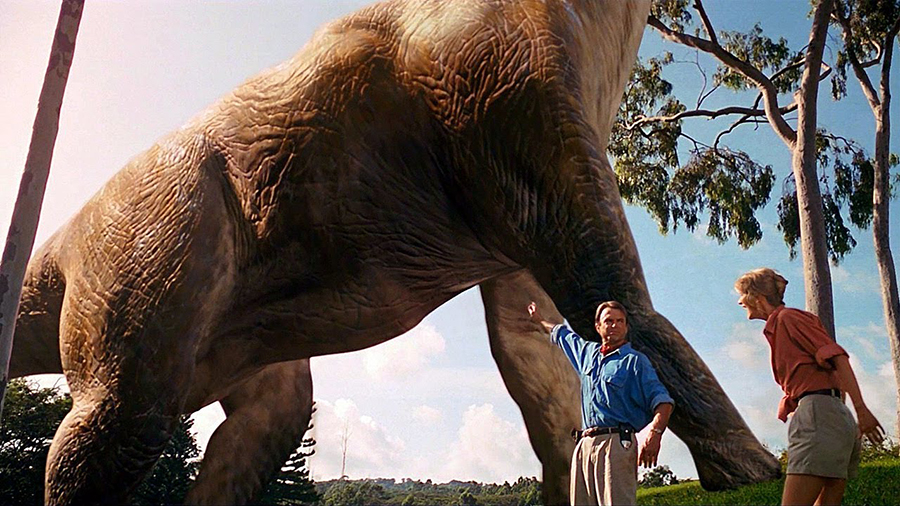
Jurassic Park is one of the most important movies in modern history, which is why it’s been a bummer to see how its sequels have paled in comparison. The original’s power is explored in a new video essay from Films&Stuff, which chronicles the way director Steven Spielberg used scale and framing to make his prehistoric monsters so magnificent, and how the modern Jurassic World films just haven’t been able to do the same.

As the above video points out, the original is “a master class in blocking and cinematography,” with each frame asking “what does the shot say and how does it make you feel?” Spielberg’s unique sense of scale extends beyond the dinosaurs, too—from the helicopter rides to the “Jurassic Park” sign to the waterfall, this land is just bigger than the one in the sequels. The humans are in the dinosaurs’ territory, not the other way around.

Source: https://news.avclub.com

Pages