Blogs

Jurassic World: Fallen Kingdom's Most Brutal Reviews

Monday, June 25, 2018

The Jurassic World: Fallen Kingdom reviews are out now, and it isn't looking good for Universal Pictures' latest foray into the dinosaur-themed franchise. Directed by A Monster Calls helmer J.A. Bayona and based on a script by original Jurassic World writer-director Colin Trevorrow, Fallen Kingdom sees the return of Chris Pratt's Owen Grady and Bryce Dallas Howard's Claire Dearing, while also bringing back original franchise stars B.D. Wong and Jeff Goldblum, who reprise their roles as Dr. Henry Wu and Dr. Ian Malcolm, respectively.

The 2018 sequel takes place three years after the events of 2015's Jurassic World and sees Claire's Dinosaur Protection Group attempt to rescue the dinosaurs off Isla Nublar, along with the help of Owen and other mercenaries, before a volcano erupts and wipes out the species. Of course, things don't go according to plan and that's when the movie takes a turn. From the start, fans were hoping for a more horror-focused installment in the vein of Steven Spielberg's original film, and while it seems there are elements of that in Jurassic World: Fallen Kingdom, the sequel isn't the critical hit that the filmmakers and the studio were hoping it would be. Part of that is because critics feel that there are essentially two different movies (with two different genres) wrapped up in one.

At the moment, Jurassic World: Fallen Kingdom sports a mediocre 54 percent on Rotten Tomatoes, which makes it slightly better than Jurassic Park III (50%) and The Lost World: Jurassic Park (53%) but worse than Jurassic World (71%) and Jurassic Park (92%). Sure, it's not an outright critical failure, and there are plenty of critics who thoroughly enjoyed Fallen Kingdom, but that doesn't disregard the fact that there are also a few film critics who've openly berated the sequel online. Here are some of the most brutal reviews for Jurassic World: Fallen Kingdom:

In his very brief appearance in Jurassic World: Fallen Kingdom, Jeff Goldblum’s Ian Malcolm argues that mankind is on the verge of bringing about its own extinction through the reckless use of genetic engineering. Deliberately or not, the film appropriates a similarly jaundiced view of humanity. I don't know if I've ever seen a character in any movie do something as dumb as several of the things the characters in this movie do — and I wrote a whole piece ranking the dumb characters in the first Jurassic World. - Screen Crush

The major problem with “Jurassic World: Fallen Kingdom” — the fifth installment in this dinosaur series, and the second of a prospective trilogy — is that the makers treat the action and suspense sequences in the way most of us go to the dentist. - The Wrap

I was one of the few naysayers when the franchise was rebooted with “Jurassic World,” yet even with the bar set lower for expectations on this one, I found it “Transformers” boring, a summer movie that however much it earns, fails to justify its existence. At least there’s Goldblum’s Dr. Malcolm there to speak for those of us who think these movies smell to high heavens. “When…will we learn? When?” - Rogers Movie Nation

The new Jurassic World is a messy menagerie of dino-related quirks and twists, a boisterous but muddled franchise-iteration which reshuffles all the old constituent plot points. But, infuriatingly, we don’t get much of that legendary Jurassic hero and style-guru of the moment – Jeff Goldblum. ...There are some reasonably entertaining scenes and set pieces, but the whole concept feels tired and contrived, and crucially the dinosaurs themselves are starting to look samey, without inspiring much of the awe or terror they used to. It could be that a meteor of tedium is heading towards these CGI creatures, despatching them to extinction. - Guardian (UK)

The appeal of dinosaurs is their enormity, which the “Jurassic Park” film franchise understands. Watching these prehistoric beasts crush cars underfoot like Coke cans has been a summertime thrill since Steven Spielberg’s first installment in 1993. But by the fifth entry into the franchise, they can’t get any bigger. The 2015 revival “Jurassic World” already achieved that goal, by introducing the fictional cross-species hybrid Indominus rex. Instead, “Jurassic World: Fallen Kingdom” finds another way to grow: by making its plot much, much bulkier. In doing so, it commits the worst possible sin: It makes dinosaurs boring. - The Washington Post

I’ve never thought more about Darwin’s “Survival of the Fittest” theory than I have during director J.A. Bayona’s Jurassic World: Fallen Kingom. We’ve always had to swallow numerous failings and foibles of this franchise’s ‘heroes,’ but the new film pushes audience tolerance over the edge.  This sequel to the widely (and unfairly) maligned Jurassic World takes what goodwill we had, douses it in kerosene, lights a match, and laughs as the flames burn higher and higher. It gets off on the wrong foot and limps all the way to the finish line. - Fresh Fiction

A once-dormant entity is resurrected and vulgarly mutated to fit the irresponsible demands of an entire population in the name of capitalist greed–this is not only the core narrative throughline of the newly-resuscitated Jurassic Park franchise, but also the primary goal of the executives at Universal Pictures. In Fallen Kingdom, we literally see dollar signs light up across the eyes of a megalomaniacal business tycoon (i.e. Universal) as his new technologically advanced breed of dinosaurs (i.e. this new iteration of the franchise) sell for millions to thrill-seeking bidders (i.e. the audience). One would think these parallels are obvious enough to be intentional, yet the new batch of Jurassic films seem to be completely bereft of a much-needed sense of self-awareness. - The Film Stage

We all know that dinosaurs are extinct. Too bad we can’t say the same for the new “Jurassic World” movie franchise. The original “Jurassic Park” was a technological marvel. The “Jurassic World” reboot of the series was a thrill ride that poked fun at corporate greed and the misplaced mindset that bigger is better. Now we have “Jurassic World: Fallen Kingdom,” which, as it turns out, is a very bad animal-rights, save-the-dinosaur allegory. - Reel Bob

Bottom line: there are some critics who like Jurassic World: Fallen Kingdom and some that don't, and then there are the aforementioned critics who outright detest the new installment, regardless of its occasional redeemable scenes. To them, the sequel represents yet another misstep for the franchise, which won't conclude its burgeoning story arc until Colin Trevorrow's Jurassic World 3 hits theaters in 2021. With the original writer-director returning for the third installment, it's clear that the threequel won't be taking the franchise in a new direction.

Given that Jurassic World: Fallen Kingdom is already a hit overseas, it stands to reason that the sequel will perform just as well domestically, though it's unclear if it will be as successful as the first Jurassic World was (which set all kinds of box office records when it hit theaters), considering that that movie was the first Jurassic movie to release in 14 years (at the time). Of course, only time will tell on that front, but it certainly seems that not everyone is on board with the new sequel.

Source: https://screenrant.com
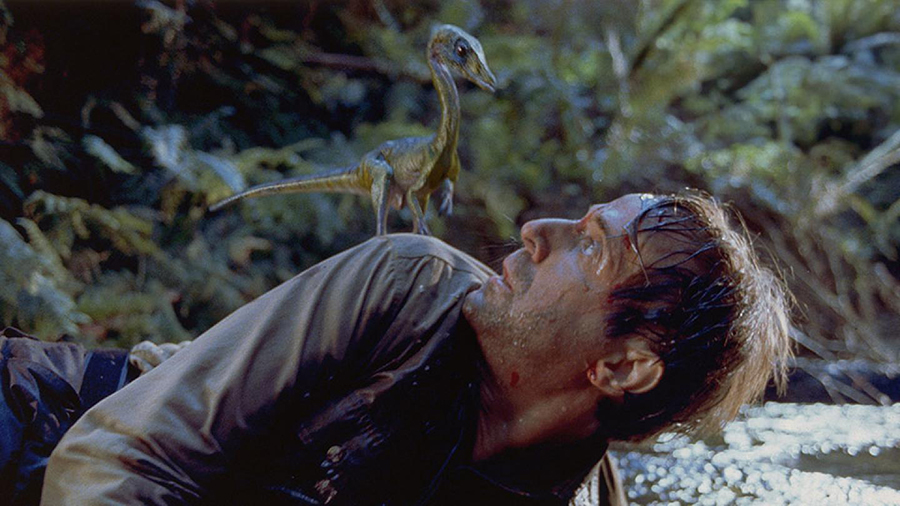
Explore the 'Lost World' of Jurassic Park on a Hike Through Fern Canyon

Tuesday, September 3, 2019

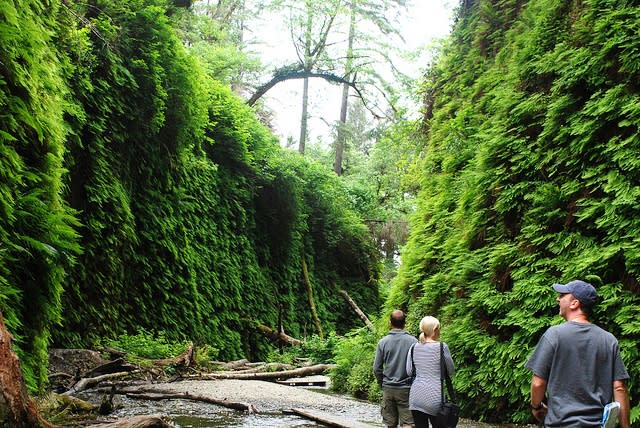
Jurassic Park 2 was filmed at one of California's only rainforests. Hike Fern Canyon, in Humboldt County, to recreate some of these iconic scenes.

At Redwood National and State Park, you will feel like you are in a movie. 

Maybe that's because Steven Spielberg filmed parts of his popular blockbuster, "The Lost World: Jurassic Park" at Fern Canyon years ago.

One reason Spielberg was probably inspired to shoot at the Redwood National and State park was because it is one of California's only rainforests, thanks to the North Coast's moist and mild climate.

But before there was Jurassic Park, Humboldt County was also known for it's reputation as the "Avenue of the Giants." That's in large part because the tallest living organism in the world grows here. The 300 foot tall trees dominate the sky at Redwood National and State Park.

"It's a very special thing to look up at an ancient sequoia, interpreting it and pondering it," Justin Legge, an educational tour guide with Redwood Adventures, said.

But on the forest floor, the fern is king.

"Protected from the sun, tones of moisture, tones of nutrients, people can't walk on them. I could think of no better place," Legge said.

Fern Canyon is a natural wonder found nowhere else in the world.  

"Biologically speaking these ferns go back hundreds of thousands of years," Legge said.

Fern Canyon in Prairie Creek Redwoods SP

At least a dozen different fern species cling to the wall of the canyon, feeding off the decaying matter from the forest to create a one-of-a-kind vertical wetland.

With its breathtaking scenery, you can't help but wonder how it was made.

"Geology! The coastal plate of California jutted under and shoved up the ocean plate," Legge explained.

The unique geology not only attracted ferns, but also people. First came gold miners in the 1800's, then in late 1990's, it attracted Steven Spielberg.

Thankfully you won't find dinosaurs in Fern Canyon, but it is not uncommon to come across Roosevelt elk or the lonely banana slug enjoying the waters of Home Creek.

"Redwood National and State park and places like Fern Canyon force us to remember that us humans are just a part of the universe," Legge said.

Fern Canyon is a picturesque place, it’s also a protected place worth visiting and sharing with others. But as Legge notes, the Instagram pictures just don't do it justice.

Source: www.abc10.com

Mass Extinction 2 Billion Years Ago Reportedly Killed 99% of Life on Earth

Wednesday, September 4, 2019

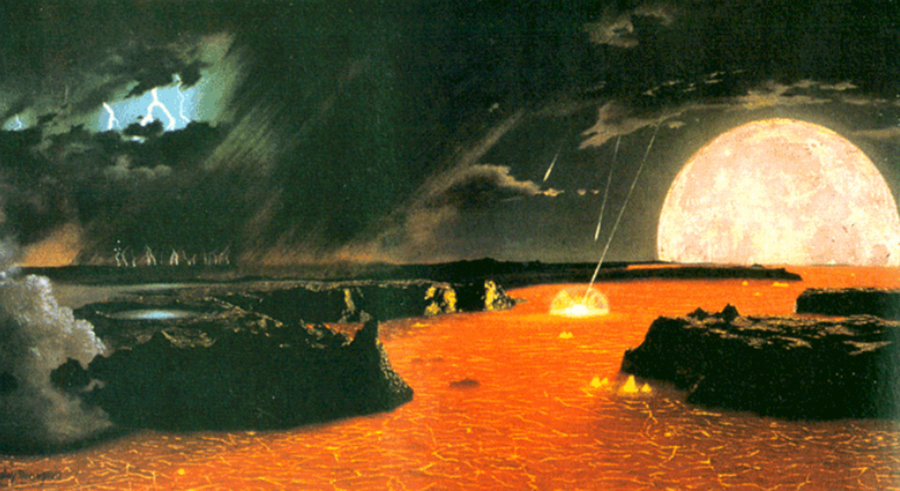
Artist rendering of Earth two billion years ago (Credit: Chesley K. Bonestell)

It may have been bigger than the event that wiped out the dinosaurs.

A mineral found in Canada is taking centre stage in the science world. Thanks to the Canadian subarctic, researchers have been able to figure out just how much life on Earth was killed during a massive extinction that took place over 2 billion years ago. The findings wouldn't have been possible without Canada. 

A new study found that extreme changes in the atmosphere were responsible for almost 100 percent of life on Earth being killed more than 2 billion years ago. 

A sample of the mineral barite that is more than 2 billion years old from the subarctic of Belcher Islands in Hudson's Bay was used in the study. According to reasearchers, the barite locks in the chemical signatures which makes it easier for them to figure out what  the atmosphere was like when it was formed.

The mass extinction that the researchers looked at in their study was huge. 

"Even our most conservative estimates would exceed estimates for the amount of life that died off during the extinction of the dinosaurs approximately 65 million years ago," co-lead author of the study Malcolm Hodgskiss told CNN.

Micro-organisms living on Earth billions of years ago used up all of the nutrients needed to create oxygen and that made Earth's atmosphere unbalanced.

Because of this change in the atmosphere, a bunch of life on Earth was wiped out. The research shows that up to 99.5 percent of organisms on the planet were killed.

The drop off of life during what is called the Great Oxidation Event was known but there was never any certainty as to just how drastic that drop off was until now.

The mineral found in Canada played a huge role in figuring out that almost all of life was wiped off the planet. 

Researchers used the chemical measurements found in the barite and how much oxygen and carbon dioxide might have been in the atmosphere at that time based on past research to figure out how much life there was.

While this was all 2 billion years ago, Hodgskiss also told CNN that the findings are still relevant to our planet because Earth is still vulnerable to changes in the atmosphere. 

Source: www.narcity.com

More Than 30 Interesting Facts About Jurassic Park

Monday, September 2, 2019

Who doesn’t love dinosaurs and movies with dinosaurs? We certainly do and we have collected a few interesting facts about the Jurassic Park franchise.

Rumours of a fourth Jurassic Park film had been circulating since the release of Jurassic Park III back in 2001. Ideas from the film varied according to reports, including ideas that the film would involve a third island where InGen had been engineering aquatic dinosaurs or the prospect of human/dinosaur hybrids.

Apparently Keira Knightly was approached for one role, and both Richard Attenborough and Laura Dern were contacted about reprising their roles from previous films.

After going through a number of scripts and rewrites, Jurassic World was finally revealed as the fourth Jurassic Park film in 2015.

Most people will know John Hammond as the friendly Father Christmassy-type man played by the eldest, now sadly deceased Attenborough brother. In the original book Hammond is a completely different character: he is an arrogant man, and only interested in opening Jurassic Park to make a profit, something that in the film Hammond frowned upon. He was prone to mood swings, and often seemed to care more about the safety of the dinosaurs than the people in his employ.

Think of Peter Ludlow (the villain of The Lost World: Jurassic Park played by Arliss Howard), and that’s the kind of person book Hammond is. Hammond also dies at the end of the first book, and one discarded Jurassic Park ending saw him marooned on the island while the other visitors escaped in helicopters. Speaking of which…

In the first Jurassic Park film, most of the nice characters made it out in tact. In the book they were not so lucky. In addition to the loss of John Hammond, Michael Crichton also chose to kill off Dr Henry Wu and Ian Malcolm.

The death of Malcolm (who was eventually played by Jeff Goldblum) would eventually be retconned after support from fans and Stephen Spielberg convinced Crichton to write a sequel novel. Oddly Robert Muldoon, the man in charge of the velociraptors, was not killed in the book. Clearly the girl wasn’t clever enough in the original source material.

A lot of bad things happened in Jurassic Park, and while it’s obvious that every single problem was caused by the lumbering Dennis Nedry, the internet has other ideas. Some intrepid fans watched through the credits and found the film’s ‘dinosaur supervisor’ Phil Tippett. In reality Tippett is a director and visual effects supervisor who specialises in creature creation. Still that hasn’t stopped the world from criticising him for not keeping the dinosaurs in check.

Tippett was not involved in The Lost World or Jurassic Park III, but he did do some work on Jurassic World.

The first Jurassic Park film was released way back in 1993, back in the days before George Lucas realised he could film almost an entire trilogy in front of a giant green sheet in a warehouse in the middle of nowhere. Realistic CGI animals had never been done before, and Jurassic Park proved to be a landmark film by doing it for the very first time.

The funny thing is it almost never happened. Spielberg apparently wanted the film to have practical effects, and wanted to use stop-motion combined with CG motion blur. What changed his mind was ILM animator Steve ‘Spaz’ Williams animating a T-Rex in secret. As soon as execs saw the work they were sold on the idea of CGI dinos.

The CG may have been impressive and groundbreaking work, but that didn’t mean the film only relied on digital dinos. People working on the picture later commented that the film probably had about 15 solid minutes of dino action, but only six of those were accomplished with CGI. The rest? That was done with costumes and impressive animatronics.

A good example is the film’s velociraptors, which were created using a combination of man-in-suit technology and animatronics before being enhanced with CGI. There was also a full-size animatronic T-Rex that would frequently scare the bejesus out of members of the crew.

Later on the Spinosaurus in Jurassic Park III would, at the time, become the largest animatronic ever created, weighing a colossal 12 tonnes.

After the success of Jurassic Park director Joe Johnston approached Steven Spielberg to express his interest in directing the film’s sequel The Lost World. While Spielberg’s original idea has been to produce the sequel, he instead chose to direct it himself. Johnston was then given Spielberg’s permission to direct a third Jurassic Park film, if it ever got greenlit. In the end there was, and it wasn’t very good.

The controversy about the makers of Jurassic World disregarding paleontological evidence in the film isn’t the first time the franchise has strayed away from the realms of science fact and into the world of science fiction.

For one thing, most of the dinosaurs in the first film and book aren’t even from the Jurassic period of history, a fact which Michael Crichton explained away as coming up with the most interesting title. Would Cretaceous Park have sounded as cool? Maybe not. And remember the venom spitting Dilophosaurus? That ability was completely made up by Michael Crichton for dramatic effect. It didn’t have a frilled neck either.

Oh, and the velociraptors? They are completely different from the real thing, leading us nicely on to…

Remember that annoying kid at the start of the first movie? The one who claims the velociraptor is basically an overgrown turkey? He’s not that far from the truth. In reality velociraptors were a lot smaller than depicted on screen, and had feathered skin. However, during production palaeontologists discovered a new type of dinosaur dubbed ‘Utahraptors’ which were incredibly similar to the ones present in the Jurassic Park series

The discovery led to effects creator Stan Wilson to joke that “We [the designers] made it, then they discovered it”.

The filming schedule on Jurassic Park was incredibly tight, and Spielberg had to be finished on time so that he could go off and film Schindler’s List. This didn’t leave him with any time to deal with the post-production, so he handed the reigns to his good friend, and owner of ILM, George Lucas.

George Lucas apparently felt that he’d never be able to make the Star Wars prequels because the technology wasn’t up to scratch, but Jurassic Park convinced him that it would be possible to put places like Coruscant on the big screen using digital effects. Then he came up with Jar Jar.

On a more positive note, it also provided Peter Jackson with some of the inspiration to film Lord of the Rings.

Obviously there was a problem when creating the dinosaur cries for the movies, since we don’t have any real world examples to work with. Instead the crew in charge of the sound opted to experiment with combinations of animal cries to get the desired effect, which is a popular technique in the world of film. The oddest one, though? The raptor cries started off as the noises made by turtles during sex. There are a few other animals thrown into the mix, but still some of the sound engineers actually listened to examples of copulating turtles to try and make that iconic squawk.

The T-Rex’s titanic growl was apparently based on that of a baby elephant, and included examples of cries from lions, tigers, alligators, and according to some sources, penguins.

Jurassic Park features an awful lot of screaming from the two child actors involved, but did you know that screaming was actually part of the audition for the character of Lex? The girls who auditioned for the role were asked to record their screams, to gauge their suitability for the part. Ariana Richards claims that part of the reason she won the role because her scream caused Kate Capshaw, Steven Spielberg’s wife, to wake up and rush off to see if her children were alright.

Before Jurassic Park was even released, Universal Studios was hard at work developing a ride for its park in Hollywood. Considering Jurassic Park had to bring convincing dinosaurs to life on screen, and built a full-size animatronic T-Rex, it surprisingly cost an awful lot less to produce and release than the ride. The final budget for Jurassic Park was $63 million. The total cost of developing Jurassic Park: The Ride was around $110 million.

Chris Pratt seems to be in everything these days, and if you look at the world of Lego it might seem that way, too. In the past two years he’s been immortalised in minifig form a grand total of three times: As Emmet in The Lego Movie, as Peter Quill/Star Lord in Guardians of the Galaxy, and, of course, as Raptor trainer Owen Grady in Jurassic World.

Those cool-looking gyrosphere ‘rides’ in the Jurassic World trailers? Those were actually Steven Spielberg’s idea. He may not be the film’s director, but that producer credit does have a few advantages.

The point of the gyrospheres is to allow park guests to be in close proximity with the dinosaurs without immediate danger. Sounds like a much better idea than the cars on the track in the first Jurassic Park resort, even if it looks like the spheres don’t hold out too well against the Indominus Rex.

Even people who haven’t seen Jurassic Park surely know about the rippling water scene when the T-Rex first shows up. But did you know how Spielberg came up with the idea? He was inspired after noticing the bass from an Earth, Wind & Fire track was making his car’s rear-view mirror shake.

The crew initially struggled to make the rippling consistent, but they found a very elegant solution to the problem. It turns out that playing a specific note on a guitar and placing the glass over the strings produced the desired concentric circles. So be safe in the knowledge that while they filmed that harrowing scene there was a guy underneath everything strumming away on.

One of the biggest plot holes in The Lost World is how the T-Rex managed to kill the crew of the S.S. Venture. Wasn’t it trapped inside the cargo hold? It’s simple, the T-Rex didn’t kill them: Raptors did. A scene cut from the film shows a single velociraptor escaping from the ship as it hits the mainland, so it makes sense that one (or more) of them stowed away and wiped out the crew. Obviously removing that scene means it doesn’t make any sense.

Incidentally this is similar to the character Anne B from the first book, where the protagonists realised raptors have stowed away on the ship and have to contact it before it reaches the mainland. The difference there is that the raptors didn’t kill the crew in the book, the crew found and killed the raptors.

Remember how brilliant the ending to Jurassic Park was? It wasn’t always going to finish up that way, and the return of the T-Rex was only possible thanks to ILM’s work creating the digital dinos. Originally the finale was supposed to be much closer to the book, and involved Sam Neil’s Alan Grant character dispatching the velociraptors by shooting one and crushing the other with a mechanised T-Rex skeleton. Spielberg wasn’t entirely happy about that, and went away to revise the ending. Good thing he did, really — that’s a killer final dino shot.

And while we’re talking about alternate endings, The Lost World was set to end very differently too, with the whole “T-Rex in town” a late addition, replacing a finale that would have seen flying pteranadons attacking our heroes’ escape choppers. They’d instead be relegated to an epilogue cameo, before getting their moment to shine in the thrilling “bird cage” scene in Jurassic Park III.

Source: https://itzagoal365.com

10 Things That Make No Sense About Jurassic World: Fallen Kingdom

Monday, September 2, 2019

When it comes to disappointing franchises, Jurassic Park certainly has a claim to fame. While there are fans of The Lost World, and the first Jurassic World was a box office behemoth, no sequel or continuation has since captured the magic of the original dino adventure.

When it comes to the worst of the worst, Jurassic World: Fallen Kingdom might be it. Filled with plot holes for days, cheesy dialogue, and a lack of commitment to the narrative goals, the most recent sequel might be the one to push the franchise to extinction. There are many aspects of the film that make absolutely no sense, these ten being the biggest.

10 THE INDORAPTOR'S LOVE OF LASERS

One of the most mind-boggling things about Fallen Kingdom comes down to its evil dino: The Indoraptor. This ferocious beast, like the Indominus Rex before it, is a frightening amalgamation of the worst dinosaurs out there. Its ability to kill is unmatched, and it is an abomination of genetic engineering.

It's no wonder that armies around the world would want to use it. The only problem? It only kills specific targets when you have someone pointing a laser pointer at it.

THE PERFECTLY PRESERVED INDOMINUS REX

Another plot hole is the fate of the Indominus Rex. In Jurassic World, the animal was eaten alive by the Mosasaurus, the giant beast living in the lagoon. The creature consumes it, tearing the dinosaur apart. Now normal when giant monsters eat other giant monsters, they don't come out as a perfectly arranged skeleton.

Well, apparently Jurassic World: Fallen Kingdom didn't realize this. When the team is exploring the lagoon looking for DNA Samples, they find the perfectly arranged and preserved Indominus Rex skeleton at the bottom. Now, we're not biologists here at Screen Rant, but it's probably safe to assume that those bones would not be arranged perfectly.

THE LOCATION OF THE LAGOON

While Jurassic World isn't perfect, it had some excellent set-pieces. One of the best was the Mosasaurus lagoon. It harkens back to an idealized water park but with a hint of Jaws. The inclusion of the Mosasaurus was one of the best decisions both films had, as it is a terrifying monster to watch.

But, if only they remembered where they put it. One of the biggest goofs of Fallen Kingdom was how the Lagoon completely changed locations. in the first film, the pool was located somewhere near the center of the park. By the time of the second, the pool has moved far closer to the entrance, not to mention it gives access to the ocean. It's an obvious oversight.

THAT'S NOT HOW VOLCANOES WORK

One of the defining moments of Jurassic World: Fallen Kingdom centers around the eruption of a long-dormant volcano on Isla Nubar. This peak, Mt. Sibo, exudes both molten hot magma and plumes of ash. It covers the island, consuming all of the prehistoric inhabitants.

For all its fantastical elements, Jurassic Park has almost always attempted to keep its science semi-believable. but when it comes to this volcano, they got it all wrong. Volcanoes can not erupt both in a pyroclastic way, with gigantic plumes of smoke and ash as well as just exuding hot magma. They can only do one or the other.

BAD AUCTIONING LAYOUT

This point is just a remark on the lack of thinking that went into some of the set design. After the explosion on the island, the gang follows the stolen dinosaurs to the home of Lockwood, where they are set to go to auction around the world. The auction room is arranged like a runway, with audience members on either side to observe the caged beasts and the auctioneer at the head of the room.

The animals were housed in giant cages that completely block the view of one side of the audience for the auctioneer. It makes no sense for an auction to be arranged like this because the auctioneer needs to see when someone is interested in making an offer.

DOUBLE LOCKING DOORS

There are tons of continuity errors in movies. When it comes to massive blockbusters, the inevitability of running into them increases tenfold. Jurassic World: Fallen Kingdom had its fair share of these issues. Going back to the explosion scene, Claire and Franklin are escaping in one of the Gyrospheres from the first film.

When they are flying down the hill, the doors lock in place, trapping them inside while they plummet. After the pair splash into the water off the cliff, the camera once again shows the doors locking on their own. It is one thing to have a small error like this, it is another though to show it so deliberately with the camera twice.

WHERE HAS LOCKWOOD BEEN?

The presence of Lockwood as a character is just annoying. Playing him off as a long term partner of Hammond while never showing him once in previous films makes no amount of sense. If the pair had been close friends and he had been essential in assisting Hammond in the tech, one would think he would be around or at least mentioned in a throwaway line. But no, Lockwood is never alluded to once in a previous film. It would have made perfect sense to have just made him a massive fan of Hammond's work, completing his own experiments with cloning and such.

MAISIE IS SMART, EXCEPT WHEN SHE'S NOT

Maisie is a mind-numbing character. For a franchise that had two of the best child performances in its first film, it has never delivered since. Maisie, the cloned granddaughter of Lockwood, is shown to be a brilliant young mind, acting ingeniously throughout the film.

Yet she continues to make big stupid decisions that put herself in danger, not to mention countless others. When she is chased by the Indoraptor, she decided to hide under her covers in plain view of the monster is all she could do. Later, she releases the dying dinosaurs upon the world, without a thought of the immediate casualties from this action.

LETHAL TRANQUILIZERS?

The tranquilizers in this film don't make an ounce of sense. Once again, the science behind this franchise is being completely left in the dust. It is mentioned constantly that the tranquilizers used on humans contain carfentanil.

This chemical is incredibly lethal to humans, even in small amounts. Yet in this film, there is only a minor sedative effect on its victims. Multiple characters come back later on after being shot with darts of the stuff. Why mention the specific chemical if its not even right? It is just one more instance of these movies forgetting their past, and refusing to put the hard work in to know what they're talking about.

WHY J.A. BAYONA WAS WASTED

Ok, this might not be a plot hole, continuity error, editing cut, or another nonsensical issue, but it is just as frustrating. Why on earth did Universal bring on a director such as J.A. Bayona for this film if they were barely going to utilize him? Bayona's vision as a filmmaker was certainly present at times, giving audiences some excellent visuals.

But his storytelling ability, so apparent in his previous works, was completely gone. In its place was a buffoonish film that offered nothing new or exciting to the franchise. Looking beyond the signature nightmare vision which appears in a shot now and again, this film criminally underutilized the abilities of its director.

Source: https://screenrant.com

Meet T-Rex Clock, Inspired by the Black Hole, Starship, and Dinosaurs

Tuesday, September 3, 2019

Meet T-Rex Clock, inspired by black hole, starship and dinosaurs

For the past five years, the independent watch brand MB&F and Swiss clockmaker L’Épée 1839 have built a reputation on enormous and complex creations. And this year, the duo has once again teamed up to bring us yet another crazy creation.

In their 11th collaboration, they have come up with the T-Rex, a desk clock set on metal legs modeled from the bones of an actual Tyrannosaurus Rex. Max Busser, founder of MB&F and the creative mind behind the T-Rex, worked with Maximilian Maertens of L’Epee to create the moving legs of the magnificent T-Rex.


The T-Rex clock stands about a foot tall (26.5 cm) and is crafted out of 201 parts made of stainless steel, palladium-plated brass, and bronze, steel and blown glass components.

The legs of the clock are designed using the 3D scans of fossilized dinosaur skeletons

The legs of the clock are designed using the 3D scans of fossilized dinosaur skeletons that emulate the real thing. The T-Rex legs are both polished and sandblasted to provide a lightweight interaction on the surface in such a way to make the legs look agile and ready for running.

A Murano glass dial is suspended in a transparent sapphire sphere between the dinosaur’s legs. Two slim steel hands arch outwards from the center of the dial, indicating the hours and minutes. Behind the dial is a 138-component made by L’Épée 1839, that power the watch movements movement with a frequency of 2.5 Hz (18,000 vibrations per hour) and a power reserve of eight days.

Behind the dial is a 138-component movement by L’Épée 1839

Additionally, the time setting can be done using the key from the center of the dial. The finished watch weighs around 2 kg including the legs.

While explaining the story behind this masterpiece Maximilian Maertens said, “The story takes off from ideas given to me by past projects of MB&F, that we have a pilot in his starship discovering new planets. Eventually, he got so far out in space that the only way back to Earth was via a black hole, but it time-warped him back to the time of dinosaurs and the starship was fused with a hatching dinosaur egg.

The T-Rex clock in blue dial

You see the remnants of the starship in the body of the clock and the movement, the dinosaur appears via the legs, and even the black hole remains part of the design, via the dial that sinks inwards towards the center where time originates.

The T-Rex clock is made in three limited editions of 100 units, each with Murano glass dials in green, blue, or red. Its retail price is approximately CHF22,500 (US$22,700). For more details visit the company website.

DISCLAIMER: We don't get any fees from sales of this product.

Source: www.inceptivemind.com

Edmonton Man Finds Dinosaur Fossil in River Valley While Fishing

Monday, September 2, 2019

A hadrosaur fossil, more than a foot-long, was found by an Edmonton man along the North Saskatchewan River near Edmonton last month. (Myles Curry)

Discovery led to a fossil finding tour with Royal Tyrrell Museum staff.

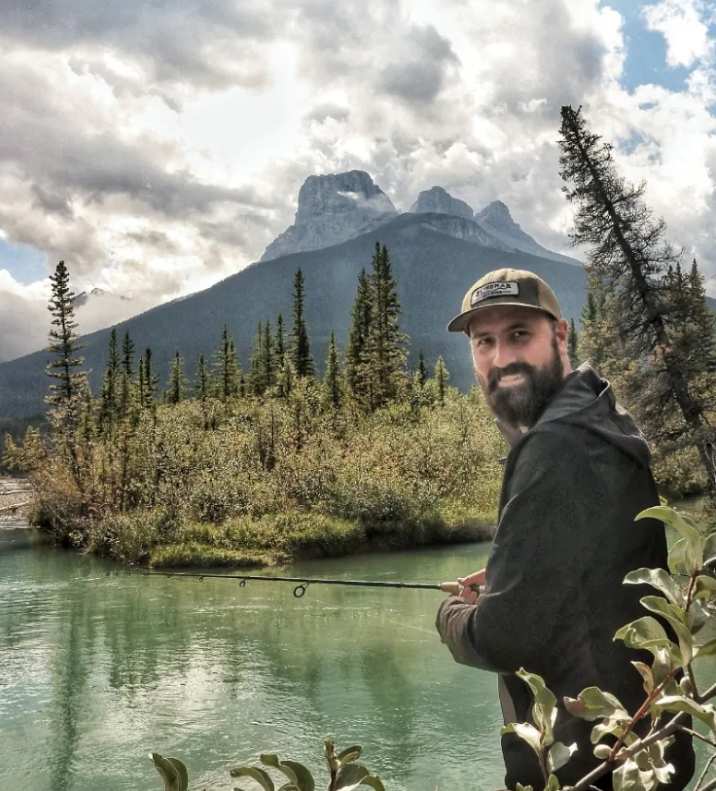
Myles Curry went into the river valley to catch fish and he came out with a foot-long dinosaur bone.

Curry was hiking out of a secluded fishing spot along the North Saskatchewan River upstream from Devon, southwest of Edmonton, on Aug. 17. 

As he clambered over a pair of large rocks, he looked down and saw an unusual object with a curved shape fully uncovered on the ground. 

"I just had this voice in my head and I was like, you should go back and check that out," he said. 

Curry figured it was a petrified wood branch, a notably large piece to add to his collection. He picked up what looked like two smaller chunks of the branch, rinsed them off in the river and tucked them into his pack. 

"It was a good find, but it didn't seem like anything totally remarkable," he said. "It just wasn't even in my frame of reference of potentially being a dinosaur." 

Curry invited his neighbour, a fellow nature enthusiast, to take a look when he got back to Edmonton. But his neighbour quickly recognized the shape and texture as a likely dinosaur bone.

"I really wanted to believe them. It still just seemed like such an outrageous thing," he said.

Curry's neighbour recognized the signs of bone marrow on the edges of the fossil. (Myles Curry/CBC)

Curry sent out an email to several Alberta museums with a description and pictures, hoping to verify his neighbour's theory. 

Less than a day later, the curator of dinosaurs at the Royal Tyrrell Museum in Drumheller responded and confirmed it was a bone. It looked like a hadrosaur, he wrote, a duck-billed dinosaur that roamed throughout western North America millions of years ago. 

Curry has a reputation among friends and family for making unexpected nature finds, he said, but nothing as unexpected as a dinosaur fossil. 

"It's unreal. It goes to show that anything can really show up," he said. 

Private museum expedition

But the best part is, Curry says, the museum asked him to escort two staff back to the spot to look for more fossils. 

When he returned on Friday with the crew, mud from the eroding cliffs on the river's edge covered the ground. If he hadn't decided to pick up the fossil the first time around, Curry figures it would have been lost in the next rainstorm. 

Not to toot my own horn here but I found a couple fossils myself. - Myles Curry

Curry and the museum staff spent several hours searching the area.  

"They were so great. They were indulging all my questions," he said. "Not to toot my own horn here but I found a couple fossils myself." 

Curry was awestruck by how quickly the museum staff could identify what they found, right down to the species and the part of the body. He says the museum staff suspect a river may have once met the North Saskatchewan at the site, leading to a build up of fossils. As heavy rain eroded the river banks, fossils like the one Curry found were being unearthed for the first time. 

It was surreal to have a paleontologist explain the history behind the fossils he was holding in his hands, Curry said.

Myles Curry hopes people will support initiatives to establish provincial parks in different parts of Alberta after hearing his story. (Myles Curry)

"It really just shows how lucky we are here in Alberta. Lots of places you don't have the ability to tell these cool stories about the geology around us and there were these amazing creatures walking around literally where we were tens of millions of years ago," he said. 

Social media buzz 

The museum doesn't have any immediate plans to return to the spot, Curry said, but staff asked him to look out for any dinosaur fossils on future fishing trips. He still has the fossils, and is filing a claim with the province to become the legal owner. 

Curry posted his story on Twitter, where it's racked up thousands of likes. Through the post, he connected with an elementary school teacher about bringing the fossils for a show-and-tell style presentation to the fourth graders. 

"I think it'd be a great way to educate people on the amazingness of our river valley," he said of the fossils.

"We have a lot of adventure and a lot of history out there, so if I can keep them and share that story, I'd love to, but if [the museum] needs them for something else, I'm happy to give them up." 

Curry, who spends much of his free-time fishing and hiking, said the fossil saga redoubled his support to establish protected provincial parks in the Woodbend-Big Island area and Bighorn country. 

"We need to protect it and make it more accessible," he said. 

Source: www.cbc.ca/

Fly fossils might challenge the idea of ancient trilobites’ crystal eyes

Saturday, August 31, 2019

Tiny, fossil crane flies found in Denmark have compound eyes (dark bulges in this specimen) with unusual lenses, renewing debate about how different extinct creatures — called trilobites — once saw the world.  RENÉ LYNG SYLVESTERSEN

Fossil lenses from the 54-million-year-old insects raise questions about other species’ sight.

Fossil crane flies found in Denmark have crystals in their eyes — individual, see-through mineral pieces where the living eyes’ lenses once were.

Those little crystals of calcium carbonate are renewing a fuss about more mysterious ancient animals, the trilobites. Fossils of those extinct, shield-shaped invertebrates also have crystalized mineral lenses in their eyes. There are no living trilobites, but since at least the 1970s, scientists have been imagining how crystal lenses might have worked for the creatures when they were alive (SN: 2/2/74). Now the crane fly researchers argue that crystal lenses, in crane flies as well as in trilobites, are just quirks of fossilization.

Living crane flies don’t have crystal lenses, the researchers note online August 15 in Nature. Neither do other known living insects or any of the bigger group of jointed-legs animals, the arthropods, says coauthor Johan Lindgren, a molecular paleontologist at Lund University of Sweden. These animals sometimes grow tinier calcite crystals in their eyes or in their rigid exoskeletons for strength, but not “one big crystal basically in each individual lens,” he says.

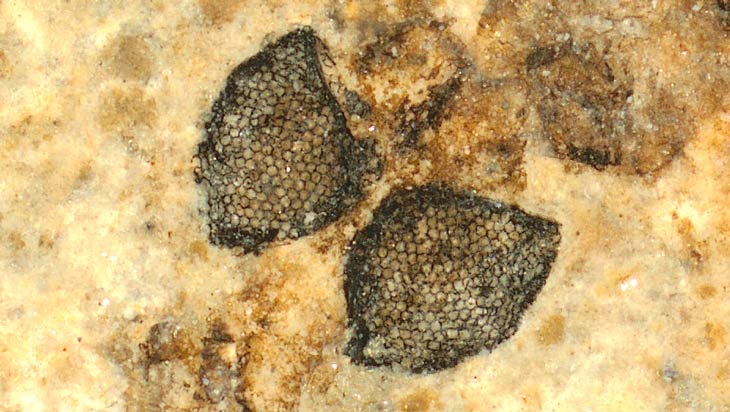
In these fossilized crane fly eyes, dark, lacy networks outline the many pale spots where individual lenses once lay in the living fly. JOHAN LINDGREN

In the new eye study, Lindgren and colleagues focus on beautifully preserved crane fly specimens of several ancient kinds. The fossils were found in 54-million-year-old sediments in what was once a waterway in today’s Danish peninsula of Jutland. Like modern crane flies, the fossil ones look a bit like mosquitoes, but with longer legs.

One surprise in studying the fossils was their eye-shade pigments. Several kinds of lab analyses identified signs of eumelanin, a form of melanin, in the flies “despite the fact that they’re not supposed to have it,” Lindgren says. Curious about living insects’ pigments, Lindgren and colleagues checked a modern species, the tiger crane fly. They found eumelanin there too, adding to the case that ancient relatives could have had it as well.

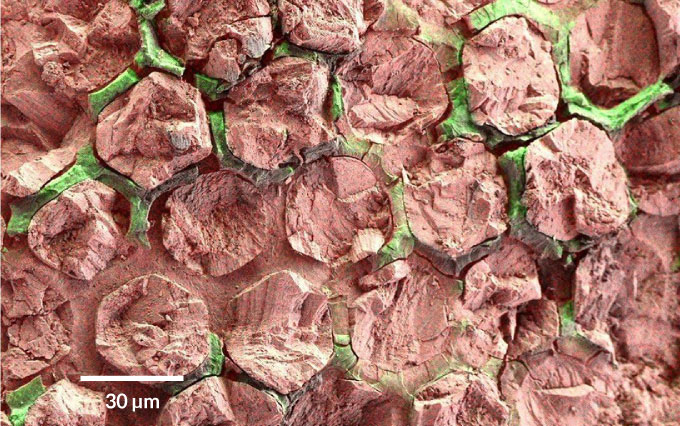
Colors added to a highly magnified image of a fossil crane fly eye show hexagonal pieces found to contain lots of calcium (pink), indicating mineralized lenses. Rims contain abundant carbon (green) and other elements as expected from a screening pigment. J. LINDGREN ET AL/NATURE 2019

Vertebrates use forms of melanin to screen their eyes from stray light that’s not focused by the lens. But biologists had thought that while insects and other arthropods use melanins for body coloring, among other functions, these animals just had a different kind of eye-shading pigment, called ommochromes. Crane flies are the first of any arthropod group, living or extinct, shown to have a melanin pigment in their eyes, Lindgren says.

So far, the evidence looks “suggestive” of eumelanin in the extinct crane fly eyes, says biophysicist Doekele Stavenga from the University of Groningen in the Netherlands, who wasn’t involved in the study. He would like to see some more kinds of tests identifying the fossil pigment.

Unlike with the pigment, crystal lenses don’t show up in living crane flies — a result that doesn’t surprise Lindgren. “There are only deficits of having rocks in your eyes,” he says. For one, crystals of calcium carbonate have optical quirks that need just the right alignment with incoming light to avoid double images. Some mollusks known as chitons have calcite-lensed eye spots that can pick up spatial information about looming predators (SN: 11/19/15).  That’s not fancy vision, but it may be enough for mound-shaped animals creeping around the sea floor instead of flying.

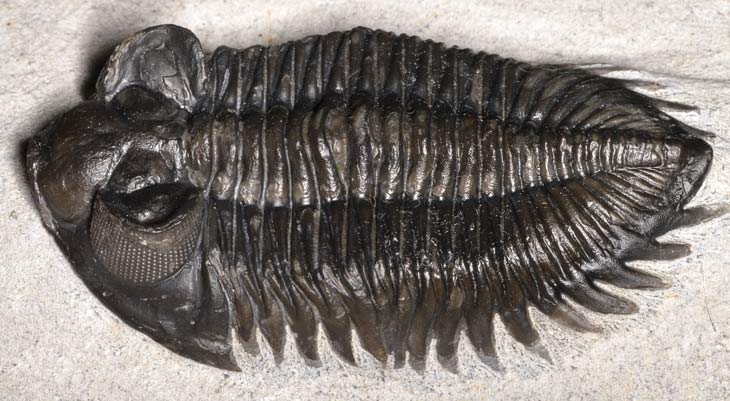
The elaborate eyes of this Coltraneia trilobite fossil, more than 350 million years old from Morocco, show up as curved arrays of little bumps. GUILLERMO GUERAO/SHUTTERSTOCK

If crane flies’ lenses fossilized into calcite lumps, the assumption that trilobite eyes likewise calcified after death seems “more probable,” says Gerhard Scholtz, a zoologist specializing in arthropod evolution at Humboldt University in Berlin. “I always had doubts about the calcitic nature of trilobite eye lenses.”

But physiologist Brigitte Shoenemann at the University of Cologne in Germany is sticking with the idea that living trilobites saw through lenses that were mainly calcium carbonate. One advantage is the mineral’s power to strongly bend incoming light underwater, a help in collecting and focusing ample illumination. Also, she says that trilobite eyes that fossilized under a variety of conditions nonetheless show such lenses. She’s prepared to accept that crane flies didn’t see through mineral crystals but is not ready “to raise this singular finding, as excellent as it may be, to a general principle touching trilobites.” Clearly, the debate goes on. 

CITATIONS

J. Lindgren et al. Fossil insect eyes shed light on trilobite optics and the arthropod pigment screenNature. Published online August 15, 2019. doi: 10.1038/s41586-019-1473-z

Source: www.sciencenews.org

"The Great Hunter of the Pampas": Legendary Saber-Toothed Tiger on Show at Argentine Museum

Sunday, September 1, 2019

Replicas of the heads of saber-toothed tiger, or Smilodon, are presented during the exhibition "Great Hunter of the Pampas" in Argentina's Bernardino Rivadavia Museum of Natural Sciences, in Buenos Aires, capital of Argentina, on August 27, 2019. (Xinhua/Martin Zabala)

"It was a hunting animal, a killing machine."

Argentina's Bernardino Rivadavia Museum of Natural Sciences opens an exhibition to present ferocious saber-toothed tigers, or Smilodon, which inhabited the Pampas around 30,000 years ago.

More than 10,000 years ago, enormous mammals such as giant sloths, precursors of armadillos known as glyptodons, and prehistoric elephants roamed South America's Pampas region.

These outsize herbivores had one thing in common: they were prey for the ferocious saber-toothed tiger, or Smilodon, a carnivore with huge canines whose fossilized prints were recently discovered for the first time in Argentina's capital Buenos Aires.

Now Argentina's Bernardino Rivadavia Museum of Natural Sciences has opened an attractive exhibition called "The Great Hunter of the Pampas," which presents the legendary feline predator in its ancient habitat.

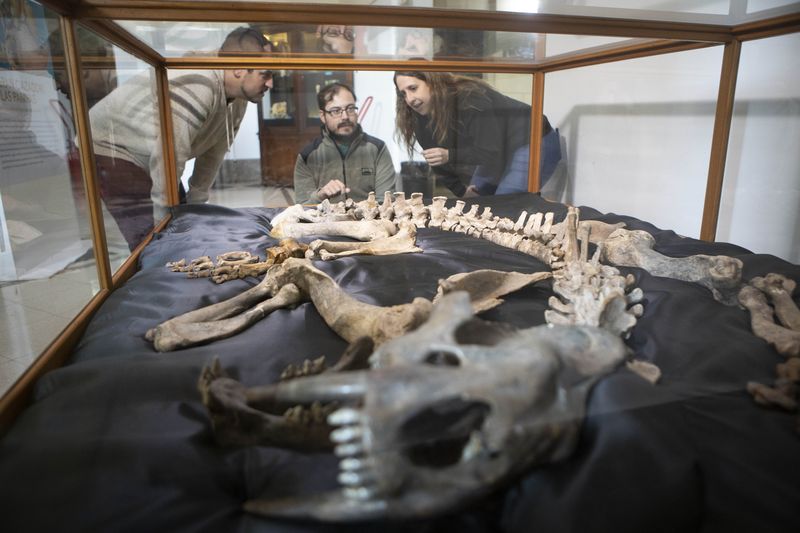
Paleontologists Martin Ezcurra (C), Laura Chornogubsky (R) and Federico Agnolin (L) observe the skeleton of a saber-toothed tiger, or Smilodon, discovered in 1844 by Argentine paleontologist Francisco Javier Muniz, in Argentina's Bernardino Rivadavia Museum of Natural Sciences on August 27, 2019. (Xinhua/Martin Zabala)

To celebrate the 207th anniversary of its founding, the museum is showcasing the latest findings on the enormous tiger, believed to weigh up to 550 kilos, or twice the size of today's largest cat, the African lion.

The temporary exhibition features a physical reconstruction of the Smilodon, complete with paw prints and other details that have long been a mystery, such as what its coat looked like.

Experts were able to recreate the animal based on an "original skeleton of the Smilodon, which we have in the department's collection," Marcelo Minana of the museum's paleontology department, told Xinhua.

"Fortunately, our familiarity of existing animals allows us to get more faithfully closer to such aspects, for example, as its coloring, eyes and soft tissues, which are the parts that are not preserved in fossils," he said.

Marcelo Minana, a paleontology technician, was measuring a jaw of a saber-toothed tiger, or Smilodon, in a workshop of Argentina's Bernardino Rivadavia Museum of Natural Science on August 27, 2019. (Xinhua/Martin Zabala)

After measuring and studying the dimensions of the bones and working together on the presumed behavior of the animal, researchers wanted to highlight the creature's fierce nature and imposing strength, that "it was a hunting animal, a killing machine," said Minana.

A team of experts worked on the show, including Federico Agnolin, a paleontologist from the National Scientific and Technical Research Council and one of the authors of the exhibit's findings; Laura Chornogubsky, associate curator of the Vertebrate Paleontology Department; and Martin Ezcurra, a specialist in vertebrate paleontology.

The saber-toothed tiger "inhabited the Pampas around 30,000 years ago," said Chornogubsky. "What can be seen in the exhibit are various replicas of the skeleton, as well as an original skeleton and some reconstructions of the head and the body."

Recreating a prehistoric animal calls for close collaboration between different areas of expertise, and "requires an artist, and knowledge and scientific exchange on how its anatomy and musculature should be," said Chornogubsky.

"What we wanted to show here is the whole process (through) both isolated skulls and replicas, as well as the complete original skeleton, as part of an action scene where the tiger is hunting a sloth," she said.

A jaw of a saber-toothed tiger, or Smilodon, is shown in the workshop of the vertebrate paleontology area of Argentina's Bernardino Rivadavia Museum of Natural Science on August 27 of 2019. (Xinhua/Martin Zabala)

According to Agnolin, "one of the most important discoveries" in saber-toothed tiger research took place when "Smilodon's footprints" were found in Argentina "for the first time in the entire world."

"Though it roamed over a large portion of the Americas, it is the first time that we have found footprints. And what do footprints provide us that bones do not?" he asked.

They "give us an idea about the animal's life," he said.

The footprints show that the animal "had front quarters that were much more powerful than its hindquarters. That tells us a little bit about how the animal hunted," he added.

"This disproportion between the front part and back parts of the body shows us that the Smilodon threw itself on its prey, toppling them over with its forelimbs, and put an end to them there," said Agnolin.

Source: www.xinhuanet.com

PRIMAL: An Extreme Animated Show With Blood and Violence

Saturday, August 31, 2019

CREDIT: ADULT SWIM

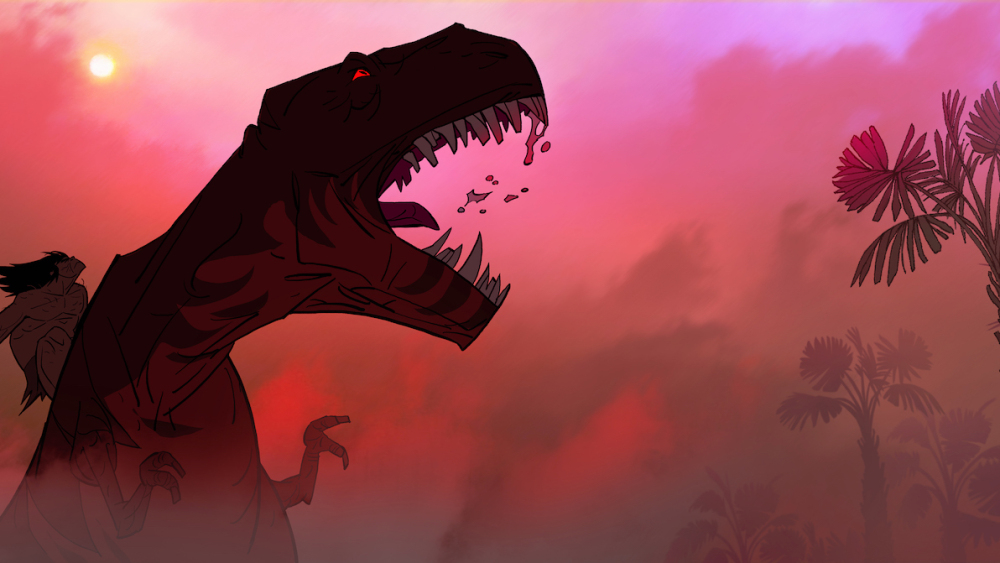
From Genndy Tartakovsky, creator of the most excellent Samurai Jack, comes Primal; an adult animated show filled with dinosaurs, screaming, and blood. If you’re not into extreme animated violence, maybe look away.

Primal revolves around a cave man who develops a bond with a Tyrannosaurus Rex over their shared traumatic experiences. Together, they fight to survive in a harsh world filled with teeth and rage. Yes, it’s not exactly historically correct, but it looks like fun and the animation is exceptional. It was created in partnership with Adult Swim.

I feel bad for that mammoth, though.

Genndy Tartakovsky makes his highly anticipated return to TV with Primal, an Adult Swim animated series that looked to be as ambitious and visionary as his acclaimed show Samurai Jack. But even the title, and the show’s premise of a caveman who befriends a dinosaur, couldn’t prepare us for just how bloody this show would be.

Showmax currently has a bunch of Adult Swim content, including Samurai Jack, available to stream so we can hope Primal will be included, once it’s released. That, or you’ll have to go visit your parents and watch it on DStv’s TNT channel, assuming Primal makes it there. Maybe they’ll feed you.

Primal comes out on 7 October 2019.

Watch the Primal trailer below.

Source: www.nag.co.za

Pages