Blogs

Tyrannosaurus Rex Forever Stamps Show Motion When Rotated in Light

Friday, August 30, 2019

The King of the Dinosaurs now featured on a Forever stamp issued today by the U.S. Postal Service.

The U.S. Postal Service salutes the dinosaur that dominated the tail end of the dinosaur age with new Forever stamps depicting the awe-inspiring Tyrannosaurus rex in growth stages from infancy to adulthood. The stamps were dedicated at a ceremony held at the Smithsonian National Museum of Natural History.

"With the dedication of these dazzling new Forever stamps today, the Postal Service pays tribute to the king of dinosaurs," said Isaac Cronkhite, the Postal Service's chief human resources officer and executive vice president, and the stamp ceremony's dedicating official.

"More than any other dinosaur, since its discovery more than a century ago, the T. rex has stirred the public imagination. We are proud to bring the powerful T. rex on stamps that will whiz through the mail stream on millions of birthday cards, letters and thank-you notes," Cronkhite said.

Joining Cronkhite to dedicate the stamps were Kirk Johnson, director, Smithsonian National Museum of Natural History; Matthew Carrano, curator of "Dinosauria," Smithsonian National Museum of Natural History; Julius T. Csotonyi, scientist and paleoartist, who digitally illustrated the T. rex stamp images and Shawn Yancy, news anchor, WTTG-TV, the local Fox station, and the guest emcee.

The Tyrannosaurus Rex Forever stamps are available in panes of 16 stamps with four designs. Featuring lenticular printing, two of the four designs show movement when rotated. See the skeletal remains with and without flesh and watch as an approaching T. rex suddenly lunges forward. This printing method was first used by the Postal Service to produce the Rabbit and Hat stamp on the Art of Magic souvenir pane in 2018.

Scientist and paleoartist Julius T. Csotonyi created photorealistic illustrations of T. rex with depictions based on the growing body of research on these dinosaurs. Csotonyi painted digitally using a stylus on a computer screen, an approach he likens to acrylic painting. Art director Greg Breeding designed the pane.

The "Nation's T. rex," the young adult featured on two of the new stamps, was discovered in 1988 on federal land in Montana. Painstaking excavation revealed what would become one of the most studied and important tyrannosaur specimens ever found, including the first T. rex arms ever recovered. The Nation's T. rex is now exhibited at the Smithsonian Institution's National Museum of Natural History.

Background

Extinct for some 66 million years, the carnivorous Tyrannosaurus rex dominated the Cretaceous Period, which was the tail end of the dinosaur age.

With powerful jaws packed in its 4-foot-long skull and banana-sized teeth serrated like steak knives, T. rex easily bit through the flesh and hefty bones of even large dinosaur prey. Its full-grown weight was six to ten tons. Its maximum length was about 40 feet.

Although the name "Tyrannosaurus rex" means "tyrant lizard king," and "dinosaur" means "fearfully great lizard," they were not lizards at all. Dinosaurs were from a separate reptile lineage, whose closest living relatives are birds and crocodilians.

News of the Tyrannosaurus Rex Forever stamps is being shared on social media using the hashtag #TyrannosaurusStamps. Followers of the Postal Service's Facebook page can view a recording of the ceremony at facebook.com/USPS .

The Tyrannosaurus Rex stamps are being issued as Forever stamps. Forever stamps will always be equal in value to the current First-Class Mail 1-ounce price.

Customers may purchase stamps and other philatelic products through The Postal Store at usps.com/shop , by calling 800-STAMP24 (800-782-6724), by mail through USA Philatelic or at Post Office locations nationwide.

The Postal Service receives no tax dollars for operating expenses and relies on the sale of postage, products and services to fund its operations.

Please Note: For U.S. Postal Service media resources, including broadcast quality video and audio and photo stills, visit the USPS Newsroom . Follow us on Twitter Instagram Pinterest and LinkedIn . Subscribe to the USPS YouTube channel like us on Facebook and enjoy our Postal Posts blog . For more information about the Postal Service, visit usps.com and facts.usps.com .  

National Contact: Roy Betts
202-268-3207
[email protected]
usps.com/news

Local Contact: Michael Hotovy
202.636.1245
[email protected]

Source: SOURCE U.S. Postal Service / https://finance.yahoo.com

A 3.8-Million-Year-Old Fossil From Ethiopia Reveals the Face of Lucy's Ancestor

Thursday, August 29, 2019

A facial reconstruction of the 3.8 million-year-old Australopithecus anamensis specimen found in Ethiopia in 2016. Matt Crow, courtesy of the Cleveland Museum of Natural History. Facial reconstruction by John Gurche.

Researchers discover 'remarkably complete' cranium of Australopithecus anamensis.

Cleveland Museum of Natural History Curator and Case Western Reserve University Adjunct Professor Dr. Yohannes Haile-Selassie and his team of researchers have discovered a "remarkably complete" cranium of a 3.8-million-year-old early human ancestor from the Woranso-Mille paleontological site, located in the Afar region of Ethiopia. Working for the past 15 years at the site, the team discovered the cranium (MRD-VP-1/1), here referred to as "MRD," in February 2016. In the years following their discovery, paleoanthropologists of the project conducted extensive analyses of MRD, while project geologists worked on determining the age and context of the specimen. The results of the team's findings are published online in two papers in the international scientific journal Nature.

The 3.8-million-year-old fossil cranium (MRD) represents a time interval between 4.1 and 3.6 million years ago when early human ancestor fossils are extremely rare, especially outside the Woranso-Mille area. MRD generates new information on the overall craniofacial morphology of Australopithecus anamensis, a species that is widely accepted to have been the ancestor of Lucy's species, Australopithecus afarensis. MRD also shows that Lucy's species and its hypothesized ancestor, A. anamensis, coexisted for approximately 100,000 years, challenging previous assumptions of a linear transition between these two early human ancestors. Haile-Selassie said, "This is a game changer in our understanding of human evolution during the Pliocene."

Discovery of MRD-VP-1/1 ("MRD"):

The Woranso-Mille project has been conducting field research in the central Afar region of Ethiopia since 2004. The project has collected more than 12,600 fossil specimens representing about 85 mammalian species. The fossil collection includes about 230 fossil hominin specimens dating to between >3.8 and ~3.0 million years ago.

A side view of the Australopithecus anamensis skull known as "MRD," which was discovered in Ethiopia in 2016. Dale Omori, Courtesy of the Cleveland Natural History Museum

The first piece of MRD, the upper jaw, was found by Ali Bereino (a local Afar worker) on February 10, 2016, at a locality known as Miro Dora, Mille District of the Afar Regional State. The specimen was exposed on the surface, and further investigation of the area resulted in the recovery of the rest of the cranium. "I couldn't believe my eyes when I spotted the rest of the cranium. It was a eureka moment and a dream come true," said Haile-Selassie.

Location of the Discovery

MRD was found in the Woranso-Mille Paleontological Project study area located in Zone 1, Mille District of the Afar Regional State of Ethiopia. Miro Dora is the local name of the area where MRD was found. It is about 550 km northeast of the capital, Addis Ababa, and 55 km north of Hadar ("Lucy's" site).

Geology and Age Determination

In a companion paper published in the same issue of Nature, Beverly Saylor of Case Western Reserve University and her colleagues determined the age of the fossil as 3.8 million years by dating minerals in layers of volcanic rocks nearby. They mapped the dated levels to the fossil site using field observations and the chemistry and magnetic properties of rock layers. Saylor and her colleagues combined the field observations with analysis of microscopic biological remains to reconstruct the landscape, vegetation and hydrology where MRD died.

MRD was found in the sandy deposits of a delta where a river entered a lake. The river likely originated in the highlands of the Ethiopian plateau while the lake developed at lower elevations, where rift activity caused the Earth surface to stretch and thin, creating the lowlands of the Afar region. Debris flows and volcanic ejecta occasionally descended into the otherwise quiet lake, which was ultimately buried by basalt lava flows. This kind of volcanic activity and dramatic landscape change is common in rift settings. "Incredible exposures and the volcanic layers that episodically blanketed the land surface and lake floor allowed us to map out this varied landscape and how it changed over time," said Saylor.

Fossil pollen grains and chemical remains of fossil plant and algae that are preserved in the lake and delta sediments provide clues about the ancient environmental conditions. Specifically, they indicate that the lake near where MRD finally rested was likely salty at times and that the watershed of the lake was mostly dry, but that there were also forested areas on the shores of the delta or alongside the river that fed the delta and lake system. "MRD lived near a large lake in a region that was dry. We're eager to conduct more work in these deposits to understand the environment of the MRD specimen, the relationship to climate change and how it affected human evolution, if at all," said Naomi Levin, a co-author on the study from University of Michigan.
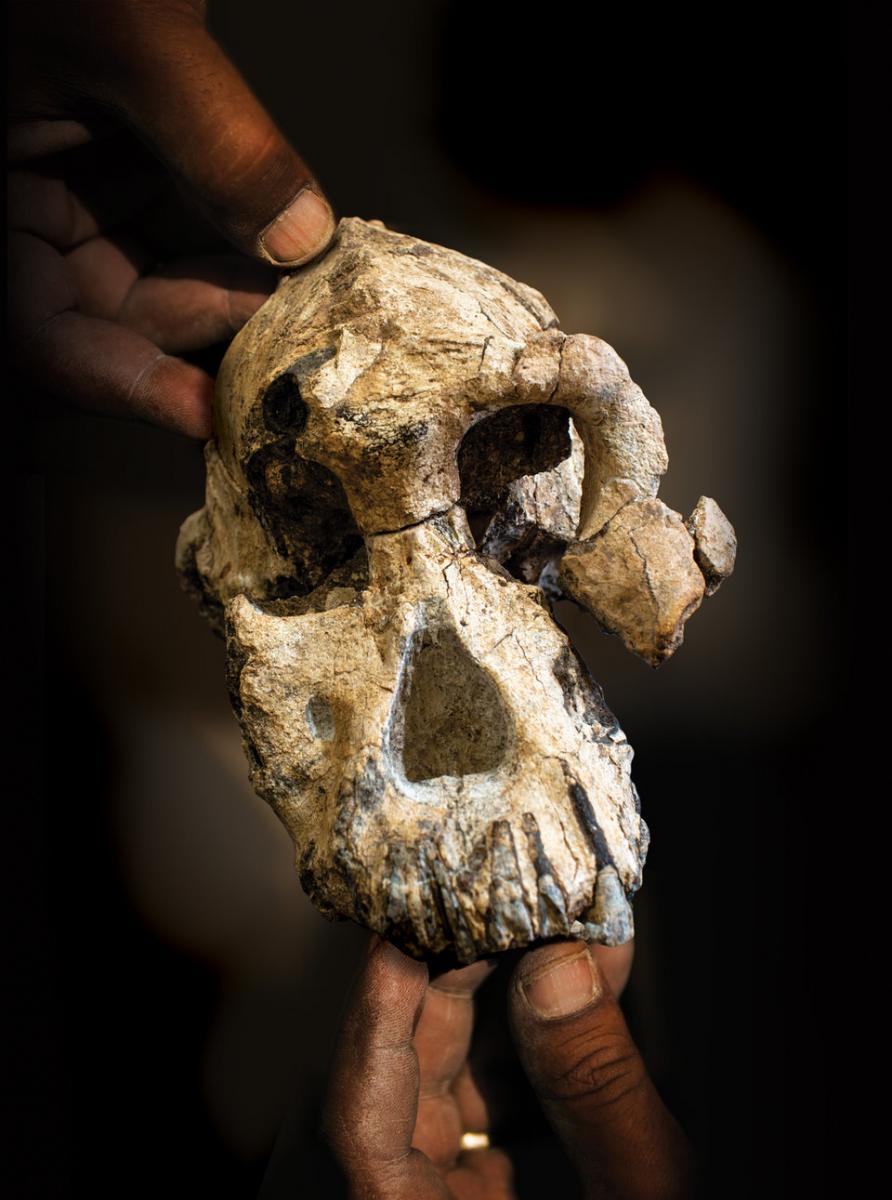
An Australopithecus anamensis skull composite, rendered by Jennifer Taylor. Dale Omori and Liz Russell, Courtesy of Cleveland Museum of Natural History

Significance of the Discovery

1. Among the most important findings was the team's conclusion that Australopithecus anamensis and its descendant species, the well-known Australopithecus afarensis, coexisted for a period of at least 100,000 years. This finding contradicts the long-held notion of an anagenetic relationship between these two taxa, whereby one species disappears only by giving rise to a new species in a linear fashion.

2. Australopithecus anamensis is the oldest known member of the genus Australopithecus. The species was previously only known through teeth and jaw fragments, all dated to between 4.2 and 3.9 million years ago. The similarities between the preserved dentition of the 3.8-million-year-old MRD and the previously known teeth and jaw fragments of A. anamensis led to a positive identification of MRD as a member of A. anamensis. Additionally, due to the cranium's rare near-complete state, the researchers identified never-before-seen facial features in the species. "MRD has a mix of primitive and derived facial and cranial features that I didn't expect to see on a single individual," Haile-Selassie said. Dr. Stephanie Melillo of the Max Planck Institute for Evolutionary Anthropology in Germany, co-author of the papers, further said, "A. anamensis was already a species that we knew quite a bit about, but this is the first cranium of the species ever discovered. It is good to finally be able to put a face to the name."

Some characteristics were shared with its descendant species, Australopithecus afarensis, while others differed significantly and had more in common with those of even older and more primitive early human ancestor groups, such as Ardipithecus and Sahelanthropus.

3. The distinct differences between the 3.8-million-year-old MRD specimen and a previously unassigned 3.9-million-year-old hominin cranium fragment--commonly known as the Belohdelie frontal and discovered in the Middle Awash of Ethiopia by a team of paleontologists in 1981--also proved significant. The preserved features of the Belohdelie frontal differed from those of MRD but were significantly similar to those of the known cranial specimens of Lucy's species. As a result, the new study confirms that the Belohdelie frontal belonged to an individual of Lucy's species. This identification extends the earliest record of Australopithecus afarensis back to 3.9 million years ago, indicating a period of at least 100,000 years' overlap with its ancestor, Australopithecus anamensis.

4. The 3.8-million-year-old MRD specimen was buried in a river delta on the margin of a lake that formed in an actively rifted landscape with steep hillsides and volcanic eruptions that blanketed the land surface with ash and lava. There were forested areas on the shores of the delta or along the edges of the river that flowed into the delta and lake system, but the watershed that fed the river, delta and lake system was mostly dry with few trees.

###

Research Participants:

Work on the analysis and geological and paleoenvironmental context of MRD was conducted by an international team of paleoanthropologists, geologists, geochemists and paleobotanists. The comparative description of MRD and associated mammalian fossils was done by Yohannes Haile-Selassie (Cleveland Museum of Natural History, Cleveland, OH, USA) and Stephanie Melillo (Max Planck Institute for Evolutionary Anthropology, Leipzig, Germany). MicroCT scanning and 3D reconstruction of MRD were conducted by Tim Ryan (Pennsylvania State University, University Park, PA, USA) and Stefano Benazzi and Antonino Vazzana (University of Bologna, Ravenna, Italy).

The work to understand the age and landscape setting was done by Beverly Saylor (Case Western Reserve University, Cleveland, OH, USA); Luis Gibert (Universitat de Barcelona, Barcelona, Spain); Alan Deino (Berkeley Geochronology Center, Berkeley, CA, USA); Mulugeta Alene (Addis Ababa University, Addis Ababa, Ethiopia) and Stanley A. Mertzman (Franklin and Marshall College, Lancaster, PA, USA). The work reconstructing the environmental conditions was conducted by Naomi Levin (University of Michigan, Ann Arbor, MI, USA); Mark Peaple and Sarah Feakins (University of Southern California, Los Angeles, CA, USA); Benjamin Bourel, Doris Barboni, Alice Novello and Florence Sylvestre (Aix-Marseille University, CNRS, IRD, INRA, Collège de France, Aix-en-Provence, France); Stephanie Melillo (Max Planck Institute for Evolutionary Anthropology, Leipzig, Germany) and Yohannes Haile-Selassie (Cleveland Museum of Natural History, Cleveland, OH, USA).

Media Contacts:

Cleveland Museum of Natural History

For questions related to the interpretation of MRD, please contact:

Yohannes Haile-Selassie, email [email protected], phone (216) 231-4600 Ext. 3242 (USA); +251 96-106-5839 (Addis Ababa).

For media materials such as images, clips, etc., visit cmnh.org/NATURE2019 or contact:

Yohannes Haile-Selassie, email [email protected], phone (216) 231-4600 Ext. 3242.

OR

Patrick Evans, email [email protected], phone (216) 231-4600 Ext. 3356.

Max Planck Institute for Evolutionary Anthropology

For questions related to the interpretation of MRD, please contact:

Stephanie Melillo, email [email protected], phone +49 (341) 355-0865.

Case Western Reserve University

For questions related to the geological context, please contact:

Beverly Saylor, email [email protected], phone (216) 712-1681.

University of Michigan

For questions related to the environmental conditions reconstruction, please contact:

Naomi Levin, email [email protected], phone (734) 615-1677.

Source: www.eurekalert.org

Paleontologists Discovered Diversity of Insect Pollinators in 99-Million-Year-Old Amber

Thursday, August 29, 2019

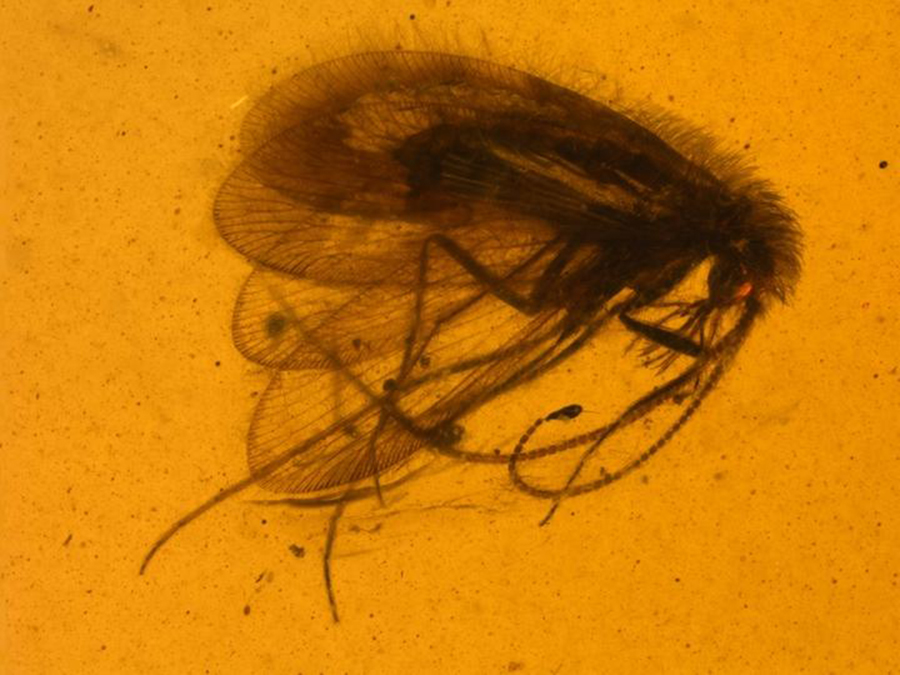
Buratina truncata, the new long-proboscid species of Paradoxosisyrinae from Burmese amber.  CREDIT Alexander Khramov

Research by Russian paleontologists revealed an unexpected diversity of insect pollinators in 99-million-year-old amber.

A team of paleontologists from the Borissiak Paleontological Institute of Russian Academy of Sciences (Moscow) discovered four new species of extinct insects with sucking mouthparts in mid-Cretaceous Burmese amber. Researchers believe that they visited first angiosperm flowers, but eventually went extinct due to the inefficient design of the proboscis. According to the research, Paradoxosisyrinae, the group to which these creatures belong, is a kind of «Nature's failed experiment». The results of the study are published in the Cretaceous Research journal.

In recent years, Burmese amber makes headlines as a source of dinosaur remains, toothed birds and other incredible vertebrate findings. However, insects found there are often no less bizarre. This is especially true for Paradoxosisyrinae, a subfamily of Sisyridae, or spongeflies, which was described from Burmese amber based on a single specimen in 2016. Neither living spongeflies nor any of their extant relatives from insect order Neuroptera, such as green lacewings and ant lions, have sucking mouthparts. In contrast, members of Paradoxosisyrinae were equipped with a well-developed proboscis -- which is a paradox indeed, as their name suggests.

Until now, functions of Paradoxosisyrinae's proboscis have remained unclear. It was hypothesized that Paradoxosisyrinae used their elongated mouthparts for piercing insect cuticle or frog skin. Contrary to this, the new research based on newly available specimens shows that in all probability these insects were not predators or bloodsuckers -- instead, they were harmless nectar feeders. Scientists said that Paradoxosisyrinae simply could not pierce any dense substrates because of loosely coupled arrangement of the mouthparts, devoid of a supportive sheath, and the presence of long hairs at the mouthpart tips.

With the help of microscope examination and virtual 3D-models scientists came to a conclusion that proboscis of Paradoxosisyrinae, rather than having a common food canal, consists of two independent straws or tubes, each one formed by two halves loosely joined together without any special devices suitable to lock them tightly. Since Paradoxosisyrinae could not seal their proboscis to produce a pressure gradient, as modern flies and moths do, they had to rely exclusively on capillary forces for nectar uptake, while other nectar feeders use also the muscular sucking pump. All this means that the proboscis of Paradoxosisyrinae, less than 1 mm in length, destined to be short forever, which undercut their ability to draw nectar from flowers with deep corolla tubes.

«These insects were a nature"s unsuccessful attempt to make nectar feeding insects in response to the rise of the flowering plants in the Early Cretaceous period. Soon they were outcompeted by bees, flies and other nectar feeders with more cleverly designed mouthparts», said Alexander Khramov, study"s leading author and a senior researcher at the Borissiak Paleontological Institute.

Discovery of four new species of Paradoxosisyrinae, in addition to the only previously known member of this subfamily, dramatically expands our knowledge about diversity of these extinct nectar feeders. One of the new species was named Buratina truncata after the long-nosed fiction character Buratino, the Russian analogue of Pinocchio. Body of Buratina truncata as well as of other newly described species was covered with dense hairs, the condition seen in modern pollinators, which allows them to carry pollen grains between plants. The researchers say that Paradoxosisyrinae could feed on small shallow flowers like Tropidogyne which are commonly occur in Burmese amber.

###

Source: AKSON RUSSIAN SCIENCE COMMUNICATION ASSOCIATION / www.eurekalert.org

Ancient Die-Off Greater Than The Dinosaur Extinction

Thursday, August 29, 2019

Ecosystems left in the wake of a mass extinction that occurred about 359 million years ago (artist’s representation shown) contained fish and other vertebrates that were much smaller than the species that lived before the die-off, a new study suggests. ROBERT NICHOLLS

Clues from Canadian rocks formed billions of year ago reveal a previously unknown loss of life even greater than that of the mass extinction of the dinosaurs 65 million years ago, when Earth lost nearly three-quarters of its plant and animal species.

Rather than prowling animals, this die-off involved miniscule microorganisms that shaped the Earth's atmosphere and ultimately paved the way for those larger animals to thrive.

"This shows that even when biology on Earth is comprised entirely of microbes, you can still have what could be considered an enormous die-off event that otherwise is not recorded in the fossil record," said Malcolm Hodgskiss, co-lead author of a new study published in Proceedings of the National Academy of Sciences.

Invisible clues

Because this time period preceded complex life, researchers cannot simply dig up fossils to learn what was living 2 billion years ago. Even clues left behind in mud and rocks can be difficult to uncover and analyze.

Instead, the group turned to barite, a mineral collected from the Belcher Islands in Hudson Bay, Canada, that encapsulates a record of oxygen in the atmosphere. Those samples revealed that Earth experienced huge changes to its biosphere -- the part of the planet occupied by living organisms -- ending with an enormous drop in life approximately 2.05 billion years ago that may also be linked to declining oxygen levels.

"The fact that this geochemical signature was preserved was very surprising," Hodgskiss said. "What was especially unusual about these barites is that they clearly had a complex history."

Looking at the Earth's productivity through ancient history provides a glimpse into how life is likely to behave over its entire existence -- in addition to informing observations of atmospheres on planets outside our solar system.

"The size of the biosphere through geologic time has always been one of our biggest questions in studying the history of the Earth," said Erik Sperling, an assistant professor of geological sciences at Stanford who was not involved with the study. "This new proxy demonstrates how interlinked the biosphere and levels of oxygen and carbon dioxide in the atmosphere are."

Biological angle

This relationship between the proliferation of life and atmospheric oxygen has given researchers new evidence of the hypothesized "oxygen overshoot." According to this theory, photosynthesis from ancient microorganisms and the weathering of rocks created a huge amount of oxygen in the atmosphere that later waned as oxygen-emitting organisms exhausted their nutrient supply in the ocean and became less abundant. This situation is in contrast to the stable atmosphere we know on Earth today, where the oxygen created and consumed balances out. The researchers' measurements of oxygen, sulfur and barium isotopes in barite support this oxygen overshoot hypothesis.

The research helps scientists hone their estimates of the size of the oxygen overshoot by revealing the significant biological consequences of oxygen levels above or below the capacity of the planet.

"Some of these oxygen estimates likely require too many microorganisms living in the ocean in Earth's past," said co-lead author Peter Crockford, a postdoctoral researcher at the Weizmann Institute of Science and Princeton University. "So we can now start to narrow in on what the composition of the atmosphere could have been through this biological angle."

The research was supported by Stanford University McGee and Compton Grants, the Northern Scientific Training Program, NSERC, National Geographic, the American Philosophical Society, Geological Society of America and the Agouron Institute.


Story Source:

Materials provided by Stanford's School of Earth, Energy & Environmental SciencesNote: Content may be edited for style and length.


Journal Reference:

  1. Malcolm S. W. Hodgskiss, Peter W. Crockford, Yongbo Peng, Boswell A. Wing, Tristan J. Horner. A productivity collapse to end Earth’s Great OxidationProceedings of the National Academy of Sciences, 2019; 116 (35): 17207 DOI: 10.1073/pnas.1900325116

Source: www.sciencedaily.com

Roarr! Jurassic Edition Review

Wednesday, August 28, 2019

Dinosaurs are pretty cool aren’t they? Whether seen in films like Jurassic Park and Land Before Time, TV shows such as The Flintstones and Dinosaurs, or even in the gaming world as part of Jurassic World Evolution, you can’t help but think it’d be rather exciting if these beasts were still roaming around the place. That’s why the arrival of Roarr! Jurassic Edition on Xbox One piqued my interest with its promise of a fast and furious brawler that’ll “make Jurassic Park look like some fairy tale for kids!” – That’s a genuine quote.

The problem is, Roarr! Jurassic Edition doesn’t deserve to be mentioned in the same sentence as Jurassic Park as it struggles to deliver an enjoyable experience. The fact that it’s damn cheap is something of a small mercy at least, so let’s discover if there are any positives to be found that may entice you in for a purchase on a whim.

Roarr! Jurassic Edition doesn’t take itself too seriously and that’s immediately apparent with the silly, but totally fine narrative, which sees a T-Rex named Sue awoken from her sleep by an alien invasion. These aliens, the Squiddies, are so noisy that Sue takes matters into her own hands and decides to decimate every last one of them in order to get some kip. Aside from a low-budget opening cutscene, the rest of what little story there is plays out through a selection of static scenes and even though they aren’t anything out of the ordinary, it does an acceptable job of setting the scene and sprinkling a tiny bit of humour into proceedings. The latter is especially true if you take time read the ‘Rexopedia’ entries for background info on the enemies.

The Squiddies come in a variety of forms, including a bunch of different coloured, fairly standard looking squids, alongside a host of other more interesting types that have made use of earthly machinery to transform into a force to be reckoned with. For example, some have merged with equipment taken from a construction site and even a ferris wheel, while others are fused with frogs and fish. Knowing that Roarr! features 19 different Squiddies – not including bosses – is quite impressive, until you factor in that most are carbon copies of each other in alternate colours. Still, it’s pretty much a positive to grasp onto.

With only six levels present in Roarr! and each one following the same pattern of eliminating enemies within an area, before moving on to do the same again, the gameplay gets monotonous far too quickly. Even the anticipation of locating a boss at the end of each level probably isn’t going to be exciting enough to drive you through without feeling like it’s a real drag. Without exaggerating, completing a level will feel akin to finishing a marathon, despite only lasting around 10 minutes – it gets very boring, very fast.

The low-poly style visuals don’t help matters because the scenery looks bland and, apart from minor variations in colour here and there, it’s all quite samey. In fact, there’s only one level with a completely different environment, an indoor offering, however even that fails to capture the imagination as it’s mostly devoid of colour.

Sue’s attacks are pretty standard, with tail whips and the ability to chomp at enemies the main ones in your arsenal. She’s also able to dodge roll and jump, but the former doesn’t seem to help avoid damage when you’re getting mauled from all angles. There are two special moves that can be charged up by destroying the environmental structures, which are rather small in comparison to your T-Rex. The roar manoeuvre sends out a blast that instantly kills nearby enemies and that’s helpful when surrounded. There doesn’t seem to be much point to the other as it just makes Sue charge forward at speed, but it’s an option.

In total, there are six bosses to tackle, ranging from a combine harvester type beast to a living, breathing, oil rig that’s ready to attack anything in its vicinity. Creatively, nothing can be complained about, but practically, the boss battles just lack any kind of sense. Get anywhere near the behemoths and they’ll destroy you swiftly, and with no obvious window of opportunity, it’s a painful activity. Even when you get behind them, they can turn on a sixpence and harm you in an instant. The only viable solution involves back-tracking to build up the special meter, then unleashing the roar on the boss, before rinsing and repeating.

To add insult to injury, at any point, normal enemies can just disappear and occasionally bosses won’t even appear, forcing a retry to be required in order to advance. This happens most often after pausing the game, so I’d highly advise to never do that for fear of having to replay a level all over again.

Forget fast and furious, Roarr! Jurassic Edition on Xbox One is painful and laborious, with incredibly repetitive gameplay, environments that are far too similar and a myriad of senseless boss battles. It’s visually unimpressive and the main audio track is highly irritating too. The saving grace, if there is one, is the enemy and boss variety, but that’s clutching at straws. So, after weighing up all of the evidence, even at under a fiver I’m not entirely sure who would enjoy this brawler.

Put it this way, if a meteor hit the Xbox Store today, no one would miss Roarr! Jurassic Edition.

Source: www.thexboxhub.com

Elevated Levels of Oxygen Gave Rise to North American Dinosaurs, Scientists Say

Friday, August 23, 2019

Chindesaurus bryansmalli by atrox1

A team of researchers from Rensselaer Polytechnic Institute and the University of Texas Austin has used a new technique to analyze tiny amounts of gas trapped inside 215-million-year-old rocks from the Colorado Plateau and the Newark Basin. Their results show that oxygen levels in these rocks leapt by nearly a third in just a couple of million years, possibly setting the scene for a dinosaur expansion into the tropics of North America and elsewhere.

“We tested rocks from the Colorado Plateau and the Newark Basin that formed at the same time about 621 miles (1,000 km) apart on the supercontinent of Pangea,” said Rensselaer Polytechnic Institute’s Professor Morgan Schaller, lead author of the study.

“Our results show that over a period of around 3 million years, the oxygen levels in the atmosphere jumped from around 15% to around 19%. For comparison, there is 21% oxygen in today’s atmosphere.”

“We really don’t know what might have caused this increase, but we also see a drop in carbon dioxide levels at that time.”

“We expect that this change in oxygen concentration would have been global change, and in fact we found the change in samples which were 621 miles apart,” he said.

“What is remarkable is that right at the oxygen peak we see the first dinosaurs appearing in the North American tropics, Chindesaurus.”

“The sauropods followed soon afterwards. Again, we can’t yet say if this was a global development, and the dinosaurs don’t rise to ecological dominance in the tropics until after the End-Triassic extinction.”

“What we can say is that this shows that the changing environment 215 million years ago was right for their evolutionary diversification, but of course oxygen levels may not have been the only factor.”

Chindesaurus was an upright carnivorous dinosaur, around 6.6 feet (2 m) long and nearly 3.3 feet (1 m) high. Found extensively in North America, with origins in the North American tropics, it was a characteristic Late Triassic dinosaur of the American Southwest.

“The first dinosaurs were quite small, but higher oxygen levels in the atmosphere are often associated with a trend to larger size,” said University of Bristol’s Professor Mike Benton, who was not involved in this research.

“This new result is interesting as the timing of oxygen rise and dinosaur appearance is good, although dinosaurs had become abundant in South America rather earlier, about 232 million years ago.”

Professor Schaller and colleagues presented their findings at the 2019 Goldschmidt Conference in Barcelona, Spain.

_____

M. Schaller et al. New constraints on ancient atmospheric oxygen concentrations and the Late Triassic rise of the first North American dinosaurs. Goldschmidt Abstracts 2019

Source: www.sci-news.com

What 'The Land Before Time' Got Right And Wrong, According To Experts

Wednesday, August 28, 2019

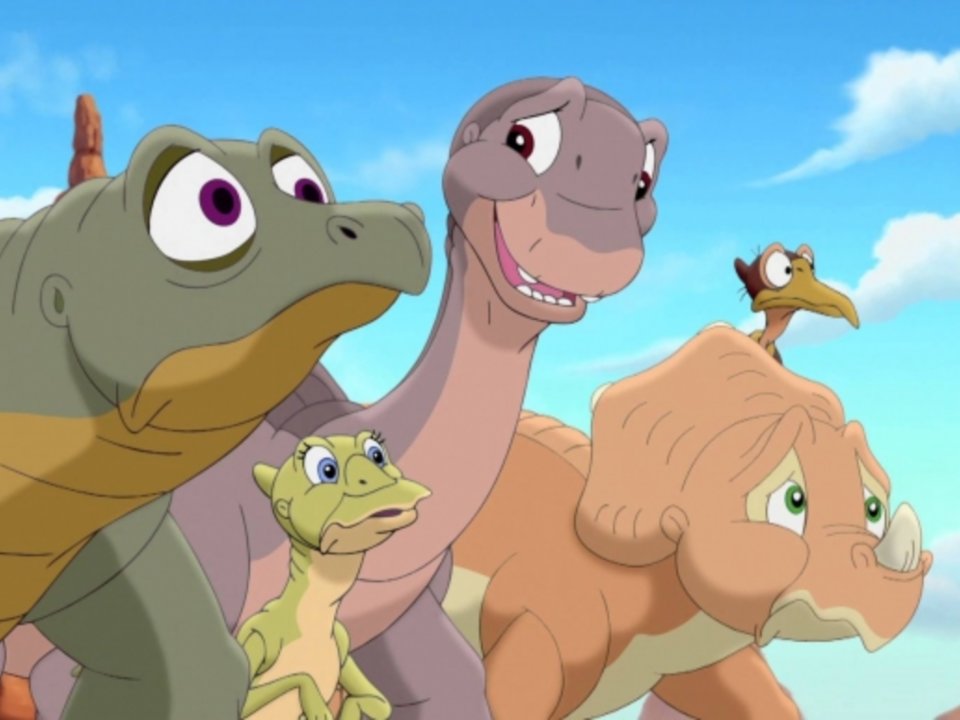
From mismatched timelines to Littlefoot's mom, experts spoke with Insider about a few of the missteps the film took when it comes to scientific accuracy. Universal Pictures

  • Director Donald Bluth's "The Land Before Time" captured the hearts and minds of generations of children, following a merry band of animated dinosaurs.
  • Though the film was well-received, experts found that certain facts were a little skewed in their portrayal.
  • This group would have never existed in the first place because the different species lived millions of years apart in real life.
  • The apocalyptic setting of the film likely did not happen during the time it was set.
  • Though the film got certain facts wrong, it was the first film to more accurately portray dinosaurs as complex and social creatures.

Thanks to its plucky band of misfit protagonists, heartfelt plot, and carefully rendered depictions of dinosaurs, the 1988 classic animated movie " The Land Before Time" has become an integral part of many generation's childhoods.

The film was directed by Donald Bluth, with executive producers Steven Spielberg and George Lucas, and follows the journey of a young, long-necked dinosaur named Littlefoot as he and a group of other young dinosaurs search for their family and food in a mythical place called "The Great Valley."

While the film is accomplished in how it helps children learn to cope with loss and overcome adversity, it is far less precise when it comes to teaching children the basics of paleontology.

From mismatched timelines to overly- anthropomorphized characteristics, experts spoke with Insider about a few of the missteps the film took when it comes to scientific accuracy — as well as a few things it got right.

The main characters of 'The Land Before Time' lived millions of years apart in real life

Littlefoot and Spike would have lived during the Late Jurassic period, while many of the others would have actually lived millions of years later during the Late Cretaceous period. Universal Pictures

"The Land Before Time" features a cast of widely recognizable dinosaurs, including a Triceratops ("Three-Horn") named Cera, an Apatosaurus ("Longneck") named Littlefoot, a Stegosaurus ("Spiketail") named Spike, a Saurolophus ("Big Mouth") named Ducky, and a Pteranodon ("Flyer") named Petrie.

While the diversity of their group gave them an advantage when it came to reaching taller heights or muscling through obstacles, John Hutchinson, a professor of Evolutionary Biomechanics at the University of London's Royal Veterinary College, told Insider that it wouldn't have been possible for these different species to have all lived at during the same time period.

Littlefoot and Spike would have lived during the Late Jurassic period, which spanned from around 165 to 145 million years ago, while many of the others would have actually lived during the Late Cretaceous period, which spanned from around 100 to 66 million years ago. These Late Cretaceous dinosaurs would have included Cera, Ducky, T-Rex, and Petrie — even though Petrie is technically not a dinosaur.

To put that into context, modern humans have only existed for roughly 300,000 years, so grasping the vastness of such deep geologic time can be mind-boggling, but Hutchinson told Insider to get a better idea of the scale you can imagine it like this: "There's more time between them then there is between T-Rex and us."

Littlefoot's mother realistically would have left him to fend for himself before he had hatched

"We know now that Sauropods (including Apatosauruses) were not good parents," Hutchinson said. The Land Before Time / Universal Pictures

Littlefoot's relationship with his mother is another driving aspect of the film that experts say was likely unrealistic.

The loving relationship between Littlefoot and his mother is obvious during the very first scenes of the movie when his mother gently explains the Great Valley to Littlefoot and the young dinosaur burrows into her to sleep on their long journey. When Littlefoot's mother dies after protecting him from a "Sharp Tooth" or Tyrannosaurus rex, it's heartbreaking given their earlier bond. Littlefoot mourns his mother but holds her memory close as a guide for the rest of the film.

While this relationship was important for the emotional development of the film, Hutchinson says that in reality, Apatosauruses were probably very bad parents.

"We know now that Sauropods [including Apatosauruses] were not good parents," Hutchinson said. "They just buried their nests, abandoned them and the babies would hatch on their own and be pretty able to fend for themselves right away. It was a tough life being a Littlefoot in reality."

The apocalyptic setting of the film likely never happened during the movie's given time period

"There is no particular record of a great famine or other environmental catastrophes in the Late Cretaceous that would cause a large migration like that seen in 'The Land Before Time,'" Cullen wrote. De Agostini Picture Library / Getty Images

Apart from the banter and hijinks of Littlefoot's rag-tag group of friends, another ever-present characteristic of "The Land Before Time" is the land itself. Complete with dramatic, literally ground parting, earthquakes, volcanic eruptions, and softly falling ash, the landscape of what is likely North America has a striking similarity to that of an environmental apocalypse. The famine that resulted from these fictional conditions is what drives Littlefoot and his friends toward the Great Valley.

But Thomas Cullen, a paleontologist and postdoctoral research scientist at the Field Museum of Natural History, told Insider by email that there doesn't appear to be any record of an environmental disaster like this taking place during the movie's probable time frame.

"There is no particular record of a great famine or other environmental catastrophes in the Late Cretaceous that would cause a large migration like that seen in 'The Land Before Time,'" Cullen wrote.

Hutchinson also says that the tar pit the protagonists become stuck in later in the film would have been "basically non-existent" in the landscape as well, coming into existence much later instead.

The cute friendships in the film are not entirely inaccurate because dinosaurs were social creatures

Despite the scientific missteps in the film, there are also a few key aspects that it got right, Hutchinson told Insider. Particularly when it comes to our modern image of dinosaurs.

An important accuracy of the film, and one that was contemporary to palaeontological research in the 1980s, was the depiction of dinosaurs as social animals and not simply violent lizards.

"They got some details more right than previous depictions had," said Hutchinson. "[It showed] that dinosaurs were not just big, dumb reptiles, but advanced, sophisticated animals — which is true."

Ultimately, 'The Land Before Time' was one of the first films to present dinosaurs as complex and intelligent

An important accuracy of the film, and one that was contemporary to palaeontological research in the 1980s, was the depiction of dinosaurs as social animals and not simply violent lizards. The Land Before Time / Universal Pictures

Hutchinson also says that the film, which came out before "Jurassic Park," was one of the first examples of dinosaurs being depicted not in the classical style of "Fantasia" (1940), but instead with a more modern understanding, much of which still shapes our imagination of dinosaurs today.

"I think that the movie bridges the gap between 'Fantasia' and 'Jurassic Park,'" said Hutchinson. "I think that it introduced people to that new way of looking at dinosaurs and thinking about them less as screaming horrors that can only be fought. Instead, the dinosaurs in the movie, broadly speaking, are intelligent and social and behaving in ways most movies hadn't shown them before. I think the public latched onto that and could empathize with dinosaurs more."

And, despite its fumbles along the way, Cullen echoed Hutchinson and told Insider that the film was influential in his career as a paleontologist.

"I still think the movie is great overall, even if it isn't perfectly accurate, and I certainly remember being influenced by it as a young child," he said.

Source: www.insider.com

Dinosaur Ridge in Colorado Ranked no. 1 Track Site in All of U.S.

Wednesday, August 28, 2019

Dinosaurs are no longer roaming the earth, but their tracks live on. In the foothills on the Front Range of Colorado, a story can be told from pieces of the past left behind.

Dinosaur Ridge has been ranked by a panel of esteemed paleontologists as the no. 1 track site in all the U.S. One of those world-renowned paleontologists is Martin Lockley, who has spent his life studying dinosaur tracks.

“You're looking at a snapshot of an ancient environment," Lockley says.

In an area of just a few hundred square feet, 330 dinosaur tracks have been discovered. However, the land was very different 100 million years ago. Lockley says the giant prehistoric animals weren't a mile high in the Rocky Mountains.

They were on the beach at sea level in an environment very similar to present day Gulf of Mexico.

“We like to joke and call this beach-front property a 100 million years ago," Lockley says.

The soft, wet, sandy land made conditions ideal for preserving tracks.

"If they're walking on wet sediment, like a beach or a mud flat or the shores of a lake, and it dries out, it becomes hard like concrete," Lockley explains. "And the next time there's a flood washing in more sediment, it will bury those tracks without them being eroded away."

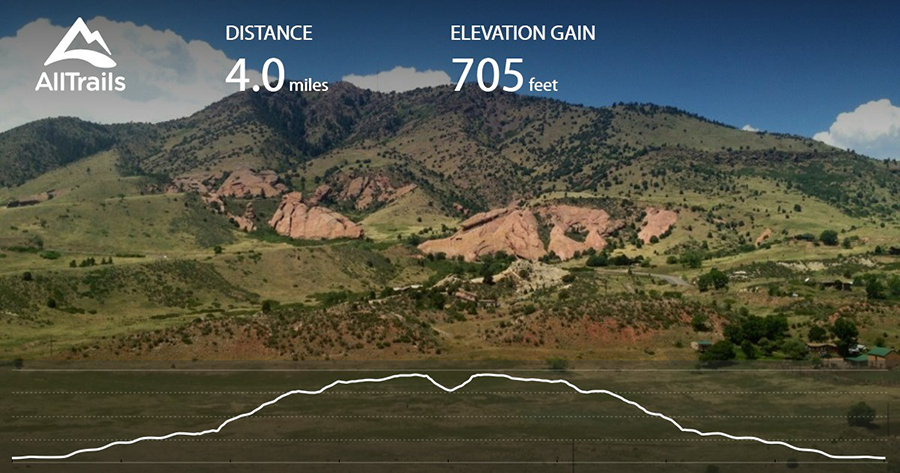
Dinosaur Ridge - Colorado | AllTrails

Experts believe three different dinosaurs made their mark on this patch of land. Lockley says it's possible they were migrating along what used to be a coast. It's clear the western U.S. was a popular place to be, because there are more than 120 dinosaur track sites from Kansas to Utah. Martin suggests part of the reason is less vegetation in these states means more fossilized rock is exposed.

But if there are so many track sites, what makes Dinosaur Ridge the top of all track sites? Executive Director Jeff Lamontagne, with Friends of Dinosaur Ridge, says there was a list of criteria the panel considered.

"How many tracks there are, the variety of dinosaurs seen in the tracks, the importance of the tracks, the clarity of the tracks, the accessibility and number of visitors," Lamontagne explains.

Accessibility is the main reason Dinosaur Ridge has become so highly regarded.

"It's right outside a major metropolitan area, and there's a major road just a quarter mile from here," he says. "It's easy to see this compared to most other dinosaur track sites in the United States and in the world."

People can get so close to the tracks; in some places you can even touch them. Although the tracks have been well-preserved for millions of years, their current exposure to humans and the elements could make them erode over time.

Thankfully, with current technology, scientists can scan the surface and re-create it as 3-D permanent record. They also plan to build a cover to protect the land.

However, Friends of Dinosaur Ridge believe the hands-on part of the site is important for kids to continue learning about the planet's past. A past that can teach us about topics like climate change, evolution and extinction.

"We used to think that the dinosaurs all went extinct, but then we realized that some of them survived and evolved into birds," Lockley says.

For modern-day humans, Dinosaur Ridge will continue to be an intriguing learning opportunity, reminding people we aren't the only ones to experience life on Earth.

"It gives you a sense of wonder to imagine these enormous beasts living, playing, dying, a hundred million years ago," Lamontagne says.

Source: www.news5cleveland.com

With 74 Fossils in Her Collection, 12-Year-Old Becomes ‘Youngest Paleontologist’ in India

Thursday, August 29, 2019

12-YO Chennai Girl is India's youngest palaeontologist!

She says her interest in the subject came about through reading encyclopedias. Paleontology is a branch of earth science which deals with the study of fossils and the evolution of organisms.

Twelve-year-old Aswatha Biju from Chennai is the “youngest paleontologist in India”, with 74 fossils and several awards to her name. She says her interest in the subject came about through reading encyclopedias. Paleontology is a branch of earth science which deals with the study of fossils and the evolution of organisms.

“I have been collecting fossils since I was in Class V,” Aswatha said, adding, “I visit the Ariyalur riverbed near Tamil Nadu to collect them.” The fossils in her mini-museum include ammonites, belemnites, bivalvia, echinoids, gastropods, lopha and nautilus.

Aswatha was recently recognised by the FICCO Ladies Organisation (FLO), Chennai. Additionally, she was also awarded the Youngest Paleontologist Award by the India Book of Records, Youngest Palaeontologist Award by Future Kalams Book of Awards and Youngest Palaeontologist Award by the Universal Achievers Book of Records.

Aswatha has also conducted seminars on paleontology in schools and colleges. In a recent seminar, she spoke about how the subject not only helps in understanding the environmental conditions that prevailed a billion years ago, but also answers a primal question — “where do we come from?”

She also believes that more people should be involved in the subject to understand the importance and abundance of paleontological evidence in India. When asked about her next venture, she says she wants to visit the Rann of Kutch in Gujarat to find coral fossils.

Source: https://indianexpress.com

Jurassic Pterosaurs Were Filter-Feeders, Study Says

Wednesday, August 28, 2019

An artist’s impression of the Cretaceous pterosaur Pterodaustro. Image credit: Nobu Tamura, spinops.blogspot.com / CC BY 3.0.

A new study led by Uppsala University researchers provides the first direct evidence of filter feeding in Jurassic pterosaurs and shows that they had a similar diet to the Chilean flamingo (Phoenicopterus chilensis).

Pterosaurs were a diverse group of flying reptiles that were the first among tetrapods to evolve powered flight.

They originated in the Late Triassic Period and constituted an important part of Mesozoic Era ecosystems until their extinction at the end of the Cretaceous Period.

During this period of time, pterosaurs adapted to diverse lifestyles and feeding habits.

Direct evidence on their diets such as gut contents, however, is rare and only known from a few pterosaur species.

Coprolites (fossilized droppings) are surprisingly common fossils and they potentially hold valuable information on the diet of extinct animals. Unfortunately, it is often difficult to know which animal produced which dropping.

In the new study, Martin Qvarnström and his colleagues from Uppsala University and the Institute of Paleobiology at the Polish Academy of Sciences analyzed the contents of three coprolites collected at the Wierzbica Quarry in Poland, a paleontological site known for abundant pterosaur footprints.

The coprolites’ size, shape and association to the tracks suggest that they were produced by pterosaurs, most probably belonging to a group called Ctenochasmatidae.

The synchrotron microtomography scans of the specimens revealed microscopic food remains, including foraminifera, small shells of marine invertebrates and possible remains of polychaete worms.

“A reasonable explanation for how a pterosaur big enough to have produced the droppings ingested such small prey is through filter feeding,” Qvarnström said.

Virtual reconstructions and virtual thin sections of coprolites (a-f) and inclusions (g-q). Image credit: Qvarnström et al, doi: 10.7717/peerj.7375.

Pterodaustro, a species of pterosaur that lived during the Cretaceous period, and is thus slightly younger than the coprolites from Poland, possessed a sieving basket consisting of many long, thin teeth and was certainly a filter feeder.

Older ctenochasmids did not possess such an obvious sieving basket, but some had elongated snouts with many slender teeth, also interpreted as adaptations for filter feeding.

These pterosaurs were around at the time the coprolites were made, and as the footprints from the site have also been attributed to ctenochasmids it is likely that such pterosaurs produced both the droppings and the footprints.

The modern Chilean flamingo, which is a filter feeder, can produce droppings full of foraminifera when feeding in coastal wetland.

“The similar contents of the droppings of these flamingos and the pterosaur coprolites could be explained by similar feeding environments and mesh sizes of the filter-feeding apparatus,” Qvarnström said.

“It appears therefore that the pterosaurs which produced the footprints and droppings found in Poland were indeed the flamingos of the Late Jurassic.”

The study was published in the journal PeerJ.

_____

M. Qvarnström et al. 2019. Filter feeding in Late Jurassic pterosaurs supported by coprolite contents. PeerJ 7: e7375; doi: 10.7717/peerj.7375

Source: www.sci-news.com

Pages