Blogs

A Tiny Skull Fossil Suggests Primate Brain Areas Evolved Separately

Thursday, August 22, 2019

A palm-sized, 20-million-year-old fossil skull from an extinct monkey (Chilecebus carrascoensis) contains evidence that different parts of primate brains evolved independently of each other, scientists say.  © N. WONG AND M. ELLISON/AMNH

Digital reconstruction hints that the organ’s development over time was complicated.

A 20-million-year-old monkey skull that fits in the palm of an adult’s hand may contain remnants of piecemeal brain evolution in ancient primates.

Neural landmarks preserved on the skull fit a scenario in which specific primate brain regions expanded or, at times, contracted while other regions remained unchanged, a new study finds. In an early clue to that evolutionary process, researchers say, a small part of the monkey’s brain devoted to odor perception was not counterbalanced by an enlarged visual system, as is typical of primates today.

Primate visual systems expanded in size and complexity over millions of years without requiring substantial changes elsewhere in the brain, contend paleontologist Xijun Ni of the Chinese Academy of Sciences in Beijing and colleagues. And comparisons of the skull with fossils of African primates from 30 million years ago or more indicate that major brain structures evolved at different rates in different primate lineages, as did increases in brain size relative to body size, the team reports August 21 in Science Advances.

The study adds evidence to the idea that the brains of primates, a group that includes humans, evolved in a piecemeal way, instead of progressively getting bigger overall as time passed.

The skull, from an extinct monkey called Chilecebus carrascoensis, was reported discovered in Chile’s Andes Mountains in 1995 by a team led by paleontologist John Flynn of the American Museum of Natural History in New York City. In the new study, Flynn and colleagues used high-resolution scanning and a digital, 3-D cast of the inner surface of the skull’s tiny braincase to reveal impressions made by a set of neural folds.

Those creases denoted a separation of brain tissue into areas with specific duties, such as smell and vision. Measurements of the skull’s eye sockets and an opening at the back of those cavities for the optic nerve let the scientists estimate the sizes of the ancient primate’s visual system. The placement of key folds on the brain’s surface enabled an estimate of the odor-perception region’s size.

New evidence from Ni’s group on the brain organization of C. carrascoensis indicates that a large variety of neural folding patterns observed in New World monkeys today — which exceed the variety of such patterns in the brains of modern African and Asian monkeys — has deep evolutionary roots, says biological anthropologist Brenda Benefit. But neural features of ancient New World primates such as C. carrascoensis “are not necessarily relevant to Old World monkey and ape brain evolution,” says Benefit, of New Mexico State University in Las Cruces.

For instance, she and colleagues previously found that, unlike C. carrascoensis, a 15-million-year-old extinct African monkey possessed an unusually large smell-perception area in a small brain folded like those of living African monkeys (SN: 8/8/15, p. 14).

But fossil comparisons in the new study indicate that the brains of Old World and New World monkeys evolved along different evolutionary pathways that nonetheless produced similar increases in brain size and complexity, Ni says.

Source: www.sciencenews.org
Fossil Discovery Reveals Paleontological Wealth of Southern Jalisco

Thursday, August 22, 2019

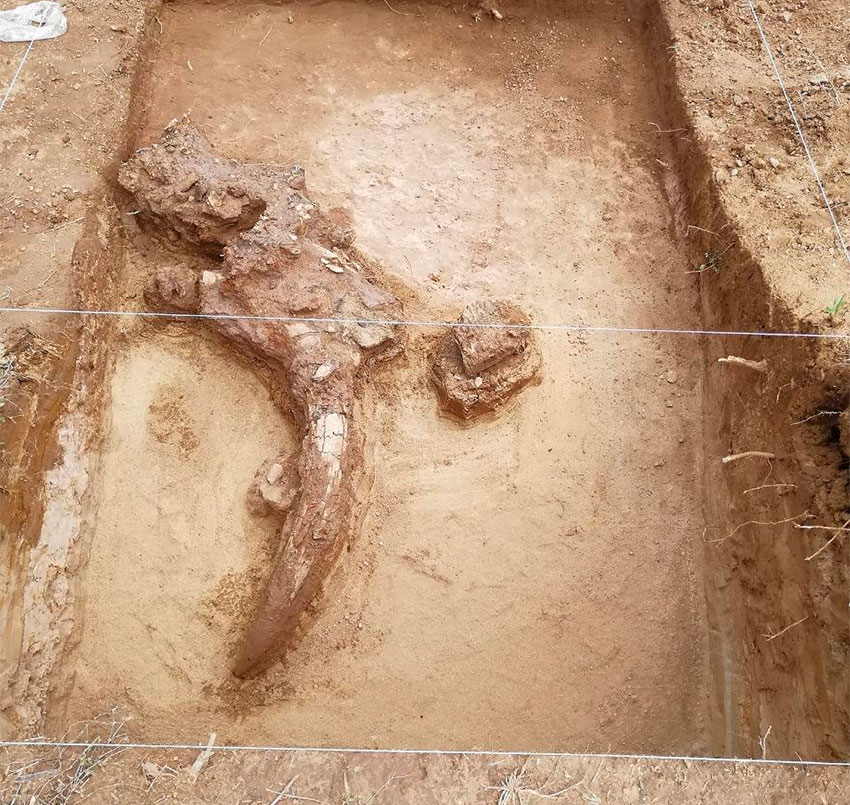
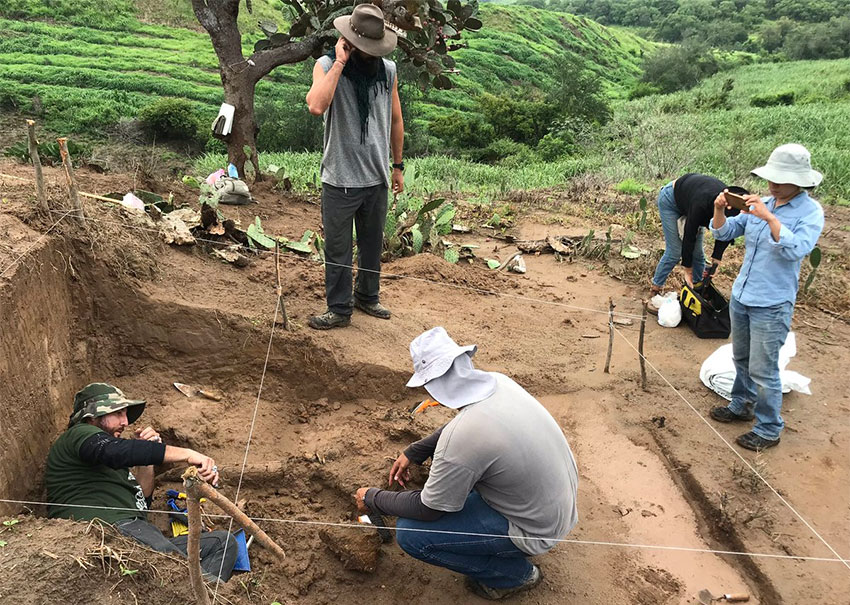
Paleontologists in Zapotiltic, Jalisco.

13,000-year-old bones found in Zapotiltic after heavy rain exposed part of a mammoth skull.

A recent discovery of prehistoric animal bones that are believed to be at least 13,000 years old has revealed the paleontological wealth of southern Jalisco.

Community museum worker and amateur paleontologist Antonio Vargas Moreno was walking on a hill in the town of San José de la Tinaja last month when he found what later would be identified as part of the skull of a mammoth.

The cranium was exposed after heavy rain caused erosion on the hillside.

Vargas advised the Paleontology Museum in Guadalajara and the National Institute of Anthropology and History (INAH) about his find, and experts from both subsequently traveled to San José, a community of some 400 residents in the municipality of Zapotiltic.

INAH Jalisco archaeologist Eduardo Ladrón de Guevara told the news agency EFE that further investigation of the hill revealed the presence of more mammoth bones as well as those of a prehistoric horse and a glyptodon, an ancestor of the armadillo.

Fossilized remains in San José de la Tinaja.

The animals inhabited southern Jalisco up until about 13,000 years ago and were attracted to the area where the bones were found due to the presence of lakes and lagoons.

Archaeologists extracted the mammoth skull and, along with the other bones, it was transferred to the Paleontology Museum.

“Jalisco is rich in [animal] remains,” Ladrón said, adding that people who find fossilized bones often keep them in their own homes.

He explained that’s not a crime because under Mexican law, anyone can be a custodian of archaeological heritage.

However, Ladrón said that the option is “not advisable” because ancient bones can deteriorate without adequate conservation measures.

The remains transferred to Guadalajara will be subjected to a restoration process after which they will be ready to put on public display, said Paleontology Museum official Ricardo Alonso.

Paleontologist at work.

“We do a mechanical cleaning then a strengthening [process] to harden the remains,” he said, adding that broken bones are put back together “piece by piece” until they are ready for exhibition.

Alonso said that restoring all the recently-discovered bones could take as long as a year, a process that Ladrón said “allows us to reconstruct part of the history of the state and country.”

Source: EFE (sp) / mexiconewsdaily.com

Meet Adratiklit boulahfa, World’s Earliest Known Stegosaur

Friday, August 23, 2019

Adratiklit boulahfa is closely related to the European stegosaurs Dacentrurus and Miragaia (seen here). Image credit: Nobu Tamura, spinops.blogspot.com / CC BY 3.0.

Paleontologists in Morocco have found fossil fragments from a new genus and species of stegosaur that walked the Earth about 168 million years ago (Jurassic Period).

Stegosaurs were a widespread group with species of the armored (thyreophoran) dinosaurs found in Southern Africa, North America, Asia and Europe.

But the newly-discovered stegosaur, named Adratiklit boulahfa, is the first of the group to hail from North Africa.

Its fossilized remains — a handful of vertebrae and an upper arm bone — were found in the Middle Atlas Mountains of Morocco.

“The discovery of Adratiklit boulahfa is particularly exciting as we have dated it to the middle Jurassic,” said Dr. Susannah Maidment, a researcher at the Natural History Museum, London.

“Most known stegosaurs date from far later in the Jurassic period, making this the oldest definite stegosaur described and helping to increase our understanding of the evolution of this group of dinosaurs.”

Adratiklit boulahfa is the oldest definitive stegosaur and the first from North Africa. Image credit: Maidment et al, doi: 10.1016/j.gr.2019.07.007.

To understand the evolutionary relationship of Adratiklit boulahfa with known stegosaurs, Dr. Maidment and her colleagues from the University of Brighton, the Natural History Museum, London, and the Université Sidi Mohamed Ben Abdellah conducted the phylogenetic analysis of the specimens.

“Despite being from the African continent our phylogenetic analysis indicated that, surprisingly, Adratiklit boulahfa is more closely related to European stegosaurs than it is to the two genera known from southern Africa,” said Tom Raven, a PhD student at the University of Brighton and the Natural History Museum, London.

When stegosaurs were alive, the world was divided into two supercontinents: Laurasia and Gondwana. Laurasia included the land masses that today make up most of the northern hemisphere’s continents, and Gondwana eventually split into land masses including Africa, South America, Australia and Antarctica.

Stegosaurs were diverse and abundant in Laurasia. In contrast, their remains are extremely rare in Gondwana.

The discovery of Adratiklit boulahfa now adds to the theory that the Gondwanan fossil record of armored dinosaurs is significantly biased by both geological factors and collection efforts.

“Most stegosaurs we know of have been found in Laurasian rock formations,” Dr. Maidment said.

“This, however may not mean that stegosaurs were not so common in Gondwana and in fact may be due to the fact that Gondwana rock formations have been subject to far fewer excavations and detailed studies.”

The team’s paper was published in the journal Gondwana Research.

_____

Susannah C.R. Maidment et al. North Africa’s first stegosaur: Implications for Gondwanan thyreophoran dinosaur diversity. Gondwana Research, published online August 16, 2019; doi: 10.1016/j.gr.2019.07.007

Source: www.sci-news.com

Adratiklit boulahfa: New Species of Stegosaur is Oldest Ever Discovered, Scientists Say

Wednesday, August 21, 2019

Scientists said despite the limited number of fossils they had to work with, the specimens were sufficient for them to identify them as belonging to a new species of stegosaur ( Getty )

Creature believed to have walked the earth 168 million years ago.

A new species of one of the most recognisable types of dinosaur is also the oldest of its kind ever discovered, British scientists believe.

Remains of a stegosaur, a dinosaur made famous through the Jurassic Park films, were studied by a team from the Natural History Museum and belong to a new genus which walked the earth around 168 million years ago.

Stegosaurs are armoured dinosaurs recognisable by spike-like bones protruding from their spine and tails.

Despite the specimen including only a few vertebrae and an upper arm bone, scientists concluded it was a new species and genus which dates to the middle Jurassic Period – much earlier than most known stegosaurs.

The team, led by Dr Susannah Maidment, named it Adratiklit boulahfa, meaning “mountain lizard” in the Berber language.

Boulahfa is a reference to the locality in the Middle Atlas Mountains of Morocco where the specimen was found.

“The discovery of Adratiklit boulahfa is particularly exciting as we have dated it to the middle Jurassic,” said Dr Maidment. “Most known stegosaurs date from far later in the Jurassic period, making this the oldest definite stegosaur described and helping to increase our understanding of the evolution of this group of dinosaurs.”

The specimen is the first stegosaur, a thyreophoran dinosaur, to be found in North Africa.

Thyreophoran dinosaurs are found across much of the globe and have been mainly attributed to Laurasian rock formations, the team explained.

This has suggested that when the earth was divided into two supercontinents, Laurasia and Gondwana, thyreophorans were more common and diverse in Laurasia. But the recent discovery could dispute that.

Dr Maidment added: “Most stegosaurs we know of, including the Natural History Museum’s Sophie, the most complete stegosaur discovered, have been found in Laurasian rock formations.

“This, however may not mean that stegosaurs were not so common in Gondwana and in fact may be due to the fact that Gondwana rock formations have been subject to far fewer excavations and detailed studies.”

The team said the discovery adds to the theory the Gondwanan fossil record of armoured dinosaurs is significantly biased by geological factors and collection efforts.

Dr Maidment said: “What is exciting about this is that there could be many more thyreophoran dinosaurs to find in places that until now have not been excavated.”

Further discoveries in the region will provide an improved view of the distribution of this group of dinosaurs and could result in a more complete specimen of Adratiklit boulahfa, the team said.

Source: Press Association / www.independent.co.uk

Rise of Dinosaurs Linked to Increasing Oxygen Levels

Wednesday, August 21, 2019

Restoration of Chindesaurus bryansmalli with likely protofeathers based on phylogenetic bracketing.

Scientists have found that increasing oxygen levels are linked to the rise of North American dinosaurs around 215 M years ago. A new technique for measuring oxygen levels in ancient rocks shows that oxygen levels in North American rocks leapt by nearly a third in just a couple of million years, possibly setting the scene for a dinosaur expansion into the tropics of North America and elsewhere. This is presented in a Keynote talk at the Goldschmidt Geochemistry conference, in Barcelona.

The US-based scientists have developed a new technique for releasing tiny amounts of gas trapped inside ancient carbonate minerals. The gases are then channelled directly into a mass spectrometer, which measures their composition.

Lead researcher, Professor Morgan Schaller (Rensselaer Polytechnic Institute, New York) said:"We tested rocks from the Colorado Plateau and the Newark Basin that formed at the same time about 1000 km apart on the supercontinent of Pangea. Our results show that over a period of around 3 million years—which is very rapid in geological terms—the oxygen levels in the atmosphere jumped from around 15% to around 19%. For comparison, there is 21% oxygen in today's atmosphere. We really don't know what might have caused this increase, but we also see a drop in CO2 levels at that time."

"We expect that this change in oxygen concentration would have been global change, and in fact we found the change in samples which were 1000km apart. What is remarkable is that right at the oxygen peak we see the first dinosaurs appearing in the North American tropics, the Chindesaurus. The Sauropods followed soon afterwards. Again, we can't yet say if this was a global development, and the dinosaurs don't rise to ecological dominance in the tropics until after the End-Triassic extinction. What we can say is that this shows that the changing environment 215 M years ago was right for their evolutionary diversification, but of course oxygen levels may not have been the only factor."

Comparison of the size of Chindesaurus and a human

Chindesaurus was an upright carnivorous dinosaur (around 2m long and nearly 1m high). Found extensively in North America, with origins in the North American Tropics, it was a characteristic late Triassic dinosaur of the American Southwest. It was originally discovered in the Petrified Forest National Park. The Sauropods, which appeared soon after Chindesaurus, were the largest animals ever to live on land.

Commenting, Professor Mike Benton (University of Bristol) said:"The first dinosaurs were quite small, but higher oxygen levels in the atmosphere are often associated with a trend to larger size. This new result is interesting as the timing of oxygen rise and dinosaur appearance is good, although dinosaurs had become abundant in South America rather earlier, about 232 million years ago."Professor Benton was not involved in this work; this is an independent comment.

At the time the gases were trapped, the Colorado Plateau and the Newark Basin were part of the giant supercontinent, Pangea. Both were located near the equator. The rocks containing the oxygen and carbon dioxide were dated by measuring the radioactive decay of Uranium which was found in the samples.

Source: https://phys.org

From Field to Museum: How Dinosaur Fossils are Prepared

Wednesday, August 21, 2019

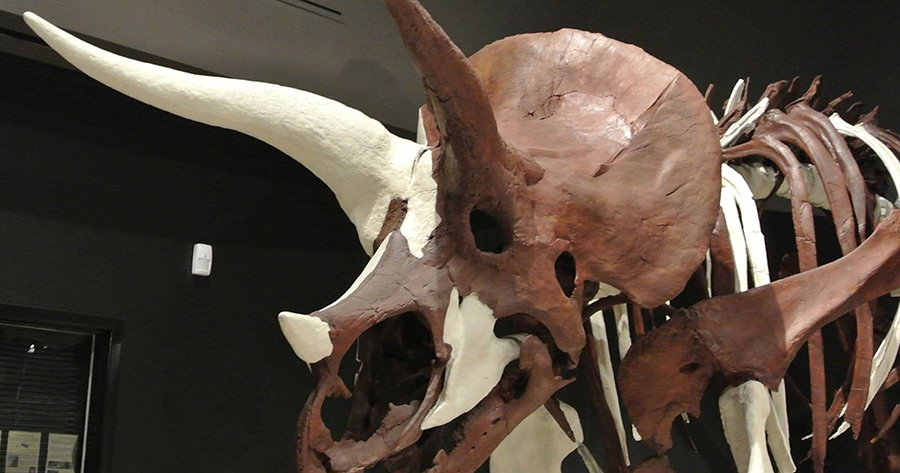
This Triceratops fossil came from the middle of the Hell Creek Formation. It is displayed at MSU’s Museum of the Rockies.  (Photo: Photo courtesy of MSU News Service)

When people think of a paleontologist, they usually picture a grizzled paleontologist gently sweeping dust away from a perfectly articulated dinosaur skeleton. In this scenario, the bones are perfectly preserved, easily distinguishable and seem to be miraculously excavated from the rock around it. The truth is, paleontology isn’t that easy.

In most cases, it is rare to find fossils complete. Most fossils in the field are fragmentary and sometimes only impressions are left behind. In paleontology, context is everything! Field paleontologists know where to seek out specific fossil localities for their research by examining geological maps called topographic maps. From these maps, they can then use a trained eye to read the rocks and identify where fossil bone could possibly be found. When a fossil is discovered during prospecting (hiking all day while looking for cues in the ground), notes and details are immediately recorded about its preservation and location. Pictures of the entire site are taken and everything is well documented before any digging commences. Finally, the fossil is excavated with a variety of tools depending on the nature of the rock the fossil is in. All fossils are found in one type of rock, sedimentary, which comes in all different shapes and sizes from sandy textured grains to more fine grained and compact rock. The kind of sedimentary rock determines the types of tools we use. Some popular tools of the trade include geopicks, jackhammers, dental tools, clay knives, and shovels.

The specimen is usually capped (plastered with burlap) with a hard shell or “jacket” that will protect it during transportation to its final destination, often a museum or university lab. To start this process, a layer of highly specialized paleontological paper (toilet paper!) is applied on the surface of the bone to create a barrier between the plaster jacket and fossil bone. Plaster is then mixed. Layers of burlap are then dipped in plaster and laid on the paper-covered fossil until that side of fossil and rock is fully encased in this “jacket.” The jacket is then flipped over and capped on the other side, totally encasing the fossil and making it ready for transport. Field paleontology is often conducted in remote locations that may not have great road access. Therefore, the team of paleontologists and volunteers may need to work together to manually haul heavy jackets across tough terrain. In some cases, like in the Perot Museum’s In The Field paleontology, helicopters are required to lift and transport heavy field jackets.

Most of the fossil unveiling takes place in a prep lab. Fossil preparators and volunteers uncover and preserve the fossils using specific tools and techniques. Preparators slowly and carefully break away the matrix, or surrounding rock, from a fossil. Some fossils with softer matrix are cleaned with hand tools such as dental curettes. Special reversible glues may be applied to strengthen weak or broken specimens. In the end, fossil preparator’s job is to ensure that fossil specimens are prepared and stored with care to be preserved for researchers, artists and future generations.

By Myria Perez, Assistant Fossil Preparator, Perot Museum of Nature and Science

Source: www.nbcdfw.com

Devonian Fish of the Eescuminac Formation

Monday, August 19, 2019

Eusthenopteron by atrox1

An exquisite fossil specimen of an Eusthenopteron Fordi from the upper Devonian (Frasnian), Eescuminac Formation, Miguasha Park, Bay of Heat, Gaspé, Quebec, Canadian Museum of Natural History, Miguasha Collection.

If you look closely at this specimen, you can see the remarkable 3-D and soft-bodied preservation. This fish specimen reminds me of the ray-finned fossil fish you see in carbonate concretion from Lower Cretaceous deposits in the Santana Formation, Brazil.

Eusthenopteron foordi

Eusthenopteron would have shared our ancient seas with the first ammonites and primitive sharks, along with well-established fauna including the trilobites, brachiopods, coral reefs and a whole host of interesting arthropods.

Miguasha National Park / Parc National de Miguasha, is a protected area near Carleton-sur-Mer on the Gaspé Peninsula of Quebec in Canada. It was created in 1985 by the Government of Quebec and designated as a World Heritage Site in 1999 in honour of paleontological significance for Devonian fish, flower and spore fossils.

These fossils represent five of the six main fossil fish groups recorded from the Devonian (370 million years ago) including specimens of the lobe-finned fish and tetrapods. We see the placoderms, armoured prehistoric fish, in their heyday, dominating almost every known aquatic environment. The Devonian is known as the 'Age of Fishes,' but it could have equally been called the 'Age of Spores,' as this was a time of significant adaptive radiation of terrestrial biota and free-sporing vascular plants. Immense forests carpeted the continents and we see the first of the plant groups evolving leaves, true roots and seeds.

The site was discovered in 1842 by a local geologist and medical doctor, Abraham Gesner. He shared much of his collection with both the British Museum and Royal Scottish Museum for further study.

Source: www.science20.com

Asteroid Warning: Space Rock Comparable to Dinosaur Killer is Heading Earth’s Way

Sunday, August 18, 2019

Asteroid warning: Space rock comparable to dinosaur killer is heading Earth’s way (Image: GETTY)

A MASSIVE asteroid comparable to the massive space rock which brought the dinosaurs’ reign on Earth to an end is hurtling towards Earth, and scientists have confirmed it is “potentially hazardous”.

The asteroid known as 1990 MU is currently completing another orbit of the Sun, and in 2027 it could come perilously close to Earth. Asteroid 1990 MU is between 4-9 kilometres in diameter and on June 6 2027, it is set to come within 0.03 AU - astronomical unit. One AU is the distance between the Earth and the Sun, so coming within just 0.03 AU is perilously close.

For reference, Mars – the planet which humans are hoping to reach – is around 0.5 AU.

The asteroid is classed as a potentially hazardous asteroid, which according to NASA has the “potential to make threatening close approaches to the Earth.”

According to data from NASA, 2019 OK was large – an estimated 187 to 427 ft (57 to 130) wide – and hurtling fast along a path bringing it within only 45,000 miles (73,000km) of Earth when it flew by in recent weeks.

This was less than one-fifth of the distance to the Moon and what the Royal Institution of Australia’s Professor Alan Duffy described as “uncomfortably close.”

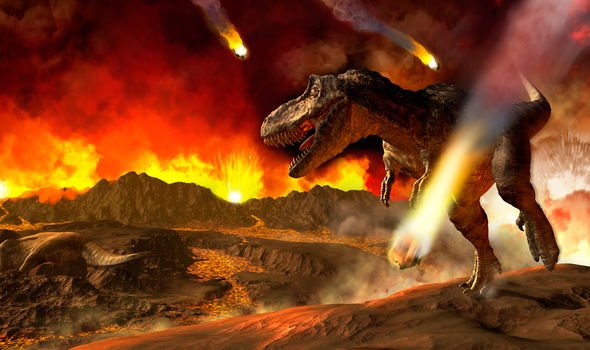
An asteroid strike 66 million years ago put an end to the dinosaurs (Image: GETTY)

That asteroid would have been big enough to wipe out a city, so 1990 MU could be truly devastating.

Asteroid 1990 MU is up to nine kilometres in diameter, which puts it in the same ball-park as the space rock which put an end to the dinosaurs.

That space rock is believed to have been between 10-15 kilometres wide and came crashing into what is now Mexico 66 million years ago marking the beginning of the end of the dinosaurs.

Research from the University of Glasgow has found up to three quarters of life on Earth was wiped out from the asteroid, with the dinosaurs dying out within a few centuries.

The space rock caused a cloud of dust to fill the air which blocked out the sun, leading to drastic and sudden climate change that ultimately created major food shortages across Earth, leading to the death of bigger animals, and allowing smaller creatures, such as mammals, to thrive in their absence.

Now, a comparable asteroid is heading Earth’s way.

The orbit of 1990 MU on July 7 2027 (Image: NASA)

While the asteroid will be close within the next decade, it will be even closer in 2058, when it comes within 0.02 AU - less than three million kilometres.

Scientists estimate that a life-ending asteroid, such as the one which put an end to the dinosaur’s reign, would collide with Earth every 100 million years or so.

But asteroids can strike at any moment and there is always a very slim chance a massive civilisation-ending space rock could hit sooner.

For that reason, many claim global authorities should have a plan in place – but it seems they do not.

NASA employee Robert Frost, who works as an instructor and flight controller for the space agency according to his bio on Q+A website Quora, said the best thing governments could do is tell the public to “hunker down”, as there would be little which can be done to prepare for the inevitable.

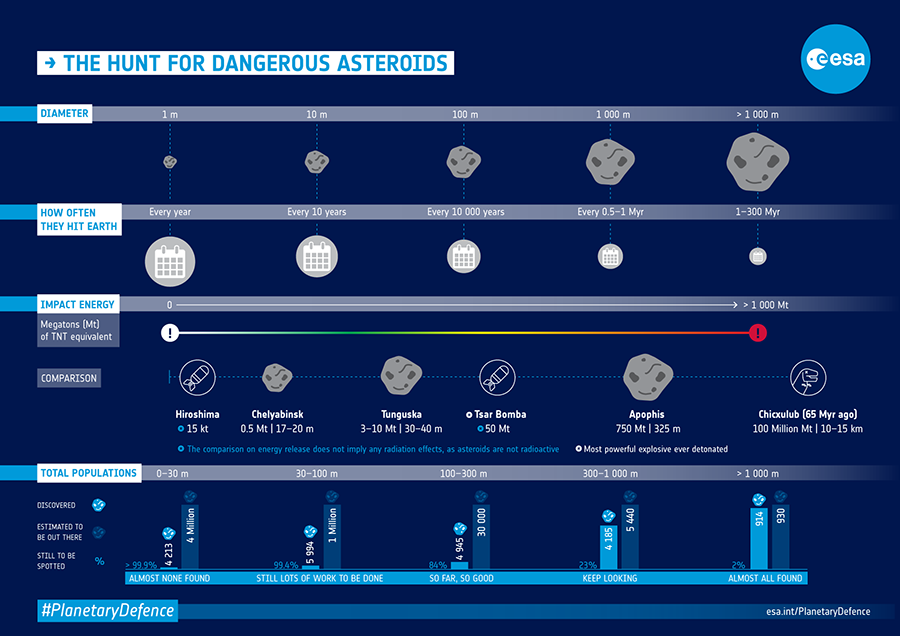
The hunt for asteroids (Image: ESA)

Mr Frost was writing in response to the question: “If it were discovered that an asteroid was going to wipe humanity out, say in 2 months, how would the governments of the world respond?”

He said: “That’s a tough one. Movies tell us they would keep it secret. There’s a lot of sense to that. Mass panic can be more dangerous than the actual event.

“But my experience working in government is that the government really isn’t good at keeping anything secret unless it begins within a secretive part of the culture, like the military.

“Something like this would likely be first discovered by someone that couldn’t spell ‘security clearance’. It would be evident to astronomers all over the world.

“Feeling helpless, the government would likely just tell us to ‘hunker down’ and duct tape our window seams.

“Then the Democrats would blame it on the Republicans for ignoring global warming and the Republicans would blame it on the Democrats for not praying in school.”

Source: www.express.co.uk

Isogomphodon aikenensis: SC Researchers Discover Prehistoric Shark Species Over 100 Miles From Sea, in Aiken

Sunday, August 18, 2019

The illustration that accompanied Müller and Henle's original description.

More than 30 million years ago, scientists believe that 20 to 30 feet of salt water covered Aiken and much of the surrounding area.

In that sea swam sharks, rays and other creatures, and their fossilized remains can be found here today.

Jim Knight, an Aiken resident, teamed up with Dave Cicimurri to study to those prehistoric animals.

Knight is a former curator of natural history at the South Carolina State Museum in Columbia, and Cicimurri is the museum’s current curator of natural history.

One of the sharks they identified wasn’t previously known to science, and they named it in honor of Aiken and Aiken County.

It is called Isogomphodon aikenensis and is considered a new species of daggernose shark.

“Aikenensis, literally translated, means lived in Aiken,” Knight said.

Shark discovery: A new species of daggernose shark was found in South Carolina (Image: GETTY/D.CICIMURRI/J.KNIGHT)

Information about Knight and Cicimurri’s discovery is included in a scientific paper they wrote that was published earlier this year in PaleoBios, a journal produced by the University of California Museum of Paleontology.

The title of the paper is “Late Eocene (Priabonian) Elasmobranchs from the Dry Branch Formation (Barnwell Group) of Aiken County, South Carolina, USA.”

An elasmobranch is a cartilaginous fish from a group made up of sharks, rays and skates.

“Anytime you can increase the knowledge of paleobiodiversity, it is exciting,” Knight said. “Something like this is what taxonomists and morphologists look for.”

Based on the fossilized teeth they examined, Knight and Cicimurri believe Isogomphodon aikenensis was similar to the modern day daggernose shark, which lives in the shallow tropical waters off of northeastern South America.

The modern daggernose has an elongated, flattened and pointed snout. Its pectoral fins are large and shaped like paddles, and its eyes are small.

Isogomphodon aikenensis adults probably were about “5 feet or so” long, which is about the size of a modern daggernose, Cicimurri said.

The Isogomphodon aikenensis teeth studied by Knight and Cicimurri were thin and small.

They generally measured less than 5 millimeters in height, but some were as big as 7 millimeters, or a little over a quarter of an inch tall.

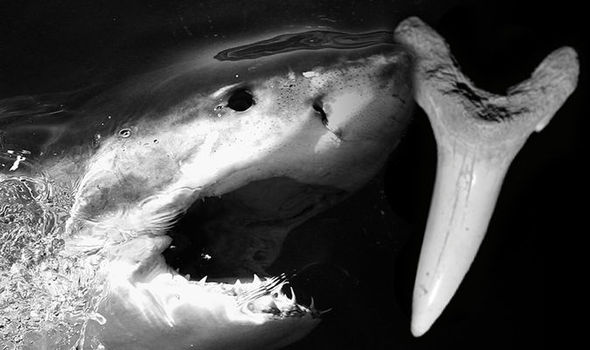
Isogomphodon aikenensis “didn’t grab and tear off big chunks of meat like a great white shark does,” Cicimurri said. “It probably ate little fish and grabbed them with its small needle-like teeth. Then it gulped them down. It didn’t chew its food.”

So far, remains exactly like those of Isogomphodon aikenensis haven’t been found anywhere else in the world.

“It’s possible that people will come across them if they look in other areas of South Carolina or other places in the Southeast,” Cicimurri said. “From what I’ve seen of sharks and rays in that time period, they were pretty widely distributed, at least in the Southeast. So a lot of things we find here you can also find down in Georgia or over in Alabama and Mississippi. I wouldn’t be surprised if they popped up somewhere else.”

The Isogomphodon aikenensis teeth are among the several thousand fossils from the Aiken area that Knight and Cicimurri have scrutinized.

Shark discovery: The researchers found thousands of shark fossils and teeth (Image: D.CICIMURRI/J.KNIGHT)

Knight, his family and Cicimurri collected most of them.

“Many years ago, when I was still working at the Savannah River Ecology Lab, we were doing alligator surveys by helicopter,” Knight said. “We couldn’t refuel at the Savannah River Plant (now known as the Savannah River Site), so we had to fly clear up to the Aiken airport to refuel. Every time we did that, we would follow Highway 1 north, and we flew over this little badlands area in an old kaolin pit on the west side of the road, about a mile or two south of the airport.”

When Knight and his family went out there and looked around, they found fossils.

“Then I got word about a site in South Aiken, when I was working at the State Museum,” Knight said.

He checked it out and picked up fossils like the ones discovered north of Aiken.

The Isogomphodon aikenensis teeth studied by Knight and Cicimurri while writing their paper were from Aiken’s Southside, but the same type of teeth also were found at the other site.

Cicimurri and another colleague who has studied the fossils also identified a new species of ray and named it Pseudaetobatus undulatus.

Turtle, crocodilian and bony fish fossils also have been collected from the two sites in the Aiken area.

In all, Knight and Cicimurri identified 17 species of sharks and seven species of rays in the paper they wrote that appeared in PaleoBios.

Source: www.aikenstandard.com

The Dubai Mall's Giant Dinosaur Skeleton to be Auctioned Off

Sunday, August 18, 2019

Dubai Mall's dinosaur skeleton is seeking a new owner. Wam.

Emirates Auction have announced that it will hold the Middle East's first auction of its kind to find the Diplodocus longus a new home.

If you've a penchant for collecting things of the really old, and really large variety (and you have rather a lot of money), this auction is for you.

The huge, 155-million-year-old dinosaur skeleton that dominates an atrium in The Dubai Mall is going under the hammer.

Emirates Auction have announced that it will hold the Middle East's first auction of its kind to find the Diplodocus longus a new home, seeking lovers of rare collectibles as potential new owners.

The online auction will begin with a starting value of Dh14.6 million, and will end on August 25.

Affectionately known as the 'DubaiDino', the 24-metre long, 7.6-metre high Diplodocus longus dinosaur is from the late Jurassic period.

It was installed in the Souk Dome in The Dubai Mall in 2014, and at the time, was the first of its kind in the world. The dinosaur, which was estimated to be age 25 when it died, weighs the same as five elephants.

The DubaiDino moniker was coined as part of a competition to name the skeleton, and was won by Johara Al Bayedh, a bank manager and Saudi national.

The remains of DubaiDino were discovered in 2008 at the Dana Quarry in Wyoming, US and it was flown to Dubai.

About 90 per cent of this fossil’s bones are original and were found intact at the excavation site. This made it an unusual find since the last Diplodocus longus discovered had only 30 per cent of the original bones.

"The auction will be an ideal opportunity for those looking for excellence to supplement their collections with a historic masterpiece rarely found around the world," Wam said.

Source: www.thenational.ae

Pages