Blogs

How To Find Dinosaur Fossils

Thursday, July 25, 2019

The tail of a sauropod dinosaur found in the Sahara Desert in Niger. These bones were discovered on a joint expedition by the Museum and Kingston Polytechnic (now Kingston University) from 1987 to 1988.

For palaeontologists in the field, few techniques have changed much since the early days of dinosaur hunting. 

Many of us associate science with high-tech undertakings. But when it comes to digging up dinosaurs, methods are far more humble, with palaeontologists in the field typically armed with shovels, brushes and the occasional power tool. 

Where do you find a dinosaur?

Prof Paul Barrett is a dinosaur researcher at the Museum and has taken part in many a dig, most recently the Mission Jurassic dig in Wyoming, USA. When it comes to knowing where to look, he says, 'We don't just go to any site and start digging. It's an educated guess.

'When we go out, we're looking for rocks of the right age that we know might have dinosaur fossils in them. So that's rocks from the Mesozoic Era - from the Triassic, Jurassic or Cretaceous periods.

'We look at geological maps to see where these types of rocks are appearing. Then when we go to those places, there should be some chance of finding a dinosaur.'

Palaeontologists don't always have to dig to find evidence of dinosaurs. Rocks can naturally weather away to reveal bones that have been hidden for millions of years.

Topographic maps can also be useful in the hunt for fossils. These show vertical depth as well as man-made structures such as roads, and can indicate how accessible a site will be.

What do fossils look like?

'Before we get digging, Paul says, 'we want some indication that there is a dinosaur in the ground. It does come down to luck: the dinosaur fossils have to have been eroded out at the surface so that you can see at least a little bit of it poking out.

'We spend a lot of time walking around, looking at the floor.'

Finding isolated fragments of bone, sometimes called float, are an indication that there may be more fossils nearby.
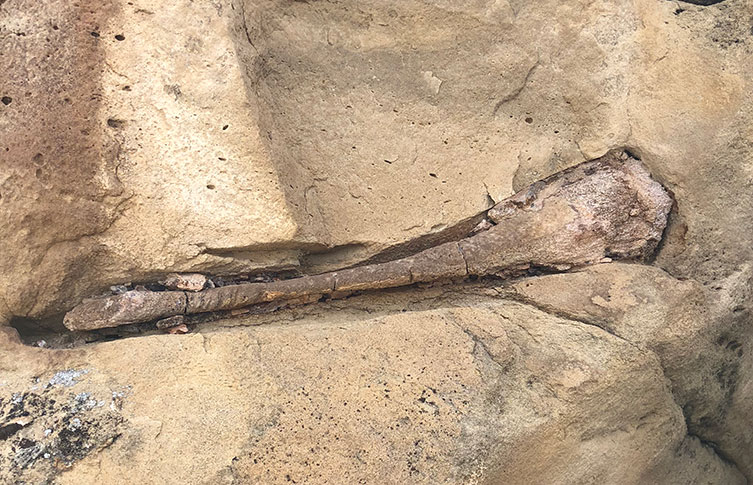
This bone was found naturally eroding out of the surrounding sandstone during the Mission Jurassic dig in Wyoming. Fragments like this indicate there may be more bones nearby.

You can figure out whether it's a fossil with a trained eye and a hand lens, but there is another way to quickly tell bone from stone in the field - although it's not particularly pleasant.

'In some cases, rock and bone look very similar, but fossils still have the structure of the living bone tissue that it once was. It will have a pattern of microscopic, honeycomb-like structures running through it,' explains Paul.

'Rock doesn't have this, so one quick way to tell the difference is to lick it.

'The tiny tubes in the bone draw moisture out of your tongue. So if it sticks to your tongue, it's probably bone, and if it doesn't it's probably rock.'

In some cases, bone (L) can look very different to the surrounding rock (R). The difference really depends on the type of rocks it's embedded in.

Scientists have trialled methods such as ground-penetrating radar to locate bones underground. But so far they haven't been effective enough, which suggests that for now the traditional approach to dinosaur hunting works best.

Digging for dinosaurs

Once you've selected a spot where there may be bones below the surface, getting a dinosaur out of the ground often requires a lot of digging.

'It's rare that you'll find a whole dinosaur bone, and even rarer, a whole skeleton waiting at the surface to be discovered,' explains Paul.

Mark Graham, a fossil preparator at the Museum, works to excavate fossils from the Morrison Formation

In places where there is a lot of overburden (the rocks overlying the material you're trying to dig up), palaeontologists may use heavy machinery to remove it and gain access to the fossils below. Early fossil hunters sometimes resorted to dynamite to blast the rocks apart to get to the bones.

Once closer to the bone bed, palaeontologists switch to smaller tools such as trowels, brushes and utility knives. It can take days or even weeks of painstakingly working around a bone to be able to remove it from the ground with minimal damage. 

Excavating dinosaur bones

Dinosaur bones can be very fragile. Even those that appear large and heavy can't always support their own weight when lifted out of the ground, as they may have fractures running through them.

Even the largest dinosaur bones can be fragile and fracture. These sauropod bones were found in the Sahara Desert in the 1980s.

Fossils can break during the excavation process. Paul says, 'It's actually quite common. When you're taking a bone out of the ground, you aren't exactly sure where the ends of it are or where it starts going into the ground.

'Often you first find the bone by accidentally digging into it, so it's very common to take a little nick off. We just keep the little pieces and they get stuck back on. We take really good care of them. We're very good with glue and we can usually make the bones right again.'

To protect the bones during transport, palaeontologists use field jackets. This involves using plaster of Paris and burlap to create a cast around a bone, similar to the casts doctors use to stabilise a broken arm or leg.

A sauropod bone in the Sahara Desert is wrapped in plaster and burlap in a process known as jacketing

'We don't just pull the bones out of the ground, because they tend to break on the way back to the lab,' Paul says. 'We keep them embedded in at least some of the rock to make that transportation process as safe as possible, and then the hard work of getting them out of the rock happens back at the lab.'

In the lab, a fossil preparator will remove the plaster jacket, then the rocks surrounding the bone, and will fix any fractures to stabilise the bone.

Understanding ancient environments

Fossilised dinosaur bones aren't always the only things found during an excavation. Other scientifically valuable information and specimens can be uncovered, such as evidence of early mammals and invertebrates, as well as trace fossils such as coprolites or trackways.

Usually a dig isn't just spent getting the dinosaurs out of the ground. Scientists will also take the time to study the rocks and excavate other fossils they find along the way.

Palaeontologists may use other techniques, too, such as screen washing.
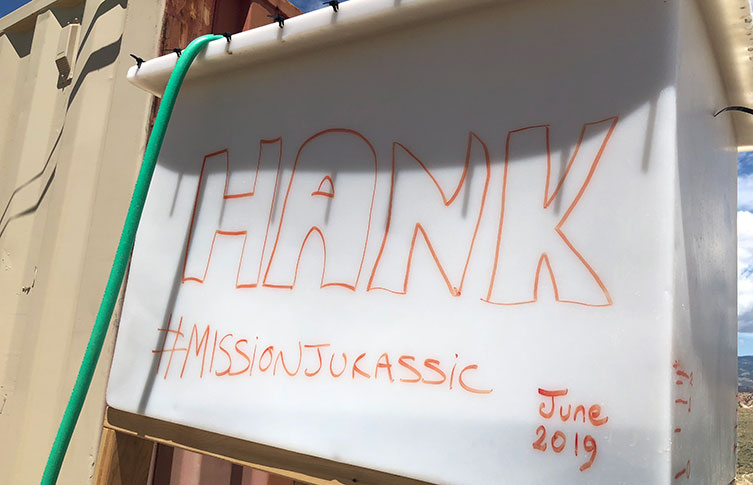
On the Mission Jurassic excavation, scientific associate and microvertebrate expert David Ward led a team to engineer a sieving machine in the field, which was affectionately known as Hank

'We take big bags of sediment and we wash them down with water to look for the tiny fossils within them. We're looking for things like the teeth of mammals and dinosaurs, the tiny vertebrae of lizards and snakes, and other things like that,' explains Paul.

By looking at both animals that lived alongside the dinosaurs and fossilised plants, palaeontologists can build up a more complete picture of what kind of environment the dinosaurs were living in millions of years ago, and how it changed.

Understanding environmental changes in the past could help us understand more about how they affect our planet today.

Source: www.nhm.ac.uk

Researchers Find 2-3-Million-Year-Old Microtektites inside Fossil Clams

Wednesday, July 24, 2019

A microtektite from the shell bed of southwestern Florida. Image credit: Meyer et al, doi: 10.1111/maps.13299.

Fossil clams found in southwestern Florida contain ancient microtektites, tiny (about 200 μm in diameter) glass beads that form when the explosive impact of an extraterrestrial object sends molten debris hurtling into the atmosphere where it cools and recrystallizes before falling back to Earth.

Dr. Mike Meyer, a researcher at Harrisburg University in Pennsylvania, and colleagues found 83 glassy spheres inside fossil clams from a quarry in Sarasota County, Florida.

“We were looking for the shells of single-celled organisms known as benthic foraminifera, when we noticed the translucent glassy balls, smaller than grains of salt,” Dr. Meyer explained.

“They really stood out. Sand grains are kind of lumpy, potato-shaped things. But I kept finding these tiny, perfect spheres.”

The scientists analyzed the elemental makeup and physical features of the spheres and compared them to other microtektites, volcanic rock and byproducts of industrial processes, such as coal ash.

According to the team, these microtektites are between 2 and 3 million years old.

They are likely the remnants of one or more undocumented meteor impacts on or near the Florida Platform, the plateau that undergirds the Florida Peninsula.

“Initial results from an unpublished test suggest the spheres have traces of exotic metals, further evidence they are microtektites,” said Dr. Meyer, lead author of a paper published in the journal Meteoritics & Planetary Science.

“One oddity is that they contain high amounts of sodium, a feature that sets them apart from other impact debris. Salt is highly volatile and generally boils off if thrust into the atmosphere at high speed.”

“This high sodium content is intriguing because it suggests a very close location for the impact.”

“Or at the very least, whatever impact created it likely hit a very large reserve of rock salt or the ocean. A lot of those indicators point to something close to Florida.”

The researchers suspect there are far more microtektites awaiting discovery in Florida and asked amateur fossil collectors to keep an eye out for the tiny spheres.

_____

Mike Meyer et al. A first report of microtektites from the shell beds of southwestern Florida. Meteoritics & Planetary Science, published online May 6, 2019; doi: 10.1111/maps.13299

Source: www.sci-news.com

Jurassic Fossil Shows How Modern Mammals Learned To Swallow

Sunday, July 21, 2019

Image credit: Zhe-Xi Luo/The University Of Chicago Medicine

Paleontologists unearthed an 165-million-year-old Jurassic fossil that sheds light on how modern mammals learned to swallow. The ancient fossil is the earliest example of how modern hyoid bones functioned throughout the evolution of mammals.

In scientific terms, hyoid bones work to link the back of the mouth known as the pharynx, to the openings of the esophagus and the larynx. All modern mammals including humans have hyoids arranged in a “U” shape, so that food is easily transported and swallowed.

Mammals have a more complex bone system compared to other living vertebrates, when it comes to processing and swallowing food, making them look much more sophisticated compared to the predators that can swallow their prey as a whole, such as snakes and alligators.

“Mammals have become so diverse today through the evolution of diverse ways to chew their food, weather [sic] it is insects, worms, meat, or plants. But no matter how differently mammals can chew, they all have to swallow in the same way,” Zhe-Xi Luo, Ph.D., a professor of organismal biology and anatomy at the University of Chicago and the senior author of a new study of the fossil, published in Science said in a statement.

Modern hyoid bones are mobile, allowing the throat muscles to control how much food is swallowed and transported. While other vertebrates also have hyoid bones, they don’t have as complex a structure as that of mammals, as they can only swallow large chunks of food, rather than small lumps like mammals have.

However, for a long time, scientists have tried to unveil the mystery on how modern mammals learned to swallow, and how our hyoid bones evolved to be so advanced. In 2014, Chang-Fu Zhou, Ph.D. from the Paleontological Museum of Liaoning in China, and lead author of the study, unveiled a Jurassic fossil of Microdocodon with its hyoid bones preserved. The fossil was discovered in the popular Jurassic Daohugou site of northeastern China.

“It is a pristine, beautiful fossil. I was amazed by the exquisite preservation of this tiny fossil at the first sight. We got a sense that it was unusual, but we were puzzled about what was unusual about it,” Luo said. “After taking detailed photographs and examining the fossil under a microscope, it dawned on us that this Jurassic animal has tiny hyoid bones much like those of modern mammals.”

The Jurassic fossil they found is a docodont belonging to an extinct lineage of near relatives of mammals that lived in the Mesozoic Era, and were known as mammaliaforms. Scientists believed that hyoids like this would need to be present in all early forms of mammals, but they couldn’t identify how modern mammals learned to swallow. This fossil has allowed scientists to identify and study more hyoid structures observed on other Mesozoic mammals.

“Now we are able for the first time to address how the crucial function for swallowing evolved among early mammals from the fossil record,” Luo said. “The tiny hyoids of Microdocodon are a big milestone for interpreting the evolution of mammalian feeding function.”

Source: www.valuewalk.com

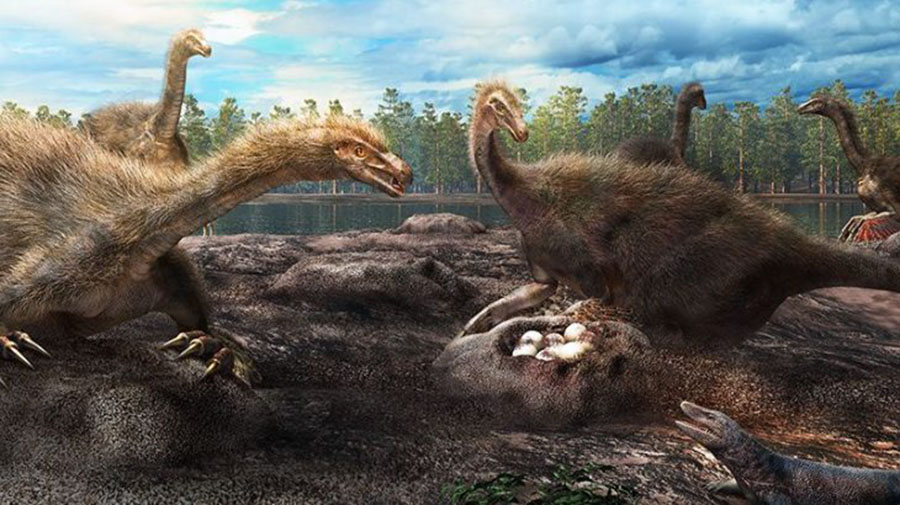
Mother Dinosaurs May Have Protected Their Nests in Groups

Saturday, July 20, 2019

Image Credit: Masato Hattori

An 80-million-year-old dinosaur nesting site in the Gobi Desert of southeastern Mongolia has revealed that mothers worked in groups to protect their eggs just like some birds do today. 

Study co-author François Therrien is an expert at the Royal Tyrrell Museum of Paleontology in Canada.

“Dinosaurs are often portrayed as solitary creatures that nested on their own, buried their eggs and then just went away,” said Therrien. “But here we show that some dinosaurs were much more gregarious. They came together and established a colony that they likely protected.”

The study was focused on the fossils of 15 nests and more than 50 eggs. The research has produced the strongest evidence to date that complex reproductive behaviors evolved before modern birds diverged from dinosaurs 66 million years ago.

Many paleontologists believe that this type of  “colonial nesting” was first used by dinosaurs to deter nest predators, but this theory had never been fully confirmed. 

For decades, fossilized eggs and nests have been found clustered together. But according to study co-author Darla Zelenitsky, the surrounding rock often represents several thousand years or more, which makes it difficult for researchers to tell whether the eggs were laid at the same time or just in the same place.

In the newly-described nest site, however, the eggs appeared to have been laid during the same breeding season. A streak of bright red rock contains 15 clutches of relatively undisturbed eggs. “Geologically, I don’t think we could’ve asked for a better site,” said Zelenitsky.

Based on the exterior and interior textures of the eggs, as well as the shell thickness, the team concluded that they most likely belonged to a type of non-avian theropod.

The researchers estimated that over half of the nests had at least one successful hatch, which is comparable to the hatching success of modern birds and crocodiles that constantly monitor their nests in groups. 

“Sometimes you can extract a fascinating and detailed story about the ecology and behaviour of these animals simply by looking at the rocks themselves,” said Therrien.

The study is published in the journal Geology.

Source: www.earth.com

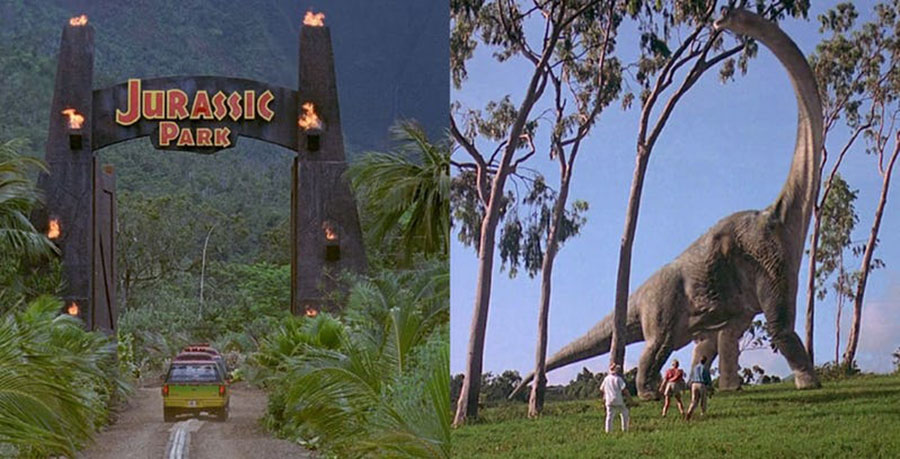
Jurassic Park: 10 Facts Fans Didn’t Know About Isla Nublar

Friday, July 19, 2019

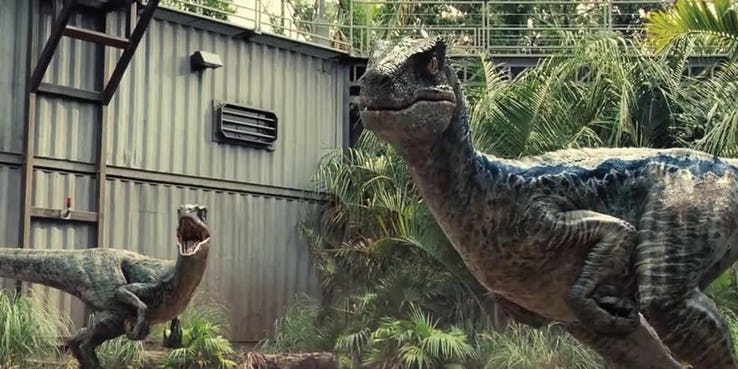
In Jurassic Park lore, Isla Nublar is the home of the first park that saw the negative consequences of cloning dinosaurs. It’s also where, 22 years later, the Indomidous Rex would wreak havoc in Jurassic World, which was built on the remains of its predecessor. It is at the core of the Jurassic Park universe, the cradle from which every major event in the series stems. 

RELATED: 10 Things Jurassic Park Gets Completely Wrong About Dinosaurs

Interestingly, the island itself isn’t very well elaborated on in either the movies or the novel that inspired them. We know that Isla Nublar sits off the coast of Costa Rica, and has a rich and diverse landscape, with mountains, rivers, waterfalls, and dense forest. Yet, dig a little deeper, and there’s a whole treasure trove of information about the little island that became a stomping ground for Tyrannosauruses and Raptors. Here are some lesser known facts about Isla Nublar.

10 ITS NAME LITERALLY MEANS ‘CLOUD ISLAND’

According to Jurassic Park’s official Fandom site, Isla Nublar was first colonized by the Spanish in the mid 1500’s. It earned its name likely because of the low hanging clouds that obscure the island from the mainland.

RELATED: Jurassic Park: 5 Things The Books Do Better Than The Movies (& 5 Things They Do Worse)

Its name is Spanish for ‘Cloud Island’, which was attributed to a Spanish cartographer who accompanied the first voyage to the island. In the modern era, Isla Nublar became the property of Costa Rica, who leased it out to Hammond’s company InGen for construction of the Jurassic Park attraction. 

IT IS NEAR ‘THE FIVE DEATHS’ 

Along with Isla Nublar, Hammond purchased five other islands that neighbored it in what was called the Muertes Archipelago. While not technically part of this grouping, its proximity to the archipelago is an important factor. One of these islands, Isla Sorna, or site-B, was the setting for The Lost World and Jurassic Park III, and where the dinosaurs were first bred prior to their arrival on Nublar. Ironically, these five islands are all called ‘The Five Deaths’, over a native legend that equated them with five different execution methods. 

RELATED: 10 Things From Jurassic Park That Kids These Days Won't Understand

Naming aside, this means that there are four other islands that have not been explored by the franchise, and which could be the setting for upcoming films.

GINGER GROWS THERE NATIVELY

Descriptions of Isla Nublar in both the novel and the film adaptation vary. Both versions share many similarities, but there are some considerable differences between the two incarnations. One random example is the abundance of ginger root that grows on the eastern part of the island. In the novel, the ginger is used to make John Hammond’s preferred flavor of ice cream, which was to be sold to park guests.

RELATED: 10 Most Memorable Quotes From The Jurassic Park Franchise

While this fact may seem inconsequential, it does lead to a pivotal scene in the novel when Hammond stuffs his face from the safety of his bungalow, while those in the park fight for their lives. This plays into the novel’s depiction of Hammond as an arrogant sociopath who lacks any sense of responsibility. 

LOCATIONS ON THE ISLAND CHANGED

The differences between the film and novel’s representation of Isla Nublar do not stop with ginger groves. In fact, most of the major locations in the park were shuffled around for the movie. According to maps released by Universal, the park’s visitor center is located in the westernmost part of the island, wherein in the novel, it's in the north. Dinosaurs are also moved around; the T-Rex enclosure is in the northeast in the movie, while the novel has it smack dab in the middle of the island. Some features from the novel disappeared completely in the movie. The biggest omission was the visitor lodge, which contained a luxury hotel and amenities (more on that in a second). This wouldn’t enter the movie cannon until Jurassic World, after which the locations were switched around again.

IT BECAME A HAVEN FOR THE SURVIVORS OF ISLA SORNA

After Isla Nublar was abandoned after the first containment breach, the island developed its own ecosystem that allowed the dinosaurs to live comfortably in their own little habitat. A similar event happened on the neighboring Isla Sorna, but according to the Dinosaur Protection Group’s Website, things soon took a turn for the worse. Illegal cloning introduced new species of dinosaurs that ended up wrecking the island's ecosystem, causing many of the dinos to fall back into extinction. Fortunately, Isla Nublar provided a safe haven for the survivors of Sorna, allowing them to live sadly while under the care of the park’s medical staff. That is, until the volcano erupted.  

HAWAII WAS A STAND-IN FOR THE ISLAND

Most fans know by now that Hawaii was used as a stand-in for Isla Nublar in every movie in the series. To be more specific, the bulk of filming took place on the island of Kauai, located northeast of the state’s capital of Honolulu. There, the most iconic scenes in the franchise were shot, and many of these locations have changed little in the last twenty-six years. Some of the minor set pieces from the movie are still there today, like the log Dr. Grant and the kids hide behind in the first movie, or the location of the iconic arch, or even the remains of the old helicopter pad from the film’s beginning. These, plus other filming locations scattered around the island, should make visiting Kauai a top priority for every film buff. Though, there are other real-world locations that have been used to represent the park.

PARTS OF JURASSIC WORLD WERE SHOT IN AN ABANDONED AMUSEMENT PARK

Jurassic World broke with tradition by being the first movie in the franchise to shoot on-location scenes of Isla Nublar somewhere other than Kauai. The avenue in front of the visitors center, where tourists are greeted by a line of restaurants and gift shops, was shot on location at the abandoned Six Flags amusement park in New Orleans, Louisiana. The park has been closed since 2005, when Hurricane Katrina ravaged the city, and today it has become a popular destination for urban explorers. Lately, it has found use as a film set, and Jurassic World was one of a number of recent movies that were shot there. 

ISLA NUBLAR WAS DESTROYED IN THE ORIGINAL NOVEL

Fans who have only ever seen the movies may be surprised to learn that Isla Nublar met its demise at the end of the original novel. During the conclusion, following reports of the dinosaurs’ breach of containment, the Costa Rican Air Force bombed the island with napalm. While the survivors of the incident managed to get out in time, the dinos were not so lucky. This is confirmed in the sequel, The Lost World, where it’s revealed that all the dinosaurs on Isla Nublar have been exterminated. 

RELATED: Jurassic Park: 10 Differences Between The Book & The Movie

This means that the island’s destruction in Fallen Kingdom was already a piece of established lore. While the way it was destroyed is an act of nature, rather than by human intervention, the island was nonetheless reduced to a pile of ash following the eruption of Mt. Sibo.

ISLA NUBLAR PROBABLY WON’T BE IN THE NEXT MOVIE

Jurassic World 3 is slated to come out in 2021, concluding both the new trilogy and possibly the entire series. While there’s still a lot we don’t know, one thing we can bet on is that Isla Nublar, and possibly all of its neighboring islands, won’t be in the next film. Now that the island is gone and the dinosaurs are on the loose, there’s no reason for the films to return to where it all began. This means that Jurassic World 3 could be the first movie in the series not to feature any of the original islands, and could possibly take place entirely on the mainland. While it may seem obvious, the lack of any tropical locales places the film in uncharted territory. Without the backing of the islands, there could be no place for the dinos to go, unless they’re relocated to one of the Five Deaths later on. 

HILTON HAS A HOTEL ON ISLA NUBLAR 

Part of the promotional campaign for Jurassic World and its sequel attempted to market the park as though it were real. This included a fully functioning in-universe website dedicated to the park, with links to other external sites that were in on it as well. One of the best sites from the first movie was a webpage for  Hilton’s dino-infested resort on Isla Nublar. The website is very convincing, and to the untrained eye, it looks like any other resort that can be booked in the real world. Browsing through the categories and reading the list of the amenities is darkly funny, considering that many of the hotel’s residents would end up getting eaten later on. The site was established as part of a contest held by Hilton and Universal to give fans a chance to win a dream vacation, and while the contest is over, the website is still up for people to explore.

Source: https://screenrant.com

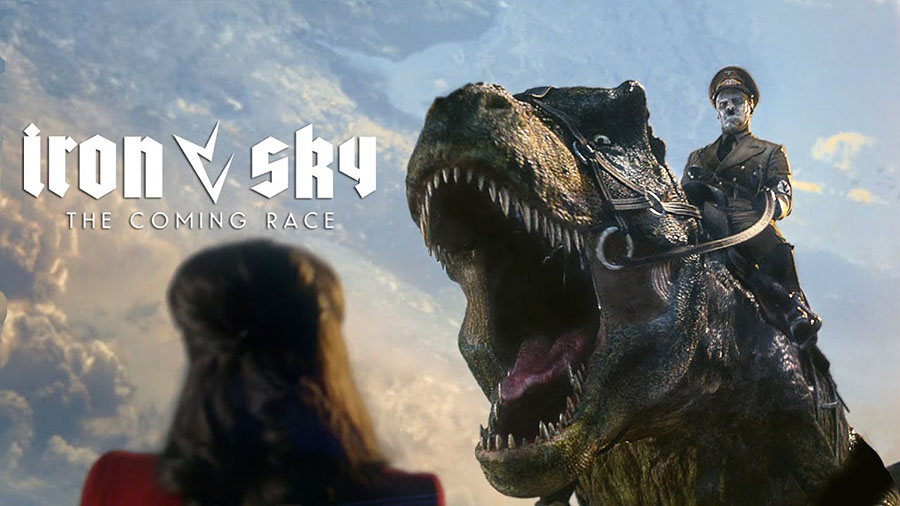
Review: Dinosaur-Riding Nazis in ‘Iron Sky, The Coming Race’

Friday, July 19, 2019

Iron Sky The Coming Race Promo

The Laibach song that plays under the opening credits to “Iron Sky: The Coming Race” ends with a heavily accented voice growling, “Let’s make Earth great again,” just before the movie commences a fantastical tale of ancient shape-shifting aliens controlling human affairs. It’s a provocative start. What does this goofy science-fiction picture have to say about foreign meddling and populism?

Anyone who saw the original 2012 moon-Nazi movie “Iron Sky” already knows the answer: Not much. It’d be a stretch to call these clumsy adventure-comedies “satires.” Any references to contemporary politics are merely meant to titillate.

Picking up nearly 30 years after the original “Iron Sky,” “The Coming Race” stars Lara Rossi as Obi, the daughter of the first film’s heroes. When the last survivors of the human race — huddled on the Third Reich’s old moon base — realize their colony’s on the brink of collapse, Obi leads an expedition to obtain a new power source from the fabled underground home of the alien Vril.

The scenes inside the Vril’s “hollow Earth” HQ are suitably wacky, with alien versions of world leaders, ranging from Caligula to Mark Zuckerberg. Anyone who’s ever wanted to see action sequences involving a dinosaur-riding Adolf Hitler or a robed cult of Steve Jobs disciples will find what they’re looking for here.

But just like the first “Iron Sky,” the sequel is frustratingly unfocused as a commentary on the modern world — and even more so as a story. It has the seeds of several nifty ideas, scattered loosely, left untended.

Source: www.latimes.com

Jurassic Fossil Shows How Early Mammals Could Swallow Like Their Modern Descendants

Friday, July 19, 2019

Microdocodon's slender skeleton suggests that it was an agile and active animal living in trees, with teeth designed for eating insects. Illustration by April I. Neander

The 165-million-year-old fossil of Microdocodon gracilis, a tiny, shrew-like animal, shows the earliest example of modern hyoid bones in mammal evolution.

The hyoid bones link the back of the mouth, or pharynx, to the openings of the esophagus and the larynx. The hyoids of modern mammals, including humans, are arranged in a "U" shape, similar to the saddle seat of children's swing, suspended by jointed segments from the skull. It helps us transport and swallow chewed food and liquid -- a crucial function on which our livelihood depends.

Mammals as a whole are far more sophisticated than other living vertebrates in chewing up food and swallowing it one small lump at a time, instead of gulping down huge bites or whole prey like an alligator.

"Mammals have become so diverse today through the evolution of diverse ways to chew their food, weather it is insects, worms, meat, or plants. But no matter how differently mammals can chew, they all have to swallow in the same way," said Zhe-Xi Luo, PhD, a professor of organismal biology and anatomy at the University of Chicago and the senior author of a new study of the fossil, published this week in Science.

"Essentially, the specialized way for mammals to chew and then swallow is all made possible by the agile hyoid bones at the back of the throat," Luo said.

'A pristine, beautiful fossil'

This modern hyoid apparatus is mobile and allows the throat muscles to control the intricate functions to transport and swallow chewed food or drink fluids. Other vertebrates also have hyoid bones, but their hyoids are simple and rod-like, without mobile joints between segments. They can only swallow food whole or in large chunks.

When and how this unique hyoid structure first appeared in mammals, however, has long been in question among paleontologists. In 2014, Chang-Fu Zhou, PhD, from the Paleontological Museum of Liaoning in China, the lead author of the new study, found a new fossil of Microdocodon preserved with delicate hyoid bones in the famous Jurassic Daohugou site of northeastern China. Soon afterwards, Luo and Thomas Martin from the University of Bonn, Germany, met up with Zhou in China to study the fossil.

"It is a pristine, beautiful fossil. I was amazed by the exquisite preservation of this tiny fossil at the first sight. We got a sense that it was unusual, but we were puzzled about what was unusual about it," Luo said. "After taking detailed photographs and examining the fossil under a microscope, it dawned on us that this Jurassic animal has tiny hyoid bones much like those of modern mammals."

This new insight gave Luo and his colleagues added context on how to study the new fossil. Microdocodon is a docodont, from an extinct lineage of near relatives of mammals from the Mesozoic Era called mammaliaforms. Previously, paleontologists anticipated that hyoids like this had to be there in all of these early mammals, but it was difficult to identify the delicate bones. After finding them in Microdocodon, Luo and his collaborators have since found similar fossilized hyoid structures in other Mesozoic mammals.

"Now we are able for the first time to address how the crucial function for swallowing evolved among early mammals from the fossil record," Luo said. "The tiny hyoids of Microdocodon are a big milestone for interpreting the evolution of mammalian feeding function."

New insights on mammal evolution as a whole

Luo also worked with postdoctoral scholar Bhart-Anjan Bhullar, PhD, now on the faculty at Yale University, and April Neander, a scientific artist and expert on CT visualization of fossils at UChicago, to study casts of Microdocodon and reconstruct how it lived.

The jaw and middle ear of modern mammals are developed from (or around) the first pharyngeal arch, structures in a vertebrate embryo that develop into other recognizable bones and tissues. Meanwhile, the hyoids are developed separately from the second and the third pharyngeal arches. Microdocodon has a primitive middle ear still attached to the jaw like that of other early mammals like cynodonts, which is unlike the ear of modern mammals. Yet its hyoids are already like those of modern mammals.

"Hyoids and ear bones are all derivatives of the primordial vertebrate mouth and gill skeleton, with which our earliest fishlike ancestors fed and respired," Bhullar said. "The jointed, mobile hyoid of Microdocodon coexists with an archaic middle ear -- still attached to the lower jaw. Therefore, the building of the modern mammal entailed serial repurposing of a truly ancient system."

The tiny, shrew-like creature likely weighed only 5 to 9 grams, with a slender body, and an exceptionally long tail. The dimensions of its limb bones match up with those of modern tree-dwellers.

"Its limb bones are as thin as matchsticks, and yet this tiny Mesozoic mammal still lived an active life in trees," Neander said.

The fossil beds that yielded Microdocodon are dated 164 to 166 million years old. Microdocodon co-existed with other docodonts like the semiaquatic Castorocauda, the subterranean Docofossor, the tree-dwelling Agilodocodon, as well as some mammaliaform gliders.


Story Source:

Materials provided by University of Chicago Medical Center. Original written by Matt Wood. Note: Content may be edited for style and length.


Journal Reference:

  1. Chang-Fu Zhou, Bhart-Anjan S. Bhullar, April I. Neander, Thomas Martin, Zhe-Xi Luo. New Jurassic mammaliaform sheds light on early evolution of mammal-like hyoid bonesScience, 19 Jul 2019: Vol. 365, Issue 6450, pp. 276-279 DOI: 10.1126/science.aau9345

Source: www.sciencedaily.com

Are Dinosaur Fossils Minerals? The Legal Answer to That is Surprisingly Important

Thursday, July 18, 2019

The “dueling dinosaurs” have sparked an ownership dispute that could have massive repercussions throughout the paleontology world. Image credits: BHIGR.

Every once in a while, a scientific matter will spill into the courtroom — this is the case with the “dueling dinosaurs” fossil, which has sparked a major property rights dispute that may be extremely important for paleontology.

A fossil is a term used for any remains preserved geologically. It can be only a trace or imprint, or some type of preserved remains (typically bones or shells). Fossils may be made up of minerals, but they are not minerals themselves — at least geologically. Technically speaking, fossils are simply the remains of the hard parts of organisms or their imprints — even if sometimes, other minerals can replace the minerals that made up the original parts of the organism.

But how does this translate into ‘legalese’?

The reason for settling this debate is not just trivial. A fantastic fossil, estimated to be worth millions, is currently being judged by a court in Montana in a landmark case.

It all started in 2006, when an amateur fossil hunter discovered a cluster of fossils in Garfield County, Montana. Within this cluster, he discovered a stunning fossil: two almost intact dinosaur fossils, seemingly locked in battle. The two “dueling dinosaurs” offer one of the most detailed looks at a predator-prey interaction in dinosaurs. Needless to say, this is a goldmine for paleontologists, but its net value is also extremely high, which sparked a heated debate about who actually owns the fossil.

In Montana, the rights to a property’s mineral estates typically don’t include fossil rights, which are considered part of surface rights. This has historically been the case, and there was little need to review the situation until now. That all changed in November when the Circuit Court of Appeals sided with the mineral rights owners of the ranch where the fossils were found.

The ruling sent shocks through the paleontology world. For starters, it would strip the research world of one of the most important findings in recent years — but that’s just the start of it. It would also make digging for new fossils much more difficult, says David Polly, a former president of the Society of Vertebrate Paleontology, based in Bethesda, Maryland. It would mean that paleontologists need to navigate the land ownership as well as the mineral ownership of a parcel — the latter of which is often traced back to large corporations and can be quite difficult to trace. But it gets even worse: the ownership of fossils currently in museums would also be up for challenge, with landowners potentially having a right to claim them as their own, forcing museums to pay up if they want to keep the fossils.

At the moment, the matter lies in the hands of the Supreme Court, after the Court of Appeals recently ruled 2-1 in favor of the landowners. The former will now have to decide on whether fossils are minerals and therefore fall under mineral rights or not.

“Once upon a time, in a place now known as Montana, dinosaurs roamed the land,” wrote Eduardo Robreno, a senior Pennsylvania district judge who was on the panel by designation, in a rather colorful voice.

“On a fateful day, some 66 million years ago, two such creatures, a 22-foot-long theropod and a 28-foot-long ceratopsian, engaged in mortal combat. While history has not recorded the circumstances surrounding this encounter, the remnants of these Cretaceous species, interlocked in combat, became entombed under a pile of sandstone. That was then … this is now.”

The way the US judicial system works, the decision could serve as a precedent for rulings in other states, opening up a massive can of worms. Needless to say, paleontologists have weighed in on the issue, calling it bizarre and difficult to understand.

Essentially, it all boils down to the question of what fossils really are: are they minerals or not? The science (and the scientists) are clear on this one. The legal jury is still out.

Source: www.zmescience.com

Teaching kids with the help of dinosaurs

Tuesday, July 16, 2019

The brain benefits of your child's dinosaur obsession

Children love dinosaurs so much they can be used to teach almost anything. You’ll need a package of small dinosaurs, small river or flat rocks, an up-to-date dinosaur book, paper and markers.

Take along your dinosaur gear to the beach and start a conversation. Have your children seen the PBS series “Dinosaur Train”? Although it is a cartoon, the information is provided by paleontologists. You can visit the library for books about dinosaurs such as National Geographic’s “Little Kids First Big Book of Dinosaurs” by Catherine D. Hughes. How big or small were dinosaurs? Where did they live? What happened to them? Young children can often learn scientific dinosaur names and information with very little practice.

Building Dens

According to paleontologist Anthony Martin in “Science,” small cold-climate dinosaurs burrowed in rocks for the winter. These rock burrows are found in Montana and southern Australia. The burrows kept small bird-like dinosaurs and the plant-eaters — or herbivores — warm and safe from carnivores, the meat eaters, about 105 million years ago.
Begin by discussing dinosaur dens. Small bird-like dinosaurs are usually not in dinosaur packages, so you can use what is available. Also, if this were real and not a game, all the dinosaurs in the den would be the same kind.
Give your child a dinosaur and some rocks and begin building the first den. The den must be just the right size for one dino to be very snug. How many rocks were used to build? Make a drawing of the den and record the number of dinosaurs next to it. Discuss the strategies and problems involved in constructing the walls and ceiling of the den. How did you know which rocks to use? How did dinosaurs build dens?
Then give your children a second, smaller dinosaur. They can estimate how many more rocks will be needed to rebuild a second den and draw a plan. Construct a snug den for two dinosaurs. Count out the rocks together. Ask questions such as “Is this enough? Do we need more?” Remind them it is OK to come back for more rocks. The second time they might use fewer rocks because they have practiced. Keep the game going by adding more dinosaurs, estimating rocks, and rebuilding.
If you are on the beach, children can make a stream going by the den and add some twigs for trees.

Math Vocabulary

Building these dens develops mathematical and scientific vocabulary, plus dexterity. Young children learn how to visualize, plan, and build from a model.
Children can make permanent dens by gluing the rocks together on piece of cardboard when they get home. They make a nice addition to their sandbox fun.

Source: www.dailypress.net

New Light on Cichlid Evolution in Africa

Tuesday, July 16, 2019

American Photograph - Fossil: Cichlid by Granger

A collaborative research project carried out under the auspices of the GeoBio-Center at Ludwig-Maximilians-Universitaet (LMU) in Munich has developed an integrative approach to the classification of fossil cichlids, and identified the oldest known member of the Tribe Oreochromini.

Cichlids (Cichlidae) are a group of small to medium-sized fish that are ubiquitous in freshwater habitats in the tropics. They are particularly notable in exhibiting a wide range of morphological and behavioral specializations, such as various modes of parental care, including mouthbrooding. Some species (mainly members of the genus Tilapia) have achieved fame as culinary delicacies and are of considerable economic significance. Cichlids have undergone rapid diversification in Africa, which is home to at least 1100 species. This process has been especially prominent in the Great Lakes in East Africa's Rift Valley (Lakes Tanganyika, Malawi and Victoria), where it is referred to as the East African Radiation.

"Cichlid diversification in East Africa has become a central paradigm in evolutionary biology. As a consequence, dating the onset of the process and understanding the mechanisms that drive it are issues of great interest to evolutionary biologists and paleobiologists," says LMU paleontologist Professor Bettina Reichenbacher, who is also member of the GeoBio-Center at LMU. Fossils from the area provide the sole source of direct evidence that would allow one to determine the timing and trace the course of lineage diversification within the group. However, the search for cichlid fossils has proven to be both arduous and extremely time-consuming. Indeed, only about 20 fossil species of cichlids from Africa have yet been formally described.

In a study that appears in the online journal Scientific Reports, a team of researchers led by Bettina Reichenbacher now describes a new fossil cichlid, which the authors assign to the new genus Oreochromimos. The name derives from the fact that the specimens, which the team discovered in Central Kenya, show similarities to members of the Tribe Oreochromini (hence the element 'mimos', meaning 'mimic', in the genus name), which are widely distributed in Africa today. "Determining whether or not the fossils could be assigned to any of the extant cichlid lineages was particularly challenging," says Stefanie Penk, first author of the study and a doctoral student in Reichenbacher's group. The difficulties are rooted in the great diversity of the modern cichlid fauna in Africa, and the fact that even distantly related species may be morphologically very similar to each other. "The architecture of the skeleton in cichlids is pretty conservative. All of them have a similar basic form, which undergoes very little change during speciation," Reichenbacher explains. In collaboration with Dr. Ulrich K. Schliewen, co-author of the new paper, Curator of Fishes at the Bavarian State Collection for Zoology in Munich (SNSB-ZSM) and also a member of the GeoBio-Center at LMU, the team adopted the 'best-fit approach' to the classification of the fossil specimens. This requires comparison of the fossil material with all the relevant modern lineages of cichlids. In light of their contemporary diversity, that might seem an impossible task. But thanks to Schliewen's knowledge -- and the range of comparative material represented in the collection under his care -- the strategy succeeded.

A unique glimpse of the past

Reichenbacher and colleagues recovered the Oreochromimos material from a fossil-fish Lagerstätte in Kenya's Tugen Hills, which lie within the Eastern Branch of the East African Rift System. This site provides a unique window into the region's past. The volcanic and sedimentary rocks deposited here date back 5-20 million years. They were overlain by younger material and subsequently uplifted to altitudes of as much as 2000 m by tectonic forces. As a result, the fossil-bearing rocks exposed in the Tugen Hills are either inaccessible to exploration or have been lost to erosion in other parts of Africa. Consequently, the strata here contain a unique assemblage of fossils. Undoubtedly the best known finds so far excavated are the 6-million-year-old remains of a hominin species, which has been named Orrorin tugenensis (orrorin means 'original man' in the local language).

But cichlid fossils are also among the paleontological treasures preserved in these sedimentary formations -- and they are at the heart of Reichenbacher's Kenya Project, which began in 2011. The material collected so far was recovered in cooperation with Kenya's Egerton University, and is now on loan to LMU's Department of Earth and Environmental Sciences for further study.

The Oreochromimos specimens are about 12.5 million years old, which makes this genus the oldest known fossil representative of the Tribe Oreochromini. It therefore qualifies as the oldest fossil clade yet assigned to the Haplotilapiini, the lineage which gave rise not only to most of the species that constitute the present-day diversity of African cichlids, but also to the East African Cichlid Radiation in the Great Lakes of the Rift Valley. With their use of an innovative approach to comparative systematics, the authors of the new study have provided a basis for the taxonomic assignment of future finds of fossil cichlid material. "With the aid of this dataset, it will be possible to classify fossil cichlids much more reliably than before and thus to shed new light on their evolutionary history," says Bettina Reichenbacher.


Story Source:

Materials provided by Ludwig-Maximilians-Universität MünchenNote: Content may be edited for style and length.


Journal Reference:

  1. Stefanie B. R. Penk, Melanie Altner, Alexander F. Cerwenka, Ulrich K. Schliewen, Bettina Reichenbacher. New fossil cichlid from the middle Miocene of East Africa revealed as oldest known member of the OreochrominiScientific Reports, 2019; 9 (1) DOI: 10.1038/s41598-019-46392-5

Source: www.sciencedaily.com

Pages