Blogs

'All Hell Broke Loose': Paleontologist Recalls Scotty The T. Rex Discovery 25 Years Ago

Tuesday, July 30, 2019

'Scotty' the T-rex was discovered near Eastend, Sask., in 1991, but its full remains only began to be excavated in 1994. This weekend, Scotty celebrated the 25th anniversary of that excavation. (Royal Saskatchewan Museum)

T. rex Discovery Centre was then established in Eastend, Sask.

Twenty-five years ago, a discovery heralded the beginning of a new and exciting time in paleontology in Saskatchewan, with the excavation of the fossil remains of a Tyrannosaurus rex.

"It changed [my life] entirely," said Tim Tokaryk, curator of vertebrate paleontology at the Royal Saskatchewan Museum's T. rex Discovery Centre in Eastend, Sask. 

This weekend, Tokaryk and others joined in a 25th anniversary celebration for Scotty the T. rex, named in honour of the scotch that was poured to mark his discovery. 

It was a finding that took a few years to fall into place. 

Scotty's first remains were found in 1991, with just a few pieces of bones that suggested the remains of a T. rex could be located nearby, said Tokaryk.

At that time, Tokaryk was part of a two-person team of scientists working at the Royal Saskatchewan Museum. He said the real "Eureka!" moment came three years later. 

At that point, he was excavating again in the area when he found the dinosaur's jaw with the teeth still inside. Given the teeth hadn't popped out, it was a good indication that there was something trapping both the teeth and the rest of the body at the site, he said. 

"That was the moment, spring of 1994, that's when all hell broke loose with the discovery," he told CBC's Saskatchewan Weekend

"I just sort of ran around the hills for about five minutes screaming, trying to figure out, 'OK how we going to get this multi-ton animal out of here?'"

The finding would lead to the establishment of the T. rex Discovery Centre, with Tokaryk moving out to head up the centre.

It also brought Saskatchewan to the forefront of paleontology with its discovery of the marquis animal that is the T. rex, he said.

"About 60 percent of our fossil resources in Saskatchewan is in the southwest corner. I can drive an hour's drive distance around the town and discover 75 million years of history," said Tokaryk. 

The T. rex discovery was a "signpost," one that shows the possibility of unlocking many more fossil secrets in the province, Tokaryk added. 

"So there's still a lot of potential for finding new stuff and Scotty's kickstarting us in that new direction." 

Source: www.cbc.ca

Jurassic World 3 to Be a Celebration of the Franchise, but May Not Be Last One

Monday, July 29, 2019

Jurassic World brought the Jurassic Park franchise roaring back to life in 2015. The sequel, Jurassic World: Fallen Kingdom, followed in 2018. A third film is on the way. While the next movie will take a holistic look a the Jurassic Park series, it may not be the final installment of the Jurassic World series.

Colin Trevorrow attended the grand opening of Jurassic World: The Ride at Universal Studios. Trevorrow directed Jurassic World and co-wrote and produced the sequel. He’ll return to direct the third Jurassic World movie. He tells Variety that he’s thinking about the movie that's in front of him and taking them as they come. “I’m kind of a one movie at a time kind of guy, so my eyes are on this one,” he says. “And it’s a celebration of everything that has existed in the franchise up until now.”

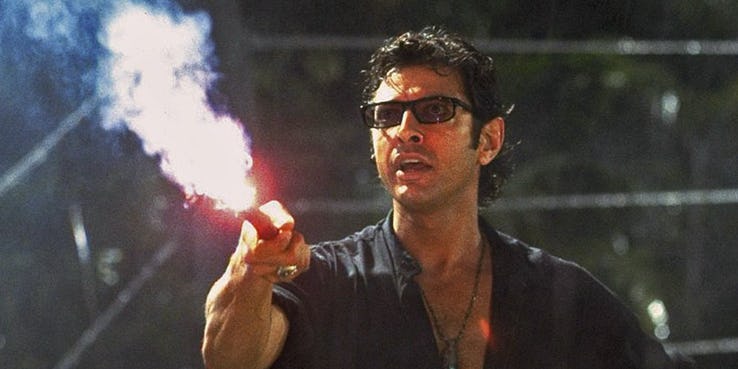
Could the celebration include the original Jurassic Park cast? Jeff Goldblum reprised his role as Dr. Ian Maclolm in Jurassic World: Fallen Kingdom. Might he turn up again? Could Laura Dern’s Ellie Sattler and Sam Neill’s Alan Grant show up as well?

“I can confirm nothing,” Trevorrow said. “But nothing would make me happier than to be able to work with any of those people.”

Jurassic World star Bryce Dallas Howard may have let the return of the original cast slip in June while on the red carpet for the premiere of Rocketman. When asked if she was looking forward to sharing scenes with them, Howard said, "Yes, very much so. If that happens, I don't know," Howard exclaimed. "I don't know what's been confirmed or whatever, but I'll blink if it's happening and maybe..."

While details about the third Jurassic World movie are under wraps, Chris Pratt has publicly praised the plot. "When I heard the pitch, I was blown away. I can't believe we're gonna make that movie," Pratt said. "I can't believe they found a way to deliver on the promise on the end of Fallen Kingdom. 'Wait, what? The island is blown up, the animals are out, we can't put them back in the box. What are we gonna do? How is, not only the dinosaurs but this technology, moving forward, going to affect the planet?' And we jump forward and it's like, 'Oh, oh right. Oh, damn.' [Director Colin Trevorrow's] been working his butt off on it and it's going to be pretty epic."

Are you excited about Jurassic World 3? Let us know in the comments. Jurassic World 3 opens in theaters on June 11, 2021.

Source: https://comicbook.com

How Do We Know What Color Dinosaurs Were?

Tuesday, January 9, 2018

There are some things we might never know about dinosaurs. What colors were they? What did they sound like? How did T. rex apply sunscreen? Lucky for us, science is there to answer those questions. Well, one of them, anyway.

Rainbowsauruses

It's just common sense that you can't tell what color dinosaurs were, right? After all, it's not like you'll be able to see greens and oranges on fossilized bones (and even if you could, that would just tell you what color their bones were). Sure, there are also skin imprints that tell us if they were scaly, like Triceratops, or feathered, like Velociraptor, but those are just shapes in the mud. They aren't enough to tell you what they really looked like.

But in 2010, a close examination of the feathers of Sinosauropteryx resulted in a surprising reveal. Discovered in 1996, Sinosauropteryx was the first dinosaur we found with feathers (though that might be splitting hairs since the line between bird and dino is notoriously blurry). When examined under a microscope, however, those feathers were found to have surviving melanosomes: the tiny, cellular organelles that generate melanin, and thus, pigment.

Even so, big deal, right? After all, we could have assumed that those dinos hadmelanosomes — it's not as if we assumed they were colorless. But the whole reason they decided to look at Sinosauropteryx's feathers in the first place was a discovery that made the color-producing process a lot less mysterious.

Melano-So Much for Green Scales

You'll find melanosomes in pretty much every animal, but it wasn't until 2008 that a team of researchers from Yale began looking for them in fossilized birds as well. They did so with an eye toward comparing them to modern birds, and what they found indicated the relationship between the physical shape of the melanosomes and the pigment that they would produce. One 40-million-year-old specimen, for example, was found to have iridescent qualities, since differently-shaped melanosomes were found arranged in a staggered pattern that would appear different depending on what angle they were viewed from.

So what color were dinosaurs? For now, we can't answer that question for every dino, but when it comes to Sinosauropteryx, the picture is nearly complete. And very raccoon-like. These little beasts, which were only about a meter (three feet) long, had a robber mask around their eyes, dark, reddish coloration on their backs, a pale belly, and long striped tails.

In its own way, it's not too surprising that a dinosaur would bear such a close resemblance to a living animal it has no relation to — color patterns evolve because they work, and because they work, they evolve more than once. So the next time you think of dinosaurs, picture your raptors with leopard prints, your duckbills with zebra stripes, or your ornithomimuses with bright blue peacock plumage.

Want to see more out-there dinosaur colors? Check out Kazuo Terakado's "The Art of the Dinosaur" for some images from the world's top paleoartists. We handpick reading recommendations we think you may like. If you choose to make a purchase through that link, Curiosity will get a share of the sale.

Source: https://curiosity.com

Jurassic Park: 10 Ian Malcolm Quotes That Show How Woke He Is

Sunday, July 28, 2019

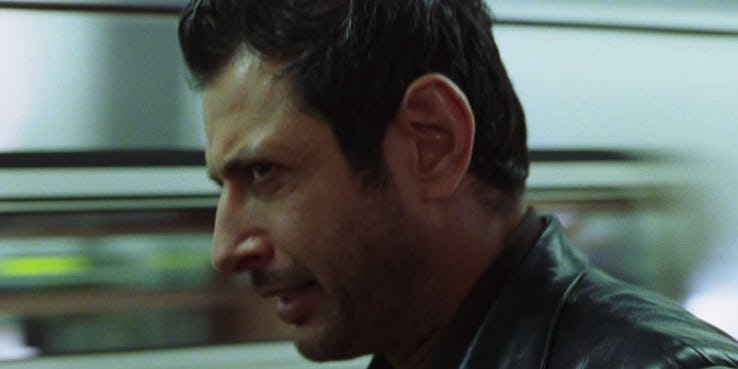
Mathematician Dr. Ian Malcolm is one of the best characters in the Jurassic Park universe. Smart, poignant and outspoken, Malcolm says it like it is, and he's unafraid to dole out brutal criticism when it's due. He was one of the first people to raise concerns about the ethical the and logical implications of bringing dinosaurs back to life, and as it turned out, he was right to be worried. Malcolm is the de facto voice of reason within the series, though he also loves slipping a few jokes into his commentary every now and then.

RELATED: 10 Most Memorable Quotes From The Jurassic Park Franchise

It's no surprise, therefore, that Malcolm is one of the most quotable characters in the series. Here are just a few of his best quotes that prove he's one of the most enlightened figures in all of blockbuster cinema.

10 "JUST FOLLOW THE SCREAMS." (THE LOST WORLD)

When looking for a giant T-Rex mother in downtown San Diego, what's the best way to locate her? Honestly, Malcolm's advice here is about as good a response as any. He says it after Malcolm and Sarah Harding save Rex Jr. from InGen's clutches.

Afterword, the two go on a wild dino-chase, hoping to reunite mother and baby before anyone gets eaten. Malcolm was opposed to the San Diego project from the start, and this catastrophe only emphasizes the fact that Malcolm's words ought not to be taken lightly.

"SO, YOU WENT FROM CAPITALIST TO NATURALIST IN JUST FOUR YEARS? THAT'S SOMETHING…" (THE LOST WORLD)
Dr. John Hammond, the mind behind the Jurassic Park venture, had a change of heart after the incident in 1993. With Isla Sorna’s dinosaurs running around unsupervised, Hammond chooses to turn the island into a nature preserve.

Obviously, Malcolm is a bit taken aback by this about-face, and he doesn't seem very convinced. Yet, no amount of ill-advised actions could compare to the recklessness of Hammond's nephew, Peter Ludlow, who later becomes the target of Malcolm's roasting.

RELATED: Jurassic Park: 10 Facts Fans Didn’t Know About Isla Nublar

"TAKING DINOSAURS OFF THIS ISLAND IS THE WORST IDEA IN THE LONG, SAD HISTORY OF BAD IDEAS." (THE LOST WORLD)
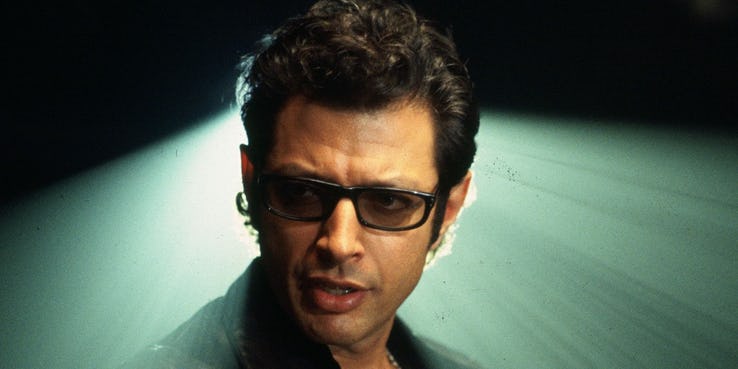
It's baffling how many stupid people there are in Jurassic Park: The Lost World. Yet, when millions of dollars are on the line, logic takes a back seat. Peter Ludlow, the next in line to take control of InGen, views the dinosaurs of Isla Sorna as a way to get out of bankruptcy.

Ian Malcolm, on the other hand, knows just how unpredictable these creatures can be, and is willing to make his case known to everyone within earshot. Of course, nobody listens, and Malcolm can tell everyone that he told them so.

"YEAH, BUT JOHN (HAMMOND), IF THE PIRATES OF THE CARIBBEAN BREAKS DOWN, THE PIRATES DON'T EAT THE TOURISTS." (JURASSIC PARK)
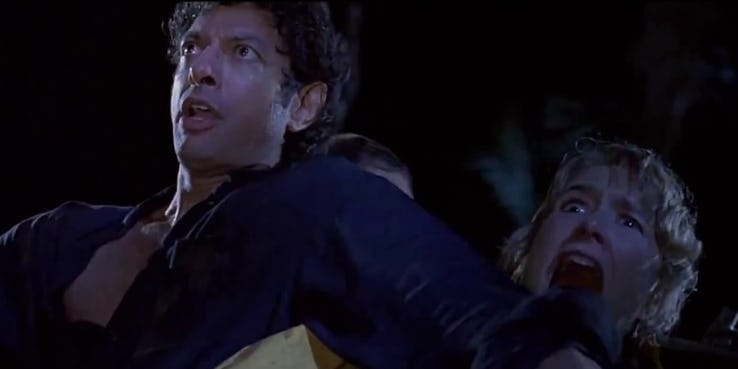
Malcolm said this in response to Hammond's claim that all major amusement parks have setbacks, using the opening of Disneyland Anaheim as an example. Sure, it's well documented that when Disneyland first opened, the results were nothing short of a disaster. But at least no one got mauled by Mickey, or crushed to death by Snow White.

The same cannot be said for Jurassic Park, a place where only the smallest mistake or mechanical failure could lead to an all out dino-on-human bloodbath. Does anyone use common sense in this universe?

"WHAT YOU CALL DISCOVERY, I CALL THE RAPE OF THE NATURAL WORLD." (JURASSIC PARK)
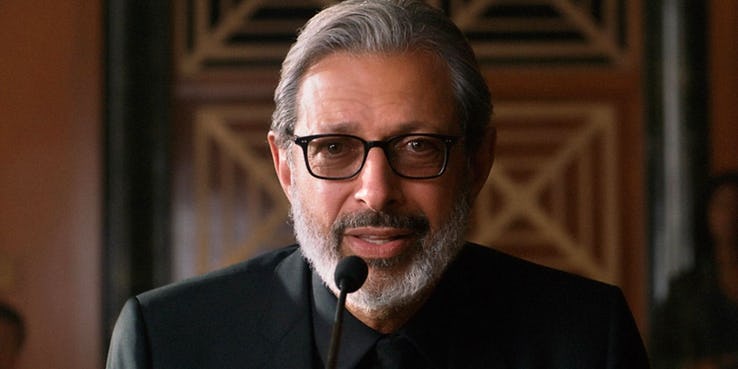
When something angers Dr. Malcolm, like John Hammon's wilful ignorance of the ethical concerns of bringing an extinct species back from the dead, the gloves come off. Malcolm's words may be harsh, but as with everything he says, it's not without its reasoning.

Dinosaurs are incompatible with the modern world; their extinction allowed for the human race to become the dominant species on planet earth. To bring them back is not only to offset the laws of nature, but also to put humanity at risk of losing a peg on the food chain.

"CHANGE IS LIKE DEATH. YOU DON'T KNOW WHAT IT LOOKS LIKE TILL YOU'RE STANDING AT THE GATES." (JURASSIC WORLD: FALLEN KINGDOM)
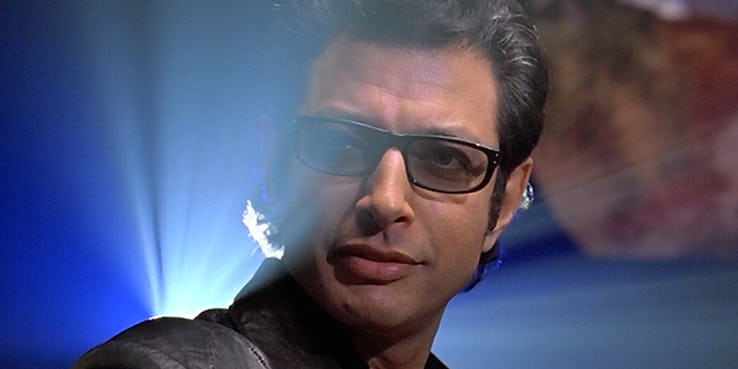
Ian Malcolm's appearance in the most recent movie in the franchise, Jurassic World: Fallen Kingdom, was brief but memorable. Standing before a Congressional hearing over whether or not the dinosaurs of Isla Nublar should be rescued from an impending eruption, Malcolm makes the case that the creatures should be allowed to die.

RELATED: Jurassic Park: 10 Differences Between The Book & The Movie

It has always been Malcolm's belief that bringing them back from the dead was a mistake, and as he said in his opening testimony, the volcano is a "correction" for that mistake. It's better, he believes, than the other option, which would be to force humanity into a co-existing with dinosaurs, which is something Malcolm thinks is impossible.

"MUST GO FASTER." (JURASSIC PARK)

Sometimes, Ian's quotes are memorable not just because of their inherent inherit wisdom. Sometimes, it's simply because Jeff Goldblum can turn even the most ordinary line into something people will quote endlessly for the rest of time.

Considering how universally loved Jurassic Park is, we don't feel like we need to describe the scene where this line was dropped. Let's just say it was one most the most pulse-pounding and iconic moments in all of sci-fi.

"I'M SIMPLY SAYING THAT LIFE... FINDS A WAY." (JURASSIC PARK)

Despite Henry Wu's insistence that the dinosaurs on Isla Nublar cannot reproduce, given that they're all female, Malcolm disagrees. He argues that just because they denied them the ability to procreate, that doesn't mean they won't find some way to do so.

RELATED: 10 Things Jurassic Park Gets Completely Wrong About Dinosaurs

After all, the existence of any species hinges on their ability to make more of themselves. Despite the limitations InGen's scientists imposed on 'their' dinosaurs, life does find a way in the end.

"GENETIC POWER IS THE MOST AWESOME FORCE THE PLANET'S EVER SEEN, BUT YOU WIELD IT LIKE A KID THAT'S FOUND HIS DAD'S GUN." (JURASSIC PARK)

Another quote delivered with a gut punch, Malcolm bemoans the recklessness John Hammond shows with his amazing feats of scientific prowess. Genetics isn't a toy for people like Hammond to play with; it's a exceedingly complex interworking of do's and don'ts, with considerable risk attached to meddling.

Obviously, using the ability to genetically resurrect dead dinosaurs for the purpose of mass consumption isn't the best use of such technology and the implications of such open a Pandora's box of potential problems. Which leads us to our number one pick.

"YOUR SCIENTISTS WERE SO PREOCCUPIED WITH WHETHER OR NOT THEY COULD, THEY DIDN'T STOP TO THINK IF THEY SHOULD." (JURASSIC PARK)
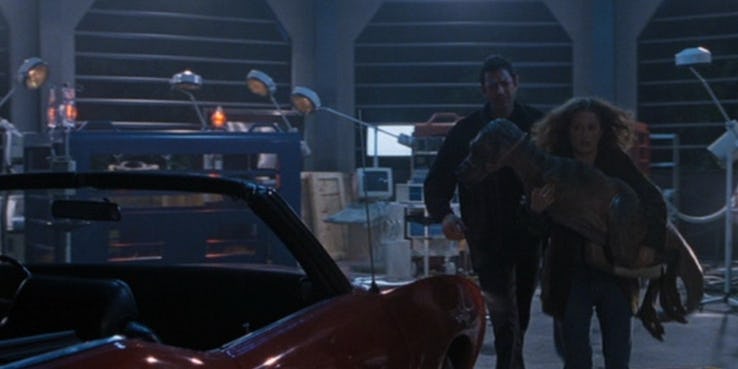
Ian Malcolm's feelings about Jurassic Park can be summed up by this one quote. It's a phrase every scientist should have stuck to the screens of their laptops. With all the amazing technological advances lately, there seems to be no regard for the adverse implications that could arise as a result.

Remove the word 'scientist' and this quote can be applied to any situation where the consequences of one's actions carry a high level of risk that outweighs the rewards. It's a shame that Dr. Malcolm is a fictional character, because we could really use him in this day and age.

Source: https://screenrant.com

Paleontologists Find Giant Dinosaur Bone in Southwestern France

Sunday, July 28, 2019

French paleontologists found the thigh bone of a giant sauropod, an herbivorous dinosaur dating from the late Jurassic Period, at an excavation site in southwestern France.

The thigh bone of a giant dinosaur was found this week by French paleontologists at an excavation site in southwestern France where remains of some of the largest animals that ever lived on land have been dug up since 2010.

The two-meter long femur at the Angeac-Charente site is thought to have belonged to a sauropod, herbivorous dinosaurs with long necks and tails which were widespread in the late Jurassic era, over 140 million years ago.

“This is a major discovery,” Ronan Allain, a paleontologist at the National History Museum of Paris told Reuters. “I was especially amazed by the state of preservation of that femur.”

“These are animals that probably weighed 40 to 50 tonnes.”

Allain said scientists at the site near the city of Cognac have found more than 7,500 fossils of more than 40 different species since 2010, making it one of the largest such finds in Europe.

Source: www.france24.com via REUTERS

Long-Lost Moth a Link to the Dinosaur Age

Saturday, July 27, 2019

The wingspan of the adult kauri moth is just 12.5 mm. Image: Len Willan.

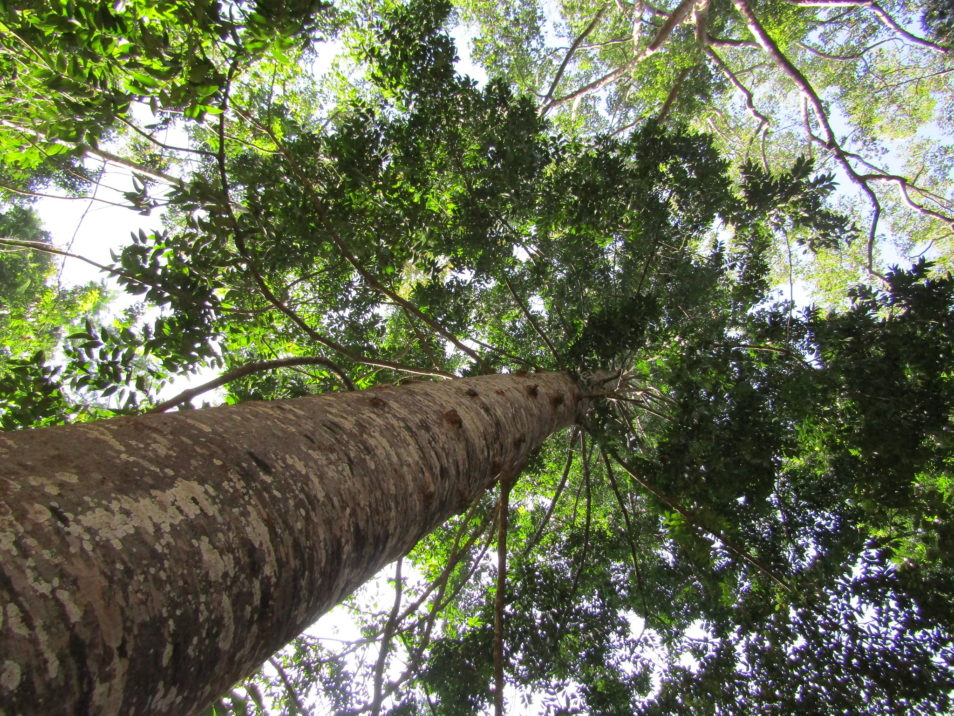
Feared lost forever, the kauri moth Agathiphaga queenslandensis has been rediscovered near Rainbow Beach in southeast Queensland.

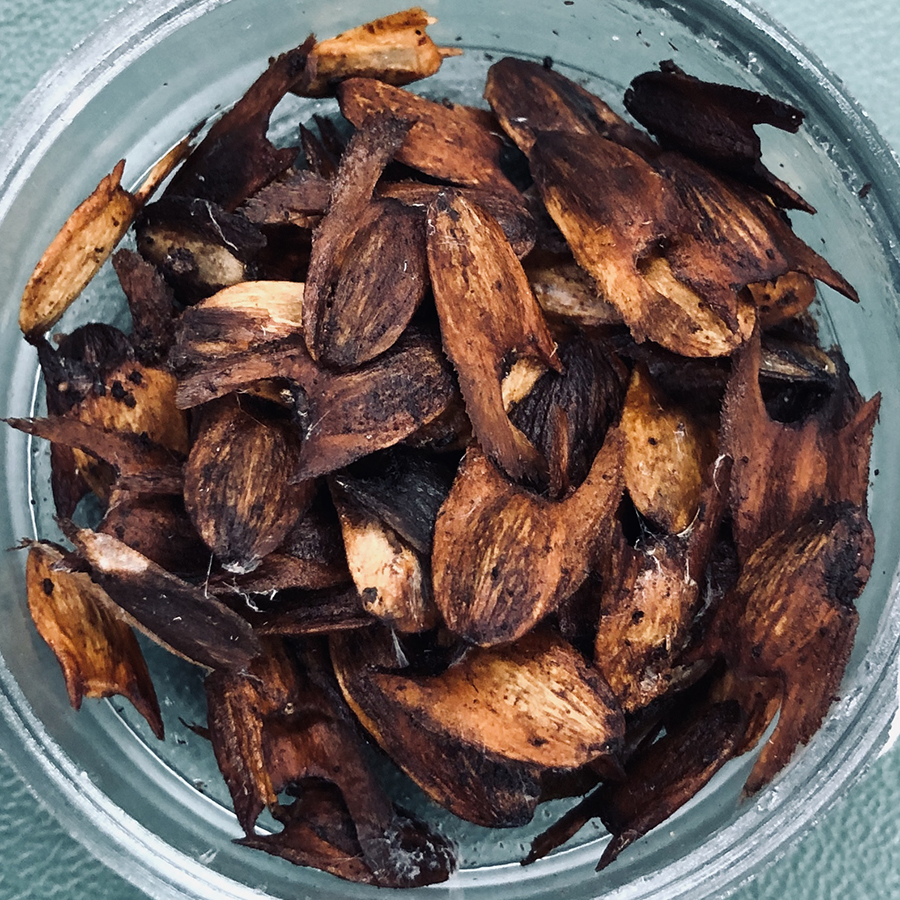
The tiny caterpillars of this species spend their larval lives inside the seeds of mature kauri pines. Then they emerge as adults with a wingspan of just 12.5 mm. Known from locations in southeast Queensland and inland from Cairns, none had been seen since the 1980s.

Lost and found

Working with Cooloola Coastcare, retired CSIRO scientist Don Sands recently collected around 100 kauri pine seeds near the three remaining large kauri pines at Rainbow Beach. Cutting around 20 seeds open under a microscope, he found a single caterpillar that looked like a mature larva of this long-lost moth.

He sent the specimen to our Australian National Insect Collection, where staff extracted DNA and sequenced a region of the mitochondrial genome known as a DNA barcode.

Comparing the barcode sequence to a barcode library confirmed that the moth was a match for Agathiphaga queenslandensis. This obviously sent our entomologists circling around the discovery like moths to a flame.

Kauri moth caterpillars can lie dormant in kauri pine seeds for many years. Dr Ted Edwards of our insect collection will attempt to rear adult kauri moths from caterpillars that might be living within these seeds from Rainbow Beach.

A dinosaur of a moth

“The really exciting thing about this news is that moths of the genus Agathiphaga represent a very isolated and old, dinosaur-aged lineage of moths,” Dr Andreas Zwick of our insect collection said.

“This lineage arose around 250 million years ago. The mouthparts of the adults are chewing mandibles.  Almost all other moths and butterflies have a drinking straw-like proboscis. This probably evolved for drinking water droplets and was later used by moths and butterflies for drinking nectar,” he says.

Today there are only two surviving species Agathiphaga moths. They are the newly rediscovered A. queenslandensis and A. vitiensis, which lives on some Pacific Islands.

“While this group is very ancient, Agathiphagoidea species have continued to evolve,” Andreas explained.

“The two Agathiphaga species alive today have a mix of ancient and newly evolved characteristics. They give us clues as to what the original moths might have looked like when they first evolved some 200 to 300 million years ago.”

Partners in nature

The kauri moth is thought to rely entirely on the kauri pine for its survival.

Kauri pines are a native species of conifer that was heavily logged in the past. The handful of A. queenslandensis moth specimens in our Australian National Insect Collection were collected between the 1940s and 1980s. They are from remnant populations of kauri pines in small areas in southeast Queensland and inland from Cairns.

DNA sequencing has confirmed that the moths from these two distant locations are indeed the same species.

The kauri moth is thought to rely entirely on the kauri pine for its survival. (Photo by Leonora (Ellie) Enking, via Flickr CC BY-SA 2.0.)

Barcodes in nature

Behind the scenes, staff at our natural history collections are busy creating DNA sequence data. This will enable scientists to identify species, from moths to fish, with molecular tools.

“We start with expertly identified specimens in our natural history collections. We extract DNA from them, sequence the mitochondrial the mitochondrial genome. Then we store the result in a global library of DNA sequences,” says Andreas.

These sequences are then available to support species identification for biosecurity, forensics and rediscovering our biodiversity.

Our collection of kauri moths in the Australian National Insect Collection

Source: https://blog.csiro.au

10-Year-Old Boy Finds 11 Dinosaur Eggs While Playing

Friday, July 26, 2019

Heyuan Radio and Television Station

The boy reportedly recognized what the eggs were because he loved science.

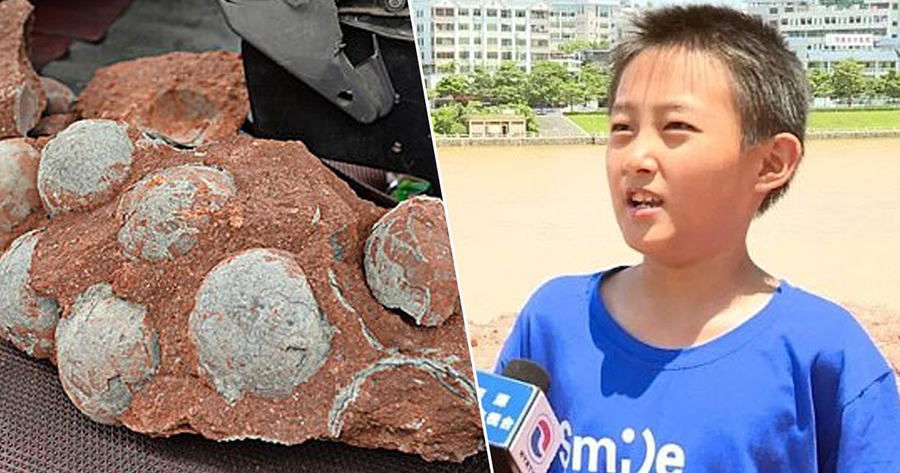
A 10-year-old boy in China found 11 dinosaur eggs while he was playing outside.

Here's what we know

The young boy had been looking for something he could use to crack open walnuts when he came across a strange rock with circles on it.

"Then I called my mother over, [and we] thought the shell looked like that of a dinosaur egg," Zhang Yangzhe, the boy, told the Heyuan Radio and Television Station, according to the Daily Mail.

His mother said he had recognized what dinosaur eggs looked like from his trip to a museum.

The boy's mother called local authorities, and the Heyuan Dinosaur Museum excavated the site and dated the eggs to the late Cretaceous period. Researchers have not yet said whether or not they have been able to determine the type of dinosaur that laid these eggs.

This region of China is home to many dinosaur fossils. Heyuan, a city with a population of 3 million, is billed as China's "home of dinosaurs," the Daily Mail said.

Image source: Daily Mail video screen capture

What else?

This isn't the first time that an important fossil was discovered accidentally by a young child.

In November 2016, 9-year-old Jude Sparks tripped over the skull of a Stegomastodon, an ancient elephant-like animal, near his family's home in New Mexico.

In 2018, a 6-year-old Naomi Vaughan in Oregon found the fossil of a rare sea creature while she was digging in the dirt near her older sister's soccer game.

In 2004, 7-year-old Diego Suarez in Chili accidentally set a world record for being the "youngest person to discover a fossil of an unknown dinosaur species," according to the Guinness Book of World Records.

Source: www.theblaze.com

'Jurassic World 3' Director Colin Trevorrow Addresses Return of Original 'Jurassic Park' Stars

Friday, July 26, 2019

Is "Jurassic World 3" going back to where it started?

The follow-up to the last year's "Jurassic World: Fallen Kingdom" will start filming in spring 2020, but already, the rumor mill is churning that original "Jurassic Park" stars Laura Dern (Ellie Sattler) and Sam Neill (Alan Grant) will make an appearance. They would join Jeff Goldblum, who reprised his role as Dr. Ian Malcom in "Fallen Kingdom."

When asked about their possible involvement at the grand opening ceremony for "Jurassic World: The Ride" at Universal Studios, director Colin Trevorrow responded — in a typically vague manner.

“I can confirm nothing,” he said. “But nothing would make me happier than to be able to work with any of those people.”

The director was similarly cagey about talk that this will be the final film in the "Jurassic World" series. It would form a trilogy, just as the "Jurassic Park" movies did.

"I’m kind of a 'one movie at a time' kind of guy, so my eyes are on this one," Trevorrow noted. "And it’s a celebration of everything that has existed in the franchise up until now.”

"Jurassic World 3" is slated to open in theaters June 11, 2021.

Source: www.moviefone.com

What’s a Turok? A Brief History of Acclaim’s Classic Dinosaur Franchise

Thursday, July 25, 2019

After a lengthy holiday, Turok is back. Well, kind of. Releasing on Steam, TUROK: ESCAPE FROM LOST VALLEY is a decidedly different vision of the famous dinosaur hunter. Taking inspiration from the cute and cuddly cartoons of today is probably appropriate for a franchise that seemed to roll with the trends more than most. From innovating console FPS on the Nintendo 64 to stagnating in the Halo era, Acclaim’s premiere shooter franchise has been through a lot. Let’s wade through the mists of time and look back at the history of the series before exploring the Lost Valley.

Before Video Games | Turok‘s hidden comic origins

Before diving into the game series proper, it is worth mentioning that Turok was not originally a video game. Originating in the mid-1950s, early Turok tales depicted the character as a young Native American trapped in a valley filled with dinosaurs. The young adventurer was more curious than violent, calling the prehistoric creatures he met “honkers.” Along with several other characters owned by Gold Key Comics, the character would have various adventures throughout the decades.

A more familiar version of Turok would emerge in the early ’90s in Valiant Comics. As was typical of characters at the time, Turok was a musclebound warrior. He hunted not just dinosaurs but demons, beasts, and Lovecraftian nightmares. The dinosaurs were upgraded as well, sporting bionic enhancements and other frankly ridiculous accouterments. This serious take would bring the character and the company to new heights of popularity. In turn, this attracted Acclaim, which purchased the company in 1994.

Turok launches the Nintendo 64’s shooter craze

Turok: Dinosaur Hunter released in 1997 for Nintendo 64, just a few short months into the console’s life. While several first-person shooters had made their way to console before this, Turok was one of the first designed with a joystick in mind. That, combined with the notable amount of violence on display on a Nintendo console, gave the game legs beyond all expectations. Those without massive PCs were seeing the potential of 3D shooters for the first time, and the Turok name began to take on a whole new meaning.

Acclaim would follow up the massive success with Turok 2: Seeds of Evil in 1998 and Turok 3: Shadow of Oblivion in 2000. There were also Game Boy releases for each mainline game in the series, trading out explosive gunplay for side-scrolling platforming. While the second N64 sequel makes some strides technologically, both games were considered iterative at best. The release of Goldeneye 007 months after Turok‘s initial gaming debut had stolen a lot of the dinosaur hunter’s thunder. By the time more Turok hit, most players were ready to move on. No matter how hard Acclaim tried, not many of them ever came back.

The meteor strikes | Turok‘s last days at Acclaim

It’s not to say that Acclaim didn’t go down swinging. Between Seeds of Evil and Shadow of Oblivion, it released Turok: Rage Wars. This was a pure deathmatch game hoping to ride the coattails of Rare’s shooters and the growing reputation of the N64 as a multiplayer beast. It had unique exclusive weapons, such as a freeze ray, sticky grenades, large needle that injected opponents with chest-bursting aliens. All that and a Cerebral Bore will lead to a good time, but Rage Wars never really achieved the fame of its multiplayer rivals.

Once the N64 was old news, Acclaim felt the need to bring Turok to the masses. Its next game, a prequel titled Turok Evolution, released in 2002 on all three major consoles of the PlayStation 2 era. It also came out on PC, although only in Europe. Critical reception was fairly tepid, as reviews stated that it had unimpressive AI compared to other first-person shooters of the time. It was now the age of Halo, and this old franchise was put out to pasture. Acclaim canceled Evolution‘s sequel, and the series lay dormant in the gaming world for the rest of the generation.

Turok fails to capture that Disney magic

The year is 2008. Acclaim has been reborn as a free to play publisher utterly divorced from its former deeds. Propaganda Games has ended up with the Turok license and a publishing deal with Disney. Their final result is a reboot of the franchise that did a lot to bring it into the Call of Duty era. These same refreshes come off as a bit generic looking back, but the game had some good ideas just under the surface. Despite mixed critical reception, there was enough excitement to start work on a sequel. That game was mostly through the concept stage when mass layoffs shuttered Propaganda Games. A release full of potential led to nothing a false start for this new take on Turok.

Now, more than a decade later, Turok exists mostly as a fond memory for N64 kids. Retro gamers are able to return to the first two games in the series on modern consoles and PC thanks to Night Dive Entertainment. Their great work created the ideal Turok, divorced from awkward controls and some of the problems with fog. Now, there is a new Turok, a decidedly indie endeavor that takes the series in a whole new direction. Instead of drawing from the ’90s era violence, Escape From Lost Valley takes concepts from the original comics series and brings them to video games. In a world filled with endless nostalgic rehashes, that sounds like a fine idea indeed.

Source: www.gamerevolution.com

California College Student Discovers 65-Million-Year-Old Triceratops skull

Thursday, July 25, 2019

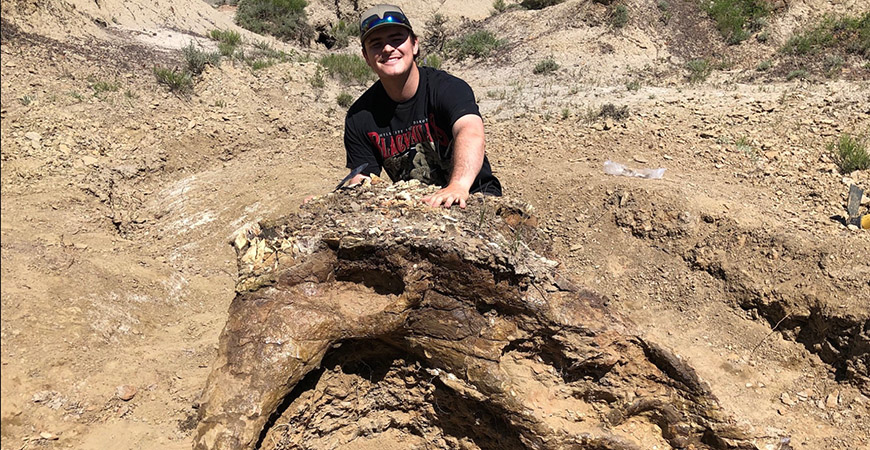
Harrison Duran, a fifth-year biology student, discovered a Triceratops skull during a paleontology dig in North Dakota.

Harrison Duran has always wanted to discover ‘the land before time,’ and his desire to dig up dinosaur bones led him to the Badlands of North Dakota, where Alice the Triceratops was waiting for him.

Duran is a fifth-year biology student with an emphasis in ecology and evolutionary biology. A longtime fan of dinosaurs, he took a History of Dinosaurs course his first year with Professor Justin Yeakel in whose lab he met Ph.D. student Taran Rallings, who advised Duran on his studies. While Duran had on-campus academic support, he decided to take his interests outside the classroom on a paleontology dig in a remote area of North Dakota.

Duran accompanied Michael Kjelland on the two-week dig. Kjelland is an experienced excavator and biology professor at Mayville State University in North Dakota. The two originally met at a biotechnology conference and after discovering their common passion for dinosaurs, together they founded the nonprofit Fossil Excavators.

To the locals, Duran and Kjelland are known as “bone diggers.” Kjelland arranged a dig at Hell Creek Formation, a world-famous dinosaur fossil site. Kjelland found a Triceratops skull in the area a year prior and this time assumed the two would find plant fossils, but kept an open mind.

“You never know what’s going to happen,” Kjelland said.

To their surprise, Kjelland and Duran uncovered Alice — the partial skull of a 65-million-year-old partial Triceratops.

“I can’t quite express my excitement in that moment when we uncovered the skull,” Duran said. “I’ve been obsessed with dinosaurs since I was a kid, so it was a pretty big deal.”

Duran's interest in dinosaurs dates back to his childhood.

The two named the Triceratops skull after the land owner.

Alice was found among other Cretaceous period plant fossils. While less exciting to find, the plant fossils provide important insight into Alice’s life all those years ago.

“It is wonderful that we found fossilized wood and tree leaves right around, and even under, the skull,” Duran said. “It gives us a more complete picture of the environment at the time.”

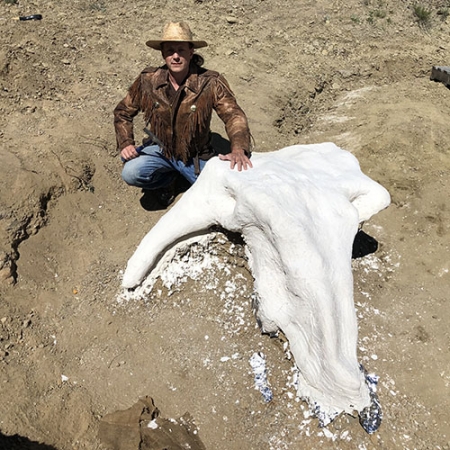
It took a full week to excavate Alice, whose fragile skull was meticulously stabilized with a specialized glue to solidify the fractured, mineralized bones, before an accelerant was applied to bond the structures. With the help of a local cattle rancher and his family, Alice was coated in foil and plaster, wedged onto a makeshift box and lifted onto a truck. Wrapped in a memory foam mattress for protection, she was driven to an undisclosed location until transport to Kjelland’s lab.

The reason for the secrecy?

“There have been people in the past who have stolen dinosaur bones,” Kjelland explained, noting dinosaur fossils can be extremely valuable.

While some fossils become part of private collections, Kjelland has another idea in mind — one that would allow others to experience the awe he and Duran felt upon discovering Alice.

“My vision is to have Alice rotate locations,” Kjelland said. “The goal is to use this find as an educational opportunity, not just reserve Alice in a private collection somewhere so only a handful of people can see her.”

Michael Kjelland poses with Alice after she has been treated with foil and plaster for protection.

Now that Alice is safely in Kjelland’s lab, Duran will return to North Dakota in the coming months to assist Kjelland in conducting further research and preparing the fossil for display. Alice’s future is in the hands of Fossil Excavators and the exact location she will call home is yet to be determined.

In the meantime, Duran and Kjelland intend to create a cast of the skull, which Duran hopes to put on display at UC Merced. This wouldn’t be the first time Duran displayed fossils at UC Merced — he helped curate a Columbian Mammoth exhibit of bones found near the campus as part of his Student Success Internship with the Library as a sophomore.

One day, Duran would even like to bring the real Alice to campus.

“It would be amazing for UC Merced to be able to display Alice on campus,” Duran said. “It’s such a rare opportunity to showcase something like this, and I’d like to share it with the campus community.”

Source: https://news.ucmerced.edu

Pages