Blogs

Jurassic World 3: Characters We Wish To See In The Next Installment

Thursday, April 9, 2020

Source: ScreenGeek

The Jurassic World franchise took a lot of years before they could set in a reboot for the original movie called “Jurassic Park” we all have seen the film growing up looking at the enormous horrific creatures.

2015 reboot Jurassic World was well received by the critics as well as the fans, so well, it got a sequel called the Jurassic World: Fallen Kingdom. Unfortunately, this sequel did win people’s hearts universally but wasn’t much appreciated by the critics well. But it surely was an enormous success at the box office; it made $1.3 billion worldwide, which meant that the franchise was set for another sequel.

Jurassic Park’s director Steven Spielberg confirmed that Jurassic World 3 would be directed by Colin Trevorrow, who was also the director for 2015’s Jurassic World; however, Jurassic World 3 has had very few details made public so far, aside from its official title being Jurassic World Dominion which they confirmed in February 2020.

RELEASE DATE FOR JURASSIC WORLD DOMINION

Mark your calendars as cinemas all around the world will welcome Dinosaurs once again on screens on June 11, 2021; however, with the situation going around the world, the date may get postponed, but let’s hope for the best.

The production is on hold for now, and we do not know when it will resume to its safer to say, don’t get your hopes high!

Trevorrow describes the movie as a “celebration of everything that has existed in the franchise up until now.”

CAST FOR JURASSIC WORLD DOMINION

We will see a lot of similar faces and some new characters

  • Chris Pratt as Owen Grady

  • Bryce Dallas Howard as Claire Dearing

  • Isabella Sermon as Maisie Lockwood

We may also get some significant characters from the Fallen Kingdom, according to Trevorrow; it is still not confirmed if Jeff Goldblum will return to the franchise as Dr. Ian Malcolm.

Source: https://nationeditions.com/

10 Best Dinosaur Movies (Outside Jurassic Park)

Tuesday, April 7, 2020

Dinosaur films don't have to be limited to the ones that take place inside theme parks. There are plenty of great dino films besides Jurassic Park.

Author Michael Crichton, no stranger to cinema, worked on the screenplay for Jurassic Park after writing the source material. Fortunately, his work was brought to life by a perfect storm of artists including Steven Spielberg, Stan Winston and ILM. And dinosaur depictions on screen were transformed forever, making it difficult to accept anything “B.C.”—before Crichton.

There has simply been a longtime misunderstanding of these mesmerizing, fascinating and beautiful animals. Jurassic Park may lack pure authenticity, due to hybrid designs and modification. But they do feel like genuine animals, rather than monsters. Still, other films at least capture a sense of fun, or boast impressive artistry.

10 - The Lost World (1925)

There’s no denying the massive influence of Sir Arthur Conan Doyle’s “other” famous fiction. While best known for Sherlock Holmes, Doyle’s great dinosaur adventure clearly inspired later tales of exotic islands and prehistoric beasts. Unfortunately, this first adaptation is a silent movie, rendering it utterly inaccessible for most audiences.

Only those with a ready inclination and adamant determination will be patient enough to revisit such movies. Truthfully, the dinosaurs ring false by most standards. But they do look impressive, particularly for the time. This was a crucial foundation for cinematic dinosaurs, and the plot is genuinely interesting thanks to Doyle’s source material.

9 - Night At The Museum

This may seem like a counter-intuitive selection, given that the only dinosaur is a set of walking bones. And it’s certainly true enough that the film is better suited for younger kids, more so than their parents. However, that demographic is often the time when dinosaurs most impress on our imagination.

Dinosaurs were larger than life, and the only true means of experiencing them anymore is through museums. This film assigns dog-like behavioral attributes, because they are distinctly easy to understand at any age. Making dinosaurs accessible in this harmless, cute way can at least invite young viewers to actually visit museums and learn.

8 - The Valley Of Gwangi

This may be a cult classic, but it’s hardly a good film. The characterization is on par with any melodramatic soap, and features redundant Western tropes, making it nigh impossible to invest. The plot revolves around a struggling circus, and an uninteresting romance hinged on poor dubbing. However, the film also has an ace up its sleeve.

Special effects master Ray Harryhausen single-handedly redeems the long-winded buildup. The creatures that he designed are truly spectacular to behold, and their interactions with people are unexpectedly seamless for the time. Anyone patient enough to reach Harryhausen’s incomparable work will be pleased.

7 - Dinosaur

This film had the misfortune of releasing after Steven Spielberg’s dinosaur classic. So, the visuals were held to a higher standard than a fully animated film could probably muster. Which is a shame, because the CGI is actually very pretty and elaborate. But the plot is also rather uninspired, especially given how distinctly similar it is to The Land Before Time.

However, Disney surprisingly pushes its boundaries here. Usually friendly with the youngest of audiences, this film depicts tragedy and violence with unusual honesty. This has always been divisive, but many appreciate the change of pace, particularly given the setting at hand.

6 - Ice Age: Dawn Of The Dinosaurs
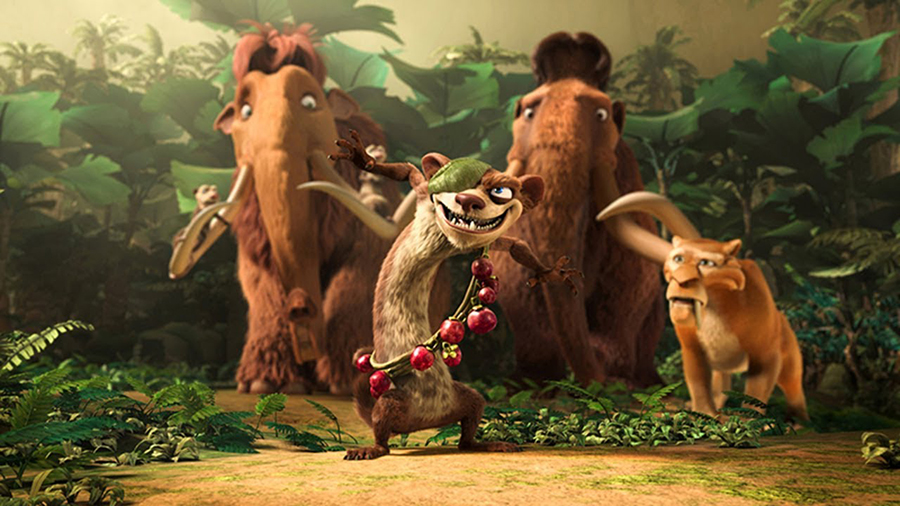
This franchise started off strong, and has unfortunately seen diminishing returns with every new installment. Even if the series has had its fair share of fun jokes, the escalation has become intolerable. The writers have seen fit to expand on the outrageous, when it was lovable characters that gave the series its legs.

This sequel introduces Buck, who is alternately loved or despised by viewers. But the dinosaurs themselves are plenty of fun, ignoring the absurdity of the premise. Fortunately, the plot is driven by Manny’s looming parenthood. Sid becomes attached to some baby dinosaurs, and predictably requires a rescue mission. It’s all silly, but surprisingly creative, and probably the last enjoyable installment in the franchise.

5 - Godzilla Vs. Destoroyah

It’s frequently debated if Godzilla is a dinosaur, due to his constantly shifting origins. But the design was clearly inspired by dinosaurs. Just to be safe, the selection here refers to the Heisei Godzilla, who definitely had a “Godzillasaurus” origin. Truly the king, Godzilla has an iconic design in every regard. Everything from his roar to his abilities are memorable and exciting.

Godzilla's original symbolism was actually meaningful, even if subsequent films relied on cheesy fantasy and sci-fi fare. Still, this particular entry was an especially poignant one for fans, and the finality is totally unapologetic. The villain is born of the Oxygen Destroyer, and Godzilla loses his son. This touching finale is exactly what the Heisei Godzilla deserved.

4 - The Beast From 20,000 Fathoms

This fifties sci-fi classic strikes an unusually serious tone, possibly due to the source material by famed author Ray Bradbury. Its peers of the time would have been more interested in simple monster madness. But here, the protagonists are all scientists, and much of the dialogue includes unexpectedly rational thinking.

The film’s themes are actually very similar to hits like Godzilla and Jurassic Park. The ethics of scientific experimentation takes the forefront. Nuclear testing awakens an arctic creature, which subsequently heads south and attacks a city. It’s a well-paced film, enabling Ray Harryhausen’s charming, endearing and masterful execution of the titular beast.

3 - The Land Before Time

An adorable tale for kids, with fundamental and familiar themes of the genre. What sets this animated classic apart, is its memorable characters. The lot of them are easily distinguishable, and plenty of fun. The pacing of the film is a relief, barely exceeding an hour. Other animated films that are designed for younger audiences often overstay their welcome.

It’s unfortunate that so many sequels followed, each missing the original’s crucial novelty. The tone can be a little wacky and boisterous at times, but the animation holds up surprisingly well. Among the few other animated dinosaur films, this original adventure has the most heart and joyfulness.

2 - King Kong (1933)

One of the few old adventures that still holds up, even against modern-day storytelling and effects. The film is a technical marvel, breathing life into enormous creatures. But most importantly, they have a tangible personality. The movie is also wildly creative, even when it spins adventure tropes. The overall tone relies on mystery and suspense, and the city showdown was probably a massive shock for early audiences.

The action throughout is better staged than most films featuring dinosaurs or monsters, in any decade. True, the natives and gender dynamics haven’t dated so well. But everything else has, and even the performances are enjoyable for the time. The characters are interesting, the setup is magnetic, and the effects have a palpable enthusiasm.

1 - King Kong (2005)

By sheer technical advantage, this film depicts dinosaurs in a superior way to the original. Post-Crichton, audience expectations require a certain kind of dinosaur on screen, and director Peter Jackson delivered. True, the action scenes feel rather splashy, but the dinosaurs are distinctly altered from their natural form. The visual effects here are mostly stunning, but the biggest change of all is Kong himself.

The famous ape is allowed a genuine, touching bond with Naomi Watts’ protagonist, really cementing the tragedy of the classic finale. Beyond mere attraction, Kong cares about her. Kong feels more human than ever, with a distinct personality. So, his dinosaur rivals are more villainous, but never simply monstrous. They are dangerous, convincing, and compelling animals.

Source: https://screenrant.com/

VIDEO: The Complete Jurassic Park Timeline, Explained

Saturday, April 4, 2020

With over 25 years of history, the Jurassic Park franchise continues to grow. Here's a look at the film series' timeline.

One of the biggest hit cinematic franchises from the past 30 years has been Jurassic Park, adapting Michael Crichton's novels of the same name. Following a genetics company that successfully clones dinosaurs from fossilized DNA to create a theme park that allows visitors to see the prehistoric creatures in the flesh. However, things go horribly, horribly wrong on every occasion. The 1993 original film spawned its on line of sequels and merchandising, with a sixth installment currently planned for release next year.

With time jumps throughout the franchise's history marking the real-world passage of time as well as changes to its cinematic universe caused by the reintroduction of dinosaurs on Earth, the series' history can be a difficult to parse out -- especially as the current generation of Jurassic Park films largely ignore the events of all but the original film in the series. However, with its initial five installments and the prologue to this year's Jurassic World: Dominion, the ongoing narrative history isn't as overly convoluted as it may initially appear.

Check out the video to see how each of the popular film series' five current installments relate to one another in the timeline and where the upcoming sequel to Jurassic World: Fallen Kingdom may line up with the previous films.

From InGen CEO John Hammond's dreams of building a theme park populated by dinosaurs that could thrill and inspire the world to the corporation being taken over by nefarious businessmen seeking to use the dinosaurs and genetics technology for their own twisted ends, the Jurassic Park franchise has always showcased the consequences of using technology recklessly to blend prehistoric life with the modern world. And with Fallen Kingdom depicting the dinosaurs now running amuck beyond InGen's islands, the consequences will be on full display in Dominion.

Let us know what you think in the comments.

Source: https://www.cbr.com/

10 Largest Meat-Eating Dinosaurs

Saturday, April 4, 2020

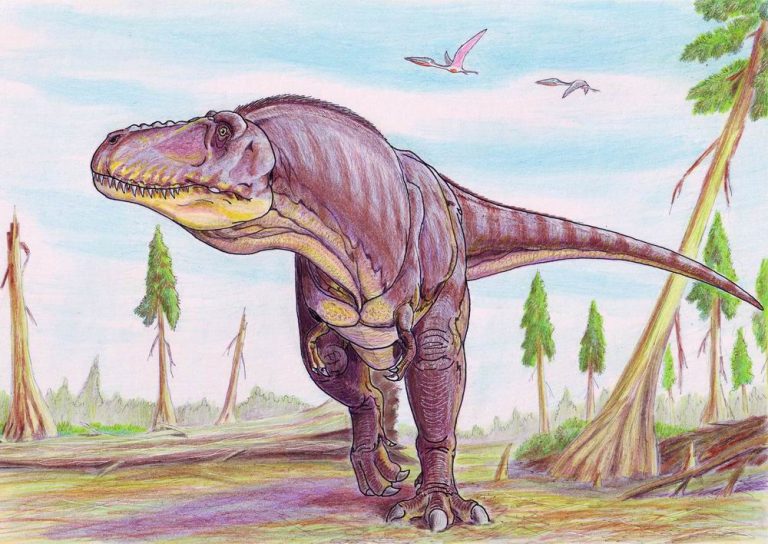
Tyrannosaurus rex the meat-eating tank (Artwork by Vlad Konstantinov)

There’s been an ongoing dispute over what was the world’s largest carnivorous dinosaur.

Calculating a dinosaur’s weight is not an exact science, and some research has suggested that estimates of extinct animals’ mass have been vastly overestimated: when applied to living animals like elephants, these methods (basing weight off of specimen length, bone length/density, etc.) have proved inaccurate.

Conversely, the weight of dinosaurs such as T. Rex, who was recently found to have grown far more quickly during its teenage years, may have been underestimated.

So rest assured, as new specimens are discovered and new models developed, the debate will continue. The following list is based on mass estimates taken from Dinoanimals.com.


10. TARBOSAURUS

Restoration of Tarbosaurus in Late Cretaceous Mongolian environment by Dimitri Bogdanov

This six-ton cousin of the North American Tyrannosaurus Rex was first discovered in China’s Gobi Desert. The largest specimen found in a 70-million-year-old rock foundation in Mongolia measured 40 feet in length. The Apex predator differentiates from T. rex due to its smaller arms and skull shape, though there’s still some controversy over whether or not Tarbosaurus was its own dinosaur or a Tyrannosaurus Rex.

9. ACROCANTHOSAURUS

Mounted skeleton (NCSM 14345) at the North Carolina Museum of Natural Sciences.

This “high-spined lizard” (English translation) weighed up to seven tons and prowled North America 105-155 million years ago. Measuring 36 feet in length, the first remains of Acrocanthosaurus were discovered in 1940 in Oklahoma, with other fossils and tracks subsequently found in Texas, Utah, and Arizona. While it’s unclear what purpose the high-spine “sail” of the “Acro” may have served, some theories believe it may have been a defensive mechanism to appear larger or to regulate body temperature. The dinosaur also had very small feet for a creature its size, perhaps due to the dry climate it walked in.

8. OXALAIA

Oxalaia quilombensis by pauloomarcio

The largest Spinosaur (more on them later) to be found in South America, this dinosaur spent part of its time in the water, munching on fish with its huge, crocodile-like jaws. Not much is known about Oxalaia quilombensis, as all researchers currently have are skull fragments dating back 95 million years ago. From these two fragments, the dinosaur is calculated to have weighed up to almost eight tons.

7. DEINOCHEIRUS

Deinocheirus is a giant ornithomimosaurus

For decades, all researchers had of this Omnivorous giant theropod was a pair of eight-foot-long limbs bearing eight-inch claws. The arms were discovered in the Gobi Desert back in 1965, inspiring scientists to dub the creature it came from Deinocheirus mirificus (Greek translation: “Terrible Hands”). Fast forward to 2014 when two complete specimens are assembled with newly discovered (and recovered, as bones that had been poached resurfaced) parts- finally giving us more insight into the ostrich-like ornithomimosaur, which at 33 feet long, 16 feet high, and up to over nine tons was no slouch in the size department. With its long bill, sharp teeth and claws, Deinocheirus fed on plants, fish, and more than likely any other small creature that crossed its path. It also had a thick, spiny sail-like backbone, giving it an even more unique look. Deinocheirus prowled Asia from 100.5 million years ago to right about the time the comet that wiped out the dinosaurs hit what is now Mexico.

6. BAHARIASAURUS

Bahariasaurus ingens by Teratophoneus on DeviantArt

First described by famed paleontologist Ernst Stromer in 1934, Bahariasaurus was a four to nine-and-a-half ton theropod (ancestrally carnivorous dinosaurs with hollow bones and three-toed legs and arms) that prowled the jungles of Africa 95 million years ago. Similar in its general look to the T. Rex, Bahariasaurus could measure up to 16 feet high and 40 feet long, with little spines that cropped up on its head and back. The only bones of the dinosaur (originally found in Egypt) were kept in a Munich museum that was unfortunately destroyed by Allied bombs during World War II. New Baharariasaurus remains have yet to be found.

5. TYRANNOSAURUS REX

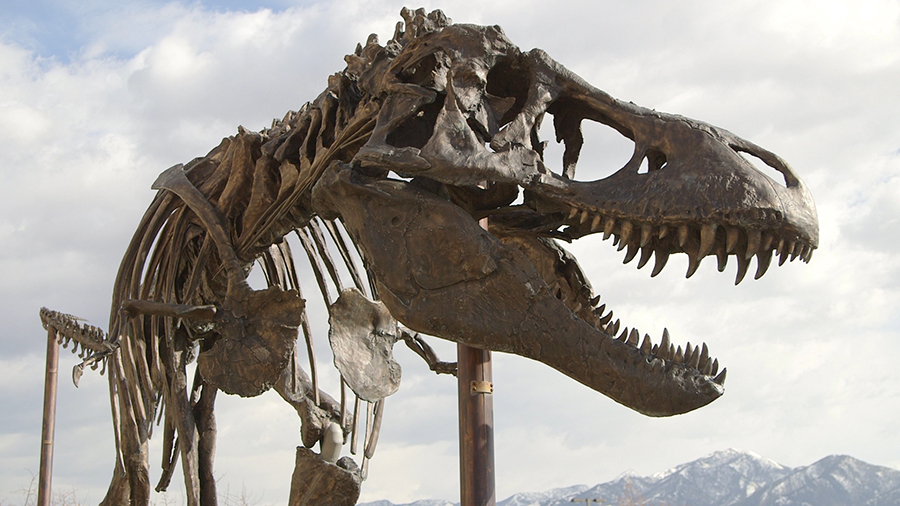
April 14, 2014---The Nation's T. rex, one of the most complete Tyrannosaurus rex specimens ever found, is taking a 2,000-mile road trip from Montana to its new home in Washington, D.C. To prepare the dinosaur fossils for the journey, a team of experts from the U.S. Army Corps of Engineers, the Smithsonian's National Museum of Natural History, and the Museum of the Rockies packed and cataloged the hundreds of bones to ensure their safe arrival.

In 1991, researchers in Canada discovered the bones of the largest T. rex ever. Dubbed “Scotty,” the specimen is calculated to have weighed nearly 10 tons and measured 42 feet in length. Scotty lived 66 million years ago on Canada’s then-subtropical coast and bore a broken rib, infected jaw, and a bite from another T. Rex on its tail. Perhaps the most famous dinosaur of all time, T. rex’s place on this list has often been disputed by researchers, with some believing the dinosaur to be the largest of all time.

4. GIGANOTOSAURUS

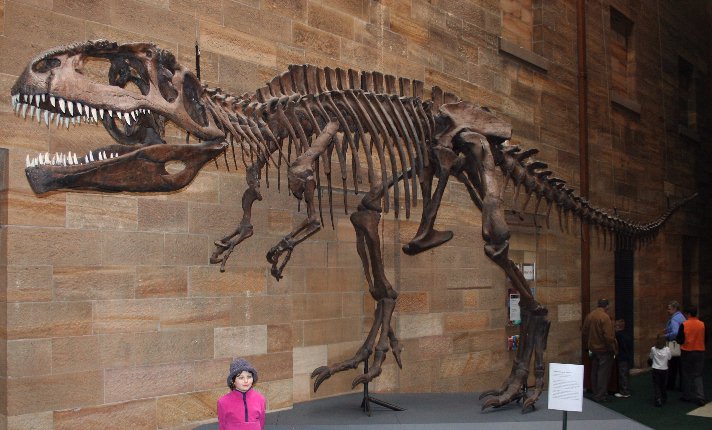
Reconstructed skeleton, Australian Museum, Sydney.

According to LiveScience, Giganotosaurus was once thought to be the largest meat-eater of all back when it was first discovered in the mid-’90s, though larger specimens of other dinosaurs have since been found. Weighing in at over 14 tons, the first specimen found in Southern Argentina measured 41 feet from head to tail, with its skull over five feet long. A study from 2001 done with a model suggested that Giganotosaurus couldn’t chase its prey over 31.3 mph or else it would lose its balance, so as long as you’re in your car and not in a school zone when you meet one, you should be fine.

3. CARCHARODONTOSAURUS SAHARICUS (15 tons) and 2) CARCHARODONTOSAURUS IGUIDENSIS (over 15 tons)

Carcharodontosaurus

First described by Ernst Stromer in 1931, this 45 foot-long theropod prowled what is now North Africa between 145 and 72 million years ago. Its teeth were serrated to slice into flesh just like the Great White Sharks of today, inspiring scientists to name its family Carcharodontosauridae (translation: shark-toothed lizard). Researchers calculate that Carcharodontosaurus saharicus weighed up to 15 tons, putting it at number three on this list. Like the bones of Bahariasaurus and the first Spinosaurus, the Carcharodontosaurus specimen described by Stromer was destroyed in the Allied forces’ 1944 bombing of Munich, though the remains of the even larger Carcharodontosaurus iguidensis (later described by Dr. Steve Brusatte) were found in 1997.

1. SPINOSAURUS

The only known dinosaur adapted to life in water, Spinosaurus aegyptiacus swam the rivers of North Africa about 95 million years ago. Image credit: © Davide Bonadonna / National Geographic magazine.

The largest dinosaur on this list and the only one to have spent more than half its time in the water, Spinosaurus measured 50 feet in length and is believed to have weighed up to a massive 22 tons-- roughly equal to the anchor of a cruise ship. First described by paleontologist extraordinaire Ernst Stromer in 1915, Spinosaurus (“spined lizard”) had 7-foot-long spines that grew out of its back, forming a fin. Researchers also believe Spinosaurus was the first dinosaur that could swim, spending more time in the water than on land. While prowling the North African swamps 97 million years ago, the dinosaur survived on a diet of fish that it chomped up in its long, razor-toothed snout.

So Spinosaurus was the heaviest meat-eating dinosaur of all time. Or was it? Fox News asked paleontologist Dr. Steve Brusatte from the University of Bristol in the U.K. to weigh in on the matter.

“There's perpetual debate over the biggest meat-eating dinosaurs, because several species seem to reach about the same size, but many of them are known from very limited fossils,” he told Fox News. “It seems like T. rex, Carcharodontosaurus, Giganotosaurus, and some other species all got to be about 40-45 feet long, so in that sense they were the same general size, but T. rex has the biggest, thickest bones, indicative of a robust, muscular body, so it probably weighed more than these other giants. So for my money, T. rex is still the biggest purely meat-eating dinosaur that we know of, and the biggest pure carnivore that we know of that's ever lived on the land.”

But what about Spinosaurus?

“Spinosaurus throws a bit of a wrench into this, as it was a theropod, and it was probably bigger than T. rex, although its fossils are so scrappy that we don't have anywhere near a complete skeleton to measure,” Brusatte explained. “But even so, Spinosaurus had a taste for fish and lived at the interface of the water and the land, so it was a semiaquatic hunter-slash-fisher, whereas T. rex was a fully land-living animal. Regardless of all of the facts and figures though, there's one thing I'm pretty sure about: if I was around in the Mesozoic and could pick a single dinosaur to avoid at all costs, I would go with T. rex, [as] it was the biggest, baddest, smartest giant predatory dinosaur that ever lived.”

Source: www.foxnews.com/

These Mating Flies Have Been Doing the Unpleasant for 41 Million Years

Sunday, April 5, 2020

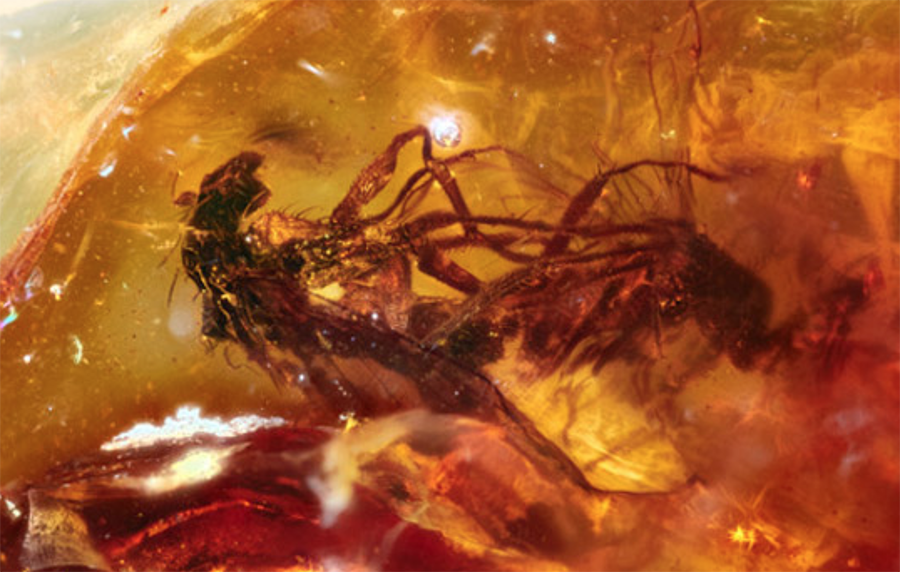
Image Source: Jeffrey Stilwell

  • Time-frozen mating flies enclosed in amber were found for the past 41 million years.
  • The flies, still locked in their mating posture, were swallowed by the tree's sap, which then hardened into protective amber that preserved them and allowed paleontologists to study them.
  • Flies are just part of a new collection of amber-covered insects and arachnids found in sites in Australia and New Zealand.
  • Visit the BGR home page for more stories.

Have you ever been caught on the spot? You know the act I want to say. I mean when someone visits you and your partner during a beautiful moment of physical activity … If you have, you know how traumatic it can be, so imagine the difficult situation of these two flies that have passed the last 41 years locked in the mating position, dreading the day someone will finally run into them.

Well, that day has come, and the unfortunate flies are now not only the weak eyes of the rest of the insect world, but they are also the stars of a new research article published in Scientific reports. These two prehistoric mistakes will never be experienced.

How Gizmodo The copulating flies are reportedly part of a large group of amber-encrusted insects and arachnids that were obtained from sites in the southern hemisphere, including Australia. This is special because many of the amber fossils discovered through decades and decades of research come from sites in the northern hemisphere such as Myanmar.

Regardless of their origin, amber-colored fossils offer scientists the unique opportunity to look through a window in time. Delicately preserved organisms that could never have survived as fossils on their own are protected by the sap of trees that have hardened for millions upon millions of years.

"Amber is considered a & # 39; Holy Grail & # 39; in the discipline, since organisms are preserved in a state of suspended animation in perfect 3D space, as if they had died yesterday, but in fact they are many millions of years old , which gives us a tremendous amount of information about ancient terrestrial ecosystems, "said Jeffrey Stilwell of the Monash School of Earth, Atmosphere and Environment, lead author of the study.

Flies are just part of the new collection, which also includes ancient ants, juvenile spiders, and mosquitoes. Two species of moss were even found trapped in amber graves. Discoveries like these allow researchers to study ancient species as they were at the time of their unfortunate deaths, often offering new insights into the lives and habits of the little creatures that were trapped in amber.

"This is one of the greatest discoveries in paleontology for Australia," says Stilwell. "The research expands our understanding of the prehistoric southern ecosystems in Australia and New Zealand during the Late Triassic to Middle Paleogene periods (230–40 million years ago)."

Mike Wehner has reported on technology and video games for the past decade, covering the latest news and trends in virtual reality, handheld devices, smartphones, and future technology.

Most recently, Mike served as technical editor at The Daily Dot, and has appeared on USA Today, Time.com, and countless other websites and in print. His love for
the reports are second only to his addiction to games.

Source: https://upnewsinfo.com/

90-Million-Year-Old Fossilized Rainforest Discovered in Antarctica

Saturday, April 4, 2020

Reconstruction of the West Antarctic mid-Cretaceous temperate rainforest. The painting is based on paleofloral and environmental information inferred from palynological, geochemical, sedimentological and organic biomarker data obtained from cores at the site of PS104_20-2, Antarctica. Image credit: J. McKay / Alfred-Wegener-Institut / CC-BY 4.0.

An international team of paleontologists and geologists has uncovered well-preserved fossilized roots, pollen and spores of 90-million-year-old (mid-Cretaceous period) rainforest trees in West Antarctica.

The mid-Cretaceous period (115 million to 80 million years ago) was the heyday of the dinosaurs but was also the warmest period in the past 140 million years, with temperatures in the tropics as high as 35 degrees Celsius and sea level 170 m higher than today.

However, little was known about the environment south of the Antarctic Circle at this time.

“The preservation of this 90-million-year-old forest is exceptional, but even more surprising is the world it reveals,” said Professor Tina van de Flierdt, a researcher in the Department of Earth Science & Engineering at Imperial College London.

“Even during months of darkness, swampy temperate rainforests were able to grow close to the South Pole, revealing an even warmer climate than we expected.”

The evidence for the Antarctic forest comes from a core of sediment drilled at the site of PS104_20-2 (73.57°S, 107.09°W; 946 m water depth) near the Pine Island and Thwaites glaciers in West Antarctica.

One section of the core, that would have originally been deposited on land, caught the scientists’ attention with its strange color.

“During the initial shipboard assessments, the unusual coloration of the sediment layer quickly caught our attention; it clearly differed from the layers above it,” said Dr. Johann Klages, a geologist at the Alfred Wegener Institute Helmholtz Centre for Polar and Marine Research.

The team CT-scanned the section of the core and discovered an intact 3-m-long network of fossil roots, which was so well preserved that they could make out individual cell structures.

The 90-million-year-old sample also contained countless traces of pollen and spores from plants, including the first remnants of flowering plants ever found at these high Antarctic latitudes.

“The numerous plant remains indicate that 93 to 83 million years ago the coast of West Antarctica was a swampy landscape in which temperate rainforests grew — similar to the forests that can still be found, say, on New Zealand’s South Island,” said Professor Ulrich Salzmann, a paleoecologist at Northumbria University.


To reconstruct the environment of this preserved forest, the researchers assessed the climatic conditions under which the plants’ modern descendants live, as well as analyzing temperature and precipitation indicators within the sample.

They found that the annual mean air temperature was around 12 degrees Celsius. Average summer temperatures were around 19 degrees Celsius; water temperatures in the rivers and swamps reached up to 20 degrees.

They conclude that 90 million years ago the Antarctic continent was covered with dense vegetation, there were no land-ice masses on the scale of an ice sheet in the South Pole region, and the carbon dioxide concentration in the atmosphere was far higher than previously assumed for the mid-Cretaceous period.

“Before our study, the general assumption was that the global carbon dioxide concentration in the Cretaceous was roughly 1,000 ppm,” Dr. Klages said.

“But in our model-based experiments, it took concentration levels of 1,120 to 1,680 ppm to reach the average temperatures back then in the Antarctic.”

The discovery is described in a paper published in the journal Nature.

_____

J.P. Klages et al. 2020. Temperate rainforests near the South Pole during peak Cretaceous warmth. Nature 580, 81-86; doi: 10.1038/s41586-020-2148-5

Source: www.sci-news.com/

All the ‘Jurassic Park’ Movies Ranked from Worst to Best

Friday, April 3, 2020

I think it’s fair to say that everyone has their franchise. Jurassic Park is mine. (With Scream being a close second.) But even coming from that adoring perspective, I never thought that the Jurassic movies would come roaring back to theaters quite like they recently did. 

The first film hit it big in 1993, becoming the highest grossing movie ever at the time with a grand total of over $914 million in the bank from the worldwide box office. The Lost World: Jurassic Park made a pretty penny in 1997 as well, but then the franchise fizzled out with the 2001 installment, Jurassic Park III. The series made its big return to theaters 14 years later and re-solidified itself as one of the most beloved and profitable franchises out there. Not only did Jurassic World pass the $1 billion mark, but so did the next installment, 2018’s Jurassic World: Fallen Kingdom

As we eagerly await more Jurassic with Jurassic World: Dominion currently scheduled to hit theaters nationwide on June 11, 2021, how about a look back at the franchise? I’ve put together my own personal ranking of all the Jurassic Park and Jurassic World films. Of course all ranked lists are subjective, so read on to check out mine but do hit the comments section below to share your own list, too!

5. Jurassic Park III

You knew the list had to start here, right? Collider’s own Adam Chitwood wrote a piece back in March 2018 titled, “Jurassic Park Is Not a Franchise.” As I much I adore Adam, I’ve got to disagree with that take, minus Jurassic Park III. Does that mean the Joe Johnston-directed entry is entirely worthless? As an installment that enhances this series of films, maybe, but for anyone undeniably drawn to these films and this world, Jurassic Park III still functions as an entertaining side adventure.

There’s some seriously goofy stuff in the mix like the over-the-top Kirbys (William H. Macy and Téa Leoni) and most notoriously Alan’s (Sam Neill) Raptor dream, but the film does rock a few interesting story beats. While the idea of anyone parasailing near Isla Sorna is ridiculous, the thought of a young boy figuring out a way to survive on the island alone has something to it. In fact, maybe this should have just been the Eric Kirby (Trevor MorganJurassic movie Castaway-style. 

There’s also Alessandro Nivola who has great presence in the film as Alan’s assistant Billy and he’s also got one of the better story arcs of the bunch. While Jurassic Park and The Lost World show how this magical idea of a dinosaur park could get the better of people on a larger scale, Jurassic Park III basically gives that whole idea to Billy. Billy isn’t a bad guy; he knows stealing eggs is wrong. But, taking the eggs is a quick and tempting fix to their funding problem. Like many characters in the previous films, Billy learns that taking something someone else created just because it’s there is a dangerous thing and pays the price in one of the movie’s best set pieces.

No, Jurassic Park III isn’t a great film and clearly pales in comparison to the rest, but it does offer a quick 90-minute adventure for anyone looking to spend more time on the islands. 

4. Jurassic World: Fallen Kingdom

I grow fonder of Jurassic World: Fallen Kingdom the more I watch it. It’s got two very distinct halves – the dino rescue on Isla Nublar and the mainland mansion auction. Initially, I much preferred the former because it felt most connected to the previous installments of the franchise and also because the mission to save the dinosaurs made far more sense than the idea of bringing dangerous dinosaurs to a mansion packed with people and auctioning them off at a starting price of a mere $4 million. However, the more I watch the film, the more I appreciate the style and tonal shift. As a horror lover, how can you say no to a spooky house filled with dinosaurs?

What wound up really cementing my love of Jurassic World: Fallen Kingdom though, was the realization that Jurassic World and Fallen Kingdom essentially follow the blueprint of Jurassic Park and The Lost WorldJurassic Park shows you the incredible potential of a dinosaur theme park and then the whole thing crashes and burns, proving Malcolm’s (Jeff Goldblum) point; they were so preoccupied with whether or not they could, they never stopped to think if they should. Then, in The Lost World, Malcolm must travel back to the region to try and stop others from making similar mistakes. He doesn’t fully succeed and dinosaurs wind up making it back to the mainland. The Jurassic World and Fallen Kingdom combination basically follows that same exact path, and that’s what makes the franchise as a whole (or almost as a whole) work quite well.

Yes, the Jurassic movies are about what happens when humans bring dinosaurs back to life, but it’s also about man’s tendency to make the same mistakes over and over again, and make the problem worse every go-around. And now we’ve got Jurassic ParkLost WorldJurassic World and Fallen Kingdom all stacked on top of each other, further hammering in that point. The two Jurassic World movies can’t match the 1993 original as far as character development, tight storytelling and the combination of CG and animatronics go; but they are big winners in the world-building department, which is key to the building intensity of the franchise overall. Colin Trevorrow‘s Jurassic World adds the idea of designer dinosaurs and trainable Raptors. Then, director J.A. Bayona‘s Fallen Kingdom throws in even freakier genetic manipulation and also dinosaurs running loose in populated areas. If Jurassic World: Dominion puts the focus on digging deeper into those ideas rather than sending characters on some standalone adventure that doesn’t add to the franchise whatsoever, we could wind up with a very rich trilogy right here.

3. Jurassic World

When you’ve been waiting for 22 years to see John Hammond’s (Richard Attenborough) original vision up and running, Jurassic World does get the benefit of coasting on the inherent thrill of finally seeing the park operational. But, it also winds up buried under an exorbitant amount of expectation and pressure. Claire and Owen (Bryce Dallas Howard and Chris Pratt) are no Ellie and Alan (Laura Dern and Sam Neill), the balance between digital and practical effects isn’t as effective, the story isn’t as refined, etc. But does that mean Jurassic World doesn’t work at all? Absolutely not! In fact, I think it uses the foundation established by the 1993 original quite well.

Jurassic World is essentially one, big wish fulfillment film for fans of the first movie. Jurassic World isn’t just John Hammond’s idea made a reality; it’s John Hammond’s idea times ten. It’s not just about going on a Jeep tour and hoping to catch a glimpse of a dinosaur behind an electric fence anymore. It’s taking a tram into a park that’s the size of a small city that gives you the opportunity to run alongside dinosaurs in a gyrosphere, to actually touch a dinosaur at the Gentle Giants Petting Zoo, and so much more. 

Colin Trevorrow’s vision for Jurassic World may not match the first film in establishing a connection to an unforgettable, layered cast of characters, but it does catch the thematic wave that the first film kicked off and it’s also hugely successful when it comes to embracing the magic and terror of humanity’s need to make everything bigger, scarier and cooler without factoring in the potential consequences. Jurassic World is missing the grounded realism that gave Jurassic Park that “reach out and touch it” vibe, but highly advanced visual effects, very creative park advancements, and well executed action scenes essentially turn the film into an experience that truly offers the thrill of a theme park ride.

2. The Lost World: Jurassic Park

No, The Lost World: Jurassic Park doesn’t come close to matching the 1993 original and has some head-scratching plot points, but Jurassic Park did set the bar astronomically high. The fact that Steven Spielberg managed to deliver a sequel film with another great ensemble of characters, unforgettable set pieces, and a story that significantly broadens the world of the franchise is quite the accomplishment.

As inspired by Michael Crichton’s sequel book, The Lost World boasts a great set-up by introducing Site B on Isla Sorna – because of course InGen had a production facility hidden away from the crowds that would have flocked to Jurassic Park. Not only does the new location give The Lost World the opportunity to deliver new dinos, set pieces and locations that still feel connected to the original film, but it also gives the story a major thematic boost as well.

Depending on how you interpret the final moment of Jurassic Park, that film essentially left the park and the dinosaurs behind. But as we all well know, you can’t just brush a problem under the rug and forget about it, especially something that significant. As Ian Malcolm says in the first film to John Hammond, “You didn’t earn the knowledge yourselves, so you don’t take the responsibility for it.” In The Lost World, that responsibility is shifting. In a similar sense, Peter Ludlow (Arliss Howard) is standing on the shoulders of geniuses to accomplish something as fast as he can; taking the dinosaurs that were created by the Site B staff and bringing them to a park on the mainland. In an effort to stop his nephew from repeating his mistakes, John has to bring in help.

Yes, I know I can’t argue with those who can’t take the gymnastics scene or the Rex’s San Diego romp seriously, but The Lost World is still filled with moments of high stakes and adventure, my favorites being the double Rex trailer attack, Peter Stormare versus the Compies, and that horrific Raptor field scene. It’s another tale of survival that continuously delivers thrills, but without ever letting you forget that the dinosaurs aren’t the villains here.

1. Jurassic Park

Jurassic Park isn’t just my favorite movie of the franchise; it’s my favorite movie of all time. On first viewing, back when I was a teeny tiny budding movie-lover, I was completely swept away by the magic of John Hammond’s dream, and then riveted by the nightmarish chaos of the park’s collapse. Not only did Jurassic Park mark my very first vidid memory of being wowed by movie magic, but it’s also the first time I remember fully grasping the power of science; the irresistible urge to do something incredible because you can and then the wallop of realizing that that power comes with great responsibility.

I adore every single stitch of Jurassic Park from the horrific opening scene that isn’t talked about nearly enough, to Lex’s (Ariana Richards) Unix system triumph to some of the most widely beloved scenes of all time – the T-rex breakout, Nedry (Wayne Knight) versus the Dilophosaurus, the Velociraptor kitchen scene, and then some. Jurassic Park is packed to the brim with brilliant filmmaking whether we’re talking about cast chemistry, details like how the crew used a guitar string to create the ripple in the glasses of water, or the game-changing combination of CGI and animatronics.

There’s a reason why Jurassic Park is my one and only movie tattoo. From my first viewing back in the summer of 1993 to my most recent watch mere days ago, Jurassic Park has never lost a single ounce of its magic. In a sense, Jurassic Park has become a safety blanket. Bad day? Turn on Jurassic Park! Caught a disappointing movie and need a reminder of what can be achieved through cinema? Watch Jurassic Park! Don’t have access to the full feature? Just put on the iconic John Williams score and you’re immediately transported back into the film.

I am forever grateful to the folks behind Jurassic Park for launching this franchise, for inspiring filmmakers for decades, and for playing a huge part in making me the movie lover I am today.

Source: https://collider.com/

This Alabama Forest Is Full Of These Mysterious Petrified Dinosaurs

Monday, April 6, 2020

barbermarina_al | Instagram & cosmic.jules | Instagram

Can you find them all?

Life finds a way, even in the most unexpected places. From theme parks to museums, you can find the remains of the by-gone age of dinosaurs almost anywhere, and that includes this secluded Alabama forest. It’s probably the last place you’d expect, but if you know where to look, you’ll find that these creepy petrified dinos hiding among the trees is one of the coolest things to see Alabama.

Local legend says the story of the dinos goes something like this: an eccentric billionaire (it seems like there’s always one of those around when dinosaurs are involved) George Barber commissioned artist Mark Cline to design and build the sculptures in the woods around Barber’s marina.

The sculptures include a Tyrannosaurus rex, a triceratops, a stegosaurus, and a brontosaurus. Local hikers say the latter is particularly hard to find because he’s hiding on the opposite side of Barber Parkway than where the others are.

The search for the hidden forest dinos makes for a great scavenger hunt and even a decent hike. You’ll want to be sure to wear appropriate shoes and make sure your camera is charged.

Barber Marina makes for a good starting point, but if you want to visit each dinosaur directly, these adventurers took the time to map out each sculpture’s GPS coordinates.

In the same area, you’ll also find an attraction called Bamahenge, Alabama’s very own Stonehenge (get the name, now?).

Unsurprisingly, this sculpture is also thought to be the work of Mark Cline’s skill and George Barber’s money. You can find your way there by following the coordinates mapped out by the same adventurers.

Within the marina waters, you’ll also find a giant Lady in the Lake sculpture. You bet you can also find her coordinates on these road trippers' page.

Stranger things have happened in the south, and these are just some of our favorites to check out if you’re in the area!

Dinosaurs In The Woods

Price: Free

Address: 26986 Fish Trap Rd., Elberta, AL

Why You Need To Go: Go for a peaceful hike in the woods and see if you can find all four dinosaurs! Website

Source: www.narcity.com/

Afrotapejara zouhrii: New Species of Pterosaur Discovered in Morocco

Tuesday, April 7, 2020

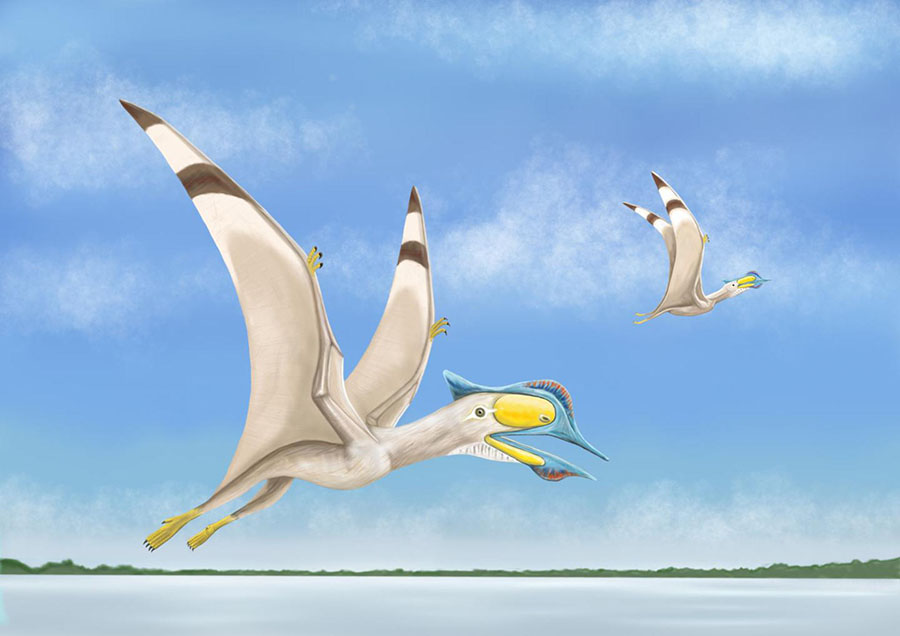
An artist’s impression of Afrotapejara zouhrii. Image credit: Megan Jacobs, Baylor University.

Paleontologists have announced the discovery of a new genus and species of tapejarid pterosaur from Errachidia Province of Morocco.

Dubbed Afrotapejara zouhrii, the newly-discovered flying reptile lived approximately 100 million years ago (Cretaceous period).

The species belongs to Tapejaridae, a group of small to medium-sized pterosaurs with wingspans perhaps as wide as 4 m.

Most tapejarid pterosaurs had large, broad crests sweeping up from the front of the skull.

They are well known in Brazil, China and Europe, but this is the first unambiguous occurrence of Tapejaridae in Africa.

The fossilized remains of Afrotapejara zouhrii were acquired by a commercial fossil trader based in the town of Erfoud who sources fossils from several localities in the Tafilalt region of southern Morocco.

The specimen — a single portion of jaw — was collected from a series of small excavations in the Cretaceous-period Kem Kem beds near a small plateau called Ikhf N’ Taqmout (Takmout).

“I feel very privileged to be part of such an exciting discovery,” said co-author Roy Smith, a Ph.D. student in the School of the Environment, Geography and Geological Sciences at the University of Portsmouth.

“Working in the Sahara was a life-changing experience, and discovering a new species of pterosaur is the icing on the cake.”

A partial rostrum of Afrotapejara zouhri from the Kem Kem beds of Ikhf N’ Taqmout, Errachidia Province, southern Morocco: (A) right lateral view; (B) left lateral view; (C) occlusal view; (D) dorsal view. Scale bar – 5 cm. Image credit: Martill et al, doi: 10.1016/j.cretres.2020.104424.

“The study of Moroccan material shows that we are still far from having found all the paleontological treasures of North Africa,” said Professor David Martill, a paleontologist in the School of the Environment, Geography and Geological Sciences at the University of Portsmouth.

“Even fragmentary fossils, like the jaw piece of the new pterosaur, can give us important information about the biodiversity of the past.”

The discovery is reported in a paper in the journal Cretaceous Research.

_____

David M. Martill et al. 2020. A new tapejarid (Pterosauria, Azhdarchoidea) from the mid-Cretaceous Kem Kem beds of Takmout, southern Morocco. Cretaceous Research 112: 104424; doi: 10.1016/j.cretres.2020.104424

Source: www.sci-news.com/

Six Million-Year-Old Bird Skeleton Points to Arid Past of Tibetan Plateau

Friday, April 3, 2020

Photograph of the fossil sandgrouse Linxiavis inaquosus (left) with a fabricated-color image (right) of the bird’s skeleton based on CT scanning data. Credit : IVPP

Researchers from the Institute of Vertebrate Paleontology and Paleoanthropology (IVPP) of the Chinese Academy of Sciences have found a new species of sandgrouse in six to nine million-year-old rocks in Gansu Province in western China.

The newly discovered species points to dry, arid habitats near the edge of the Tibetan Plateau as it rose to its current extreme altitude.

According to their study published in Frontiers in Ecology and Evolution on Mar. 31, the new species, named Linxiavis inaquosus, fills a nearly 20 million-year gap in the sandgrouse fossil record.

The fossil of the partial skeleton includes much of the body, such as the shoulder girdles, wishbone, bones from both wings, vertebrae, and part of a leg. Unfortunately, the head is missing.

“As the oldest fossil of a sandgrouse in Asia and the most complete fossil known from the group, the new skeleton provides a key link in expanding our understanding of the evolution of the sandgrouse living in China today, as well as the ecosystem associated with the Tibetan Plateau and the species that live only there,” said Dr. LI Zhiheng, first author of the study.

Sandgrouse are a group of 16 species of birds related to doves and pigeons that live in some of the most arid areas across Europe, Asia, and Africa. The association between sandgrouse and dry environments has helped scientists determine that the area next to the Tibetan Plateau was equally arid when Linxiavis inaquosus lived during the period known as the late Miocene.

“Most people would probably think of the Tibetan Plateau, with its high elevation, low oxygen levels, and harsh sun as one of the last places to be invaded by a group of animals. But in this case, our fossil suggests that sandgrouse might have quickly adapted to the dry, mountainous plateau millions of years ago,” said the coauthor Dr. Thomas A. Stidham.

Importantly, this fossil is from the time period known as the late Miocene when the Tibetan Plateau was continuing to rise rapidly in altitude and changing the climate of central Asia with an increase in aridity, along with a strong monsoon season.

This fossil was found at over 2,000 meters above sea level and within sight of Tibetan Plateau peaks that exceed 4,000 meters. That elevation is far greater than where all species of sandgrouse, except for the specialized Tibetan Sandgrouse, live today.

Despite the elevation and arid conditions, other fossils from the area show that the ecosystem was quite diverse. Dr. Stidham explains, “If you were on the edge of the Tibetan Plateau where our fossil is from six or seven million years ago, it would have looked quite like a nature documentary about the savannas in Africa, with the horizon filled with extinct relatives of hyenas, elephants, rhinos, pigs, antelopes, horses, ostriches, vultures, falcons, and of course now, sandgrouse.”

“We are discovering many fossil birds in this area by the Tibetan Plateau that help us to understand the relationships between the plateau, climate change, and biodiversity. We’re likely to keep uncovering more unusual and amazing bird fossils like this sandgrouse and the pheasant with a windpipe longer than its body that we reported a couple of years ago,” said Dr. LI.

CHINESE ACADEMY OF SCIENCES HEADQUARTERS

Source: www.heritagedaily.com/

Pages