Blogs

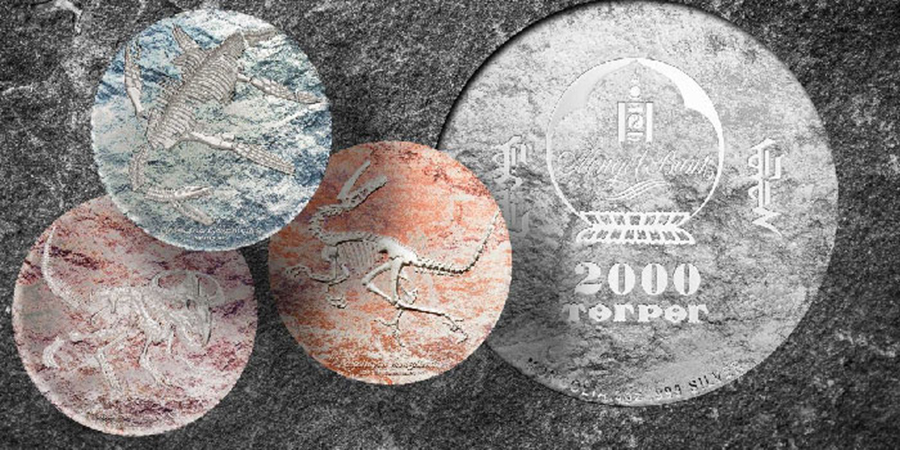
Plesiosaur Latest Coin in High Relief Silver Prehistoric Beasts Series

Friday, April 17, 2020

Plesiosaur Latest Coin in High Relief Silver Prehistoric Beasts Series

Prehistoric Beasts – Plesiosauria

Mongolia. 2,000 Togrog. 2020. Silver .999. 3 oz. Blue-rock finish. 65 mm. ProofMintage499. B. H. Mayer’s Kunstprägeanstalt, Munich.

Description of the Coin

One side presents the fossilized skeleton of a plesiosaur; below in italics PlesiosauriaBlainville1835; in block letters Mesozoic Era.

The other side features the coat of arms of the Bank of Mongolia, below in Cyrillic script 2,000 Togrog. In the exergue in Latin script MONGOLIA 3 oz .999 SILVER.

Plesiosauria blainville    Plesiosauria blainville

Background

Since 2018, CIT Coin Invest has been issuing its series “Prehistoric Beasts”. After Velociraptor mongoliensis and Protoceratops andrewsi, now a coin featuring a sea dweller will be released, the Plesiosaur de Blainville.

The word plesiosaur is a combination of the Greek terms for “closer to” and “lizard”. By creating this name, the French zoologist Henri Marie Ducrotay de Blainville (lived 1777-1850) wanted to point out in his original scientific description of 1835 that this animal was more closely related to dinosaurs than the ichthyosaurus, which also lived in the water. By the way, the species’ name “Plesiosauria” isn’t the only term created by de Blainville that is still used today: when we talk about “paleontology”, for example, we’re using another word coined by Blainville.

The Mesozoic species of Plesiosauria was first discovered at the coastal cliffs of British Dorset, known as “Jurassic Coast”, by Mary Annings, the first woman professionally engaged in paleontology. The plesiosaur de Blainville excavated by her is still considered one of the best examples of the Plesiosauria species.

By the way, plesiosaurs didn’t only live around the British Isles but in every ocean of the world, which is why remains were found on all five continents.

Whereas the plesiosaur de Blainville “only” reached a length of about 3.5 m, other species had a length of up to 20 meters. But there is one thing all plesiosaurs had in common: they were extremely fast. With their four fins, they “flew” through the water – just like penguins do today.

For the third release of its series “Prehistoric Beasts”, CIT Coin Invest adapted its “Red Rock Finish” to the habitat of the marine animal. The blue-green coloring of the rough background in “Blue Rock Finish” makes the skeleton minted in high relief with smartminting© technology stand out particularly clearly. This issue of the award-winning series is especially interesting for collectors and lovers of state-of-the-art minting technique: CIT Coin Invest decided to limit the mintage of Plesiosauria to only 499 pieces.

Further Information: www.cit.li/coins/plesiosaur

Source: https://coinweek.com/

Mahogany Tree Family Dates Back To Last Hurrah Of The Dinosaurs

Thursday, April 16, 2020

Credit: University of Kansas

You might own something made from mahogany like furniture, paneling or a musical instrument.

Mahogany is a commercially important wood, valued for its hardness and beauty. The United States is the world's top importer of the tropical timber from leading producers like Peru and Brazil. Unfortunately, mahogany is harvested illegally a lot of the time.

For science, mahogany is important, too—the fossil presence of the mahogany family is a telltale of where tropical forests once stood. Until recently, paleobotanists had only found evidence the mahogany family extended back to the Paleocene (about 60 million years ago).

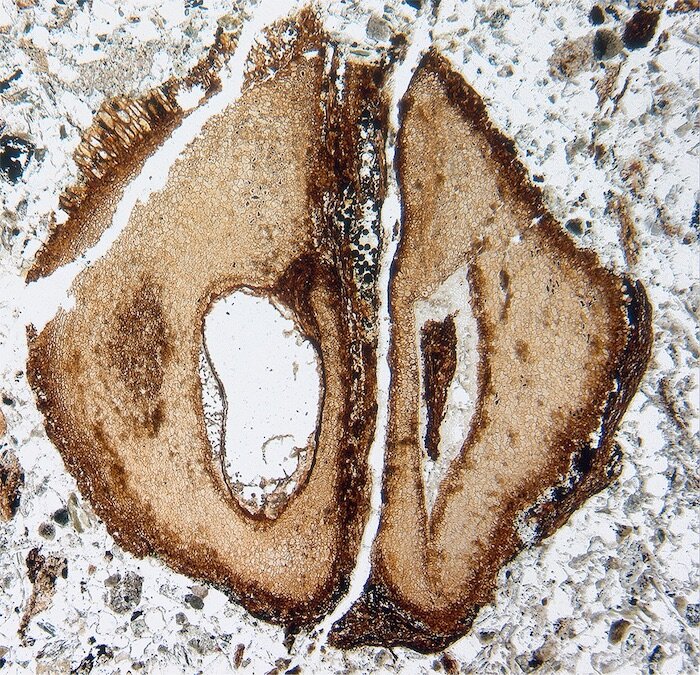
Now, a new paper written by University of Kansas researcher Brian Atkinson in the American Journal of Botany shows the mahogany family goes back millions of years more, to the last hurrah of the dinosaurs, the Cretaceous.

"For understanding when many of the different branches of the tree of life evolved, we're primarily dependent on the fossil record," said Atkinson, an assistant professor of ecology & evolutionary biology and curator in the Biodiversity Institute's Division of Paleobotany. "In this case, Meliaceae, the mahogany family, is an ecologically and economically important group of trees. A lot of researchers have used this group as a study system to better understand the evolution of tropical rainforests. This work is the first definitive evidence that the tropically important trees were around during the Cretaceous period, when we first start to see the modernization of ecosystems and modern groups of plants."

Atkinson's new work pushes back the fossil record for Meliaceae by 15 to 20 million years, the Campanian stage of the Late Cretaceous, from between 72-79 million years ago. The well-preserved mahogany specimen Atkinson analyzed was discovered just off Vancouver Island in Canada.

"The rock that contained the specimen was collected by a local fossil collector, Graham Beard, who is the director of the Qualicum Beach Museum of Natural History," Atkinson said. "He collected it years ago, but I was actually interested in the rock that has this fossil in it for something else. And as I kept preparing this rock, more for the other fossils were in there, this thing showed up by surprise. So, it was kind of found by accident."

To pinpoint the fossil's identity, Atkinson carefully studied the structure of the fossilized fruit and also analyzed phylogenetic information to figure out its relationship to other species in the mahogany family.

"I combined the molecular data from living representatives of the mahogany family with the morphology of the fossil, as well as the morphology of living species," he said. "And then I subjugated that combined dataset to phylogenetic analyses, which allows us to reconstruct evolutionary relationships. Based on this analysis, we found the fossil is closely related to this genus called Melia, which is living today."

The KU researcher gave the oldest-known mahogany fossil the scientific name Manchestercarpa vancouverensis—the species name signifies where the specimen was discovered, and the genus is named after an esteemed colleague in the field.

"I named it after a prolific paleobotanist who's really improved our understanding of the evolution of flowering plants through the fossil record," Atkinson said. "So, I named it in honor of Steve Manchester, who's at the University of Florida Museum of Natural History."

While it's noteworthy that Atkinson has pushed back the origin story of mahogany, he stressed it also helps improve our understanding of the rate of early flowering plant evolution and, in turn, our grasp of larger modern ecosystems.

"They're our most diverse group of plants on Earth, and so there's a whole lot to explore," he said. "And there are some cool things you can do methodologically that you might not be able to do with other groups of plants. I can really ask some exciting paleontological and general evolutionary questions with this group."


More information: Brian A. Atkinson. Fossil evidence for a Cretaceous rise of the mahogany family, American Journal of Botany (2020). DOI: 10.1002/ajb2.1416

Journal information: American Journal of Botany 

Provided by University of Kansas 

Source: https://phys.org/

Rare Homo Naledi Juvenile Fossils Provide Clues Into How Early Humans Aged

Thursday, April 16, 2020

Homo naledi inhabited Earth at about the same time as Homo sapiens, the early ancestors of modern humans (Credit: John Hawks/University of the Witwatersrand)

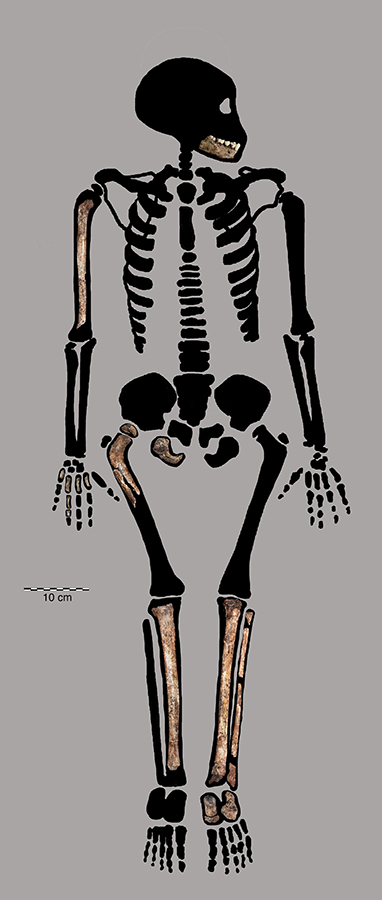
Over the years, paleontologists have been able to uncover many mysteries about human ancestors from unearthed skeletal remains. However, not much is known about their development and growth. because most hominin fossils are those of adults, and remains of developmentally young hominins are uncommon. Now, a perfectly-preserved partial skeleton of a Homo Naledi juvenile, who lived on Earth between 335,000 and 226,000 years ago, ​ is providing insights into how our ancient relatives may have aged.

The rare remains of the young individual, dubbed DH7 (Dinaledi Hominin 7), were among a treasure trove of bones found in South Africa's Dinaledi Chamber of the Rising Star cave system in 2013 and 2014 by Dr. Debra Bolter and her colleagues at the University of the Witwatersrand. Prior to leaving the area, the scientists carefully documented the over 1,800 fossils so they could accurately reconstruct each skeleton once they returned home.

An artist's illustration of Dinaledi Chamber in South Africa where remains of 15 H. naledi individuals, including a juvenile, were discovered (Paul H. G. M. Dirks et al / CC -BY-SA 4.0/Creative commons.org)

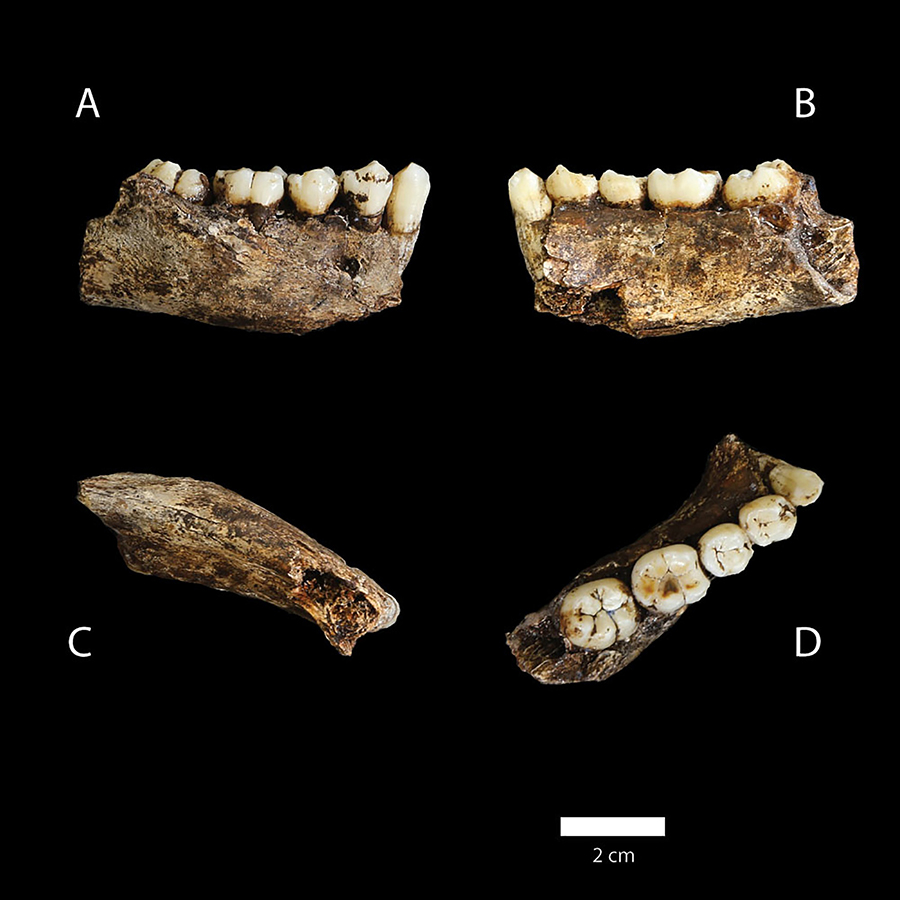
Over the years, Bolter and her team have determined that the remains, which include 1,550 bones and teeth, belonged to at least 15 H. naledi individuals. While all were interesting, DH7's perfectly-preserved arm and leg bones and partial jaw, were particularly so, because they revealed a blend of maturation patterns observed in modern humans and earlier hominins.

A detailed study of the remains, published in the journal PLOS ONE on April 1, 2020, revealed that while the young H. naledi had curved hand bones like our older, faster-developing ancestors, its feet and ankles looked very similar to those of slower-growing modern humans. The anatomical mishmash becomes more confusing when scientists consider that H. naledi's brain was much smaller than our modern-day human ancestors, H. sapiens, and more in line with our primitive ancestors like the H. erectus or A. sediba. However, it was more complex and developed than that of the earlier hominins.

Homo naledi juvenile remains offers clues to how our ancestors grew up. Credit: Bolter et al. PLOS ONE 2020 (CC BY)

The scientists estimate that DH7 was between 8 and 15 years old at the time of its demise. However, they are not sure of its exact age. Its small brain would typically indicate that DH7 matured as fast as the earlier hominins and was between 8 and 11 years old when it died. However, its human-like features and complex brain could mean that DH7 aged more slowly, like modern humans and Neanderthals, making it between 11 and 15 years old. "You're beginning to see that maybe H. naledi is breaking all the rules," says study co-leader Lee Berger.

Scientists may be able to determine the juvenile H. naledi's age by its teeth, but the process poses risks (Credit: Debra Bolter et al/ University of the Witwatersrand)

The researchers could determine DH7's age more accurately by counting the faint lines left behind by the accumulating enamel on its developing teeth. However, in order to do so, they would have to cut into the teeth or expose them to powerful x-rays. While the former would destroy the precious fossils, the latter could kill any preserved proteins that may help unveil more secrets about H. naledi's connection to other hominins, including modern-day humans. "We just have to be careful that what we do to get one piece doesn't destroy an attempt to get any other kind of data," Bolter says.

The paleontologists plan to continue studying the juvenile H. naledi to get more insights into how it aged and, more importantly, where the young individual fits into the evolution of the growth and development of modern-day humans.

Resources: www.nationalgeographic.com, www.sciencedaily.com

Dinosaur Fossils Could Reveal ‘Ancient Solutions To Modern Flight Problems’

Thursday, April 16, 2020

Credit: Chase Stone

Engineers often look to insects and birds when tackling new aerospace challenges such as drone stability. Until now, they have largely ignored another key group with potential solutions, claims researcher Liz Martin-Silverstone – dinosaurs.

Despite the aeronautic excellence of animals such as the Pterosaur, the largest ever flying creature, dinosaurs have mostly been overlooked in the pursuit of bio-inspired technologies, said the University of Bristol palaeontologist.

The researcher and her colleagues claim dinosaurs could provide “ancient solutions to modern flight problems”, such as aerial stability and drone launches.

“There's a lot of really cool stuff in the fossil record that goes unexplored because engineers generally don't look to palaeontology when thinking about inspiration for flight,” said first author Martin-Silverstone. “If we're only looking at modern animals for inspiration, we're really missing a large degree of the morphology out there and ignoring a lot of options that I think could be useful.”

With living and photographed specimens of insects and birds available, engineers might not think to examine fossils, which are often incomplete. However, Martin-Silverstone said there are a few Pterosaur fossils that provide extraordinarily deep insight into the anatomy of their wings, which is essential for understanding their flight capabilities.

“There are two or three absolutely amazingly-preserved Pterosaur fossils that let you see the different layers within the wing membrane, giving us insight into its fibrous components. Also, some fossils are preserved enough to show the wing attachments beneath the hip,” she said. “While you don't know exactly the shape of the wing, by knowing the membrane attachments you can model the effectiveness of different wing shapes and determine which would have performed best in natural conditions.”

Analysing the morphology and predicted flight mechanics of these ancient creatures has revealed novel tactics that don't exist in modern flyers.

Becoming airborne is one example. Launching into the air through a leap or jump, also known as ballistic launch, is standard throughout the animal kingdom. However, larger birds require a running start to gain enough momentum for lift-off. Pterosaurs, on the other hand, may have developed a method to launch from a stationary position, despite some specimens weighing nearly 300kg.

One hypothesis, proposed by review co-author Mike Habib from the Dinosaur Institute at the Natural History Museum of Los Angeles County, suggests that the wing membrane and the robust muscle attachments in the wings allowed Pterosaurs to generate a high-powered leap off their elbows and wrists, giving them enough height to become airborne.

“Today, something like a drone requires a flat surface to launch and is quite restricted on how it actually gets into the air. The unique launch physiology of Pterosaurs might be able to help solve some of these problems,” said Martin-Silverstone.

Pterosaurs can also provide insights on how to prevent flight instability once in the air. Contrary to how sails can become unstable in a strong wind, Pterosaurs evolved strategies to resist flutter of their broad wings over their 160m-year existence. “So far we've struggled to design things like flight suits that can resist the pressures of flight. If we can understand how Pterosaurs did it, for instance by understanding how their wing membrane was actually structured, then that's something we can use to answer modern engineering questions,” the researcher said.

The unique physiological elements aren't limited to Pterosaurs. Other ancient flyers, like Microraptors, had feathered wings on both their arms and legs, while newly-discovered dinosaur Yi qi had wings that combine feathers with a bat-like membrane – something that has never been repeated since their extinction. The authors say many flight strategies remain to be properly explored.

We will have a much better chance of overcoming the hurdles still hindering man-made flight if we combine our knowledge from both living and extinct flying animals, said Martin-Silverstone. “We want biologists and engineers alike to reach out to palaeontologists when they are looking to solving flight problems, as there might be something extinct that could help. If we limit ourselves to looking at the modern animals, then we're missing out on a lot of diversity that might be useful."

The review was published in Trends in Ecology and Evolution.

Source: www.imeche.org/

5 Ways Jurassic Park III Has Aged Well (& 5 Ways It Hasn’t)

Wednesday, April 15, 2020

Jurassic Park III gets a lot of flak, but looking back, a lot of it still stands up to scrutiny today.

Franchises tend to have an evergreen factor about them, as newer films serve to make the older ones stand out as products of their time. Looking back, fans tend to find many things that have changed over the years, some for the better and some not-so-well. With the Jurassic World movies coming about, the earlier Jurassic Park trilogy has become a legacy series.

However, there are factors that have made certain aspects here age rather badly, and some of these weren’t good to begin with. Jurassic Park III gets the most flak in this regard, but there are definite solid points from the film that were great and remain so. 

10 - Aged Well: Special Effects

The effects used in the original Jurassic Park series have been able to outdo even the Jurassic World films, and Jurassic Park III is probably the peak of excellence in this regard. Even today, watching the dinosaurs is awe-inspiring.

You won’t find any of these creatures look even remotely fake, and compared to the CGI-heavy films today, Jurassic Park III comes across as a benchmark to use for mastery in the special effects department.

9 - Hasn't Aged Well: Silly Decisions By The Characters
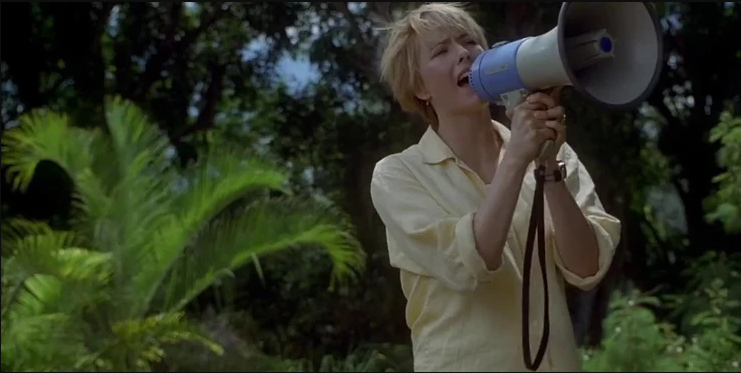
Audiences have gotten quicker over the years in picking out nonsensical elements from films, and Jurassic Park III suffers by hoping the viewers adopt a very simple mindset. However, watching the characters make dumb decisions does become very tiresome.

For instance, watching Mrs. Kirby use a megaphone in an area filled with carnivorous dinosaurs is just plain stupid, along with witnessing Billy take raptor eggs from their nests and not expecting any retaliation. This kind of stuff just seems like lazy ways to create tension in the movie, and fans these days don’t take them on well.

8 - Aged Well: Fast Paced Style

One of the reasons that The Lost World doesn’t have much replay value is because the film tried to replicate the whole moral issue the first movie raised, only for it to interfere with the pacing of the action onscreen. With Jurassic Park III, this is no issue, and it’s a breeze of a watch.

With material that is hard on the action and very less reliant on dialogue, the film is prime for moviegoers these days who love blockbuster style entertainment. Jurassic Park III wastes little time in kickstarting proceedings, following which the thrills only stop when the film reaches its conclusion.

7 - Hasn't Aged Well: Spinosaurus Taking Out The T-Rex

Having an official mascot for a series is something that is hard to manufacture, and audiences are the ones who choose which thing shines the most. The T-Rex became the figurehead for the series, only for Jurassic Park III to make an attempt in making the Spinosaurus fill this role.

It might have been achieved, had the rather awful fight scene between the Spinosaurus and the T-Rex not having taken place. Looking back, the choreography in this sequence seems laughable, and the Spinosaur’s victory through snapping the Rex’s neck is mainly just goofy.

6 - Aged Well: The Island Backdrop

Rarely do you feel both uneasy and at home in a film’s setting, and Jurassic Park III achieved this by carving out Isla Sorna as a cool backdrop for the film’s events. This happened to be a criticism for The Lost World and Jurassic World: Fallen Kingdom, where audiences didn’t like how the action kept changing from one place to another.

In this film, Isla Sorna has the feel of a jungle where anything can happen, and the various places the heroes go even seems like they’re part of a survival game as a fresh obstacle is thrown at them. You really have to appreciate the cinematography and set design for pulling this off.

5 - Hasn't Aged Well: Cheesy Comedy

The Marvel Cinematic Universe films have made cheesy comedy a staple of its franchise, but this isn’t something that can be passed on to other series. And while Jurassic Park films certainly had comedic elements, this movie’s hammy jokes don’t hold up.

Stuff like arguments over misnaming dinosaurs into “Tricycloplots,” or making fun of Eric collecting T-Rex’s urine is more geared toward juveniles rather than a global audience at large. There are some good comedic moments, but the weaker points are far more jarring.

4 - Aged Well: Horror Moments

In many ways, the Indominus Rex from Jurassic World can’t hold up against the Spinosaurus, which came across like a complete killing machine. This dinosaur and its psychotic obsession with the heroes - during which it sprang out of nowhere numerous times - make for riveting entertainment.

The raptors, too, were made out to be far more menacing in Jurassic Park III, and these ones are way better to follow than those seen in the Jurassic World movies. Along with that, the eeriness brought from silent moments can still make you feel the chills of an incoming horror-fest.

3 - Hasn't Aged Well: Kirbys Serving As Pinball Protagonists

There’s a trope known as the “Pinball Protagonist,” in that these types of lead characters offer nothing to the plot other than be used as the framing device. The Kirbys fit the bill for such a trope, serving as annoyances rather than actual heroes.

Characters like Alan and Billy save the film’s point-of-view from becoming too frustrating to follow, as the Kirbys with their frequent mishaps and bickering seem out of place in a dinosaur movie. Audiences today almost exclusively single out this family as being the weakest point of Jurassic Park III.

2 - Aged Well: The Soundtrack

Even if you happen to dislike Jurassic Park III, there’s no way you can criticize the soundtrack. This happens to be the brightest aspect of the movie, especially during the final moments as the departing soundtrack is just heaven to the ears.

In times of duress for the protagonists, the music shifts sharply over to thrilling levels, greatly solidifying the theme of the moment. When the time comes to make the audience feel a sense of wonder, the soundtrack does the charm. Even today, hardly any other film can be considered to be on par with Jurassic Park III’s musical range.

1 - Hasn't Aged Well: The Airplane Dream Sequence

Here, a raptor in Alan’s dream sequence on the airplane sat rat beside him as if it were a passenger as well, even going so far as speaking to him! Unfortunately, the scene has ended up remaining in memory, and almost two decades later, this moment sticks out as the sequence that has aged absolutely horribly.

Was this supposed to be funny, or was it supposed to be scary? And what was the point of it in the first place? There’s a lot of questions that have gone into this bizarre scene. But while the consensus isn’t certain, what’s for sure is that it has ended up being the most talked-about scene from the film, and not in a good way.

Source: https://screenrant.com/

Jurassic Park: 10 Funniest Scenes From The Series

Monday, April 13, 2020

Jurassic Park is known for its special effects, thrilling action sequences and of course, dinosaurs. But it's time to give the comedy its due too.

There’s more variety in the Jurassic Park series than the films get credit for. Not only are they incredible from a special effects standpoint, they also serve well as thrilling horror movies that provide blockbuster entertainment. However, the series doesn’t get much praise for its comedy, which it absolutely should.

Part of the reason why the films are so entertaining is because they provide a well-rounded experience, and the funny moments certainly deserve credit here too. For this reason, here are 10 of the funniest scenes from the Jurassic Park series — not including the Jurassic World films — that will bolster the replay value of the movies.

10 - Mr. Kirby Explains His True Profession

Although the Kirbys are largely regarded as one of the worst characters in the series due to their role in kidnapping Alan Grant, Mr. Kirby’s incompetence does have an amusing quality. In this scene, he was outed for lying about climbing K-2 when he claimed he had set camp at 30,000 feet.

After Billy told him K-2 didn’t even peak that high, an embarrassed Mr. Kirby admitted that “Kirby Paint & Tile Plus” made bathroom fixtures. His buffoonish attempts to apologize involved offering them free remodeling of their kitchens. It was then made funnier when Alan quipped that they were now in the worst place in the world and weren’t even getting paid for it.

9 - Ellie Bamboozles Alan Grant And Ian Malcolm

The dinosaurs on Jurassic Park were all female due to their genetic coding, or at least that was what the intention had been. When Ian Malcolm began explaining Chaos Theory and its effects, Ellie Sattler came to a conclusion that quieted down both Ian and Alan.

Here, she surmised that if the dinosaurs were to take over the world and cause human extinction, then it would also mean that women would then rule the Earth. After not having paid her heed for the most part, this point shut both men up promptly.

8 - Everybody Runs After Alan Grant Asks Them To Stay Still

There’s no doubt that Jurassic Park is comparable to a horror video game, in that the characters have to constantly run for their lives or be brutally devoured. However, there was a funny spin on that in one occasion. 

In this scene, the stranded group ventured into the jungle, finding the body of a deceased dinosaur. Unfortunately, a larger one eating said dinosaur showed, prompting Alan to tell them to stay still. And yet, the second the dinosaur roared, each one of the characters behind Alan scrammed like there was no tomorrow.

7 - John Hammond Hates Ian Malcolm

Ian Malcolm has one-liners to last for days, and the person who despised him most for it was none other than John Hammond. After having challenged Hammond for keeping dinosaurs at the park in the first place, Ian truly got under his skin during the jeep ride.

When no dinosaurs showed up for the trip, Ian looked straight into the car camera and sarcastically asked Hammond if he planned to have any dinosaurs to show for in the first place. A fuming Hammond could only mutter how much he hated Ian’s guts.

6 - Ian Malcolm Sees Mountain Of Droppings

Sometimes a single statement is enough to make a scene stand out in its comedy, and this was done best when Ian Malcolm pretty much stated the general vibe of the day. After the group joined Ellie in attending to an ill dinosaur, Ian noticed something he didn’t expect to see.

Walking over to what seemed like a mountain of droppings, Ian didn’t care to censor his words by proclaiming it to be a big pile of dung. It was the kind of comment you expect from such a character, and it served as a hilarious tension breaker.

5 - Nedry Outs Dodgson's Identity

One of the surprisingly iconic moments from Jurassic Park turned out to be the meeting between Dennis Nedry and Dodgson. When the latter admonished Nedry for calling him out in public — the two were meeting to double-cross Hammond — Nedry made a joke of the whole thing.

Pointing straight toward his guest, Nedry shouted “We got Dodgson here!” for everyone to hear, only for nobody to care at all. He then piled on the humiliation by mocking Dodgson’s hat, asking if he was trying to look like a secret agent.

4 - Using Gymnastics To Beat A Raptor

It’s bizarre how people with guns haven’t been able to kill dinosaurs in the series, only for a teenager to swing on a bar and end a fully grown raptor. This is what happened in The Lost World, where Ian Malcolm’s daughter used gymnastics to gain the victory.

While trapped with a raptor out to get her, she somehow conjured up some otherworldly courage by jumping on a bar and performing theatrics. This bamboozled the raptor to the point where the girl managed to kick it to its death. The entire ridiculousness of it all makes this the most campiest moment in the series by far.

3 - Sarah Asks Nick For Gum

Sarah Harding is considered to be the reason for the whole conflict in The Lost World for going to the island in the first place, and she gets a lot of flak for it. The one good thing out of it, though, was this exchange between herself and Nick.

Here, Sarah was operating on the wounded T-Rex and needed something to hold the wrapping around its foot together, which was when she asked Nick to spit out the gum he was chewing. Misunderstanding her, Nick literally spat in her hand, causing a shocked Sarah to wretch in disgust.

2 - Dinosaur Lets Heroes Go Because They Smell

It appears as if dinosaurs have standards in the Jurassic Park series as on this occasion a Ceratosaurus let a potential meal go because of the smell. As it happened, the heroes came across the satellite phone they needed to call home, but it was submerged in a pile of droppings left by the Spinosaurus.

Once they had dug through the pile, they were met by the Ceratosaurus, which drew back instantly once it got a whiff of the smell and walked away. Who knew being covered in dino feces was a way to avoid death?

1 - A Raptor Says Alan's Name

For some, this was the moment they stopped taking Jurassic Park III seriously, when it became clear the film would dive hard in the jokes. As Alan slept on the plane, he had a nightmare that remains impossible not to laugh at.

Within his dream, Alan woke up to find the plane empty with an eerie silence around him. Upon turning around, he was beside himself with fear to see a raptor close to his face, which then muttered, “Alan!” to him in Billy’s voice. Funnily enough, the raptor's positioning made it look as if it was sitting like a passenger on the plane. The scene is like watching a Jurassic Park parody within a Jurassic Park film.

Source: https://screenrant.com/

Scientists Use X-rays to Peer inside Fossilized Dinosaur Eggs

Saturday, April 11, 2020

The clutch of Massospondylus carinatus eggs. Image credit: Brett Eloff.

Powerful X-ray beams at the European Synchrotron in France allowed an international team of researchers to study some of the world’s oldest and well-preserved dinosaur embryos and reconstruct them in 3D.

The clutch of seven subspherical dinosaur eggs was recovered from the Elliot Formation of Golden Gate Highlands National Park in South Africa in 1976. Two partially exposed embryos in the clutch were quickly identified as being dinosaurian, making them among the oldest known dinosaur eggs and embryos in the world.

The fossilized eggs belong to Massospondylus carinatus, a 5-m-long sauropodomorph dinosaur that lived approximately 200 million years ago (Jurassic period).

“At the ESRF, an 844-m-long ring of electrons traveling at the speed of light emits high-powered X-ray beams that can be used to non-destructively scan matter, including fossils,” the paleontologists explained.

“The embryos were scanned at an unprecedented level of detail — at the resolution of an individual bone cell.”

With these data in hand, they were able to create a 3D model of Massospondylus carinatus’ embryonic skull.

Watercolor painting of the Massospondylus carinatus embryos at 17% through the incubation period, 60% through the incubation period and 100% through the incubation period. Image credit: Mélanie Saratori.

“No lab CT scanner in the world can generate these kinds of data. Only with a huge facility like the ESRF can we unlock the hidden potential of our most exciting fossils,” said Dr. Vincent Fernandez, a scientist at the Natural History Museum in London, UK.

The researchers noticed similarities between the dinosaur embryos and the developing embryos of crocodiles, chickens, turtles, and lizards.

“By comparing which bones of the dinosaur embryonic skull were present at different stages of their development, we can now show that the Massospondylus carinatus embryos were actually much younger than previously thought and were only at 60% through their incubation period,” they said.

“We also found that each embryo had two types of teeth preserved in its developing jaws.”

“One set was made up of very simple triangular teeth that would have been resorbed or shed before hatching, just like geckos and crocodiles today. The second set was very similar to that of adults, and would be the ones that the embryos hatched with.”

Digital reconstructions of Massospondylus carinatus embryonic skulls. Image credit: Chapelle et al, doi: 10.1038/s41598-020-60292-z.

“I was really surprised to find that these embryos not only had teeth, but had two types of teeth,” said Dr. Kimi Chapelle, a researcher at the University of Witwatersrand.

“The teeth are so tiny; they range from 0.4 to 0.7 mm wide. That’s smaller than the tip of a toothpick.”

The team concluded that dinosaurs developed in the egg just like their reptilian relatives, whose embryonic developmental pattern hasn’t changed in 200 million years.

“It’s incredible that in more than 250 million years of reptile evolution, the way the skull develops in the egg remains more or less the same. Goes to show — you don’t mess with a good thing,” said Professor Jonah Choiniere, also from the University of Witwatersrand.

The study was published in the journal Scientific Reports.

_____

K.E.J. Chapelle et al. 2020. Conserved in-ovo cranial ossification sequences of extant saurians allow estimation of embryonic dinosaur developmental stages. Sci Rep 10, 4224; doi: 10.1038/s41598-020-60292-z

Source: www.sci-news.com/

Child's Shattered Skull May Be Oldest Homo Erectus Fossil On Earth

Friday, April 10, 2020

The skull fragment of a 2-million-year-old Homo erectus child found in South Africa (Image: © Andy Herries, Jesse Martin and Renaud Joannes-Boyau])

The 2-million-year-old skull fragment was mixed among fossils of two other extinct human species in Africa's 'Cradle of Humankind'

In an ancient cave in South Africa, paleontologists have found evidence that three of humankind's oldest known relatives lived in the same place, at the same time.

That time was roughly 2 million years ago, and the place was the Drimolen Paleocave System near Johannesburg — part of a 180-square-mile (466 square kilometers) network of limestone caverns also known as the Cradle of Humankind. 

As their nickname suggests, the primeval caves hold some of the oldest-known fossils of archaic humans. Scientists have unearthed more than 900 hominin fossils at the site, including a near-complete skeleton of a 3 million-year-old Australopithecus africanus — a human ancestor that lived between 3.3 million and 2 million years ago — and the only extant fossils of Paranthropus robustus, an ancestor not directly related to modern humans that lived roughly 2 million to 1.2 million years ago.

Now, a new study suggests, researchers digging in the caverns have found the oldest Homo erectus skull fragment ever found, dating to some 2 million years ago — several hundred thousand years older than any other known Homo erectus fossil.

"The age of the fossil shows that Homo erectus existed 150,000 to 200,000 years earlier than previously thought," lead study author Andy Herries, head of the Department of Archaeology and History at La Trobe University in Australia, said in a statement. "We can now say Homo erectus shared the landscape with… Paranthropus and Australopithecus."

Homo erectus is considered to be a direct ancestor of modern humans (Homo sapiens), thriving for nearly 2 million years before vanishing roughly 110,000 years ago, the researchers wrote. They are the first species on our family tree to have human-like proportions (their name means "upright man") and the first to appear outside of Africa, a 2013 study in the journal Science suggests. Before now, the earliest Homo erectus fossils came from the country of Georgia; the species was hypothesized to have migrated out of Africa around 1.85 million years ago.

An assortment of hominin fossils found at Drimolen cave in South Africa. (Image credit: Andy Herries)

In the new study, published April 3 in the journal Science, researchers analyzed several fossils excavated from Drimolen cave between 2015 and 2018. Among the fossils is a skull fragment believed to belong to a Homo erectus child, who was 2 or 3 years old at the time of death.

To date the fossil, the team first looked to the ancient sediments that surrounded the fossil. The orientation of magnetic particles located in the cave's rocks suggested that the fossils were deposited during a brief window when Earth's magnetic poles reversed — a rare geophysical event that tends to occur a few times every million years or so. 


Prior studies of Earth’s magnetic field had revealed that one such magnetic reversal occurred 1.95 million years ago. To determine if that reversal was the one that affected the cave's magnetic minerals, the team looked at the ratio of chemical elements in the sediments near the fossil. Because radioactive versions, or isotopes, of uranium atoms decay into lead at a constant rate, the ratio of uranium isotopes to lead in the sample confirmed the minerals were 1.95 million years old.  The cranial fossil, they concluded, was even older than this, and dated to approximately 2 million years ago.


Because fossil remains of Australopithecus and Paranthropus found at Drimolen date to the same time period, this research suggests the three archaic hominins all lived side-by-side in southern Africa at the same time — albeit briefly. This era would have been a moment of transition, the researchers wrote, right before Australopithecus went extinct and Homo erectus was just beginning its nearly 2 million-year residency on Earth. Indeed, the authors concluded, it could be that fierce competition with Homo erectus and Paranthropus finally led to the demise of Australopithecus — a possibility never seriously considered until now.

Originally published on Live Science.

Paleontological Surprise: Monkeys Sailed From Africa to Americas Not Once but Twice

Friday, April 10, 2020

Pygmy marmosets, members of the Platyrrhini: The newly discovered fossil monkey may have been around this. CREDIT: size.bluedog studio / Shutterstock.co

There were two early monkey lineages in South America, not one. One lineage became the adorable platyrrhini and one went extinct.

Just how the primate family reached South America from Africa remains a mystery. However they did it, it had been thought that only one lineage of monkeys reached the New World, around 32 to 36 million years ago.

Not so, it seems. Researchers, to their shock, have found evidence of a second lineage of early monkeys that strongly resemble archaic monkeys found in Africa.

But that second lineage went extinct, albeit after more than 11 million years, paleontologists reported in a journal of the American Association for the Advancement of Science.

The first lineage is still there. The discovery is based on exactly four tiny fossilized teeth found in the Peruvian Amazon that proved to be profoundly unlike the teeth of that first known lineage, the platyrrhini. Evidently a second early monkey also accidentally rafted over the briny.

The newly discovered extinct early monkey in Peru has been named Ucayalipithecus perdita, and the analysis concludes that it originated in a primitive African higher primate (which is the category of monkeys and apes; lower primates are lemurs, lorises and tarsiers).

Regarding the nomenclature, “Ucayali” is for a Peruvian department bordering Brazil, pithekos is Greek for monkey or trickster and perdita is Latin for lost.

So how did the lost Peruvian trickster early monkey, and the ancestors of the platyrrhini, travel somewhere between 1,500 to 2,000 kilometers (1,243 miles) across the paleo-Atlantic? And what happened to it?

Tempest-tossed monkey

No fossils of platyrrhini (ancestors of today’s South American monkeys) have been found in North America. One might expect to have found some if there were any, because North America has an extensive fossil record, Prof. Marc Godinot of Ecole Pratique des Hautes Etudes points out in an analysis in the journal.

Also, North America is nothing if not paleontology-oriented. Also, when these ancestral mammals made their involuntary crossings, sea levels were relatively low, Erik Seiffert of the University of Southern California and colleagues note in their paper published in the journal.

So absent other theories, the conclusion is that the hapless early monkeys “sailed” or “rafted” – they got washed into the turbulent seas clinging to floating logs and somehow survived their trans-Atlantic adventure, thanks to fortuitous ocean currents.

If it helps buy that odd scenario, caviomorph rodents also apparently crossed the pond at least 41 million years ago, Godinot explains, floating on vegetation rafts, because they exist in Africa and South America but haven’t been found in North America. (Maybe monkeys and rodents crossed together and it doesn’t bear thinking who ate what en route, but the primate and rodent dispersals seem to be separated by some 10 million years.)

The bottom line is that the Ucayalipithecus fossil teeth found in Peru near the Brazilian border are extremely close to similar well-dated fossils from African parapithecid primates found in Egypt, Libya and Tanzania. They couldn’t have been ancestral to the platyrrhini, Seiffert and the team conclude. So (at least) two monkey groups rafted over the seas from Africa.

Swinging by the tails

Today, around 35 million years after their ancestors parted ways, New World monkeys differ from their African cousins in myriad ways. The American monkeys have flat noses (hence the name “platyrrhini”) with nostrils facing sideways, while African catarrhine monkeys have snouts with the nostrils facing down. The American monkeys’ nostrils are further apart. New World monkeys have long prehensile tails that can help them master the arboreal lifestyle, while African monkeys’ tails can’t grasp branches.

A wondrous additional difference is that the African monkeys have opposable thumbs but the American ones don’t. Their thumb is on the same plane as their other fingers.

The two sides’ social style is also disparate enough to warrant attention. African monkeys tend to form groups with one dominant male and multiple ladies, and they don’t help with the offspring. American monkeys tend to form groups with one female and multiple males who do help with the kids.

We humans arose from African primates tens of millions of years after the catarrhine and platyrrhini separated. With all due respect to monogamy, marriage and fidelity, we are catarrhinic in our habits.

And teeth also evolved radically over the eons. The Ucayalipithecus’ molars are lumpier and more bulbous than that of the platyrrhini. They look like the molars of the African Parapithecidae, which lived in North Africa from 23 to 56 million years ago (the Eocene and Oligocene periods).

Ucayalipithecus split from its African sister taxon, the Qatrania, about 35.1 million years ago, the team estimates, which would date the trans-Atlantic adventure that gave rise to the Ucayalipithecus lineage between 31.7 and 35.1 million years ago.

But what happened to them? However they arrived, we have flat-nosed monkeys in South America to this day, but Ucayalipithecus went extinct – though first they crossed the ocean and then the continent to the location the teeth were found in the Peruvian Amazon.

It must have been extremely challenging to adapt to the new environment, but they did it, for a long time. In fact, the Ucayalipithecus was likely found throughout prehistoric South America. Why they died out and the platyrrhini went on to conquer the canopy remains a mystery.

Source: www.haaretz.com/

Elessaurus gondwanoccidens: Scientists Name 250-Million-Year-Old Dinosaur Fossil After Lord of the Rings Character

Thursday, April 9, 2020

Life restoration of Elessaurus gondwanoccidens, from the Sanga do Cabral Formation (Lower Triassic), Brazil. (Artwork by Márcio L. Castro)

A newly discovered reptile that lived 250 million years ago even before the dinosaurs has been named after a Lord of the Rings character.

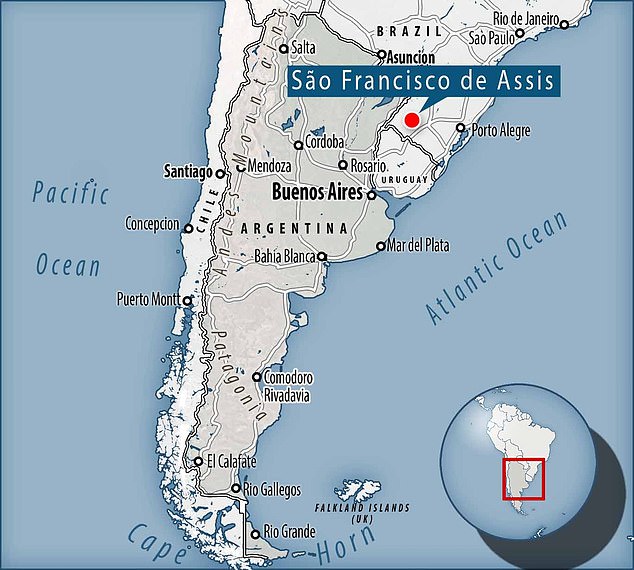
The new species, called Elessaurus gondwanoccidens, was discovered among rocky deposits not far from the Argentina border. 

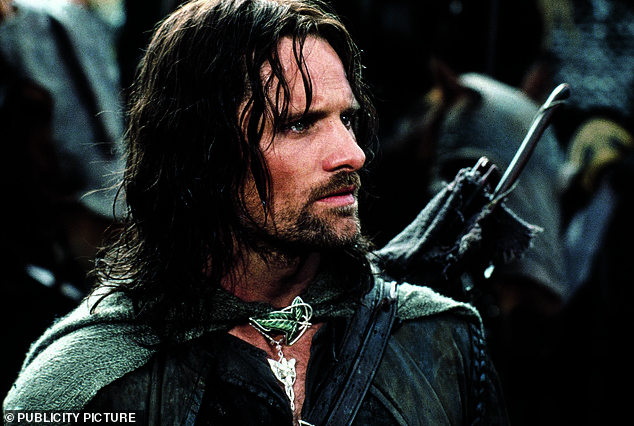
E. gondwanoccidens is named after the Elvish name (Elessar) of Aragorn from Lord of the Rings, also known as strider, in reference to the animal's long legs.  

It had a mostly terrestrial lifestyle during the Triassic period – between 252 million and 201 million years ago.

E. gondwanoccidens, which is also part of a new genus, is a close cousin of the mysterious tanystropheids, noted for their 9.8 feet (3 metre) long necks

The new specimen was collected atrock formations at the locality Bica São Tomé, Sango do Cabral Formation municipality of of São Francisco de Assis, Rio Grande do Sul, Southern Brazil

'Most tanystropheid fossils are found in Middle to Late Triassic rocks of Europe, Asia, and North America, and often in marine sediments,' said study author Tiane De-Oliveira, from the Federal University of Santa Maria in Brazil.

'The presence of Elessaurus in continental deposits of Early Triassic South America suggests that the origins of this group may lie in the southern continents, and that their ancestors may have lived on land before later species adapted to aquatic life.'

De-Oliveira said most representatives of the Elessaurus group would have had hindlimbs longer in length than their upper limbs. 

'A clearer view of the group's origins will rely on more rare fossils from this early time in their evolution.'

About 251 million years ago, a global extinction event – called the Permian extinction, possibly caused by meteors – wiped out most of most of Earth’s species.

Among the early groups to appear after the Permian extinction event were the tanystropheids. 

Most tanystropheid fossils are found in Middle to Late Triassic rocks of Europe, Asia, and North America, and often in marine sediments. 

These long-necked animals were known to be successful in the Triassic Period, an era which followed the extinction of more than 90 per cent of the Earth's species. 

But their lifestyle remains a mystery and the early evolution of this group is poorly understood as their remains are very rare from the Early Triassic period.

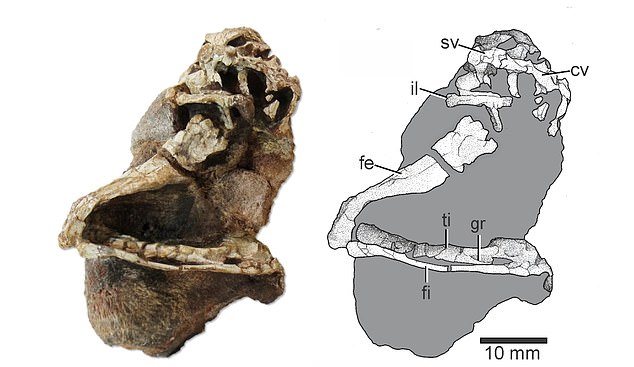
Photo and drawing of E. gondwanoccidens fossilised fragment of pelvic and leg taken from the Sanga do Cabral Formation, Brazil. Abbreviations for drawing: fe femur, ti tibia, gr groove, fi fibula, il ilium, sv sacral vertebra, cv caudal vertebrae. (Image: PLOS ONE/De-Oliveira et al)

This new fossil, discovered in rocks of the Sanga do Cabral Formation in southern Brazil, sheds new light on these precursors to  dinosaurs. 

After analysing fossilised posterior limb and pelvic fragments, researchers concluded that it mostly resided on dry land.     

Remains of its hind leg, pelvis and tail and skeletal comparisons revealed it is the closest known relative of the tanystropheids. 

Professor De-Oliveira said the neck size of Elessaurus would be smaller in relation to what has been described for Tanystropheus.

Aragorn, also known as strider, was a ranger of the north, first introduced as Strider at Bree which the Hobbits continued to call him in The Lord of the Rings. Pictured is his portrayal by Viggo Mortensen in Peter Jackson's film adaptation

Researchers said the E. gondwanoccidens fossil provides insights on the early diversification of the group. 

The presence of the new species in Early Triassic deposits of South America also suggests the origins of this group may lie in the southern continents. 

Researchers have said a clearer view of the group's origins will rely on the discovery of more rare fossils from this early time in their evolution.     

The study of the new species has been published in PLOS ONE.


WHAT WERE THE TANYSTROPHEIDS?

Tanystropheids were likely mainly based in aquatic environments but studies show they could walk on land

Tanystropheid (genus Tanystropheus) was a long-necked reptile that lived during the Triassic period – between 252 million and 201 million years ago.

It measured around 20 feet long, with an extremely elongated neck of about 9.8 feet – longer than its body and tail combined.

The neck was composed of 12–13 extra-long cervical vertebrae.

Fossils of this creature have been found in Europe and the Middle East.

Its habitat was likely aquatic – most fossils studied from the tanystropheid group belonged to marine environments – and fed on fish.

However, Tanystropheus would also have been capable of walking around on land, studies have said.

The teeth at the front of the narrow snout were long and conical for gripping slippery prey such as fish or squid from the waters.

Source: www.dailymail.co.uk/

Pages