nandi's blog

Sexing a Fossil That’s Millions of Years Old

Saturday, January 11, 2020

Borealopelta by Julius T. Csotonyi

Borealopelta, an armoured dinosaur fossil featured in Dinosaur Cold Case, a documentary from The Nature of Things, had huge 51-centimetre-long shoulder spikes. Could that mean Borealopelta was a male, using its spikes for display and fighting, similar to animals today?

When it came to determining the sex of a fossil, scientists usually had to guess. That is, until paleontologist Mary Schweitzer found a definitive way of identifying the bones of a female dinosaur, after being dead for millions of years. She discovered medullary bone in the fossil fragments from a Tyrannosaurus rex.

Medullary bone is a special tissue that forms inside the bone cavities of modern birds, like chickens. The tissue is formed when a female is laying eggs and it acts as a calcium reservoir to form the eggshells. Schweitzer saw the same bone in a T.rex fossil and was able to determine that it was a female.

In the case of Borealopelta, the dinosaur’s body is so well preserved that researchers can’t see the skeleton, keeping the mystery of its sex a secret. For now.

For more, watch Dinosaur Cold Case on The Nature of Things.

Source: www.cbc.ca/

Royal Tyrrell Museum Palaeontologists Use 3D Printing to Replicate Fragile Fossils

Saturday, January 11, 2020

A 77.3 million-year-old daspletosaurus is now on display at the Royal Tyrrell Museum.

When a fossil is discovered it’s typically encased in rock.  

After surviving for millions of years, technicians at the Royal Tyrrell Museum of Paleontology painstakingly remove that rock with fine instruments.

Once the specimen is revealed it can become brittle, especially when it's only one or two millimetres thick.

Many of the fossils at the Royal Tyrrell are too fragile to be put on display, so for decades, they've sat protected on shelves in the museum.

But now those rare bones can be photographed and scanned to create 3D printed replicas.

Amy Kowalchuk is the preparation and 3D technician at the museum. She’s mastered the technique of photographing original fossils, inputting the data into a computer program and sending it off to be 3D printed.

Kowalchuk says there’s been a lot of learning over the last three years on how to take the right photos.

“If you don’t have the photography just right for photogrammetry, it can take hours and hours of editing to take out extraneous material because the program will try to recreate the whole room around your object," she said.

"So until you really nail down how to take the photographs efficiently, then it’s a lot more time consuming than it is now I think.”

Lorna O’Brien is the head technician at the museum and proudly shows off the "exploded skull" exhibit, featuring a 77.3 million-year-old Daspletosaurus.  O’Brien says the fossils remained in storage for 20 years because they were too delicate to display.

“It’s been sitting in our collection for quite a while and we were trying to figure out how do we put this beautiful specimen on display but not compromise the fossil material, and we were able to do that with 3D printing," she said.

Francois Therrien is the curator of dinosaur paleoecology at the museum and is focused on learning more about dinosaur brains.

His challenge is brain tissue doesn’t fossilize. So he’s left with an empty cavity.

Therrien says a medical CT scan is taken of a dinosaur skull to map the brain cavity. But now that data can be used to make a 3D model of a dinosaur brain.

"Having a 3D object in your hands, you can truly look at it in all its orientations and get a better sense of perspective to see what parts are bigger than others, what’s the shape of the brain," said Therrien.

“So having the luxury of holding a dinosaur brain in your hands rather than just staring at it on a monitor makes a lot of difference.”

Because 3D technology is ever-evolving, the museum uses an outside source to do its printing. 

Source: https://calgary.ctvnews.ca/

Fossil Reveals Earth’s Oldest Known Animal Guts

Saturday, January 11, 2020

Illustrated views of Cloudina, a worm that lived about 550 million years ago. © Stacy Turpin Cheavens, University of Missouri

“It was just really lucky,” said Dr. Smith, who works at Johns Hopkins University in Baltimore and is part of the team that reported the find in Nature Communications.

The guts are those of an extinct animal called Cloudina, which looked like a worm made of a stack of ice cream cones and lived about 550 million years ago, just after a period in Earth’s history when the entire planet was encased in ice.

Dr. Smith and a doctoral student in her lab wrapped the Cloudina fossils they found in toilet paper, put them in paint buckets and hauled them back to their field car, a Ford Ranger nicknamed Kitty. Later, Dr. Smith shipped the fossils to Tara Selly and James Schiffbauer, paleontologists at the University of Missouri, for further study.

Dr. Schiffbauer and Dr. Selly specialize in the group of fossils that Cloudina is a member of, the Ediacara biota. The group includes Earth’s oldest known animals, which means that if a researcher wants to figure out what the dawn of the animal kingdom looked like — and find out when animals developed intestines — studying animal fossils like Cloudina is a good place to start.

In their lab, the duo shined X-rays on Cloudina’s remains, building 3-D images of the fossils’ insides. “The first one we were looking at, we found a gut,” said Dr. Selly, who spotted the digestive system in the lab while Dr. Schiffbauer was in his office.

“She texted me and said, ‘Hey, found something really cool, you have to come look at this,’” Dr. Schiffbauer said. When he got to the lab and saw the X-ray images, he knew exactly what they had on their hands.

“This is a gut,” he recalled saying.

The tubular guts are only about as wide as a cocktail straw. They run through Cloudina’s entire length, meaning they passed all the way through from the front end to the back end. Not every animal has a digestive system that ends in a different place from where it begins. But that setup has been common in everything from humans to insects to dinosaurs. Cloudina’s guts, then, are the first known example of our particular kind of digestive tract in the history of animal life.

“Finding that we had a tubular structure inside this skeletal tube tells us that it had a distinct mouth and a distinct anus,” Dr. Schiffbauer said. In other animals like corals, the gut is a simple sac, and the only way into that sac is through the mouth, which also serves as the anus. But with the evolution of a through-going gut, animals no longer had to wait for their food to digest before regurgitating the waste so they could keep eating.

This made eating a lot more efficient, and it opened the door for other kinds of animals with through-going guts to evolve later on, said Lidya Tarhan, a paleontologist at Yale University who was not involved in the new research.

“I think this gets at the heart of some of the most outstanding questions about the evolution of complex life on our planet,” she said.

Source: www.msn.com/  -  https://www.nytimes.com/

New Study Sheds Light on Triceratops Behavior and Living Habits

Friday, January 10, 2020

An artist's reconstruction of "Larry" the Triceratops. "Larry's" uniquely kinked tail has given researchers clues into the animal's lifestyle in a new study published, Jan 7. Reconstruction by Andrey Atuchin.

A new study published by paleontologists Matthew M. Canoy Illies and Denver Fowler, examines the kinked tail of “Larry” the Triceratops, a fossilized dinosaur on display in a new exhibit at the Badlands Dinosaur Museum in Dickinson. The investigation sheds light on the animal’s behavior and answers crucial questions about its overall ecology and habits.

“Larry” the Triceratops was first unearthed in the 67 million year old Hell Creek Formation of the U.S. Forest Service lands in southwest North Dakota in 1988 by former museum curator, Larry League. With over 70% of the skeleton preserved, the unusually complete specimen was placed on public display at Dickinson’s dinosaur museum in 1993.

A little over two decades later, Fowler, while cleaning the skeleton with his staff, noticed a peculiar feature near the end of the dinosaur’s tail: an angled crimp showing evidence of an injury sustained while the animal was still alive.

“We were in there dusting everything and it just jumped out at me,” Fowler told The Press, detailing the experience of his discovery. “It was a really cool thing to see. We all have a bit of injury that we’re reminded of when bad weather occurs or we move wrong; The idea that dinosaurs were exactly the same is really cool.”

Fowler held on to the project until he was approached by Illies who also took an interest in the animal’s life as a living creature. Together, the pair set to analyzing the crooked vertebrae in the hopes of determining the injury’s possible cause.

“The study proposes a few different hypotheses that might explain how the injury occured,” a press release issued by the Dickinson Museum Center. “Perhaps the tail was clumsily struck against a tree or rock. Maybe the injury could have been caused during an attack, being bitten by a Tyrannosaurus rex.”

However, considering the fairly frequent appearance of these kinds of malformations in Triceratops, the likelihood of a T. rex attack seems quite low to Fowler. What seems more likely to the investigators is that the tail was accidentally stamped on by another of its kind in a herd-like setting.

The skeleton of "Larry" the Triceratops. "Larry's" uniquely kinked tail has given researchers clues into the animal's lifestyle in a new study published, Jan 7. Photo c/o the Badlands Dinosaur Museum

“It’s a real example of some sort of behavior — an event that happened in this animal’s life,” Fowler said as he described the dinosaur’s environment and behavior on the prehistoric Western Edge. “It was really flat and a bit swampy. Things like Triceratops are actually more common in these swampy environments; They seem to like it more swampy.”

Only within the last decade have researchers truly begun to understand the living habits of this supposedly social creature.

“We’ve started to find groups, preserved together, now, so we think they may have been in small groups,” Fowler said. “we’re not talking hundreds and hundreds like you might see in bison, but we are talking about small groups of maybe five to ten individuals.”

No matter the findings, Fowler and his staff are admittedly happy to breathe life into the area’s Cretaceous history with the new study and its accompanying exhibit.

“It gives character to something that’s been at the museum for quite some time, but it tells us a story about ‘Larry’ the Triceratops,” the researcher said. “It also shows the new direction for the museum: we’re looking at researching the specimens we’ve had here for a long time, finding out new things about them and also finding new specimens.”

Fowler had this to say of his institution’s overall objectives: “We had a nice picture done and hopefully it will show that Dickinson, as an institution, is growing — we’re starting to produce research and hopefully it will get noted. Rather than being dusty old bones, these were animals that had events happen in their lives.”

Source: www.thedickinsonpress.com/

What Did Dinosaurs Smell Like?

Thursday, January 9, 2020

School's in Session. BY  Herschel-Hoffmeyer

Smell was certainly an important part of dinosaur life. What do we know about it?

What did Triceratops smell like?

Bones have given us an osteological outline of what the famous “three-horned face” looked like. Skin impressions and colors of related animals have offered some possibilities about saurian fashion, too. But, if we were able to travel back 67 million years, what scent would waft away from the hefty herbivore? Would it smell like a barnyard? Like nothing at all? Would the dinosaur carry a whiff of… frill cheese?

We know more than ever about dinosaurs. New species, new insights, new hypotheses. It’s almost impossible to keep up with everything. But one aspect of dinosaur lives we know precious little about is how they would have smelled – to us or, more importantly, to each other.

I can think of a few reasons why discerning dino perfume hasn’t struck the cover of Nature or Science just yet. The first is a lack of direct evidence. Fossil bones can sometimes be smelly, but they don’t preserve the aromas of the living animals. Not to mention that finding evidence of scent glands or other relevant soft tissue evidence seems like a scant possibility (but we’ll get back to that in a moment).

There’s also the way we resurrect and envision dinosaurs. Our species relies greatly on sight and touch. More often that not, we try not to smell the entirety of the world around us. If you’ve taken your dog on a walk or watched your cat snuffle an intriguing spot on the couch, you know that we generally try to avoid developing a scentscape. Perhaps, to us, dinosaurs wouldn’t have carried much of a smell at all, their funk coming from fetid mud, rotted meat, excrement, or other odors daubed onto their skin. And given that so much of dinosaurian media is transmitted through art, skeletal reconstructions, and sometimes film, trying to suss out the essence of Tyrannosaurus just doesn’t come up.

And yet we know that smell was important to at least some dinosaurs. To go back to that all-too-dominant favorite, every dinosaur fan knows that Tyrannosaurus rex had a relatively large olfactory bulb compared to the rest of the brain. So did other predatory dinosaurs like Allosaurus, making these dinosaurs above average at detecting smells. The earliest birds – dinosaurs themselves – inherited these abilities. A good sniffer can be critical to finding food, regardless of what meat and veggie mix a particular species preferred. What I wonder about, though, is whether non-avian dinosaurs communicated through scent.

Here’s where we get into the distinction between what we’d be able to smell and how dinosaurs would perceive each other. In terms of modern reptiles, species kept as pets are often said to have no smell – unless you forget to clean their cage properly or frequently enough. Their scaly skins seem relatively stink free compared to a the fur of a companionable canid. And yet we know that smell is important for reptiles. Alligators and crocodiles, for example, have glands along their jaws that sometimes secrete an oily substance thought to be important in some form of communication. Garter snakes, too, can actually spray a compound into the air and tell competing mates to back off. And contrary to a long-held belief about birds, scent is important to communication among living dinosaurs, too.

We don’t know if any non-avian dinosaur advertised with scent in the same way. Our image of dinosaurs and their lives is principally molded by what they left behind, with our expectations of what can be found guiding what we look for. Personally, I think there’s an entire world of dinosaurian fragrances that we have yet to even catch the barest sniff of. We already have evidence that some dinosaurs were sensitive to smell thanks to endocasts of their brains, and, while circuitous nasal passages in groups like ankylosaurs have generally been hypothesized to be advantageous for cooling incoming air or making sounds, it’s possible some sensitive sniffing abilities were carried along.

There may be some aspects of Mesozoic lives that time has completely obscured. But I don’t think the scents of the dinosaurs’ world are impossible to detect. The fossil record is far more detailed than we ever knew. Shreds of degraded proteins and tatters of blood vessels can now be uncovered from fossils. Perhaps, somewhere out there, there’s a fossil that preserves some critical gland or organ that itself contains the biochemical remnants of what those tissues used to create. Something smelly. Until then, we can at least try to imagine the ancient odors. Close your eyes, picture your favorite dinosaur, and think about what you’d smell.

Source: https://blogs.scientificamerican.com/

Pu’an Dinosaur Geopark: China to Build Real-Life Jurassic Park in Megacity Ready for 2021

Wednesday, January 8, 2020

Plans for a real-life off screen Jurassic Park are under way in China (Image: Reuters)

Budding paleontologists will be able to discover more about dinosaurs at a real-life Jurassic Park adventure world in Chongqing, China called Pu’an Dinosaur Geopark.

Plans for a real-life off screen Jurassic Park are under way in China after megacity Chongqing approved a request for a dinosaur land.

Budding explorers will be able to discover more about their favourite reptile giants and even dig through a fossil site in the excavation area.

The attraction will also feature a dinosaur fossil museum and research base which will study the movement of dinosaurs from the late Jurassic era to the early middle Jurassic era.

For Jurassic Park fans truly living on the wild side of life, the park will also feature rollercoasters and large scale rides.

It is not yet clear when the building for the park will be complete but developers have dubbed it Pu’an Dinosaur Geopark.

Construction is expected to begin early spring and the adventure park is set for completion by the end of 2020 - ready for a 2021 opening.

The Jurassic Dinosaur Park will become the second large geo-park for Chongqing with Longgang National Geopark a much-loved tourist attraction in the city.

According to the Chongqing Municipal Planning and Natural Resources Bureau the application for the exotic park was approved early on Monday.

News of the attraction will delight Jurassic Park fans who have developed a cult following for the dinosaur franchise.

It began in 1990 when Universal Pictures acquired the rights to the novel by Michael Crichton and developed it under the guidance of Steven Spielberg in 1993.

The original film is centred on a disastrous attempt to create a theme park of cloned dinosaurs which would be open to the public.

Steven Spielberg also directed the second Jurassic Park film The Lost World in 1997 and there have since been five films in total with a sixth scheduled for 2021.

Source: www.dailystar.co.uk/

Ghost Worms Mostly Unchanged Since the Age of Dinosaurs

Wednesday, January 8, 2020

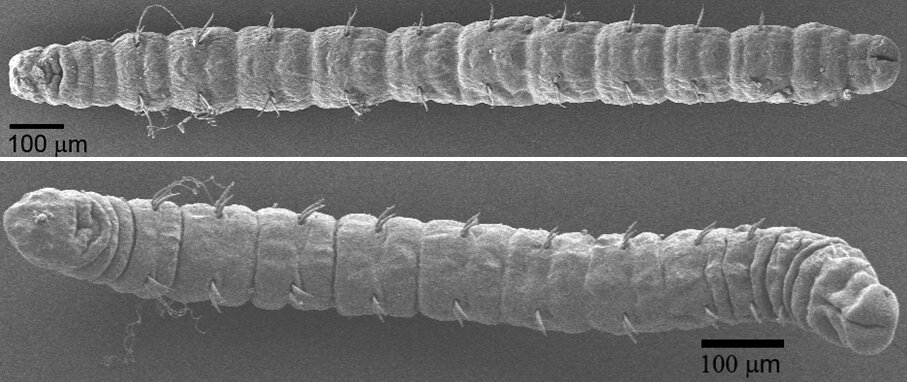
Upper specimen: Stygocapitella josemariobrancoi from a beach close to Plymouth, UK: Lower specimen: Stygocapitella furcata from the 4th of July beach on San Juan island, WA, USA Credit: José Cerca, Christian Meyer, Günter Purschke, Torsten H. Struck

It is well known that the size, shape and structure of organisms can evolve at different speeds, ranging from fast-evolving adaptive radiations to living fossils such as cichlids or coelacanths, respectively.

A team led by biologists at the Natural History Museum (University of Oslo) has uncovered a group of species in which change in appearance seems to have been brought to a complete halt. The tiny annelid worms belonging to the genus Stygocapitella live in sandy beaches around the world. In their 275-million-year history, the worms have evolved 10 distinct species.

But what makes the group stand out is the presence of only four morphotypes. Such absence of morphological change has lately proven to be a common feature of many so-called cryptic species complexes, for example, in mammals, snails, crustaceans and jellyfish.

"Cryptic species are species which have already been distinct species for a substantial amount of time, but have accumulated very little or no morphological differences. Such species can help us understand how evolution proceeds in the absence of morphological evolution, and which factors might be important in these cases," explains Professor Torsten Struck at the Natural History Museum (University of Oslo)

Two of the Stygocapitella species that were investigated split apart at the time when Stegosaurus and Brachiosaurus lived. But despite 140 million years of evolution, these ghost worms today look almost exactly the same. However, looks may be deceiving. Molecular investigations reveal that they are highly genetically distinct, and considered reproductively isolated species.

In comparison to other cryptic species complexes separated by a maximum of a couple million years, the time span in this complex is 10 times longer, which makes the lack of change in ghost worms extreme.

"These species can also be studied to understand how species respond to extreme ecological changes in the long run. Some of these morphotypes have experienced the much warmer conditions of the Cretaceous as well as the changing intervals of the ice ages," says Struck.

What makes the case of Stygocapitella particularly puzzling is that closely related taxa seem to be evolving morphotypes significantly faster. The findings therefore highlight that evolutionary change in appearance should be viewed as a continuum, ranging from accelerated to decelerated, and where the investigated worms stand out as one of the more extreme cases of the latter. The study also points out that species formation is not necessarily accompanied by morphological changes.

The researchers suggest that lack of morphological change may be linked to the worms having adapted to an environment that has changed little over time.

"Beaches have always been around and had the same composition then as now. We suspect these worms have remained in the same environment for millions and millions of years and they are well adapted. We suspect they have become good in moving around, but not having changed much," explains first author of the study Ph.D. Fellow José Cerca. "Alternatively, it has been suggested that populations regularly crash to only a few surviving individuals, and newly evolved characters get eliminated in the course of these events. Finally, besides or instead of the environment, their development may constrain their evolution."

However, the reasons for the slow rate of morphological change are still inconclusive in the current study, and remain to be explored by the group in the future.

More information: José Cerca et al, Deceleration of morphological evolution in a cryptic species complex and its link to paleontological stasis, Evolution (2019). DOI: 10.1111/evo.13884

Source: https://phys.org/

Australia Fires Could Lead to ‘Mass Extinction’ Just Like the Dinosaurs Scientist Warns

Wednesday, January 8, 2020

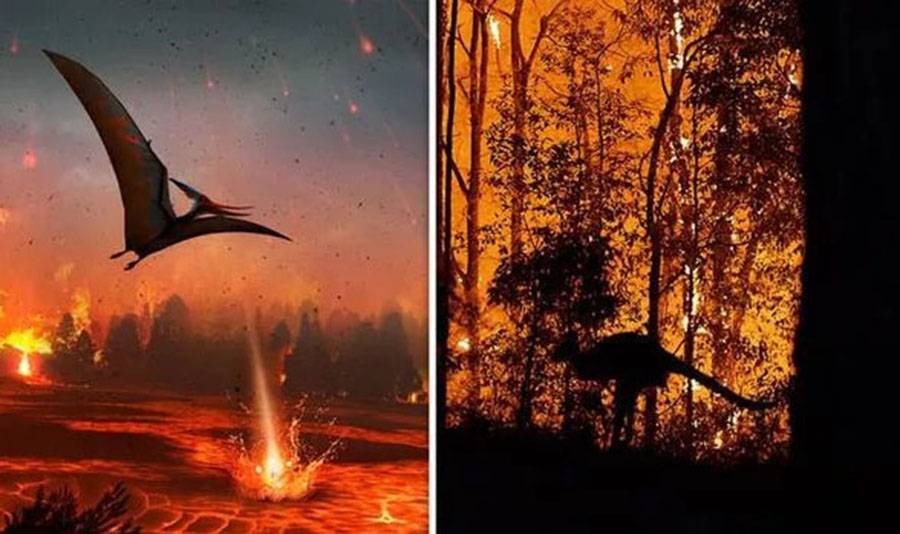
Australia fires could lead to ‘mass extinction’ just like the dinosaurs scientist warns (Image: GETTY)

THE wildfires ravaging Australia could lead to a “mass extinction” of species which could take millions of years to recover from, a scientist has warned.

Thousands of homes have been destroyed, tens of people have lost their lives and half a billion animals have died as a result of wildfires across Australia. Authorities in Australia say the dire situation could continue for another month, leading to a catastrophic loss of life. And judging by previous cataclysmic fires, researchers warn that a mass extinction in Australia could ensue which could take millions of years to recover from.

By analysing previous wildfires, most notably the one which consumed the globe following the asteroid strike which led to the dinosaurs’ demise 66 million years ago, it will be difficult for many species to survive.

Following the asteroid collision, 75 percent of species across the planet went extinct thanks to the ensuing nuclear winter and fires which virtually left no corner of the globe untouched.

Mike Lee, professor in evolutionary biology at Flinders University, Australia, said that “ every land-dwelling animal species larger than a domestic cat was ultimately doomed, unless it could swim, burrow or fly.”

This could mean that famous Australian species such as the kangaroo and koala bears could be doomed if the fires continue as they are.

Australia's wildlife is suffering (Image: GETTY)

While the wildfires in Australia are regional rather than global and much less severe than the extinction event 66 million years ago, the “long-term extinction effects could be severe”, Prof Lee warned.

He added that it could pave the way for entirely new species to emerge, much like how the loss of the dinosaurs gave way to the rise of the mammals.

The scientist wrote in an article for The Conversation: “Humans have seldom if ever seen fires like these, but we do know that wildfires have driven mass extinctions and reshaped life on Earth at least once before – when the asteroid strike that led to the demise of the dinosaurs sparked deadly global firestorms.

“The recent rampant bushfires are regional rather than global, and are burning less land cover than the worst-case dinosaur firestorm scenario.

“Yet their long-term extinction effects could also be severe, because our planet has already lost half its forest cover due to humans.

“These fires are hitting shrunken biodiversity refuges that are simultaneously threatened by an anthropogenic cocktail of pollution, invasive feral species, and climate change.

“The ancient catastrophe provides strong evidence, written in stone, that firestorms can contribute to extensive extinctions, even among large vertebrates with large distributions and high mobility.

Australia is warming faster than average (Image: EXPRESS)

“It took millions of years of regeneration and evolution for our planet’s biosphere to recover from the nuclear winter and wildfires of the asteroid impact.

“When a new world order eventually emerged, it was radically different: the age of dinosaurs gave way to the age of mammals and birds.”

Source: www.express.co.uk/

Small ‘Cousins’ of T. Rex May Actually Have Been Growing Teenagers

Tuesday, January 7, 2020

A dinosaur called Nanotyrannus (left in this illustration), once thought to be a smaller cousin of Tyrannosaurus rex (right), was probably a juvenile T. rex, a new study suggests.  JULIUS T. CSOTONYI

Fossil analyses suggest that Nanotyrannus wasn’t a diminutive kin of the more famous behemoth.

Small but fearsome dinosaurs once thought to be pygmy kin of Tyrannosaurus rex instead may have been mere juveniles of the iconic species, new analyses of fossils suggest. The finding bolsters the case that teenage tyrannosaurs had different dining habits than their bone-crushing elders, researchers report January 1 in Science Advances.

T. rex fossils were first discovered more than a century ago. Paleontologists estimate that the largest individuals of the species measured more than 12 meters from snout to tip of the tail. The dinosaurs had teeth about the size and shape of bananas, likely tipped the scales at more than 8,000 kilograms and may have lived to be 30 years or older.

In the 1940s, paleontologists unearthed a fossil skull that, although similar to that of a T. rex, was about half the size and had teeth shaped more like daggers than bananas. After detailed analyses of a similar yet more complete specimen that was dug up in the early 2000s from rocks in the same region and of the same era as T. rex, researchers dubbed the dinosaur Nanotyrannus.

But for the last 15 years or so, debate has raged about whether Nanotyrannus was indeed separate from T. rex, says Holly Woodward, a paleohistologist at the Oklahoma State University Center for Health Sciences in Tulsa. For instance, some of the anatomical features originally thought to be unique to Nanotyrannus have now been found in some other tyrannosaurs, including T. rex.

So Woodward and colleagues decided to investigate the microstructure of leg bones of the two most recently discovered Nanotyrannus specimens, nicknamed Jane and Petey. In particular, the team sliced into each fossil’s femur and tibia, the major weight-bearing bones of the upper and lower leg.

Cross sections of the bones revealed features similar to growth rings that suggest that Jane, the smaller of the two specimens, was at least 13 years old at death. The slightly larger Petey was apparently at least 15 years old. More importantly, Woodward says, the microscopic structure of the bones — and especially the number and orientation of blood vessels therein — hints that the tissues were still growing vigorously, as they would in individuals that weren’t fully mature.

“It’s clear that these creatures were not adults,” says Thomas Holtz Jr., a vertebrate paleontologist at the University of Maryland in College Park who wasn’t involved in the study. “They were still growing and still changing,” he says.

Scientists have yet to come to a consensus on whether the first known example of Nanotyrannus — the 1940s skull — was an adult or a juvenile. Some paleontologists claim that individual bones in that skull are fused together, indicating that the creature was an adult, but other researchers aren’t convinced.

Previous studies have suggested that teenage tyrannosaurs experienced a substantial growth spurt before adulthood (SN: 8/11/04), Woodward notes. And other analyses have found that fossils first thought to be anatomically distinct species were actually different life stages of the same dinosaur (SN: 10/27/09).

Even though a young T. rex was the same species as an adult, it still might have behaved much differently, Woodward says. While juveniles were probably fleet-footed, an adult T. rex was a lumbering behemoth that probably couldn’t run well if at all (SN: 2/27/02). And a juvenile’s daggerlike teeth were strong enough to puncture the bones of prey but couldn’t crush them like adult T. rex teeth could. That difference suggests that youngsters and adults probably chased and consumed different prey, Woodward notes.

Holtz argues that such differences in lifestyle mean that T. rex adults and adolescents “were functionally a different species” — that is, youngsters probably served a different role in the ecosystem than adults. Nevertheless, he says, the juveniles were likely the dominant predator among dinosaurs of their size.

CITATIONS

H.N. Woodward et alGrowing up Tyrannosaurus rex: Osteohistology refutes the pygmy “Nanotyrannus” and supports ontogenetic niche partitioning in juvenile Tyrannosaurus. Science Advances. Published online January 1, 2020. doi:10.1126/sciadv.aax6250.

Source: www.sciencenews.org/

Fossilized Seashells Show Signs of Ocean Acidification Before Dinosaur-Annihilating Asteroid

Wednesday, January 8, 2020

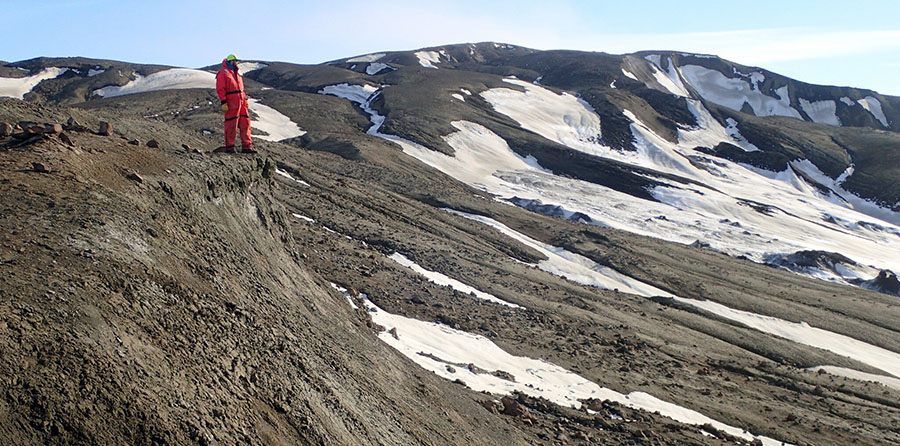
The Lopez de Bertodano Formation, a fossil-rich area on the west side of Seymour Island, Antarctica. Credit: Northwestern University

New evidence gleaned from Antarctic seashells confirms that Earth was already unstable before the asteroid impact that wiped out the dinosaurs.

The study, led by NSF-funded researchers at Northwestern University, is the first to measure the calcium isotope composition of fossilized clam and snail shells, which date back to the Cretaceous-Paleogene mass extinction event 66 million years ago. The researchers found that—in the run-up to the extinction event—the chemistry of the shells shifted in response to a surge of carbon in the oceans.

This carbon influx was likely due to long-term eruptions from the Deccan Traps, a 200,000-square-mile volcanic province located in modern India. During the years leading up to the asteroid impact, the Deccan Traps spewed massive amounts of carbon dioxide into the atmosphere. The concentration of CO2 acidified the oceans, directly affecting the organisms living there.

"The Earth was clearly under stress before the major mass extinction event," said Andrew Jacobson, a senior author of the paper. "The asteroid impact coincides with pre-existing carbon cycle instability. But that doesn't mean we have answers to what actually caused the extinction."

The researchers examined shells collected from the Lopez de Bertodano Formation, a well-preserved, fossil-rich area on the west side of Seymour Island in Antarctica.

The researchers expected to see changes in the shells' composition, but were surprised by how quickly those changes happened. Understanding how the Earth responded to past extreme warming and CO2 input can help us prepare for how the planet will respond to current, human-caused climate change, the scientists said.

The study will be published in the January 2020 issue of the journal Geology.

Source: https://phys.org/

Pages