nandi's blog

Early Jurassic Dinosaur Footprints Discovered in SW China

Saturday, February 8, 2020

(Photo/GT)

A group of international scientists led by a Chinese dinosaur expert on Friday announced the discovery of early Jurassic dinosaur footprint fossils in Hezhang county, Southwest China's Guizhou Province, which is significant for understanding the behavior, range of activity and biota composition of small and medium-sized dinosaurs in the early Jurassic period.

The footprint fossils belonged to 31 small and medium-sized theropods, nine sauropods and one anomoepus, according to a statement Xing Lida, a dinosaur expert at the Beijing-based China University of Geosciences and leader of the international team, sent to the Global Times.

A research paper on the footprints written by Xing's team was published in international scientific journal Historical Biology.

The footprint fossils were preserved in the sandstone of the Longtou Mountains in Hezhang county. 

The 31 theropod footprints, each between 14 and 19 centimeters long, formed four tracks which revealed how the four dinosaurs moved. One dinosaur was trotting at a speed of 10 kilometers per hour and the other three were walking at speeds of 3.6, 4 and 6 kilometers per hour.  

The majority of the 31 footprints were well preserved, with the toe pads and toes visible, and were quite similar with footprints of eubrontes in the early Cretaceous period found in Qianjiadian in Beijing, showing that the shape of the theropod footprints did not change much from the Jurassic to the early Cretaceous periods, according to the statement. 

The nine sauropods footprints, with an average length of 26.8 centimeters, formed two tracks.

The discovery in Guizhou supplemented the fossil records of the early Jurassic biota in southwestern China, and is an important part of the census of the composition of the dinosaurian fauna in the region.

Source: www.ecns.cn/

Guernsey Dad Accidentally Orders Six-Metre-Long Dinosaur For Son

Friday, February 7, 2020

Andre Bisson/Facebook

Guernsey is turning into Isla Nublar after one dad’s purchase: a full-size dinosaur, dropped into his garden by crane. 

Andre Bisson’s four-year-old son, Theo, is obsessed with dinosaurs. After watching Disney’s animated classic, Dinosaur, he was particularly found of the Carnotaurus species (Carnotaur for short).

For months, he’d been saying: ‘Daddy, I want the biggest Carnotaur you’ve ever seen.’ Well, Andre delivered, unwittingly shipping in a six-metre, full-size dino – and it’s amazing.

Andre Bisson/Facebook

Meet Chaz, Guernsey’s newest prehistoric resident, ‘nestled nicely into palm trees and enjoying west coast salt air living’, Andre told UNILAD.

His initial attempts at finding a large Carnotaur for his son weren’t particularly fruitful. In a BBC Sounds interview, the dino dad explained that Theo’s mum led the way, sending him a link to Jersey’s Tamba Park on the neighbouring island, which just so happened to be selling off its dinosaurs. ‘No way, I have to have this,’ he said.

Andre added:

I phoned them straight away and I was lucky enough because they were inundated, and managed to secure him. I thought: ‘This’ll be the biggest dinosaur you’ll ever see.’ So he’s a full size, teenage dinosaur in age.

When I looked on the website, I thought it was about three metres long and it’d fit nicely next to the hot tub and it’d be quite fun. It wasn’t until the boys from Channel Seaways – who did an epic job trying to get him from Jersey – told me it wouldn’t fit in their truck that I thought, ‘Wow, it must be about six metres.’ Then I knew he wouldn’t fit anywhere apart from my very small garden.

Chaz wasn’t a cheap addition to the household, costing £1,000. While there aren’t any plans to build his own back-garden Jurassic Park, Andre is a big fan. As for the neighbours, ‘whilst they think I am bonkers, they think it’s great, although I haven’t seen all of them,’ he said.

Andre hoped he’d be able to get Chaz home for Christmas, but logistically it just wasn’t possible (the park’s director even messaged him personally to apologise).

In fact, because of the delay, Tamba Park even sent out Dave, a smaller, no-less-fierce dino.

Andre Bisson

After a downpour in Jersey, Chaz’s skin got wet, causing him to balloon in weight up to two tons. When he eventually arrived, ‘seven guys couldn’t lift or move him… so they had to organise a JCB to get him out’.

His long-awaited arrival has gone down a storm with Theo, with Andre saying:

Theo didn’t want to go to school as he didn’t want to leave him, he thought he’d be home alone – he wanted to take him on the yellow crane. He said he was hungry, so we cooked fish fingers and fed him. Theo and Chaz are best buds – he’s got a pet dinosaur!

Chaz would not be contained, Chaz expanded to a new territory… Chaz found a way.

Source: www.unilad.co.uk/

Jurassic Park: 10 Most Iconic Moments, Ranked

Thursday, February 6, 2020

Who could ever forget Steven Speilberg's epic 1993 film Jurassic Park? Here are 10 iconic moments from the movie which still hold up today.

Jurassic Park, Steven Spielberg’s film adaptation of Michael Crichton’s bestselling novel, broke a ton of box office records when it hit theaters in 1993. It shot past Spielberg’s own E.T. to become the highest-grossing movie ever made. Moviegoers were captivated by the sense of wonder that came along with watching dinosaurs walk the Earth again.

And, all these years later, that sense of wonder remains. Jurassic Park is a timeless classic, filled with unforgettable scenes that, no matter how many times you’ve seen the movie, never fail to elicit an emotional response. So, here are Jurassic Park’s 10 Most Iconic Moments, Ranked.

10 Sattler Treats The Sick Triceratops

There’s a general rule in the Jurassic Park franchise that if you respect dinosaurs, you’ll survive. The government suits trying to weaponize them are doomed,  but a character like Dr. Ellie Sattler, who rushes to the side of a sick Triceratops to treat them, earns her survival.

The practical effects in this scene are incredible. There’s also some great comic relief, as Malcolm approaches the Triceratops’ dung and bluntly says, “That is one big pile of sh*t.”

9 Nedry Gets Outsmarted

Wayne Knight was looking forward to his character, Dennis Nedry, getting a really gruesome death scene, as he does in the source material, and was a little disappointed that all the bloodshed happened off-screen. But the death scene as it stands is still pretty gruesome.

His car gets stuck in some wet mud in the pouring rain, and then he encounters a Dilophosaurus. He underestimates the dinosaur’s intelligence, and this becomes his downfall. After he’s attacked in the car, his blood seeps out into the rushing water and dilutes it with red.

8 “Dinosaurs Eat Man. Woman Inherits The Earth.”

John Hammond is miffed that the paleontologists he invited to his park don’t immediately endorse it and question his dangerous decision-making. Ian Malcolm runs through the course of history that led to Hammond cloning dinosaurs and creating Jurassic Park: “God creates dinosaurs, God destroys dinosaurs. God creates Man, Man destroys God, Man creates dinosaurs.”

And then, Ellie Sattler proves herself to be a match for Malcolm when she continues his line of thinking: “Dinosaurs eat Man. Woman inherits the Earth.”

7 Objects In Mirror Are Closer Than They Appear

Like all great directors, Steven Spielberg is a master of telling audiences multiple things with one image. During the scene in Jurassic Park in which a jeep is being chased by a T. rex, he includes a closeup of one of the jeep’s side-view mirrors, bearing the phrase, “objects in mirror are closer than they appear,” with the mirror’s frame filled by the roaring T. rex closing in.

In this one image, we get a sense of the impending danger, because the T. rex looks extremely close, and we’re being told by a sign that we recognize from actual side-view mirrors that it’s even closer than we think.

6 “Life, Uh... Finds A Way.”

In four words (not including Jeff Goldblum’s signature fillers), Ian Malcolm perfectly summed up chaos theory, his specialist subject: “Life, uh, uh, uh...finds a way.”

This quote has become so iconic that Goldblum—and the franchise—will forever be associated with it. Life finding a way is the M.O. of these stories; humans screw with nature, then nature fights back.

5 “When You Gotta Go, You Gotta Go.”

The first time the T. rex kills a character in Jurassic Park is unforgettable. Donald Gennaro, John Hammond’s slimy lawyer trying to justify his reckless endangerment of human lives, flees the T. rex in terror and locks himself in a bathroom stall. Malcolm quips, “When you gotta go, you gotta go.”

Then, the T. rex pursues Gennaro and promptly removes the roof from the bathroom he’s hiding in. The low-angle shot of Gennaro sitting on the toilet, looking up at the T. rex, before being mercilessly eaten, is beautifully shocking.

4 “Clever Girl!”

Talk about famous last words. As Muldoon hunts down one of the escaped raptors, he realizes he’s been outmatched as it emerges from some shrubbery to his left. He simply says, “Clever girl!,” before the raptor pounces on him. It’s a really effective jump scare, and the takedown is framed from a low angle to make the raptor feel truly menacing.

This subverts the rule that characters who respect the dinosaurs get to live because Muldoon has a great respect for the dinosaurs, but, then again, he also wants to hunt them.

3 When Dinosaurs Ruled The Earth

The original script for Jurassic Park didn’t contain a big finale. Some crew members approached Steven Spielberg and suggested adding one, and they got to work figuring it out. The final showdown between the T. rex and the velociraptors is more than just sheer spectacle (although it’s got that in spades).

There’s a lot of thematic resonance in the film’s two antagonists—the T. rex and raptors that have been separately terrorizing the characters—taking care of each other. The flailing “When Dinosaurs Ruled the Earth” banner hammers home the point that nature will always win out when people like John Hammond play God.

2 Grant And Sattler’s First Dinosaur Encounter

Jurassic Park’s CGI has aged surprisingly well, considering how early in the technology’s development it was. The scene in which Dr. Alan Grant and Dr. Ellie Sattler first arrive on Isla Nublar and witness a living dinosaur for the first time is just as breathtaking today as it was in 1993.

Sam Neill and Laura Dern play the scene spectacularly, looking up in astonishment at a grazing Brachiosaurus that wasn’t actually there. John Hammond boldly says, “Welcome to Jurassic Park,” as John Williams’ beautifully composed theme booms onto the soundtrack.

1 Velociraptors In The Kitchen

Jurassic Park’s raptors-in-the-kitchen set piece, in which Lex and Tim are hunted through a kitchen by some hungry velociraptors, is a masterclass in suspenseful filmmaking. Martin Scorsese once said that directing movies is all a matter of what is in the frame and what isn’t in the frame.

Steven Spielberg makes fantastic use of the frame in this scene. He inventively uses imagery like the reflective surfaces of the cabinets to create tension, and symbolically, the kitchen setting works brilliantly, positioning Lex and Tim as raptor food.

Source: https://screenrant.com/

Dynamosuchus collisensis: 'Bonecrushing' Crocodile that Hunted Dinosaurs 230MYA Discovered in Brazil

Friday, February 7, 2020

This newly discovered species of prehistoric reptile, called Dynamosuchus collisensi, lived 230 million years ago during the Triassic period. Its back was protected by two rows of dermal bones. ILLUSTRATION BY MÁRCIO L. CASTRO

The fossils of a "bonecrushing" ancestor of the modern-day crocodile that hunted dinosaurs 230 million years ago have been discovered in Brazil, stunning researchers.

Known as Dynamosuchus collisensis, the fossil was discovered in the dinosaur fossil hotbed of Agudo, in southern Brazil. It has been nicknamed the "T. rex of its time," according to researchers. The study has been published in the scientific journal Acta Palaeontologica Polonica.

"The extremely rare reptile would have been a real bonecrusher from the 'dawn of the dinosaur era,'" the study's lead author, Rodrigo Müller, told British news outlet SWNS.

Dynamosuchus collisensis. A "bonecrushing" reptile that hunted dinosaurs 230 million years ago has been unearthed in the Brazilian rainforest. The terrifying creature, an ancestor of the crocodile, lived on land and was the 'T Rex of its time,' according to researchers. (Credit: SWNS)

Like modern-day crocodiles, D. collisensis walked on four legs, but it used its two hind legs to run, similar to the Tyrannosaurus rex. The creature was approximately seven feet long and had a long snout, massive jaws with blade-like teeth and claws that were used to rip apart its prey.

D. collisensis also had two rows of bony plates that ran down its back and a skull similar to that of T. rex. A study published in September 2019 stated the terrifying dinosaur had a stiff skull that allowed it to not shatter its own bones with its bite force, while simultaneously devouring its kill.

It's also believed that D. collisensis was a scavenger, a theory many paleontologists also have about the T. rex, looking for carcasses or smaller, easier-to-catch prey.

"Their large and blade-like teeth were adapted to eat meat. But the bite speed was low, suggesting it was also a scavenger," Müller explained.

SOM Fig. S2. Selected skull parts of Dynamosuchus collisensis (CAPPA/UFSM 0248). A. Partial skull roof in dorsal view. B. Partial skull roof in ventral view. C. Partial left maxilla in lateral view. D. Parabasisphenoid in anterior view. Abbreviations: bpt, basipterygoid process; bt, basal tubera; ea, empty alveolus; f, frontal; fo, foramen; fob, fossa for the olfactory bulb; ltf, laterotemporal fenestra; orb, orbit; p, parietal; pof, postfontral; rdg, ridge; stf, supratemporal fenestra; tt, tooth. Scale bar = 30 mm. Author: Rodrigo T. Müller, M. Belén Von Baczko, Julia B. Desojo, and Sterling J. Nesbitt

"Therefore, this animal probably caught slow animals and searched for dead animals — like today's vultures and hyenas," Müller continued.

This is the fourth D. collisensis, which is a member of reptiles known as ornithosuchids, to be discovered. The first was discovered in Scotland in the 19th century and the other two were unearthed in Argentina, 50 years ago, Müller added.

The skull was similar to T Rex's - and a double row of bony plates ran down its back. It belonged to a group called the ornithosuchids. It is the fourth different species to be discovered. (Credit: SWNS)

That an ornithosuchid was discovered from the Late Triassic period in Brazil "suggests that ornithosuchids were more widespread than previously thought in the southern hemisphere," the researchers wrote in the study's abstract.

In November, researchers discovered the world's oldest carnivorous dinosaur, which also lived 230 million years ago, in southern Brazil.

Source: www.foxnews.com/

Photos: Velafrons Dinosaur on Display Outside of Children’s Discovery Museum

Thursday, February 6, 2020

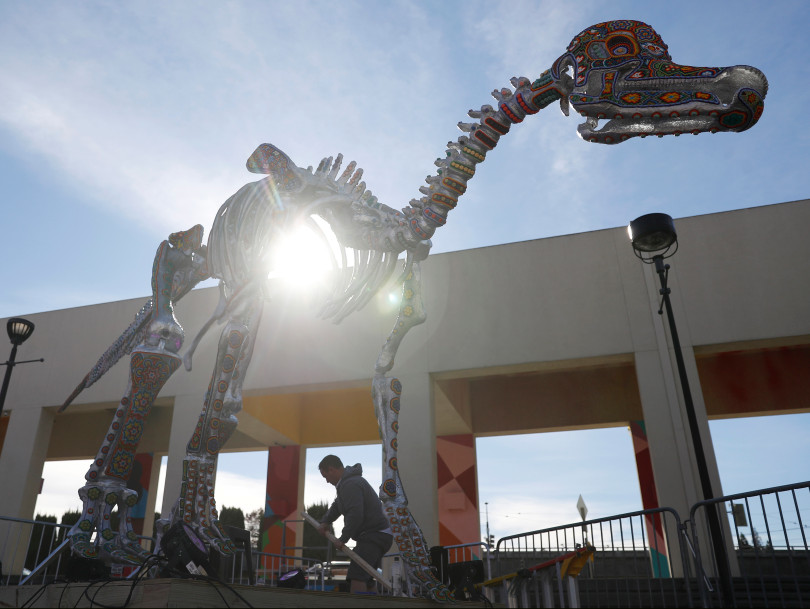
SAN JOSE, CALIFORNIA - FEBRUARY 4: Joseph Trillo, faculty maintenance operations supervisor at Children's Discovery Museum of San Jose, works on the base of "Ichiro," a Velafrons dinosaur by artist Marianela Fuentes, outside of the museum in San Jose, Calif., on Tuesday, Feb. 4, 2020. (Nhat V. Meyer/Bay Area News Group)

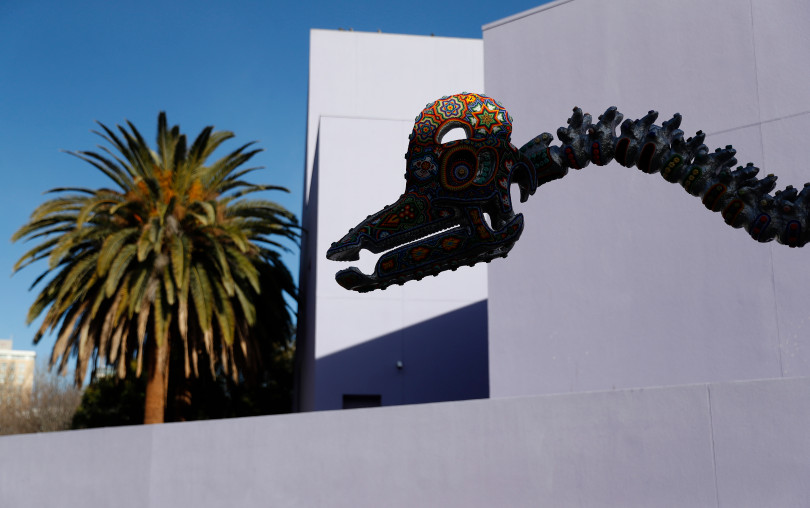
Artist Marianela Fuentes’ art installation “Sacred Beings: Ichiro The Dino.”

Artist Marianela Fuentes’ art installation called “Sacred Beings: Ichiro The Dino” is “an exact replica skeleton of the Velafrons Coahuilensis, a dinosaur from the Cretaceous period, 72 million years ago,” according to her website. The dinosaur is currently on display outside of the Children’s Discovery Museum.

“The dinosaur is decorated in the art of the Huichol, an indigenous tribe of Mexico who now live in the same lands that once were populated by the Velafron,” also according to her website.

The display was previously at the Burning Man Festival. It is about 36 feet long and weighs about 330 pounds.

SAN JOSE, CALIFORNIA - FEBRUARY 4: The head of "Ichiro" a Velafrons dinosaur by artist Marianela Fuentes outside of the Children's Discovery Museum of San Jose in San Jose, Calif., on Tuesday, Feb. 4, 2020. (Nhat V. Meyer/Bay Area News Group)

SAN JOSE, CALIFORNIA - FEBRUARY 4: The head of "Ichiro" a Velafrons dinosaur by artist Marianela Fuentes outside of the Children's Discovery Museum of San Jose in San Jose, Calif., on Tuesday, Feb. 4, 2020. (Nhat V. Meyer/Bay Area News Group)

SAN JOSE, CALIFORNIA - FEBRUARY 4: A foot on "Ichiro" a Velafrons dinosaur by artist Marianela Fuentes outside of the Children's Discovery Museum of San Jose in San Jose, Calif., on Tuesday, Feb. 4, 2020. (Nhat V. Meyer/Bay Area News Group)

SAN JOSE, CALIFORNIA - FEBRUARY 4: Joseph Trillo, faculty maintenance operations supervisor at Children's Discovery Museum of San Jose, works on the base of "Ichiro," a Velafrons dinosaur by artist Marianela Fuentes, outside of the museum in San Jose, Calif., on Tuesday, Feb. 4, 2020. (Nhat V. Meyer/Bay Area News Group)

SAN JOSE, CALIFORNIA - FEBRUARY 4: A man takes a picture of "Ichiro" a Velafrons dinosaur by artist Marianela Fuentes outside of the Children's Discovery Museum of San Jose in San Jose, Calif., on Tuesday, Feb. 4, 2020. (Nhat V. Meyer/Bay Area News Group)

Source: www.mercurynews.com/

Gunakadeit joseeae: New Thalattosaur Species Discovered in Southeast Alaska

Wednesday, February 5, 2020

This is an artist’s depiction of Gunakadeit joseeae. Credit: Artwork by Ray Troll ©2020

Scientists at the University of Alaska Fairbanks have identified a new species of thalattosaur, a marine reptile that lived more than 200 million years ago.

The new species, Gunakadeit joseeae, is the most complete thalattosaur ever found in North America and has given paleontologists new insights about the thalattosaurs' family tree, according to a paper published in the journal Scientific Reports. Scientists found the fossil in Southeast Alaska in 2011.

Thalattosaurs were marine reptiles that lived more than 200 million years ago, during the mid to late Triassic Period, when their distant relatives -- dinosaurs -- were first emerging. They grew to lengths of up to 3-4 meters and lived in equatorial oceans worldwide until they died out near the end of the Triassic.

"When you find a new species, one of the things you want to do is tell people where you think it fits in the family tree," said Patrick Druckenmiller, the paper's lead author and director and earth sciences curator at the University of Alaska Museum of the North. "We decided to start from scratch on the family tree."

Prior to the discovery of Gunakadeit joseeae, it had been two decades since scientists had thoroughly updated thalattosaur interrelationships, Druckenmiller said. The process of re-examining a prehistoric animal's family tree involves analyzing dozens and dozens of detailed anatomical features from fossil specimens worldwide, then using computers to analyze the information to see how the different species could be related.

Druckenmiller said he and collaborator Neil Kelley from Vanderbilt University were surprised when they identified where Gunakadeit joseeae landed.

"It was so specialized and weird, we thought it might be out at the furthest branches of the tree," he said. Instead it's a relatively primitive type of thalattosaur that survived late into the existence of the group.

"Thalattosaurs were among the first groups of land-dwelling reptiles to readapt to life in the ocean," Kelley said. "They thrived for tens of millions of years, but their fossils are relatively rare so this new specimen helps fill an important gap in the story of their evolution and eventual extinction."

That the fossil was found at all is a remarkable. It was located in rocks in the intertidal zone. The site is normally underwater all but a few days a year. In Southeast Alaska, when extreme low tides hit, people head to the beaches to explore. That's exactly what Jim Baichtal, a geologist with the U.S. Forest Service's Tongass National Forest, was doing on May 18, 2011, when low tides of -3.7 feet were predicted.

He and a few colleagues, including Gene Primaky, the office's information technology professional, headed out to the Keku Islands near the village of Kake to look for fossils. Primaky saw something odd on a rocky outcrop and called over Baichtal, "Hey Jim! What is this?" Baichtal immediately recognized it as a fossilized intact skeleton. He snapped a photo with his phone and sent it to Druckenmiller.

A month later, the tides were forecasted to be almost that low, -3.1 feet, for two days. It was the last chance they would have to remove the fossil during daylight hours for nearly a year, so they had to move fast. The team had just four hours each day to work before the tide came in and submerged the fossil.

"We rock-sawed like crazy and managed to pull it out, but just barely," Druckenmiller said. "The water was lapping at the edge of the site."

Once the sample was back at the UA Museum of the North, a fossil preparation specialist worked in two-week stints over the course of several years to get the fossil cleaned up and ready for study.

When they saw the fossil's skull, they could tell right away that it was something new because of its extremely pointed snout, which was likely an adaptation for the shallow marine environment where it lived.

"It was probably poking its pointy schnoz into cracks and crevices in coral reefs and feeding on soft-bodied critters," Druckenmiller said. Its specialization may have been what ultimately led to its extinction. "We think these animals were highly specialized to feed in the shallow water environments, but when the sea levels dropped and food sources changed, they had nowhere to go."

Once the fossil was identified as a new species, it needed a name. To honor the local culture and history, elders in Kake and representatives of Sealaska Corp. agreed the Tlingit name "Gunakadeit" would be appropriate. Gunakadeit is a sea monster of Tlingit legend that brings good fortune to those who see it. The second part of the new animal's name, joseeae, recognizes Primaky's mother, Joseé Michelle DeWaelheyns.


Story Source:

Materials provided by University of Alaska FairbanksNote: Content may be edited for style and length.


Journal Reference:

  1. Patrick S. Druckenmiller, Neil P. Kelley, Eric T. Metz, James Baichtal. An articulated Late Triassic (Norian) thalattosauroid from Alaska and ecomorphology and extinction of ThalattosauriaScientific Reports, 2020; 10 (1) DOI: 10.1038/s41598-020-57939-2

Source: www.sciencedaily.com/

Laurasichersis relicta: Primitive Turtle Species Survived The Dinosaur-Killing Asteroid

Wednesday, February 5, 2020

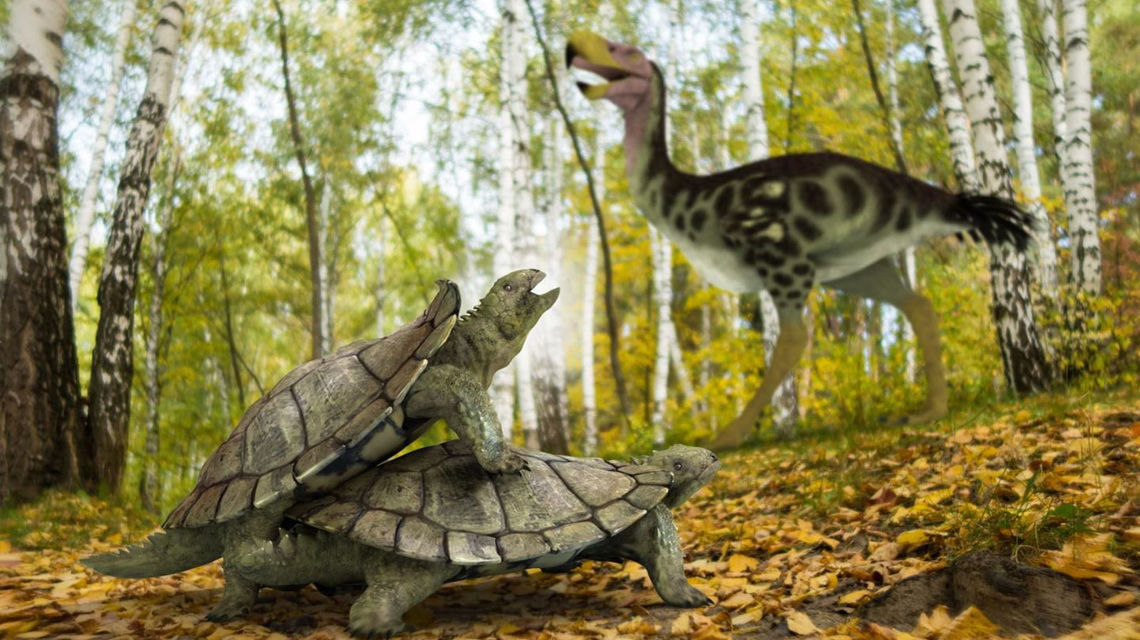
Credit: José Antonio Peñas

When the dinosaur-killing asteroid hit the Earth about 66 million years ago, it wiped out 70 percent of all life on the planet, including many groups of primitive tortoises that were living with the dinosaurs. In fact, nearly all of the primitive turtle groups were wiped out.

However, a paleontologist discovered the only primitive turtle species that managed to survive the wipe-out in the northern hemisphere.

Primitive Turtle

Today, all the turtle species we are aware of descended from two lineages that separated during the Jurassic era, about 160 million years ago. Apart from the two turtle lineages that persist until today, there were also many primitive turtle species in an earlier evolutionary position that lived with the dinosaurs as well. However, virtually all of the were wiped out by the asteroid impact. 

Based on fossil records in South America and Oceania, horned turtles were the only primitive turtles that survived the asteroid impact in Gondwana, now known as the southern hemisphere. Unfortunately, their descendants were eventually hunted by humans into extinction. Apart from the horned turtles, no other primitive turtle species from the last 66 million years have been recorded.

That is, until recently, when paleontologist Adán Pérez García of the National University of Distance Education in Spain confirmed another primitive turtle species, the Laurasichersis relicta, that survived the mass extinction in the ancient continent Laurasia, now known as the northern hemisphere.

This now-extinct species had separated from Gondwana tortoises a hundred million years prior and, for reasons that still remain unknown, they survived the mass extinction when none of the other primitive turtles did.

This is Laurasichersis relicta, an extinct turtle genus and species that corresponds to a new form. (José Antonio Peñas (SINC))

Laurasichersis

The turtle is just about 60 centimeters long in adulthood and was not capable of retracting its head inside its shell, just like other primitive reptiles. Because of this disadvantage, it had defense mechanisms such as spikes on its legs, neck and tail.

Somehow, this species ended up surviving the asteroid impact and continued to live with the new predators in the new environment. 

“The fauna of European turtles underwent a radical change: most of the forms that inhabited this continent before the extinction disappeared, and their role in many ecosystems was left vacant until the relatively rapid arrival of new groups from various places in North America, Africa and Asia,” Pérez García explained.

These surviving turtles all belong to the two turtle lineages that persist until today. With the discovery of the Laurasichersis, we now know that another primitive species survived the mass extinction event in Laurasia.

The study is published in Scientific Reports.

Source: www.ibtimes.com/

How and When Spines Changed in Mammalian Evolution?

Tuesday, February 4, 2020

Restored specimen of E. boanerges, AMNH

A new study from Harvard University and the Field Museum of Natural History sheds light on how and when changes in the spine happened in mammal evolution. The research reveals how a combination of developmental changes and adaptive pressures in the spines of synapsids, the extinct forerunners of mammals, laid the groundwork for the diversity of backbones seen in mammals today.

By comparing the biomechanics of two modern animals, cat and lizard, and CT scans of synapsid fossils, the researchers overturned the traditional notion that the gradual accumulation of different regions (or independent sections) of the spine alone account for its evolving complexity. New evidence suggests that regions (like the thorax and lower back) evolved long before new spinal functions, such as bending and twisting. The study points to the idea that the right selective pressures or animal behaviors combined with existing physical regions played a significant role in the evolution of their unique functions.

The findings by Stephanie Pierce, Associate Professor of Organismic and Evolutionary Biology and Curator of Vertebrate Paleontology at Harvard, and postdoctoral researcher Katrina Jones tap into the larger question of how mammals, including humans, evolved over millions of years.

Modern mammals, for instance, have developed compartmentalized spinal regions that take on a number of diverse shapes and functions without affecting other spinal regions. This has allowed the animals to adapt to different ways of life, explained Jones.

In previous research, the authors showed that extinct pre-mammalian land animals developed these small but distinct regions during evolution.

"What we were able to show in 2018 was that even though all the vertebrae looked very similar in early mammal ancestors they had subtle differences and those subtle differences created distinct developmental regions," Pierce said. "What we're showing with this new study is that those distinct regions were really important as they provided the raw material that facilitated functional differentiation to happen. Basically, if you don't have these distinct developmental regions in place and you have a selective pressure, all the vertebrae are going to adapt in the same way."

It's long been thought that developing different spinal regions is one important step in evolving backbones with many functions, but Pierce and Jones show that this isn't enough. An evolutionary trigger was also required, in this case the evolution of a highly active lifestyle that put new demands on the backbone.

Jones said, "We're trying to get at something that's quite a fundamental evolutionary question which is: How does a relatively simple structure evolve into a complex one that can do lots of different things? Is that determined by the limitations of development or natural selection related to the behavior of the animal?"

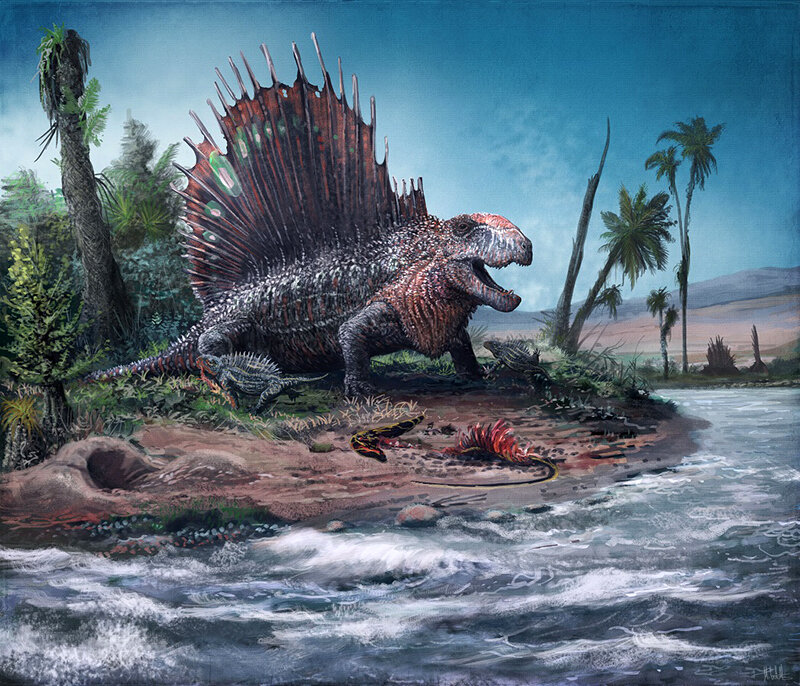
Illustration of Dimetrodon, pelycosaur synapsid, showing the elaborate backbone sail. This study shows that despite their bizarre sails, it is likely that their vertebral movements were relatively uniform along their back, more similar to living lizards or salamanders than to mammals. Credit: Copyright 2019 Mark Witton

The researchers compared the spines of two animals essentially on opposite ends of the evolutionary and anatomical spectrum: cat, which has highly developed spinal regions, and lizard, which has a pretty uniform backbone. They looked at how each animal's spinal joints bent in different directions to measure how the form of the vertebrae reflects their function. They determined that while some spinal regions can function differently from one to the other, others do not; for example, the lizard's backbone comprised several distinct regions, but they all acted in the same way.

Researchers including Kenneth Angielczyk from the Field Museum of Natural History then turned their focus to finding out when different regions started taking on different functions in the evolution of mammals. They took the cat and lizard data showing that if two joints in the spine looked different, then they tended to have different functions. With that, they mapped out how spinal function in those fossils changed through time.

"The earliest ancestors of mammals have a remarkably good fossil record, considering that those animals lived between about 320 and 250 million years ago," Angielczyk said.

The researchers found that despite having developmental regions capable of performing different functions, the level of functional variation seen in mammals today did not start to take hold until late in synapsid evolution.

"We then hypothesized that maybe it was the evolution of some new mammalian behaviors that helped trigger this [in these late synapsids] and provided the natural selection that could exploit the regions that were already there," Jones said.

Their findings fit with observations that the group in which this functional diversity occurs—the cynodonts, which directly preceded mammals—have a number of mammalian features, including evidence they could breathe like a mammal. The researchers believe that these mammal-like features shifted the job of breathing away from the backbone and ribs to the newly evolved diaphragm muscle, releasing the spine from an ancient biomechanical constraint. This enabled the backbone to adapt to interesting new behaviors, such as grooming fur, and take on new functions.

The next step for Pierce and Jones is to clarify what those functions looked like in these extinct animals.

The study is published in Nature Ecology & Evolution.

More information: Regionalization of the axial skeleton predates functional adaptation in the forerunners of mammals, Nature Ecology & EvolutionDOI: 10.1038/s41559-020-1094-9 , https://nature.com/articles/s41559-020-1094-9

Provided by Harvard University

Source: https://phys.org/

Laura Dern Spills Beans On Her Jurassic World 3 Return

Monday, February 10, 2020

Laura Dern is excited to return to Ellie Sattler as a dishonest feminist in Jurassic World 3. Dern first appeared in Steven Spielberg’s Jurassic Park in 1993 as the iconic Paleobotanical, before returning to a small role for Jurassic Park III eight years later. Fans have wanted her back since Jurassic Park 4 was announced, and is now ready to return for the final movie in Jurassic World Trilogy.

Jurassic World takes place on June 3, 2021, but little is known about the film at this time. The plot is being organized in secret, but the next movie will not include the hybrid dinosaurs that were introduced in Jurassic World: Fallen Kingdom. Colin Trevorrow, who directed Jurassic World in 2015, directs the final film with Chris Pratt and Bryce Dallas Howard returning with Owen Grady and Claire Dearing. While the actors of the first two Jurassic World movies are returning, fans were excited to hear last September that Sam Neill and Jeff Goldblum would return to Jurassic World 3 alongside Dern, who had more important roles in Jurassic World: the Fallen Kingdom that Goldblum Fans are excited for the return of the three iconic characters, and also Dern.

While Dern is still known for her role as Ellie Sattler, she has had a very successful career since the days of Jurassic Park. Dern has been nominated for two Academy Awards in the Best Acting category by an actress in a supporting role, and she doesn’t even mention her nomination for Rumbing Rose in 1992. Goldblum was also nominated for an Oscar in 1996 with Tikki Goldberg in his short film Little Surprise. Goldblum is still known today for his role as Grand Master in the Marvel film universe. Although he was not nominated for an Oscar, Neill has been working continuously since the early 1970s.

Two of Jurassic World’s already released films have received mixed reviews, but fans certainly expect Trevorrow to end up with a trio. The inclusion of the three main characters of the first film is a way to get people’s attention, especially because fans have wanted the characters to return for years. Ellie was always in trouble instead of being a strong character in the Jurassic Park movies, so it was reassuring to hear that her character would be just as hard in the next movie. That said, Dern probably wouldn’t return for Jurassic World 3 if he had changed characters.

Source: https://thedigitalweekly.com/

SA Mint Releases New Coin that Features a Small Dinosaur

Monday, February 3, 2020

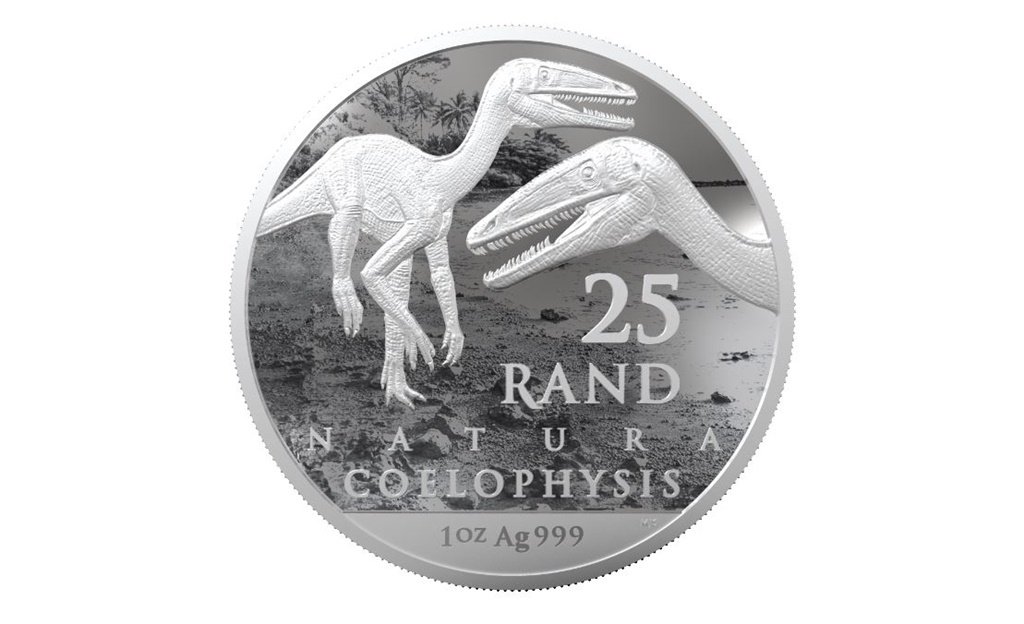
The dinosaur-themed collectable coin will feature Coelophysis rhodesiensis, a two-legged carnivore that grew to a relatively diminutive 3 metres tall.

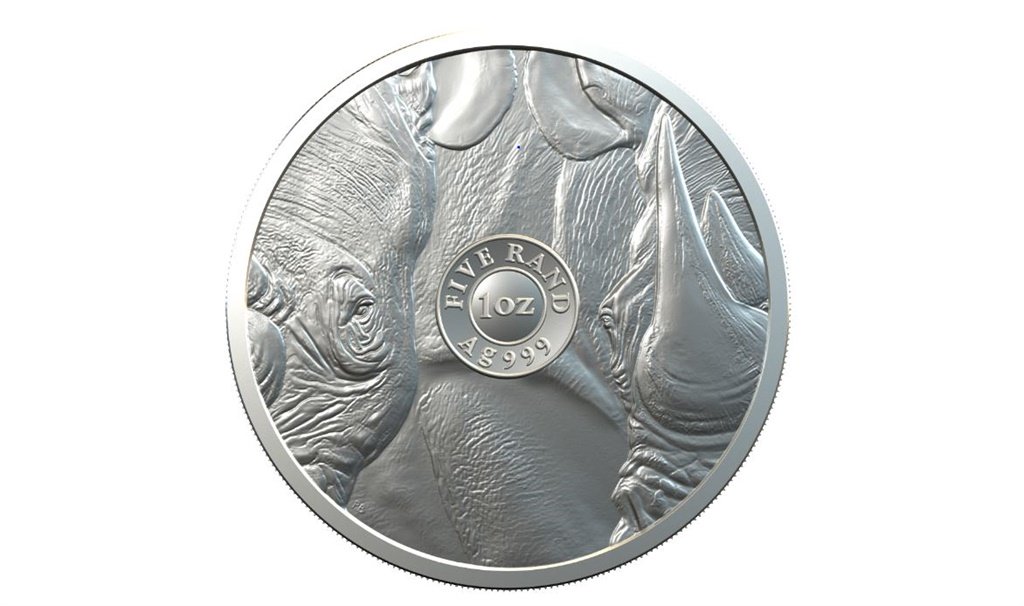
The SA Mint will launch two new Big 5 designs this year and one of its new coins will feature a tiny dinosaur. 

  • The South African Mint has announced its new designs for 2020.

  • The new Big 5 designs will feature the rhino and leopard. 

  • The fine silver Natura coin will feature the Coelophysis rhodesiensis, a diminutive dinosaur.

  • The design of the iconic Krugerrand has remained unchanged over the last 50 years.

According to the Chinese horoscope, 2020 is The Year of the Metal Rat and is considered a year of new beginnings and renewals. The mint has embraced this fully and will renew its prized collectable coins and the iconic Krugerrand, it said in a statement.

The new Big 5 designs will feature the rhino and leopard. The Big 5 series was introduced last year at the 2019 World Money Fair. Previous coins in this series featured the lion and the elephant. 

The new Big 5 designs will feature the rhino and leopard.

The fine silver Natura coin was a huge hit in 2019 and will be repeated this year, exclusively in silver. The 2020 series features the Coelophysis rhodesiensis, a diminutive dinosaur that lived approximately 188 million years ago.

The fine silver Natura coin features the Coelophysis Rhodesiensis, a diminutive dinosaur that lived approximately 188 million years ago.

The new R2 coin will enter circulation later this year. The coin is the product of a competition which ran in 2019, following the launch of the “25 Years of SA’s Constitutional Democracy” series. The mint invited members of the public to submit designs for the reverse of the new R2 coin, depicting a right from South Africa’s Bill of Rights.

Numismatists will also be able to add the new sterling silver and tickey coins to their collection. The coins feature the Retinal cryoprobe, invented by a South African doctor. The pen-like instrument revolutionised cataract surgery. 

The R2 crown features the anatomy of an eye on the reverse, while the tickey shows a gloved hand holding the retinal cryoprobe. When the 2.5c tickey is placed on top of the crown in the designated area, the surgical procedure is recreated.

The “South African Inventions” theme was introduced on the crown and tickey coins in 2016, to highlight globally relevant local ingenuity. Last year’s coin featured Pratley Putty. Invented by South African engineer George Pratley, it was the world’s first epoxy adhesive, and was even used by NASA for its craft 50 years ago. 

The design of the Krugerrand, featuring the bust of President Paul Kruger on the obverse and a prancing springbok on the reverse, has remained unchanged over the last 50 years.

The design of the Krugerrand, featuring the bust of President Paul Kruger on the obverse and a prancing springbok on the reverse, has remained unchanged over the last 50 years. The iconic Krugerrand in 2020 stars individually, as well as in the existing four and five fractional sets available. It is also available in 1oz and 2oz both gold and silver and in bullion and proof quality.

Source: www.businessinsider.co.za/

Pages