nandi's blog

Targaryendraco wiedenrothi: Pterosaur Named After Game Of Thrones’ Winged Wyvern

Friday, February 28, 2020

Illustration of the new described pterosaur species Targaryendraco wiedenrothi by Vítor Silva, from Pêgas et al. 2019.  V. SILVA/PÊGAS ET AL. 2019

The fossil of a pterosaur, a group of flying reptiles ruling the Mesozoic skies, was named after the flying creatures featured in the popular fantasy world of Game of Thrones.

The fossil was discovered in 1984 by amateur fossil hunter Kurt Wiedenroth in 130-million-year-old sediments excavated in a clay pit at Engelbostel, near Hanover in northern Germany. Six years later, Wiedenroth donated the specimen to the natural history museum in Stuttgart. The fragmentary fossil, including ribs, the long bones of the wings and the lower jaw, was first classified as Ornithocheirus wiedenrothi, but new research shows some particular anatomical features, prompting a taxonomic reevaluation of the specimen.

Targaryendraco wiedenrothi (Wild, 1990)   in Pêgas, Holgado & Leal, 2019.   DOI: 10.1080/08912963.2019.1690482   Illustration: Vítor Silva   Holotype SMNS 56628 (Hauterivian, Engelbostel clay pit, Hannover). in Rodrigues & Kellner, 2013.  DOI: 10.3897/zookeys.308.5559

Based on the unusual narrow jaw, distinct from the rounded jaw of toothed pterosaurs classified as Ornithocheirus, the fossil was reassigned into an own genus, named Targaryendraco, after the House Targaryen, a noble family in the fantasy world created by American novelist George RR Martin. The Targaryen sigil is a three-headed red dragon breathing flames on a black background. Lead author Rodrigo Pêgas, a palaeontologist at Federal University of ABC in São Bernardo do Campo, Brazil, and Game of Thrones fan, and his co-authors chose the name because the dark permineralized bones of Targaryendraco reminded them of the Targaryen symbol, and also because pterosaurs have inspired some biological aspects of the Game of Thrones’ reptiles. Unlike a classic dragon, depicted with four legs and two wings, RR Martin’s winged wyvern has just two hind legs and two wings, like the extinct pterosaurs.

Unlike the wyverns of Westeros, Targaryendraco lived in a coastal environment and probably fed on fish, as the slender jaw and the sharp teeth, adapted to catch and hold slippery fish, suggest.

Source: www.forbes.com/

10 Best & Most Powerful Dragons, Dinosaurs, & Lizards In Marvel Comics

Monday, February 24, 2020

Millions of years before mammals first walked the Earth, the dinosaur was the dominant species. From the ferocious Tyrannosaurus Rex to the cunning and small Velociraptor to the sky-scraping Brontosaurus, the dinosaur has excited the imaginations of creatives and academics alike.

Today’s snakes and lizards are a far more manageable evolutionary cousin to the dinosaur, but are still a vehicle for the imaginations of writers and artists. So let's look at Marvel Comics' best representations of dinosaurs and lizards (and dragons) to date.

10 - LIZARD

The Lizard was Dr. Curt Connors, a doctor, and scientist who lost his arm as a surgeon embedded with the US military. Connors became obsessed with restoring his missing arm and created a serum using reptile DNA. Connors tested the serum on himself. His arm began to regrow but the reptilian DNA overwrote his human DNA, suppressed his intellect and turned him into the vicious Lizard.

Connors, often with the aid of Spider-Man, has cured himself on several occasions but it has never lasted long. Connor’s genius has saved the life of May Parker, cured Spider-Man of having six arms and cured John Jameson, Harry Osborn, and the young Avengers Academy student Batwing.

9 - OLD LACE

Old Lace was the pet Deinonychus of Runaways members Gertrude Yorkes and Chase Stein. Old Lace was genetically engineered in the 87th Century by Gertrude’s villainous time-traveling parents to protect her through a psychic link.

Finding Old Lace was a mistake. When she and her friends saw their parents kill a young girl, they all went on the run and discovered Old Lace’s hiding place while looking for evidence. The psychic bond activated immediately and Old Lace received her name when Gertrude choose “Arsenic” for herself based on the 1944 Frank Capra film.

8 - LOCKHEED

Lockheed was a highly intelligent alien from a race called the Flock. Lockheed encountered X-Men member Kitty Pryde and saved her from the Brood on “Sleezeworld” after the X-Men had been kidnapped. Lockheed followed the team back to Earth and destroyed a Sidrian hunter hatchling nest in the X-Mansion. He revealed himself to Kitty and they became constant companions.

SWORD director Abigail Brand outed Lockheed as not only quite capable of speech and omni-lingual. This revelation came just as Kitty seemingly gave her life to phase a giant bullet through the planet. This led Lockheed to begin drinking heavily. They have since been reunited.

7 - DEVIL DINOSAUR

Devil is from the alternate primitive reality of Earth-78411 euphemistically called “Dinosaur World”. He is a mutant among his species after a burning attack turned his hide bright red. He is very intelligent, more than his humanoid companion, Moon Boy.

One of Devil and Moon Boy’s encounters with the 616 reality was to become members of the Fallen Angels. Sorceress Jennifer Kale inadvertently teleported the pair into her New York apartment. They returned to their own reality where Moon Boy was killed by the Killer Folk. Devil and a small band of Killer Folk were brought to modern-day Brooklyn and encountered brilliant young Lunella Lafayette. Devil avenged Moon Boy’s murder and Lunella subjected herself to the Terrigen Cloud to become Moon Girl.

6 - SHOU-LAO THE UNDYING

Shou-Lao was the source of power for the mystical land of K’un-Lun. During a performance, Shou-Lao went berserk and attacked the city’s leader. The dragon was killed by Quan-St’Ar. The leader or Yu-Ti resurrected the dragon by melting his heart and placing both the molten heart and the dragon in a sacred cave. The dragon has been resurrected 66 times.

Daniel Rand had to face the dragon and in the course of the battle, a dragon-shaped tattoo was burned into his skin. Rand plunged his hand in the brazier that held the molten heart of the dragon and it bestowed the power of the Iron Fist to him.

5 - MR. LAO

Mr. Lao is a centuries-old Lung Dragon who had defeated a Genie 700 years ago and gained his powers but also his imprisonment. After being trapped for 600 years, he was freed by Master Plan Tzu aka the Yellow Claw but was still bound to serve as an advisor to Master Plan and the Atlas Foundation. Lao now serves Master Pan’s successor, Jimmy Woo and his Agents of Atlas.

Lao could breathe fire and take on the knowledge of anyone he devoured. And Lao would anyone who wandered into his cavern in the Atlas Sanctuary unannounced. Using the genie’s magic, he could take on the form of a man.

4 - GODZILLA

Atomic testing in the Pacific created or merely awakened Godzilla who rampaged through Tokyo in 1956. After that, he became caught under the ice off the coast of Alaska and only broke free in modern times. SHIELD veterans Dum Dum Dugan and Jimmy Woo put together a team to deal with Godzilla.

Godzilla rampages along the Pacific Coast, battling the Champions in San Francisco and SHIELD’s Godzilla Squad before he made landfall and began a trek through America. Godzilla fought the giant Red Ronin armor to a draw on several occasions and the pair had to team up against the Betan race, who were planning an invasion. The armor was destroyed and Godzilla had to fight their giant monsters alone. All were returned to Earth where Godzilla made his way to New York City. Godzilla nearly defeated the Fantastic Four and Avengers before the impassioned cries of young Godzilla Squad member Robert Takiguchi stopped the monster and he disappeared into the cold Atlantic Ocean.

3 - FIN FANG FOOM

Fin Fang Foom is a Makluan alien that landed in China on Earth centuries ago. His race are shape-shifters. The rest of the crew assumed the form of men to go out and see the world before they conquered it. Foom stayed behind as “back-up” and slept due to an herb that was native to the area, only awakening a few times in centuries.

In modern times, the Mandarin ransacked the Makluan ship and found the ten powerful rings that became his signature weapons. He also awoke the dragon and turned him on the Chinese Government. Iron Man was unable to defeat the pair but the Mandarin found himself in trouble when the 12 other Makluans returned to begin their conquest. The Mandarin and Iron Man teamed up and destroyed all 13 Makluans in a controlled nuclear blast. Fin Fang Foom returned many times.

2 - MIDGARD SERPENT

Jormungand is the son of Loki and the brother to the Fenris Wolf. Odin, sensing that Jormungand would be a danger to the Gods of Asgard banished him to the oceans of Midgard or Earth. But, as with Fenris, Jormungand thrived in exile and grew so large that he encircled the entire planet, becoming the Midgard Serpent. Upon Ragnarok, the death of the Asgardian Gods, Thor was prophesied to kill the Midgard Serpent but would die himself.

On one occasion, Loki and the War God Tyr had stolen the Golden Apples of Idunn, the source of Asgardian immortality and hid them in the gullet of the Serpent. The Serpent constricted its body causing massive atmospheric and tectonic upheaval to befall the planet. Thor battled the Serpent, who called the fight a stalemate and surrendered the Apples.

1 - SET

Set was one of the Elder Gods created at the beginning of life on Earth. Set and his brother Chthon embraced the dark forces of the world and became corrupt. Gaea’s son Atum became the Demogorge, the God Eater to kill the corrupt members of their species. Set and his children retreated to a pocket dimension.

Set attempted to prevent the ascension of mammals. Atum and Set’s avatars battled for an eon which led to the extinction of the dinosaurs. Prior to the Great Cataclysm, Set’s followers created the Serpent Crown but it was lost. In the rise of Egypt, Seth stole Set’s worshipers by posing as him. The Serpent Crown was rediscovered 600 years later by Atlantean wanderers but was lost again until it was found in the 1920s by Paul Destine.

Source: www.cbr.com/

5 Places To See Dinosaur Tracks In Colorado

Saturday, February 22, 2020

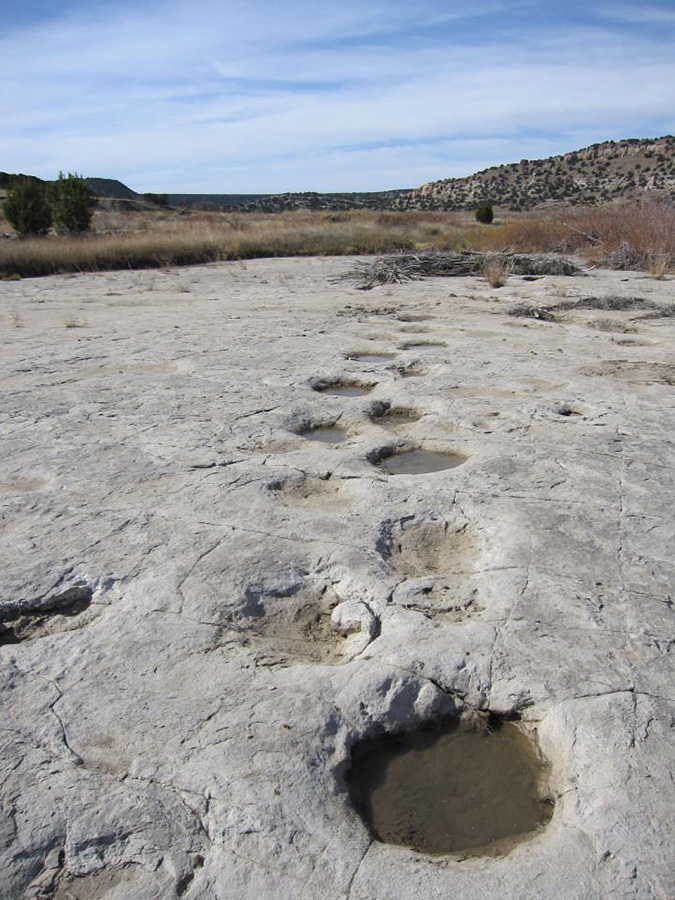
Dinosaur tracks in Comanche National Grasslands. Photo credit: cm195902

Colorado’s rich fossil presence harkens back to an age when dinosaurs roamed long-gone waterways and the shores of an ancient sea found along what is now the Front Range. Here are a few spots around the Centennial State where visitors can see dinosaur footprints, bones, and historic discovery sites.

1. Picketwire Canyon (La Junta)

Hike 11.2 miles round trip to see the most extensive dinosaur track site in North America. The Comanche National Grasslands in southeastern Colorado are home to a site that’s a stunning vestige of an era that took place 150 million years ago. Starting at the Withers Canyon trailhead, you’ll descend into the canyon – keep a close eye out for ancient rock art and the ruins of an 1800’s settlement. Along the Purgatoire River you’ll find the dinosaur tracks, left by a variety of long-necked herbivores and the T-Rex-esque Allosaurus. Carry plenty of water as the summer months can bring with them extreme temperatures. Don’t feel like hiking? Take the auto tour and get a ride with the only motorized vehicle allowed in the canyon. 

2. Skyline Drive (Cañon City)

Found just outside of Cañon City, take a drive on this somewhat harrowing ridgetop one-way road to see cliffside dinosaur tracks. The tracks were left behind more than 100 million years ago by the Ankylosaurus, an armored dinosaur that looked something like a mix of an armadillo and an alligator. Enjoy great views along the drive and make sure you allow roughly an hour for the trip. Nearby, try out the Royal Gorge Dinosaur Experience for a collection of impressive family-friendly exhibits.

3. Dinosaur Ridge (Morrison)

Found just 20 minutes outside of Denver, walk, bike, or hop on a tour bus to see an impressive display of around 300 dinosaur tracks at Morrison’s Dinosaur Ridge. This must-see spot has been rated as a top dinosaur track site by paleontologists. Highlights include large 3- and 4-toed prints left by the beloved Triceratops, bulging inverted Brontosaurus tracks, and remnants of Jurassic-era bones at the site of the very first stegosaurus discovery.

4. Dinosaur Hill (Fruita)

Stroll along this 1.5-mile loop and see the quarry site where a remarkably complete Apatosaurus skeleton was discovered in 1900 (the skeleton now resides at the Chicago Field Museum of Natural History). You’ll find sweeping views of the Colorado river and interpretative signs detailing various other fossil discoveries along the way. If you’re left wanting more, try the .75-mile loop on nearby Rigg’s Hill featuring more historic excavation sites, including one where a 75-foot Brachiosaurus was uncovered in 1900. While you’re in the area, round out your trip be checking out Fruita’s Dinosaur Journey Museum.

5. Dinosaur National Monument (Dinosaur)

Spanning the Utah-Colorado border, this park offers stunning hiking trails, ancient petroglyphs, and an impressive display of some 1,500 dinosaur bones inside the Quarry Exhibit Hall (which is, admittedly, just over the border in Utah). You’re even allowed to touch some of the nearly 150 million-year-old bones! Get your legs moving on the 1.2 mile one-way Fossil Discovery trail, which starts at the visitor center and features several dinosaur bones embedded in the rock.

Source: www.outtherecolorado.com/

Palaeontologists Identify New Prehistoric Amphibian: A Salamander Named Egoria

Saturday, February 22, 2020

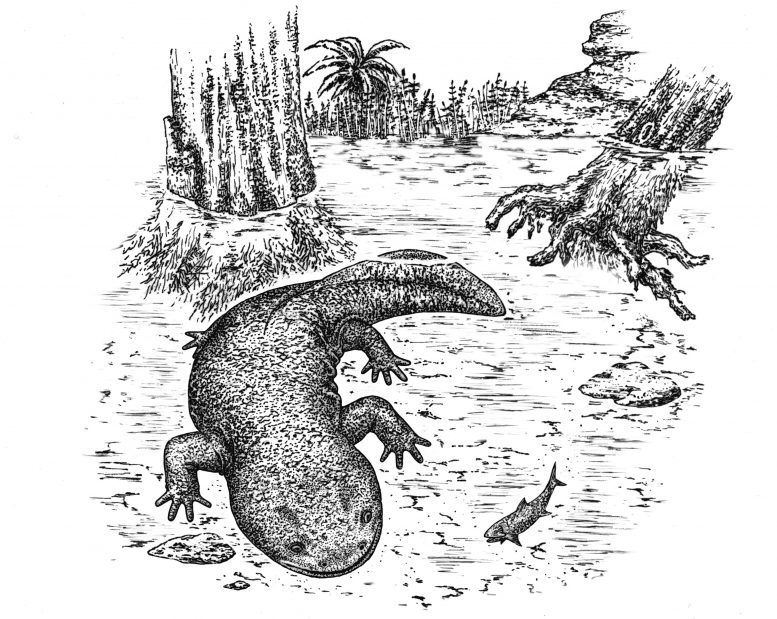
A group of Russian and German paleontologists have described a previously unknown genus and species of prehistoric salamanders. The new amphibian is named Egoria malashichevi — in honor of Yegor Malashichev a talented scientist and associate professor of the Department of Vertebrate Zoology at St Petersburg University, who passed away at the end of 2018. Credit: Vadim Glinskiy

They lived on the Earth about 166-168 million years ago, in the Middle Jurassic.

The paleontologists found the remains of the ancient amphibian at the Berezovsky quarry, a fossil locality in the Krasnoyarsk Krai near the town of Sharypovo. Fossils of ancient fish, various reptiles, mammals, herbivorous and predatory dinosaurs have been previously found there. The research materials were collected on field expeditions in the mid-2010s. In these expeditions the scientists from St Petersburg University worked alongside experts from the University of Bonn (Germany), the Tomsk State University, the Zoological Institute of the Russian Academy of Sciences, and the Sharypovo Museum of Local History and Nature.

Four vertebrate fossils enabled the scientists to declare the finding of a new genus and species. These were: three trunk vertebrae and the atlas — the first and, in the case of the salamander, the only cervical vertebra. Since the atlas is a highly specialized vertebra, providing for attachment and rotation movements of the skull, it has a rather complex structure, the scientists explain. It is therefore most suitable for describing a new species as it provides much information for analysis. The amphibian proved to have belonged to the geologically oldest stem salamanders.

It was not the first time that remains of ancient salamanders had been found at the Berezovsky quarry. One of them — a basal stem salamander Urupia monstrosa, named after the nearby Uryup River — was about 50-60 centimeters long. Another one — Kiyatriton krasnolutskii — was named after a local historian Sergei Krasnolutskii, the discoverer of the fossil locality Berezovsky quarry. By contrast, this one was quite small in size (about 10-15 centimeters) and looked more like modern Hynobiidae. The newly discovered salamander, judging by the size of the vertebrae, was of medium length (about 20 centimeters).

‘Salamanders first appear in the fossil records in the Middle Jurassic, including representatives of both the present-day salamander families and the most primitive ones,’ said Pavel Skutschas, associate professor of St Petersburg University, doctor of biology, expert in Mesozoic vertebrates. ‘When they had just appeared, salamanders made efforts to occupy different ecological niches. Thus, the stem salamanders filled the niche of large water bodies; while those close to the present-day salamanders found their niche in small water bodies. As for the newly discovered salamander, it occupied a middle position, although morphologically, it is closer to the primitive.’

The scientists not only described the external characteristics of the specimens, but were able to look inside the fossils. In this, they were assisted by the experts from the ‘Centre of X-ray diffraction studies’ at the Research Park of St Petersburg University, where the specimens were scanned on up-to-date microtomography scanners. Based on the obtained data, the paleontologists created 3D reconstructions of the vertebrae and described their internal structure. As expected, it proved to be very similar to that of the large stem salamanders.

The ancient amphibian received the name Egoria malashichevi — in honor of Yegor Malashichev, associate professor of the Department of Vertebrate Zoology at St Petersburg University, who, among other things, studied the morphology of caudate amphibians. ‘Yegor Malashichev was a wonderful person and a very talented scientist. He supported aspiring palaeontologists and did everything to help them to stay in scientific research,’ remarked Pavel Skutschas. Additionally, Malashichev studied the phenomenon of lateralization (body asymmetries associated with the functioning of the nervous system), as well as other asymmetries in motor performance and visual perception. Yegor Malashichev’s professional career was almost exclusively connected with St Petersburg University. In 1996, he graduated from the Faculty of Biology and Soil Science. In 2000, he began to teach there, and in 2003, he defended his dissertation and was awarded a PhD in biology. Sadly, in late 2018, he passed away unexpectedly.

The next step for the paleontologists is to compare the bones of the ‘Berezovsky’ salamanders with the fossils from Great Britain: the ‘Kirtlington’ salamanders which were found at the Kirtlington quarry in Oxfordshire. The Siberian and British faunas of the mid-Jurassic time were very similar. Besides, the paleontologists are aware of similar amphibians that lived in the territory of present-day England. ‘They may be representatives of the same genera. However, to ascertain this, a detailed comparison of the palaeontological collections is required. In the coming spring, our colleagues from England will come to St Petersburg to study our research materials. We may discover that Urupia and Egoria used to have a very wide habitat, extending across Europe and Asia,’ mused Pavel Skutschas.

Reference: “A new small-sized stem salamander from the Middle Jurassic of Western Siberia, Russia” by Pavel Skutschas, Veniamin Kolchanov, Sergey Krasnolutskii, Alexander Averianov, Rico Schellhorn, Julia Schultz and Thomas Martin, 19 February 2020, PLOS ONE. DOI: 10.1371/journal.pone.0228610

Source: https://scitechdaily.com/

46,000-Year-Old Horned Lark Found in Siberian Permafrost

Saturday, February 22, 2020

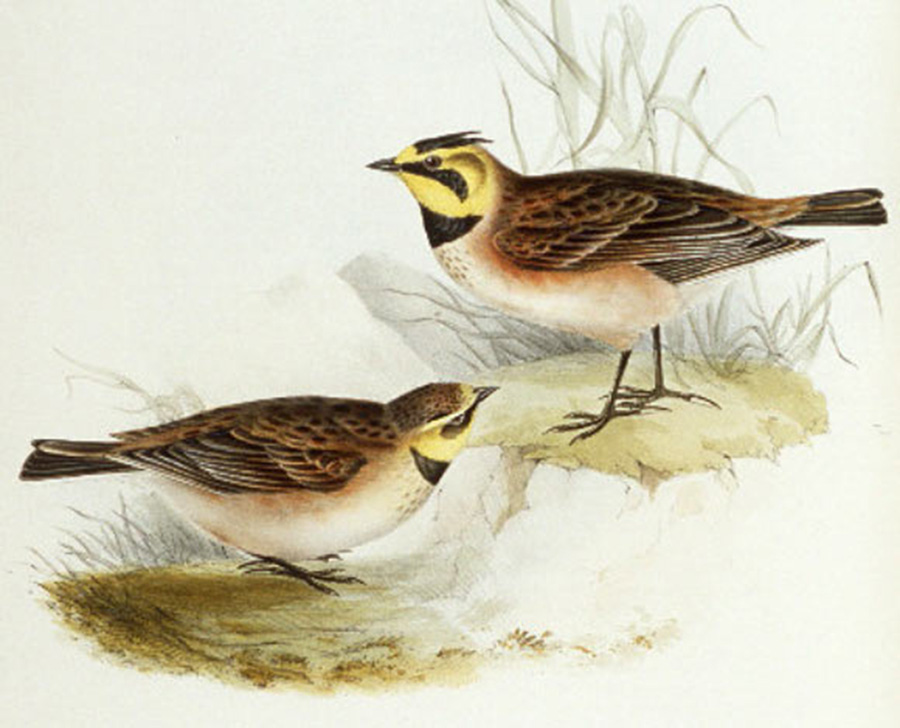
Horned larks (Eremophila alpestris).

In a new study published in the journal Communications Biology, an international team of researchers radiocarbon-dated an exceptionally well-preserved carcass of an ancient bird found in the Siberian permafrost and identified the species through reconstruction of its mitogenome.

Permafrost deposits containing both animal and plant material represent a unique opportunity to reconstruct paleoenvironments.

In recent years, permafrost sites in the Arctic have revealed a wealth of frozen animal carcasses from the last Ice Age, including mammoths, woolly rhinoceroses, horses, bisons, and wolverines.

These remains are of great interest to paleontology since they enable a better understanding of the impact of climate change on species, populations, and communities.

In 2018, the frozen near-complete carcass of a passerine bird was recovered in permafrost from a site 30 km (18.6 miles) east from the village of Belaya Gora in Yakutia.

Dr. Nicolas Dussex, a scientist at Stockholm University, the Swedish Museum of Natural History and the Centre for Palaeogenetics, and his colleagues dated the specimen to 46,000 years old.

The researchers then used 50 mg of the bird tissue for DNA extraction and genome sequencing.

They reconstructed the bird’s mitogenome and extracted a partial COI gene, which is used for species identification.

They searched for matches with this gene in GenBank avian genetic databases and found a 100% identity match with the horned lark (Eremophila alpestris), a species of lark in the Alaudidae family found across the northern hemisphere.

“Not only can we identify the bird as a horned lark,” Dr. Dussex said.

“The genetic analysis also suggests that the bird belonged to a population that was a joint ancestor of two sub species of horned lark living today, one in Siberia, and one in the steppe in Mongolia.”

“This helps us understand how the diversity of subspecies evolves.”

During the last Ice Age, the steppe spread out over northern Europe and Asia and was home to now extinct species such as the woolly mammoth and the woolly rhinoceros.

According to one theory, this ecosystem was a mosaic of habitats like such as steppe, tundra and coniferous forest.

At the end of the Ice Age, the steppe was divided into the biotopes we know today — tundra in the north, taiga in the middle and steppe in the south.

“Our results support this theory since the diversification of the horned lark into these sub species seems to have happened about at the same time as the mammoth steppe disappeared,” said Professor Love Dalén, also from Stockholm University, the Swedish Museum of Natural History and the Centre for Palaeogenetics.

_____

N. Dussex et al. 2020. Biomolecular analyses reveal the age, sex and species identity of a near-intact Pleistocene bird carcass. Commun Biol 3, 84; doi: 10.1038/s42003-020-0806-7

Source: www.sci-news.com/

How To Make The Perfect Jurassic Park Video Game

Friday, February 28, 2020

Who's bothered about flying a plane when you can hop on a T. Rex?

Picture the scene:

With the world of gaming anxiously awaiting the release of Grand Theft Auto 6, Rockstar Games suddenly announces a little side project they've secretly been working on - an open map experience based on the world of Jurassic Park. It's never been done before, and is a world away from anything the studio has done.

But how exactly would that work, and what would the game contain?

Well for starters, it needs to have multiple playable characters, and there's a full franchise to choose from.

Personally, this author would go for the original trilogy of heroes, Alan Grant, Ian Malcolm and Ellie Sattler (also providing Rockstar with their first female playable character), and give the player the ability to move between them as they freely explore Isla Nublar. That, or completely new characters with a brand new story.

In terms of the open world, Isla Nublar would be the main island (as the primary setting for the original film and the Jurassic World sequels), but there would also be the potential to explore smaller islands mentioned in the films, with the ability to get there via helicopter (Isla Sorna, for example).

By focusing mainly on Nublar and the surrounding area, it gives Rockstar an opportunity to map out the scale of the island accurately like for like. Described as eight miles long and three miles wide, it's the perfect size.

For gameplay, the main story could pan out the events of the first film and go from there, but with a large amount of side missions and exploration quests on the side, mainly hunting dinosaurs and carrying out ranger missions. Buggies and jeeps could be scattered around the island to use as vehicles for our characters, and they could interact with other figures from the film in locations such as the theme park, cloning labs and ranger outposts.

The most exciting element of course, would be the inclusion of the dinosaurs. While there would obviously be a combat element involved with them (which would see the player needing to upgrade weapons to take on some of the larger beasties), there's also the potential to use them as vehicles. Who wouldn't want to do a racing mission through the jungle on a raptor, or fly over the island on a Pterodactyl? The possibilities for using the dinosaurs are endless.

It's certainly an intriguing prospect, and one that Rockstar could creatively replicate.

What would you like to see in a Jurassic Park game?

Source: https://whatculture.com/

Smaller Animals Faced Surprisingly Long Odds in Ancient Oceans

Saturday, February 22, 2020

Giant clams, the largest type of invertebrate included in the study, survive today on tropical reefs in the Pacific and Indian Oceans, but many species from this group are under threat. “People collect them to carve the shells, as with elephant ivory, and to eat the clam because of its supposedly aphrodisiac-like properties,” says paleobiologist Noel Heim. Credit: iStock

A new fossil study from Stanford University shows extinction was unexpectedly common among smaller sea creatures in the deep past.

The research, published in the journal Paleobiology, suggests evolutionary winners during most of the history of animal life included not only true behemoths of the sea, such as Jurassic fish as long as a bus, but also species who were giants of their kind.

"Our study shows there are macroevolutionary forces that tend to favor the survival of larger species," said Noel Heim, a paleobiologist at Tufts University who worked on the analysis as a researcher in the lab of Stanford geological sciences professor Jonathan Payne.

The findings contrast with extinction patterns observed on land and in today's oceans. "Our findings suggest that the controls on extinction risk for marine animals across evolutionary time were quite different from those that are operating in the current extinction crisis, but were consistent across time and distantly related groups of animals," Payne said.

Disproportionate losses

Scientists have long debated how and why animal size and extinction risk were related in the deep past, often forming theories based on examples from land-based ecosystems. Payne has studied the question from different angles for more than a decade, mostly focusing on the marine environment. His teams have demonstrated that the size bias of extinction threats in modern oceans does not exist in the pattern of extinction of fossil marine mollusks and fishes spanning the past 66 million years, and that marine animals evolved toward larger sizes over the past 500 million years.

The new study examines a far broader swath of the tree of life, from huge bony fish and giant clams down to crustaceans and sea snails tinier than poppy seeds. Payne and Heim conducted a statistical analysis of 251,124 fossil records, including creatures belonging to 9,408 groupings known as "genera," one taxonomic level higher than species. They chose the largest specimen in each of these genera to represent its kind. Then they analyzed extinction and survival patterns for three long chunks of time between 485 million years ago and the present day.

Collectors found this king scallop (Pecten maximus) fossil in rocks formed more than two million years ago near Suffolk, England. The creature belongs to a group of mollusks that saw many species with smaller bodies go extinct toward the end of the age of dinosaurs, while related species with larger bodies tended to survive. Credit: Noel Heim

"People might think paleontology looks like a rugged outdoors person battling the wilderness to extract fossils from the Earth," Heim said. "In our case, we went to the library to extract data then wrote computer code to analyze it."

They found disproportionate losses among smaller creatures, such as those belonging to a group of bivalves known as Pectinida. The smallest of these distant sea-scallop relatives, pancake-thin and narrower than the palm of your hand, perished in the later years of the Cretaceous period, which ended when a dinosaur-killing asteroid crashed to Earth 65 million years ago. Related scallop-like species whose bodies could grow to more than twice that width and 10 times the volume, survived.

Filling in the gaps

The study also addresses nagging concerns that perhaps scientists until now have counted fossils in a way that makes smaller species appear to be rarer and more extinction-prone than they really were; or that perhaps body size has been far less important for survival than range, which happens to be bigger for bigger animals.

Paleontologists know that the fossil record has problematic gaps when it comes to smaller species—due partly to the allure of big fossils, and partly to the technical challenge of tracking down evidence of the ocean's smallest animals millions of years after they perished.

"Their shells tend to be destroyed prior to burial and fossilization," Payne explained. "Even if preserved in rocks, smaller shells are often more difficult to see in the field and require greater skill and precision to prepare them in ways that enable identification."

The study confirmed that larger genera do tend to have broader geographic range, and that better techniques for preparing and magnifying small fossils have allowed scientists to begin filling in gaps where smaller species remain underrepresented. Yet neither of these facts accounts statistically for the bias in extinction against smaller animals evident in every era over the past 485 million years.

"The biggest surprises for me were finding that neither poor sampling nor narrower geographic ranges of smaller genera explained the statistical association of body size with extinction risk," Payne said.

Biodiversity crisis

The precise processes underlying the pattern of higher extinction risks for smaller ocean animals remains unclear. Yet its existence underlines the extraordinary nature of threats facing ocean animals today. So many species are now in peril that scientists warn losses may reach the scale of a mass extinction—only the sixth in nearly half a billion years.

It's a crisis that fuels efforts by Payne's team and others to identify what drives extinction risk, and somehow quantify how species died off in the deep past.

"The fossil record is our only archive of past extinction events," Payne said. It allows researchers to examine directly which biological traits tend to lead to higher extinction risk under different circumstances, whether in the wake of an asteroid impact or volcanic eruption, or amid global warming.

Just as valuable are the insights scientists can glean from fossils about long-term recovery. "The bad news is that recovery is a slow process, taking hundreds of thousands to millions of years," Payne said. "This finding adds substantial urgency to our efforts to conserve species and ecosystems before extinction occurs."

More information: Jonathan L. Payne et al. Body size, sampling completeness, and extinction risk in the marine fossil record, Paleobiology (2020). DOI: 10.1017/pab.2019.43

Journal information: Paleobiology

Provided by Stanford University Source: https://phys.org/

Vellbergia bartholomaei: Tiny Prehistoric Lizard Sheds Light on Reptile Evolution

Friday, February 21, 2020

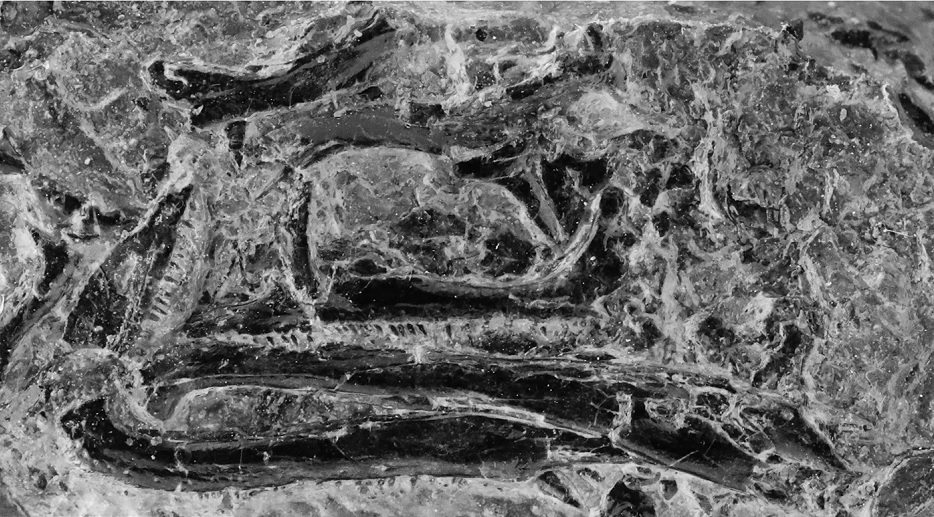
Fossil of the tiny prehistoric lizard Vellbergia bartholomaei, an over 200 million-year-old specimen scientists believe may fill in the gaps in the evolutionary history of reptiles. (Sobral et al. / Scientific Reports)

The discovery of a new species of prehistoric reptile from Germany is reported in Scientific Reports. The anatomical features of the species, named Vellbergia bartholomaei, add to our understanding of the early evolution of lepidosauromorphs.

Lepidosauromorphs are one of the largest and most diverse tetrapod lineages with over 10,500 species. Ancestors to modern-day lizards, snakes and reptiles known as tuataras, lepidosauromorph specimens have only been found across a few Triassic sites and their early evolution remains largely unknown.

Gabriela Sobral and colleagues discovered the small fossil within the Middle Triassic (247 to 237 million-year-old) deposits of Vellberg, Germany. Analyses suggest that the specimen is a previously unknown species of early lepidosauromorph. One of the smallest found at the site, it could represent the first juvenile fossil collected at Vellberg. V. bartholomaei differs from other lepidosauromorph species owing to its distinct characteristics, including narrow, slender and short teeth relative to the lower jaw, but shares a mosaic of features found in the predecessors of present-day lizards and tuataras. The findings, which suggest that Vellbergia may be a common ancestor of the two lineages, further our understanding of early reptile evolution.

The fossil adds to evidence implicating Vellberg as an important site for understanding early lepidosauromorph evolution. Owing to the poor fossil record for the Early Triassic period, specimens from the Middle Triassic are of fundamental importance to understanding how vertebrates recovered after the Permian-Triassic mass extinction (around 252 million years ago), the Earth's most severe known extinction event, and how they diversified into modern species.

###

Article and author details

A tiny new Middle Triassic stem-lepidosauromorph from Germany: implications for the early evolution of lepidosauromorphs and the Vellberg fauna

Corresponding authors:

Gabriela Sobral
Staatliches Museum für Naturkunde, Stuttgart, Germany

DOI 10.1038/s41598-020-58883-x

Online paper https://www.nature.com/articles/s41598-020-58883-x

Source: www.eurekalert.org/

The Weird Arm Physics of Jurassic Park: Trespasser

Saturday, February 22, 2020

An ambitious game with a legendarily bad control system.

I love ambitious games—even when they're bad—and Jurassic Park spin-off Trespasser definitely falls into that category. Released in 1998 by DreamWorks Interactive, this is an original Jurassic Park story that features some great voice acting from John Hammond himself, Richard Attenborough. But the game's legacy will always be its control scheme, which involved flapping a long, bendy arm around to interact with the environment.

You can read more about the game here, but if you'd rather just see this weird control system in action for yourself, check out the video above.

RELATED: "Trespasser: The Lost World": Jurassic Park's Forgotten Digital Sequel

Source: www.pcgamer.com/

A Bee From the Age of Dinosaurs

Friday, February 21, 2020

Primitive bee trapped in amber. It lived in a tropical jungle 100 million years ago, when flowering plants were just beginning to diversify. It’s thought that bees and flowering plants co-evolved. This specimen has traits from modern bees and their evolutionary ancestors, the carnivorous apoid wasps. Image via George Poinar Jr./ OSU.

One hundred million years ago, a bee got trapped in tree resin. Over time, geological forces converted the resin to amber. Now a scientist arrives on the scene, to tell us this bee’s story.

About 100 million years ago, a female bee with young beetle larvae crawling all over her body flew haplessly into a glob of sticky tree resin where she became trapped. Over time, the resin fossilized to become amber, preserving the bee and its parasites in exquisite detail within the clear honey-colored rock. As rare as it is, this fossil bee isn’t the first to be found entombed in amber. But it is the only known known amber-encased bee that has pollen on it. And it’s the only fossil bee with parasites, providing a fascinating glimpse into a predator-prey relationship that continues to this day. And the entomologist who studied this doomed bee? He is George Poinar Jr. of Oregon State University (OSU), whose work helped inspire the movie “Jurassic Park.”

Poinar’s work also showed that the bee – which he named Discoscapa apicula – belonged to a new family, genus, and species. His findings were published in the January 29, 2020, issue of BioOne Complete.

George Poinar, Jr. is a renowned expert in animals and plants fossilized in amber. He’s also credited with popularizing the idea of extracting DNA from these primitive insects. This idea received widespread attention when Michael Crichton incorporated it into his blockbuster Jurassic Park franchise. In the movie, dinosaur blood is extracted from mosquitoes encased in amber from the age of dinosaurs, and DNA in the blood is used to clone living dinosaurs.

In the real world of science, researchers study insect pollinators, such as bees, because they’re critically important to the reproduction of flowering plants, some of which are key to humans’ food supply.

There are more than 16,000 known bee species worldwide, from seven taxonomic families. Bees feed primarily on nectar and pollen, in contrast to their evolutionary ancestors, apoid wasps, that preyed on other insects.

A new species of bee, trapped in amber for about 100 million years. Can you spot the parasitic beetle larvae it carried? Image via George Poinar Jr./ OSU.

The newly studied bee fossil, from Myanmar, dates to the mid-Cretaceous period. This bee’s world was a tropical forest of mostly conifers, ferns, cycads, ginkgo, and horsetails. Angiosperms – flowering plants – were just beginning to diversify, along with the primitive bees that pollinated their flowers. These ancient bees shared traits seen in both modern bees and their evolutionary forebearers, apoid wasps.

In a statement about this new research, Poinar commented on one of the most interesting features of the bee:

Something unique about the new family that’s not found on any extant or extinct lineage of apoid wasps or bees is a bifurcated scape.

The scape is a base section of the antenna, closest to the bee’s head. In this bee, it branches into two sections, one ending as a small spur. This feature has never before been seen in either living or fossil bees.

An image of the “scape” on one of the bee’s antennae, divided into 2 parts. This bifurcated scape has not seen before, in any known fossil or living bee. The scape is labeled “Sc” and appears divided into 2 branches, with 1 side ending as a small spur, labeled “S.” Other labeled parts are “T” for torulus (basal socket joint that allows antenna movement), “R” for radicle (antenna joint attached to the head), and “P” for pedicle (antenna segment that creates an elbow-like joint with the scape). Image via George Poinar Jr./ BioOne Complete.

Poinar continued:

The fossil record of bees is pretty vast, but most are from the last 65 million years and look a lot like modern bees. Fossils like the one in this study can tell us about the changes certain wasp lineages underwent as they became palynivores, or pollen eaters.

There were pollen grains on the bee, indicating it had visited some flowers not long before it died.

Also present were very young beetle larvae on the bee. These parasitic larvae were not feeding on it, but were hitching a ride from one of the flowers visited by the bee to its nest. At the nest, the parasitic beetle larvae would continue to develop, feeding on bee larvae and the food left by the adult bee.

Microscopic imaging reveals pollen on the bee’s pollen-catching hairs. It had visited flowers shortly before becoming trapped in tree resin. Image via George Poinar Jr./ OSU.

Poinar observed:

Additional evidence that the fossil bee had visited flowers are the 21 beetle triungulins – larvae – in the same piece of amber that were hitching a ride back to the bee’s nest to dine on bee larvae and their provisions, food left by the female.

It is certainly possible that the large number of triungulins caused the bee to accidently fly into the resin.

One of the young larval beetles. Poinar counted a total of 21 larvae on this bee. These larvae are carried by the adult bee from a flower to the nest, where the larvae parasitize bee larvae and eat the food collected by the adult bee. Image via George Poinar Jr./ OSU.

Bottom line: A bee that lived during the age of dinosaurs became entombed in tree resin about 100 million years ago. It was identified as a species new to science, and is the only known fossil bee encased in amber to carry parasitic beetle larvae and pollen.

Source: Discoscapidae fam. nov. (Hymenoptera: Apoidea), a new family of stem lineage bees with associated beetle triungulins in mid-Cretaceous Burmese amber.

Via Oregon State University Source: https://earthsky.org/

Pages