nandi's blog

Chris Pratt Might Be Returning As Owen In A Jurassic World TV Show

Friday, March 20, 2020

There are some rumours online that are suggesting that Chris Pratt could be returning as Owen in a Jurassic World TV show.

This rumour comes from We Got This Covered’s sources who claim that NBCUniversal is in the early stage of developing a Jurassic World TV show.

However, that’s not all. They also claim that this will be released on Universal’s upcoming streaming service which hasn’t been released yet.

They also claim that NBCUniversal wants Chris Pratt to return as Owen in the new TV show.

This would be an interesting thing to do, especially if Jurassic World: Dominion does well.

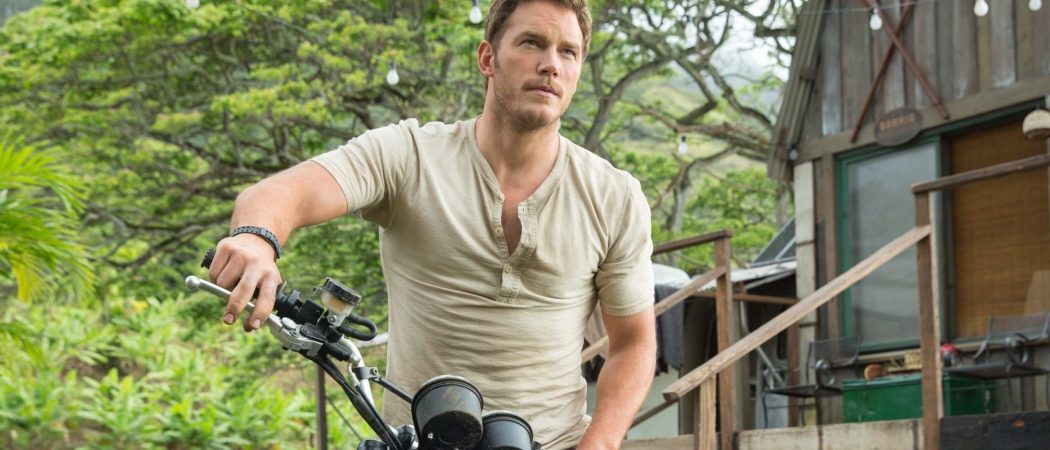
Should Chris Pratt play Owen in a Jurassic World TV show? – Credit: Universal Pictures

It was revealed this week that production on Jurassic World: Dominion was put on hold due to the Coronavirus outbreak.

Hopefully, it should get back on track towards the end of April, along with all the other movies that have been put on hold.

It’s going to be strange and uncertain times moving forward, but I do hope they end up making this Jurassic World TV show because I think there’s something good to come out of it.

Chris Pratt is just so good as Owen. I would hope to see more of him moving forward.

Would you like to see Chris Pratt return as Owen in a Jurassic World series?

Sounds like a good idea to me.

Source: www.small-screen.co.uk/

A New Book Captures How Genetics Fills In The Story of Life’s Evolution

Saturday, March 21, 2020

Neil Shubin recounts big moments in life’s history, including animals’ colonization of land. Tiktaalik roseae, which lived 375 million years ago, took early steps toward a terrestrial lifestyle.  ZINA DERETSKY/NATIONAL SCIENCE FOUNDATION

‘Some Assembly Required’ explores how genetic analyses complement paleontological research.

When descendants of ancient fish first hauled themselves onto dry land, they didn’t do so with lungs evolved specifically for that reason. The need to breathe air ultimately led to a change in the function of an organ the fish already had. Likewise, when birds took to the air millions of years later, they did so using feathers that may have originally evolved as insulation or as a way to attract mates.

In Some Assembly Required, Neil Shubin, a paleontologist, explores these and other great evolutionary innovations, as well as the invisible genetic changes that made them possible. The book is an impressive chronicle of what genetic research over the last few decades has done to complement the story of evolution, a tale once told through fossils, anatomy and physiology alone.

Some Assembly Required by Neil Shubin, Pantheon, $26.95

For instance, studies show that the genes fish need to build swim bladders — the organ that helps control buoyancy — are the same ones lungfish and humans use to build lungs. Such repurposing, of both genes and anatomical features, is a recurrent theme in the tree of life, Shubin notes. 

In some cases, genetic mutations trigger the production of new proteins, which can either serve new functions or perform old tasks more efficiently and, in turn, enhance the survival of the organism. In other cases, mutations cause genes to be switched on or off earlier or later in development and at different places in an embryo. These changes can alter the development of skulls, fins, limbs and other anatomical features, and sometimes result in totally new features.

Many of these tweaks may arise when genes duplicate themselves, a process that allows one copy of a gene to retain its original function but frees up the additional copy to change and gain a new purpose. For instance, research suggests that the gene NOTCH2NL, which originated via duplication of a more primitive gene and is found in humans but not monkeys, triggers the growth of brain cells when inserted into the DNA of lab mice. The gene probably contributes to humans’ big brain, scientists have proposed.

Viral infections have also led to evolutionary changes in the host, Shubin points out. Syncytin, a protein that plays a vital role in the placenta of mammals, is a viral protein that lost its ability to infect other cells. At some point in the evolution of mammals, the protein was incorporated into its hosts’ genetic code and put to work, creating intercellular pathways that enable nutrients and other substances to flow between mothers and embryos.

By taking a historical perspective and recounting the gradual accumulation of knowledge about genes and their effects, Shubin transforms a complicated topic into a smooth and fascinating read.


A version of this article appears in the March 28, 2020 issue of Science News.

Source: www.sciencenews.org/

Late Cretaceous Dinosaur-Dominated Ecosystem

Thursday, March 19, 2020

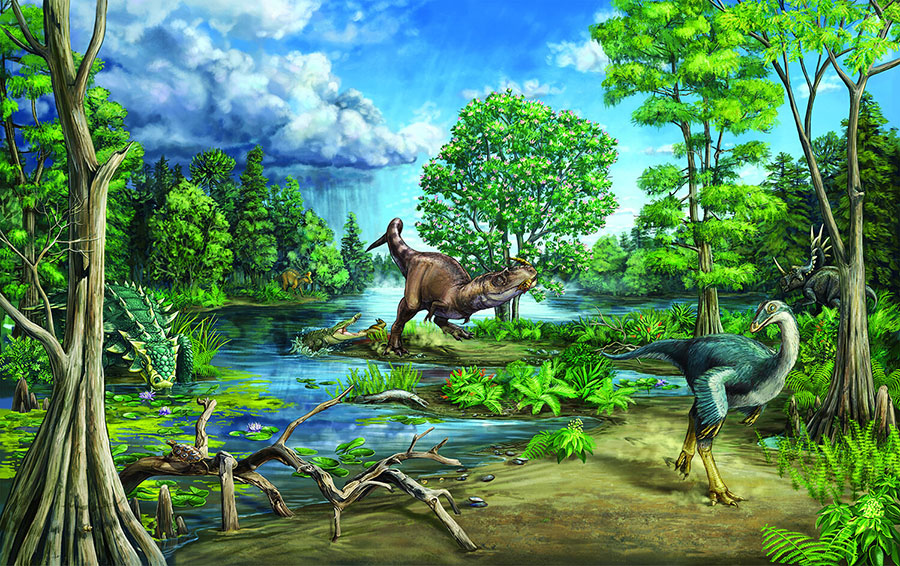
This mural was originally made for a recent Royal Ontario Museum exhibit about a fossil ankylosaur named Zuul crurivastator. That fossil is found within a couple of meters stratigraphically/temporally of the site described in this paper. The last author on the study, David Evans, is the dinosaur curator at the Royal Ontario Museum and was also involved in the description of Zuul and design of that exhibit. Credit: Danielle Dufault, Royal Ontario Museum.

A topic of considerable interest to paleontologists is how dinosaur-dominated ecosystems were structured, how dinosaurs and co-occurring animals were distributed across the landscape, how they interacted with one another, and how these systems compared to ecosystems today. In the Late Cretaceous (~100-66 million years ago), North America was bisected into western and eastern landmasses by a shallow inland sea. The western landmass (Laramidia) contained a relatively thin stretch of land running north-south, which was bordered by that inland sea to the east and the rising Rocky Mountains to the west. Along this ancient landscape of warm and wet coastal plains comes an extremely rich fossil record of dinosaurs and other extinct animals.

Yet, from this record, an unexpected pattern has been identified: Most individual basins preserve an abundant and diverse assemblage of dinosaur species, often with multiple groups of co-occurring large (moose- to elephant-sized) herbivorous species, yet few individual species occur across multiple putatively contemporaneous geological formations (despite them often being less than a few hundred kilometers apart). This is in fairly stark contrast to the pattern seen in modern terrestrial mammal communities, where large-bodied species often have very extensive, often continent-spanning ranges. It has therefore been suggested that dinosaurs (and specifically large herbivorous dinosaurs) were particularly sensitive to environmental differences over relatively small geographic distances (particularly with respect to distance from sea level), and may have even segregated their use of the landscape between more coastal and inland sub-habitats within their local ranges.

In their new study published in Geology, Thomas Cullen and colleagues sought to test some of these hypotheses as part of their broader research reconstructing the paleoecology of Late Cretaceous systems.

One of the methods they're using to do that is stable isotope analysis. This process measures differences in the compositions of non-decaying (hence, "stable") isotopes of various common elements, as the degree of difference in these compositions in animal tissues and in the environment have known relationships to various factors such as diet, habitat use, water source, and temperature. So the team applied these methods to fossilized teeth and scales from a range of animals, including dinosaurs, crocodilians, mammals, bony fish, and rays, all preserved together from a relatively small region over a geologically short period of time in sites called vertebrate microfossil bonebeds.

By analyzing the stable carbon and oxygen isotope compositions of these fossils they were able to reconstruct their isotopic distributions in this ecosystem—a proxy for their diets and habitat use. They found evidence of expected predator-prey dietary relationships among the carnivorous and herbivorous dinosaurs and among aquatic reptiles like crocodilians and co-occurring fish species.

Critically, says Cullen, "What we didn't see was evidence for large herbivorous dinosaurs segregating their habitats, as the hadrosaurs, ceratopsians, and ankylosaurs we sample all had strongly overlapping stable carbon and oxygen ranges. If some of those groups were making near-exclusive use of certain parts of the broader landscape, such as ceratopsians sticking to coastal environments and hadrosaurs sticking to more inland areas, then we should see them grouping distinctly from each other. Since we didn't see that, that suggests they weren't segregating their resource use in this manner. It's possible they were doing so in different ways though, such as by feeding height segregation, or shifting where in the landscape they go seasonally, and our ongoing research is investigating some of these possibilities."

Another important part of their study was comparing the fossil results to an environmentally similar modern environment in order to examine how similar they are ecologically. For a modern comparison, they examined the animal communities of the Atchafalaya River Basin of Louisiana, the largest contiguous wetland area in the continental U.S. The landscape of this area is very similar to their Cretaceous system, as are many elements of the plant and animal communities (not including the non-avian dinosaurs, of course).

From their comparisons, the team found that the Cretaceous system was similar to the Louisiana one in having a very large amount of resource interchange between the aquatic and terrestrial components of the ecosystem, suggesting that fairly diverse/mixed diets were common, and food being obtained from both terrestrial and aquatic sources was the norm. They also found that habitat use differences among the herbivorous mammals in the Louisiana system was more distinct than among those large herbivorous dinosaurs in the Cretaceous system, lending further evidence to their results about their lack of strict habitat use preferences.

Lastly, the team used modified oxygen stable isotope temperature equations to estimate mean annual temperature ranges for both systems (with the Louisiana one being a test of the accuracy of the method, as they could compare their results to directly measured water and air temperatures). The team found that in their Late Cretaceous ecosystem in Alberta, mean annual temperature was about 16-20 degrees C, a bit cooler than modern day Louisiana, but much warmer than Alberta today, reflecting the hotter greenhouse climate that existed globally about 76 million years ago.

Characterizing how these ecosystems were structured during this time, and how these systems changed across time and space, particularly with respect to how they responded to changes in environmental conditions, may be of great importance for understanding and predicting future ecosystem responses under global climate change. The team's research continues and should reveal much more about the food webs and ecology of the dinosaurs and other organisms that inhabited these ancient landscapes.


More information: T.M. Cullen et al. Large-scale stable isotope characterization of a Late Cretaceous dinosaur-dominated ecosystem, Geology (2020). DOI: 10.1130/G47399.1

Journal information: Geology 

Provided by Geological Society of America

Source: https://phys.org/

Beetles changed their diet during the Cretaceous period

Thursday, March 19, 2020

Reconstruction of the beetle on a water lily in its habitat. On the "back" it carries pollen from the water plant. Credit: J.A. Peñas

Like a snapshot, amber preserves bygone worlds. An international team of paleontologists from the University of Bonn has now described four new beetle species in fossilized tree resin from Myanmar, which belong to the Kateretidae family. They still exist today, with only a few species. As well as the about 99 million years old insects, the amber also includes pollen. It seems that the beetles helped the flowering plants to victory, because they contributed to their propagation. In turn, the beetles benefited from the new food source. The results have now been published in the journal iScience.

The researchers have described the new beetle species using specimens in four amber pieces from Myanmar (previously known as Burma). The pieces are estimated to be 99 million years old and date from the Cretaceous period, when dinosaurs were a rich and diverse group. Two of the pieces are in the Museum of Natural Sciences of Barcelona (Spain), while the other two specimens are kept in the Institute of Geology and Palaeontology in Nanjing (China).

"Although Myanmar surprises us time and again with finds of great scientific importance, amber pieces containing numerous organisms are not often found there," says project leader Dr. David Peris, who comes from Spain and is a postdoc at the Institute for Geosciences at the University of Bonn with an Alexander von Humboldt Foundation fellowship. He carried out the project with scientists from the USA, Spain, Germany, China and the Czech Republic.

Three of the examined amber pieces contained numerous beetles, while the fourth piece contained only one specimen of this family. Many pollen grains of different groups of seed plants, some of them long extinct, have been preserved with the beetles in the tree resin. Peris: "This close association suggests that the grains were distributed in the viscous lump of resin by the movement of the beetles."

The beetle family still exists today

Numerous specimens of Kateretidae in a piece of amber from the Institute of Geology and Palaeontology in Nanjing (China). Included are also pollen grains from primitive water lilies. Credit: Georg Oleschinski/Uni Bonn

Numerous specimens of Kateretidae in a piece of amber from the Institute of Geology and Palaeontology in Nanjing (China). Included are also pollen grains from primitive water lilies. Credit: Georg Oleschinski/Uni Bonn

The Kateretidae are a small family of beetles with less than 100 described modern species that today live in South America and other temperate and subtropical regions. The species of this family feed on pollen and flower parts. Due to their dietary habits, they are nowadays regarded as pollinators of flowering plants (angiosperms). But in the middle Cretaceous period their rapid development had just begun. Previously, the Earth was colonized by gymnosperms, literally meaning "naked seeds", which also includes our conifers. "The most important aspect of this study is that the pollen grains in three of the amber pieces do not belong to flowering plants," says Peris. The pollen grains on the beetle of the fourth piece of amber, however, come from a water lily, a group of very primitive angiosperms that emerged at an early stage.

Living together for mutual benefit

There are other pollinating insects in amber, but almost all of them concern gymnosperms. When flowering plants (angiosperms) began their early development, they represented a new resource that was used by the Kateretidae. The beetles adapted quickly and formed a mutually beneficial symbiosis: The flowering plants served the beetles as a food source and these animals contributed to the propagation of the new angiosperms by pollination.

In earlier studies it was speculated that the beetles might belong to the insect groups that pollinated the earliest flowers. Some of these animals had developed the ability to pollinate gymnosperms well before the appearance of angiosperms. "Our study supports this hypothesis of significant host plant relocation, as there are no Kateretidae associated with gymnosperms today," says Peris. Adapting to the new resource has proven to be an evolutionary advantage.


More information: David Peris et al, Generalist Pollen-Feeding Beetles During the Mid-Cretaceous, SSRN Electronic Journal (2019). DOI: 10.2139/ssrn.3492117

Journal information: iScience

Source: https://phys.org/

UNMATCHED Just Released Its Incredible JURASSIC PARK Addition

Wednesday, March 18, 2020

It's InGen Vs. Raptors in Mondo's New Unmatched: Jurassic Park Game

Raptors vs. Ingen is here!

Unmatched is a game where every character is both deeply individual while remaining balanced with all the other characters. This means new editions, with new characters, are much more exciting than typical board game expansions. Being able to get a new character offers a whole new angle for gameplay. You don’t just want to get Bruce Lee because he’s cool (he is). You want to see how he plays with each and every other character you have.

So this is very cool: Mondo has released a new Jurassic Park edition of the game: InGen vs Raptors:

I actually got to see this one first hand and it’s pretty cool. As the InGen game warden, your main deal is setting traps all over the board. With Raptors, you have three, each with equal health. They are stronger the more of them survive. You have to kill all three to win. A lot of characters have sidekicks, but the raptors are more like three medium-characters. You would think that gives them a ridiculous edge, but when I tried them out, the InGen fella drew some lucky cards and killed me almost as soon as we started. Do not underestimate those traps!

But how do the raptors fare against Robin Hood and his Merry Men? How will the InGen Game Warden’s traps affect Medusa’s long-range attacks? That’s the real fun of Unmatched, and I can’t wait to get this set for myself to find out. Check it out here!

Source: https://birthmoviesdeath.com/

Jurassic Park 2’s Sarah Harding Is The Series Most Underrated Character

Wednesday, March 18, 2020

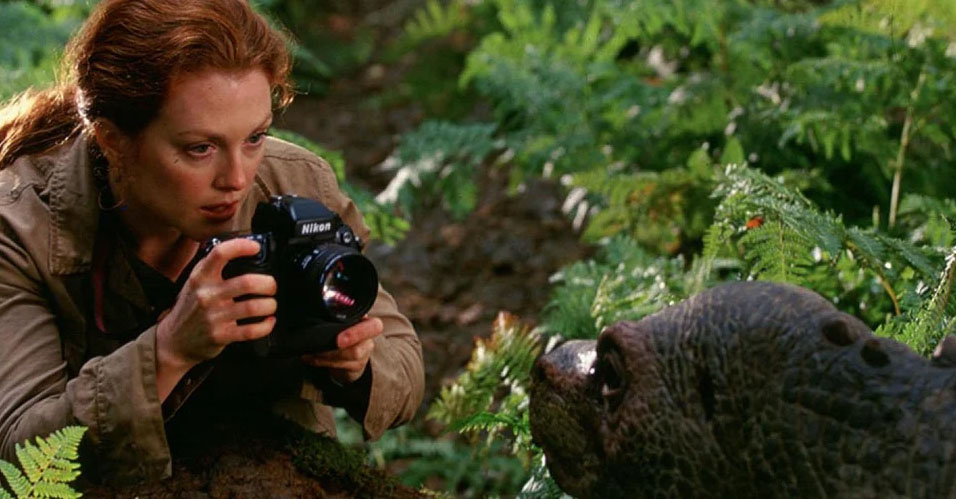
The Lost World: Jurassic Park introduced Julianne Moore's Dr. Sarah Harding, who is arguably the franchise's most underrated protagonist.

The Lost World: Jurassic Park's Sarah Harding is one of the most underrated characters in the series. Before Steven Spielberg adapted Jurassic Park into a groundbreaking blockbuster, James Cameron tried to get the book rights. He basically planned to make "Aliens with dinosaurs" and his version would have been a gory, R-rated affair. Tempting as that sounds, Spielberg's adaptation is a classic blockbuster filled with great performances and setpieces and helped pioneer CGI effects. The resulting series is something of a mixed bag.

The Lost World: Jurassic Park again featured some great sequences but felt like a reheat of the first movie, and Spielberg later admitted being bored making it. Jurassic Park III was a hollow, virtually plotless blockbuster held together by Sam Neill's performance and it took fifteen years for the franchise to return. Jurassic World featured a fully functioning park that's ripped apart by the arrival of an intelligent hybrid dinosaur. This sequel was a huge success upon release in 2015, though reviews were mixed. That same could be said of 2018's Jurassic World: Fallen Kingdom, which featured the destruction of the original island and another deadly hybrid. The sequel featured an odd structure and story logic but benefitted from atmospheric direction by J. A. Bayona.

The series has featured some great protagonists, from Neill's Dr. Grant to Jeff Goldblum's Ian Malcolm, but one character who deserves a little more love is The Lost World: Jurassic Park's Dr. Sarah Harding. Sarah first appeared in Michael Crichton's The Lost World novel and is played by Julianne Moore (Kingsman: The Golden Circle) is the movie. Harding is a paleontologist in a relationship with Malcolm who signs up to research the dinosaurs roaming free on Isla Sorna, AKA Site B. Harding leaves for the island alone while the rest of the team get ready, the news of which prompts Malcolm to rush the operation to rescue her.

Sarah is found to be more than comfortable living with the dinosaurs in The Lost World: Jurassic Park, and is in awe of the animals she finds on Isla Sorna. Harding later helps free captured dinosaurs rounded up by InGen mercenaries and in a well-meaning gesture, she takes a wounded T-rex infant to heal its broken leg - only to famously incur the wrath of its parents. Harding fits the mold of most of the franchise's best heroes, being a normal person thrust into an unbelievable situation and having to use their wits to survive.

Even when terrified herself, she works hard to save others, including rival paleontologist Burke, who panics while hiding from a T.rex and runs right into its jaws. Harding later helps save the day in The Lost World: Jurassic Park's finale, helping trap and tranquilize a T.rex during its San Diego rampage. She and Malcolm are last seen watching a news broadcast about the captured dinosaurs being returned to Isla Sorna, and she hasn't reappeared in the series since. Julianne Moore's Sarah Harding doesn't get the same attention as some of the franchise's other main characters, but she's just as resourceful. When Jurassic World: Dominion arrives, hopefully Harding will have a role to play alongside the rest of the returning cast.

Source: https://screenrant.com/

Jurassic Park Vs. Jurassic World: Which Is The Better Series?

Tuesday, March 17, 2020

From characters to action, we break down where the Jurassic World movies best the Jurassic Park movies (and where the originals are still king).

Now that we’re two films in the Jurassic World series, we’ve got enough of an assessment of the movies to judge if they can be considered on par with the original Jurassic Park movies. Those films tend to be held in high regard by fans, so it’s quite a task to match them.

With Jurassic World: Dominion’s teases having begun, it’s appropriate to stack up the plus points of both the Jurassic Park and World movies to have a definitive opinion over which can be considered the better iteration of the franchise. Read on further and find out what we’ve concluded.

10 - Characters: Jurassic Park

With protagonists like Ian Malcolm, Alan Grant, and Ellie Sattler, it’s hard to go wrong, and the Jurassic Park films did it better by having solid supporting roles too. These films had villains you wanted to see get their just desserts, yet also liked them for the entertainment value they brought.

Even child actors had a rightful place here, as Lex and Tim Murphy can attest to bringing us solid moments that made good use of having children be a testament to the no-holds-barred environment that was Jurassic Park.

9 - Emotional Moments: Jurassic World

With just one scene, the Jurassic World movies had a place in viewers’ hearts, that being the scene where the Brachiosaurus is stranded on the destroyed island and succumbs to its fate. The films have also gone a fine way in making raptors out to be sympathetic, with Blue’s relationship to Owen also pulling on heartstrings.

The original series had some fine emotional moments of its own, but those were either few and far between or just didn’t have the same kind of impact as the Jurassic World movies achieved.

8 - Horror: Jurassic Park

We have to commend Jurassic World: Fallen Kingdom for feeling like a horror movie in its second half, as the Indoraptor wreaked havoc, but the fact that these dinosaurs are genetically enhanced has the effect of taking away the scare level.

On the other hand, the Jurassic Park films excelled in bringing moments fraught with tension, with several deaths making the bone chill. The first movie, in particular, had the ability to make one gasp, as scenes like the T-Rex’s escape or the raptors hunting the children are a spectacle in horror.

7 - Comedy: Jurassic World

There are more comedic moments in both series than you’d realize, with these instances arriving in the form of awkward interactions. While the Jurassic Park films had more outright comedy, these weren’t all met with such acclaim; in particular, Jurassic Park III, which is seen as something of a parody on occasion.

However, Jurassic World has made good use of Chris Pratt’s penchant for comedy, as the actor has brought his funnyman persona in these films. Other supporting characters have also contributed to the funny scenes, and these haven’t felt as out of place as the Jurassic Park movies did.

6 - Soundtrack: Jurassic Park

Is there any need to debate this? The Jurassic Park movies have been termed iconic in this regard, as the use of music to go along with the theme of the scene is well-known. Of course, the jewel in this crown has to be the series theme song, which has been described as having an epic feel that fills the heart with emotion.

Every scene in these movies deserves praise, though, as scary scenes carry a chilling track, while happy moments have an uplifting sentiment attached. The Jurassic World movies have borrowed these soundtrack elements for the most part.

5 - Special Effects: Jurassic Park

It’s natural for newer entries to look much better than earlier installments as the technology progresses, yet Jurassic Park still has effects to die for. That would be because these movies favored animatronics over CGI, with the result being dinosaurs that looked remarkably lifelike.

Even after almost three decades, the first Jurassic Park never fails to leave one in awe for making the dinosaurs come alive onscreen. Meanwhile, the Jurassic World movies are beautiful to behold on their own, but just don’t have that evergreen feel the original movies had.

4 - Action Sequences: Jurassic World

To Jurassic Park’s credit, the action in these films still holds up; however, the newer movies have better choreography. It’s quite an achievement by Jurassic World to make dinosaur fights have variety, and these sequences have carried that adrenaline rush that makes you feel like you're part of an intense survival game.

Even scenes that seem cheesy on paper - such as Owen riding alongside raptors or Claire running with a T-Rex in tow - look great since they make sense in the context of the movie’s events.

3 - Dialogue: Jurassic Park

Part of the reason why Jurassic Park turned out to be the success we know it for is due to the films bringing in social commentary over the ethical consequences of science. This is conveyed to audiences through intellectually stimulating conversations between characters.

It’s a treat to listen to the likes of Alan Grant and Ian Malcolm over the boundaries that Jurassic Park crossed morally, and these conversations still hold true. Jurassic World just doesn’t have this level of smarts in dialogue, with the films employing jargon in the aspects of science or even goofy material for its main characters.

2 - Audience Draw Power: Jurassic World

Sure, the Jurassic Park movies have aged fabulously well, but the reality is that each film of the series saw hugely diminishing returns at the box office and audience opinion over its quality. There’s as much as $300 million worth of differences between each movie in the trilogy.

On the other hand, the Jurassic World films have sustained audience interest, being hugely successful commercially and retaining fan support. Call it the effect of the blockbuster film mentality of today’s audiences, but the Jurassic World series sure can keep the hype alive.

1 - Winner: Jurassic Park

When all is said and done, it’s pretty clear that the Jurassic Park trilogy remains a cut above the latest films. In areas that speak quality, these movies outshine the Jurassic World series in almost all departments, and even new viewers tend to prefer the original trilogy.

While Jurassic World has done well in keeping the legacy of the series alive, it will probably always be associated with the Jurassic Park movies rather than stand out as its own thing. So, if you’re looking for a trilogy that has the highest class of scares, effects, and entertainment, you’d better go with the Jurassic Park films.

Source: https://screenrant.com/

Michael Giacchino to Score Jurassic World: Dominion

Tuesday, March 17, 2020

Michael Giacchino is to return to the 'Jurassic Park' franchise by scoring upcoming new film 'Jurassic World: Dominion'

The 52-year-old composer returns to the franchise after creating the incidental music for 'Jurassic World' and its sequel 'Jurassic World: Fallen Kingdom'.

Giacchino's involvement with 'Jurassic Park' dates back to 1997, when he scored the video game 'The Lost World: Jurassic Park'. He also worked on 'Warpath: Jurassic Park' in 1999.

In addition to the sci-fi adventure, Michael's other upcoming credits include the Seth Rogen comedy 'An American Pickle', the animated film 'Extinct' and 'The Batman'.

Colin Trevorrow is directing the film, which sees Chris Pratt and Bryce Dallas Howard return to the franchise as Velociraptor handler Owen Grady and former Jurassic World operations manager Claire Dearing respectively.

It was also recently confirmed that Jake Johnson – who appeared in 2015's 'Jurassic World' – and Omar Sy have both been added to the cast. They'll be joined by Sam Neill, Laura Dern and Jeff Goldblum, as their characters from the original 1993 'Jurassic Park' blockbuster.

Other new additions to the franchise include Mamoudou Athie and DeWanda Wise, whilst Justice Smith and Daniella Pineda are set to reprise their roles from 'Jurassic World: Fallen Kingdom'.

Despite this, plot details of the upcoming movie – which is slated for release in 2021 – remain a closely-guarded secret.

Goldblum, who returns to the franchise as Dr. Ian Malcolm, has teased that his character will have a significant role to play in the story.

The 67-year-old actor – who made a brief appearance in 2018's 'Jurassic World: Fallen Kingdom' – said: "Colin Trevorrow is so wonderful. He's going to write in and direct it. Yes, I have a nice part in it.

"I've been reading it every day, working on it and I am eager to do it and get reunited with Sam Neill, Laura Dern, Chris [Pratt] and Bryce [Dallas Howard] and I can't wait."

Source: www.list.co.uk/

Elpistostege watsoni: Ancient 4-Limbed Fish Reveals Origin of Human Hand

Saturday, March 28, 2020

Image via Katrina Kenny/ The Conversation.

The origin of digits in land vertebrates is hotly debated, but a new study suggests that human hands likely evolved from the fins of Elpistostege, a fish that lived more than 380 million years ago.

By John LongFlinders University and Richard CloutierUniversité du Québec à Rimouski (UQAR)

One of the most significant events in the history of life was when fish evolved into tetrapods, crawling out of the water and eventually conquering land. The term tetrapod refers to four-limbed vertebrates, including humans.

To complete this transition, several anatomical changes were necessary. One of the most important was the evolution of hands and feet.

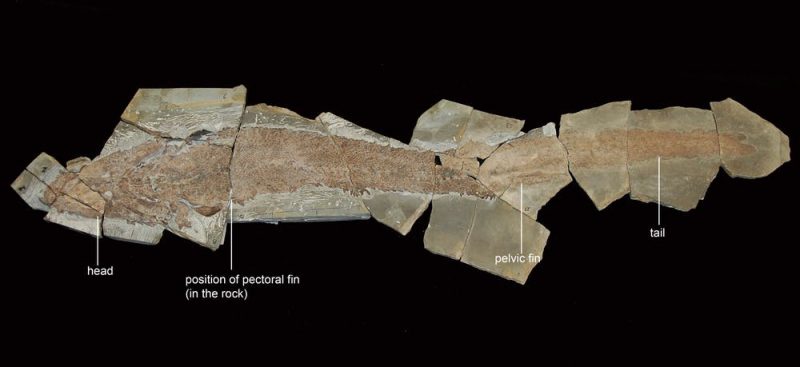
Working with researchers from the University of Quebec, in 2010 we discovered the first complete specimen of Elpistostege watsoni. This tetrapod-like fish lived more than 380 million years ago, and belonged to a group called elpistostegalians.

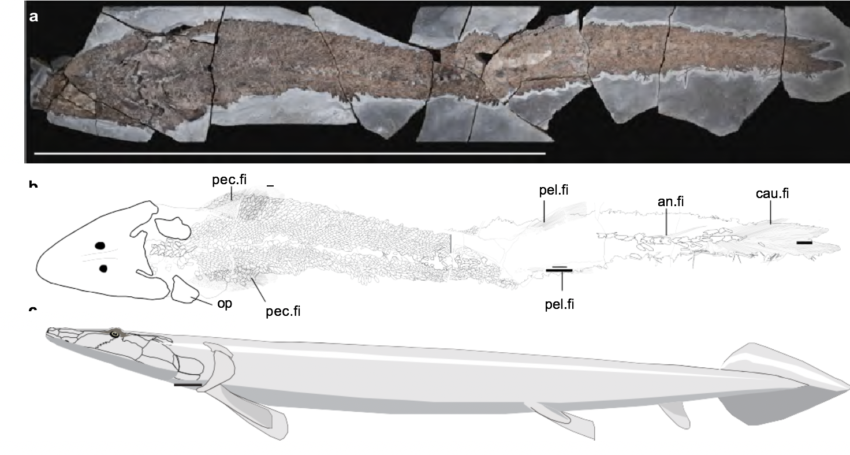
The near complete Elpistostege specimen with line drawing showing the outline of the skeleton and a life reconstruction.  The research was conducted on a fossil specimen that had been discovered in 2010.  Picture Credit: South Australia Leads/Flinders University

Our research based on this specimen, published today in Nature, suggests human hands likely evolved from the fins of this fish, which we’ll refer to by its genus name, Elpistostege.

Elpistostegalians are an extinct group that displayed features of both lobe-finned fish and early tetrapods. They were likely involved in bridging the gap between prehistoric fish and animals capable of living on land.

Thus, our latest finding offers valuable insight into the evolution of the vertebrate hand.

Elpistostege, from the Late Devonian period of Canada, is now considered the closest fish to tetrapods (4-limbed land animals), which includes humans. Image via Brian Choo/ The Conversation.

The best specimen we’ve ever found

To understand how fish fins became limbs (arms and legs with digits) through evolution, we studied the fossils of extinct lobe-finned fishes and early tetrapods.

Lobe-fins include bony fishes (Osteichthyes) with robust fins, such as lungfishes and coelacanths.

Elpistostegalians lived between 393–359 million years ago, during the Middle and Upper Devonian times. Our finding of a complete 1.57 meter (5-foot) Elpistostege – uncovered from Miguasha National Park in Quebec, Canada – is the first instance of a complete skeleton of any elpistostegalian fish fossil.

Prior to this, the most complete elpistostegalian specimen was a Tiktaalik roseae skeleton found in the Canadian Arctic in 2004, but it was missing the extreme end part of its fin.

When fins became limbs

The origin of digits in land vertebrates is hotly debated.

The tiny bones in the tip of the pectoral fins of fishes such as Elpistostege are called “radial” bones. When radials form a series of rows, like digits, they are essentially the same as fingers in tetrapods.

The only difference is that, in these advanced fishes, the digits are still locked within the fin, and not yet free moving like human fingers.

Our recently uncovered Elpistostege specimen reveals the presence of a humerus (arm), radius and ulna (forearm), rows of carpal bones (wrist) and smaller bones organised in discrete rows.

We believe this is the first evidence of digit bones found in a fish fin with fin-rays (the bony rays that support the fin). This suggests the fingers of vertebrates, including of human hands, first evolved as rows of digit bones in the fins of elpistostegalian fishes.

The pectoral fin of Elpistostege shows the short rows of aligned digits in the fin, an intermediate stage between fishes and land animals such as the early tetrapod Tulerpeton. Image via The Conversation.

What’s the evolutionary advantage?

From an evolutionary perspective, rows of digit bones in prehistoric fish fins would have provided flexibility for the fin to more effectively bear weight.

This could have been useful when Elpistostege was either plodding along in the shallows, or trying to move out of water onto land. Eventually, the increased use of such fins would have lead to the loss of fin-rays and the emergence of digits in rows, forming a larger surface area for the limb to grip the land surface.

Our specimen shows many features not known before, and will form the basis of a series of future papers describing in detail its skull, and other aspects of its body skeleton.

Elpistostege blurs the line between fish and vertebrates capable of living on land. It’s not necessarily our ancestor, but it’s now the closest example we have of a “transitional fossil”, closing the gap between fish and tetrapods.

Our new specimen of Elpistostege watsoni measures 5.15 feet (1.57 meters) long from its snout to the tip of its tail. Image via Richard Cloutier/ UQAR/ The Conversation.

The full picture

The first Elpistostege fossil, a skull fragment, was found in the late 1930s. It was thought to belong to an early amphibian. In the mid 1980s the front half of the skull was found, and was confirmed to be an advanced lobe-finned fish.

The original finds of the Elpistostege skull roof (left) and front half of the skull. The new specimen confirms these all belong to the one species. Image via Richard Cloutier/ UQAR/ The Conversation.

Our new, complete specimen was discovered in the fossil-rich cliffs of the Miguasha National Park, a UNESCO World Heritage site in Eastern Canada. Miguasha is considered one of the best sites to study fish fossils from the Devonian period (known as the “Age of Fish”), as it contains a very large number of lobe-finned fish fossils, in an exceptional state of preservation.

John Long, Strategic Professor in Palaeontology, Flinders University and Richard Cloutier, Professor of Evolutionary Biology, Université du Québec à Rimouski (UQAR).

This article is republished from The Conversation under a Creative Commons license. Read the original article.

Bottom line: A new study suggests that human hands likely evolved from the fins of Elpistostege, a fish that lived more than 380 million years ago.

Source: https://earthsky.org/

Possible Dinosaur DNA Find Sparks Jurassic Park Debate

Monday, March 16, 2020

The amazing possibility that Hollywood film franchise Jurassic Park could one day be a scientific reality, took a giant leap forward with a stunning discovery by a team of international scientists, China Daily reported.

According to Alida Bailleul, a paleontologist from the Chinese Academy of Sciences who led the study, the scientists may have identified traces of genetic material in an exceptionally well-preserved dinosaur fossil — fueling fantasies that mankind might one day be able to resurrect the ancient reptiles.

The specimen, which comes from the skull of a 74-80 million year old baby duck-billed dinosaur from North America called Hypacrosaurus, appears to contain fossilized cell nuclei and chromosomes within preserved bone cartilage, the report said.

'I couldn't believe it, my heart almost stopped beating,' Bailleul said of the first time she observed the fossil under a powerful microscope.

Bailleul noticed shapes consistent with cartilage cells. Within these, she found further structures resembling cell nuclei and chromosomes, the slender rods that contain a cell's DNA, the report said.

'Seeing exquisitely preserved microscopic structures that resembled the specific cell types found only in cartilage, and which would have been present in the living organism in these tissues, led us to hypothesize that cellular preservation may have extended to the molecular level,' said Bailleul.

Through staining and immunological techniques, the team successfully determined that the fossilized cells still contain remnants of proteins, the report said.

The study was published in the National Science Review and included researchers from the Chinese Academy of Sciences in China, North Carolina State University and Chapman University in the United States, Dalhousie University in Canada and the University of Lund in Sweden.

More studies need to be done to determine if the preserved proteins belong to the deceased dinosaur itself, or if they arrived through other lifeforms, the report said.

Mary Schweitzer, a paleontologist from the University of Lund, who contributed to the study, said that some clues could rule out a tainted sample.

'These tests show how specific the antibodies are to each type of protein, and support the presence of collagen II in these tissues,' Schweitzer says. 'Additionally, bacteria cannot produce collagen, which rules out contamination as the source of the molecules.'

While the fossil provides a rare view into the structure of ancient cells, the chances that any genetic material has survived intact are vanishingly small, the report said.

The DNA molecule is fragile and breaks down easily, with degradation sped up by exposure to heat, water, sunlight and oxygen, the report said.

Source: https://menafn.com/

Pages