Blogs

Jurassic Park: What Happened To Samuel L. Jackson's Mr. Arnold

Sunday, August 2, 2020

Samuel L. Jackson had a small but memorable role In Jurassic Park. Here's what became of his character, the chain-smoking chief engineer, John Arnold.

In Jurassic Park, Samuel L. Jackson had a small but memorable role as John "Ray" Arnold before he was killed off-screen. Steven Spielberg's 1993 blockbuster dazzled audiences worldwide by bringing realistic-looking dinosaurs to the big screen. It spawned a franchise that includes the upcoming 6th film, Jurassic World: Dominion, directed by Colin Trevorrow. Jurassic Park's stars Sam Neill and Jeff Goldblum returned to headline two of the sequels, and both, along with Laura Dern, will reprise their iconic roles in Jurassic World: Dominion; however, Sam Jackson's Arnold was a one-and-done character who perished in the original film.

John Arnold was the chief engineer of Jurassic Park's computer systems, and he managed the theme park's automated rides, paddocks, and other vital services. Arnold was known by the nickname Ray, likely so that his first name wouldn't conflict with John Hammond (Richard Attenborough), the eccentric billionaire owner of Jurassic Park. Although Samuel L. Jackson was still a year away from his breakout role as philosophical hitman Jules Winnfield in Quentin Tarantino's Pulp Fiction, fans fondly remember Mr. Arnold because of the practical advice he offered Hammond from Jurassic Park's control room, the ever-present cigarette dangling from his mouth, and his signature catchphrase, "Hold onto your butts!" Arnold was also frustrated by the slovenly Dennis Nedry (Wayne Knight), the park's programmer — but Ray had no idea that Nedry was planning to steal and sell dinosaur embryos.

Sadly, John Arnold died during Jurassic Park's lethal dinosaur outbreak. The one-two punch of a hurricane striking Isla Nublar and Nedry's sabotaging of the park's systems literally left the control room in the dark. Because Dr. Alan Grant, Dr. Ian Malcolm, and Hammond's grandchildren Lex (Ariana Richards) and Tim (Joseph Mazzello) were all trapped in the park with unleashed dinosaurs, including Velociraptors, Hammond demanded that Arnold gets the park's computers back online. This involved rebooting the entire park's systems, something that hadn't been tested and Arnold was skeptical about. Still, Arnold went to the maintenance shed to perform a system-wide reboot while everyone else in the control room went to the security bunkers.

Arnold was relieved when he made it to the maintenance shed unharmed, but that was the last fans saw of him — until Dr. Ellie Sattler and Robert Muldoon (Bob Peck) realized he hadn't returned and went to look for him. Sattler and Muldoon were stalked by Velociraptors en route to the shed, but Ellie made it to the building while the clever raptors trapped and killed Muldoon. In the shed, Sattler found what was left of Arnold: his severed arm. Sadly, the raptors killed Ray inside the shed and literally tore him apart.

John Arnold's gruesome death by Velociraptors was originally intended to be shown on-screen. Unfortunately, the real-life Hurricane Iniki tore into Hawaii during production and destroyed Jurassic Park's sets, an eerie example of life imitating the film's art. Regrettably, this meant that Jackson was unable to complete filming his death scene and it was changed so that Ellie finds his dismembered arm instead, which was still a scary moment and effectively sold Arnold's heroic sacrifice to save the park. Although audiences and Samuel L. Jackson were denied a gory death for John Arnold like some of the other characters received, he lives on as part of Jurassic Park's legacy.

Source: https://screenrant.com/

Primoptynx poliotauros: 55-Million-Year-Old Fossil of Large-Sized Owl Found in Wyoming

Saturday, August 1, 2020

The 55-million-year-old skeleton of Primoptynx poliotauros. Image credit: Senckenberg Research Institute / Tränkner.

A new genus and species of owl that lived 55 million years ago (Eocene epoch) has been identified from a partial skeleton found in Wyoming, the United States. The discovery is reported in a paper in the Journal of Vertebrate Paleontology.

Named Primoptynx poliotauros, the ancient owl species was about 60 cm (23.6 inches) tall.

It belongs to a group of owls closely related to the extinct family Protostrigidae.

“The fossil owl was about the size of a modern snowy owl (Bubo scandiacus). However, it is clearly distinguished from all extant species by the different size of its talons,” said lead author Dr. Gerald Mayr, an ornithologist in the Senckenberg Research Institute and Natural History Museum Frankfurt.

“While in present-day owls the talons on all toes are approximately the same size, Primoptynx poliotauros has noticeably enlarged talons on its hind toe and second toe.”

Dr. Mayr and colleagues hypothesize that Primoptynx poliotauros used its feet to dispatch prey items in a hawk-like manner, whereas living owls kill prey with their beak.

“Owls today have four toes with claws of equal size to catch relatively small preys and kill them with the beak,” said co-author Dr. Thierry Smith, a paleontologist at the Royal Belgian Institute of Natural Sciences.

Primoptynx poliotauros has a longer first and second toe, as seen in hawks and other members of the family Accipitridae.”

“Those more developed toes are used to pin down prey, which are punctured by the talons. So it was an owl that hunted like a hawk on medium-sized mammals.”

“The lifestyle of this extinct owl clearly differed from that of its modern relatives,” Dr. Mayr added.

The partial skeleton of Primoptynx poliotauros was found by U.S. paleontologists at Bighorn Basin in Wyoming about 30 years ago.

The fossil shows that during the Early Eocene there were already many species of owls, of different sizes, which occupied different ecological niches.

“The success of the owls runs parallel to that of the mammals, which became very diverse after the fifth mass extinction, which wiped out the dinosaurs,” the researchers said.

“The later extinction of Primoptynx poliotauros and other proto-owls may have been due to the emergence of daytime birds of prey in the Late Eocene.”

“It is not clear why owls changed their hunting technique in the course of their evolution,” Dr. Mayr said.

“However, we assume that it may be related to the spread of diurnal birds of prey in the Late Eocene and Early Oligocene, approximately 34 million years ago.”

“Competition for prey with diurnal birds of prey may have triggered feeding specializations in owls, possibly also leading to these charismatic birds’ nocturnal habits.”

The discovery of Primoptynx poliotauros also revealed a high level of diversity among the owls in the Early Eocene of North America: from the small species Eostrix gulottai, measuring a mere 12 cm (4.7 inches), to the newly-discovered large species.

_____

Gerald Mayr et al. Skeleton of a new owl from the early Eocene of North America (Aves, Strigiformes) with an accipitrid-like foot morphology. Journal of Vertebrate Paleontology, published online July 28, 2020; doi: 10.1080/02724634.2020.1769116

Source: www.sci-news.com/

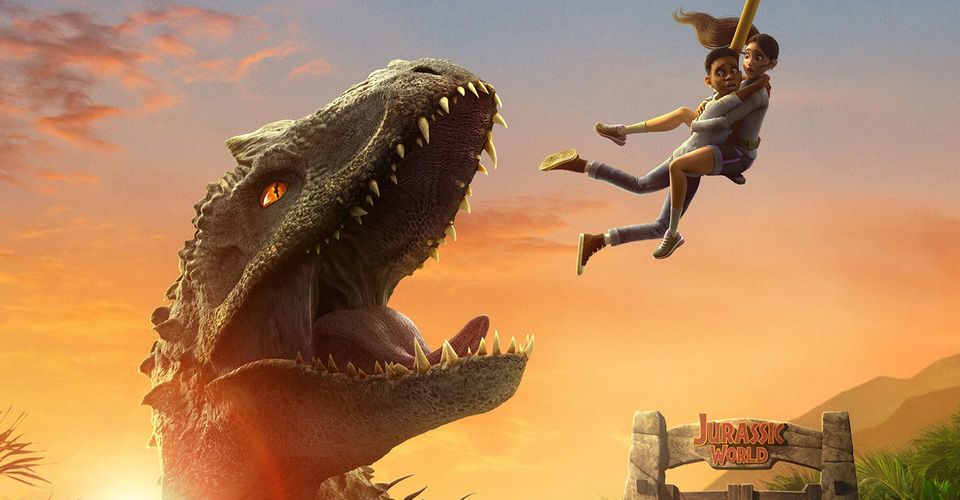
Netflix's Jurassic World Cartoon Trailer Puts Kids In Serious Danger

Saturday, August 1, 2020

Jurassic World: Camp Cretaceous poses the question of 'what's the worst possible decision the park owners could possibly make?'

While the Jurassic Park films have placed children in perilous situations before, the latest installment of the franchise may up the game. The trailer for the upcoming animated series Jurassic World: Camp Cretaceous shows that the owners of the dinosaur park have learned nothing from past disasters, other than new ways to get people killed.

In 2015, Universal relaunched the Jurassic Park franchise with Steven Spielberg serving as a producer and Colin Trevorrow, then known for his independent film titled Safety Not Guaranteed, sitting in the director's chair for the new film. Set after the events of the previous Jurassic Park films, Jurassic World offered audiences a brief glimpse at a fully functioning dinosaur amusement park before a newly created species called the Indominus Rex breaks free from its paddock and unleashes chaos upon the visitors. Although the film received criticism from movigoers, it proved to be a box office hit, grossing over $1 billion worldwide, resulting in two feature-length sequels in addition to an augmented reality-based game available on iOS and Android mobile devices and rumored video game for current and next-gen consoles.

Now, DreamWorks and Netflix are partnering to expand the franchise with the new CG animated series Camp Cretaceous that is set to debut on Netflix in September. Produced by Spielberg and Trevorrow, Camp Cretaceous will follow a group of six kids attending summer camp at the park just as the disastrous events of the first Jurassic World film unfold. Much like the films, the main characters of the cartoon quickly go from being in awe of the dinosaurs to fleeing for their lives.

Featuring the voice talents of Paul-Mikél Williams, Jenna Ortega, Ryan Potter, Raini Rodriguez, Sean Giambrone, Kausar Mohammed, Jameela Jamil, and Glen Powell, Camp Cretaceous' first season will consist of eight episodes. The animated series is the latest move to expand the Jurassic Park franchise, with producer Frank Marshall stating that the forthcoming installment of the film franchise, titled Jurassic World: Dominion, will usher in a "new era" of Jurassic Park movies. Currently scheduled to be released in theaters on June 11, 2021, Jurassic World: Dominion will see returning stars Chris Pratt and Bryce Dallas Howard join forces with Sam Neill, Laura Dern, and Jeff Goldblum, the trio of stars from the original 1993 film.

With Jurassic World: Camp Cretaceous being a CG animated series, it would be understandable if most fans assumed the show would be a relatively lighter entry in the franchise. However, the latest trailer from Netflix indicates the creative team behind the project will not shy away from putting the kids in life-threatening danger.

Of course, children have often been considered one of the weaker elements of the Jurassic Park films, with even some of the most ardent fans of the franchise often noting that the kids frequently make questionable decisions or come across as annoying. So, while it may come as a surprise to some that Camp Cretaceous appears to be darker than anticipated, others might relish the chance to see kids meet their end in the jaws of Indominus Rex, though it remains to be seen if the series will really go that far.

Jurassic World: Camp Cretaceous premieres on September 18, 2020, on Netflix.

Source: Netflix

The Cambrian Creatures That Grew Up Over the Course of 28 Bodies

Friday, July 31, 2020

E. kingii never got huge, but it kept on growing. JOHN ALAN ELSON/CC BY-SA 3.0

Trilobites slipped out of one exoskeleton and built another, over and over and over again.

WITH ANY LUCK, HUMANS CHANGE a lot over the course of our time on Earth. As we grow out of our teeny onesies and our teenage styles, the aging process can feel a lot like shedding a past self. But other creatures literally do that: step out of their bodies and grow into a new one. For trilobites—marine arthropods that appeared in the Cambrian period, more than 500 million years ago—molting was a key part of growing up.

Trilobites could crawl out of their exoskeletons more than two dozen times in a single lifespan, typically by arching their bodies, lodging themselves into the sediment, and pushing out of the exoskeleton through the head, which separated into pieces. “The animal pulled itself out of its molt and walked out through the opening,” says Melanie Hopkins, an associate curator of paleontology at the American Museum of Natural History. Hopkins recently researched how a species called Elrathia kingii changed over the course of many, many molts.

In Utah, Hopkins found oodles of E. kingii. M. HOPKINS/© AMNH

The scientific appeal of E. kingii comes from its frequent appearance in the Wheeler Formation in western Utah. There, it’s everywhere: “I could find a lot of well-preserved specimens in a really small amount of rock,” Hopkins says. (In most other respects, such biology or nearby ecology, this particular species of trilobite isn’t all that special—no offense, E. kingii.) The Wheeler Formation has sparse vegetation, which makes it easy for scientists to scour, and the fossils happen to be reddish or brown—darker than the surrounding rock. E. kingii is abundant in those layers, and Hopkins and her crew gathered over 450 specimens, and collected data from 228 of them. Back in the lab, they cleaned them up and started measuring.

After molting and scuttling away, E. kingii would take in a bunch of water. The new exoskeleton would form around them, like custom-built armor. “They would swell up, and then start to deposit calcium carbonate back into its outermost layer,” Hopkins says. (Something similar happens with present-day spiny lobsters.) In that process, Hopkins found, the animals would often grow new thoracic tergites—segments that run down the length of the body and look like vertebrae. (Segments like these helped trilobites curl up into tiny balls for safety.) Over time, the animal’s eyes also slowly moved closer to the back of its head, and sideways. As Hopkins describes in a new article in Papers in Paleontology, the youngest specimens of E. kingii would have measured a wee 0.02 inches long. Over the course of 28 molts, the creature reached a maximum body length of a little less than 1.5 inches. Hopkins found that, for the early part of development, the number of segments was a good indicator of age. Over time, the animals stopped adding segments. To gauge the ages of individuals with the same number, scientists look at the growth rate of the head, instead: The bigger the head, the older the animal.

Multiple species sometimes mingle in a single slab of rock. M. HOPKINS/© AMNH

There are still mysteries to the ancient life and times of trilobites, including how frequently E. kingii molted, and how long it lived. (Some contemporary arthropods, including some crab species, only live a few years, for instance, while some lobsters can survive for many decades.) A number of factors may have affected the growth rate and frequency of molting, including temperature and what kind of food was available. Other trilobite species that got more hulking may have gotten better at dodging predators, and therefore managed to stay alive longer. (The largest known trilobite—found in Manitoba, Canada, and dubbed Isotelus rex, or “King of the Trilobites”—measured a slightly mind-boggling 28 inches long.)

Hopkins was intrigued to see that, unlike humans, E. kingii didn’t seem to stop growing after it left its wild youth behind. In fact, it did more of its growing later. “They stopped adding body segments at 0.2 inches,” she says. “All of the rest of the growth happened as an adult.” She says it might seem counterintuitive because of how humans grow—markedly in childhood and adolescence, and then hardly at all. Maybe there’s a lesson to be learned in how E. kingii kept moving forward, again and again and again.

Source: www.atlasobscura.com/

8 Canon Facts About Jurassic Park/World Not Shown In The Movies

Wednesday, July 29, 2020

Jurassic Park/World has built a cinematic world with its interesting concept. Here are some facts about the series that are not shown in the films.

With five movies in the franchise, a short film, and another upcoming sequel, the Jurassic franchise has had many years under its belt with quite a bit of them happening in between the films, especially in the massive gap between the Jurassic Park movies and the Jurassic World movies.

This has led to some pieces of lore occurring off-screen and only told through canon pieces of material on official Jurassic World websites, books, deleted scenes, and more created by Universal Pictures. Some of these lore pieces actually end up providing surprising revelations about the movie franchise.

8 - Legacy Of The Queen Of Jurassic Park

Though it is not audibly stated in the Jurassic World movies, it was confirmed that the Tyrannosaurus Rex that wiped out the velociraptor pack in the very first Jurassic Park movie is, in fact, the same Rex shown in both Jurassic World movies with the biggest hint of this being her series of scars she obtained from her battle with the raptors.

This Rex has become an icon to the franchise, acting as a dinosaur anti-hero who has even gotten her own unofficial name amongst fans. A name lifted straight out of Michael Crichton's novel: Rexy. She would remain the queen of Isla Nublar until recaptured to be a part of Jurassic World.

7 - Vic Hoskins' History With The Park

Vincent D'onofrio's antagonist character from Jurassic World did not begin his relationship with InGen and the Masrani Corporations in that film. According to the official Jurassic World sites, he was heavily involved in the cleanup of the fallout of the original trilogy.

Hoskins and his containment team tracked down and removed the escaped pteranodons that escaped Isla Sorna from Jurassic Park III and he was in charge of rounding up all still living dinosaurs from Jurassic Park including the Brachiosaurus and the aforementioned Rexy.

6 - What Happened To The Dino-Soar Boat?

In Jurassic Park III, the plot begins via a foolish attempt to parasail off the coast of Isla Sorna leading to Eric Kirby and his guardian Ben to land on the dinosaur infested island. The movie only shows the boat vanish into the fogs of the island then re-emerge with the men on board gone and the boat damaged.

The movie never explains what happened to the crew and some fans even speculate that it was an attack from the Spinosaurus since it was also an aquatic animal. However, the script reveals in an alternate ending that was deleted due to the troubled production that it was a flock of pteranodons that took out the boat.

5 - The Fifth Member Of The Raptor Squad

InGen's Project I.B.R.I.S. was what brought about Chris Pratt's Owen Grady and his raptor training program, leading to the Raptor Squad which consisted of Blue, Charlie, Delta, and Echo, four sisters who would become Grady's surrogate daughters in a way before three of them were killed during the fall of Jurassic World.

However, there was a fifth velociraptor that was not shown on screen: Subject V-2. Bearing an uncanny resemblance to the dull-colored raptors from the original Jurassic Park, V-2 did not share the same level of compliance as her sisters. She was hyper-aggressive and cunning, much like The Big One from the first movie which led to her being euthanized.

4 - The Secret Origins Of The Spinosaurus

Jurassic Park III introduced the dreaded Spinosaurus to the series, a monstrous creature that stalked the main heroes throughout the movie. Many questioned where this genetic clone came from, why wasn't it on InGen's official list of assets, etc. Well, there are answers to all those questions.

Dr. Henry Wu was attempting to tamper the genetic code of the cloning process so the dinosaurs would feature feathers but this resulted in an "accident" that was abandoned on Isla Sorna years after the San Diego incident, thus explaining why the creature wasn't in The Lost World: Jurassic Park. The Spinosaurus could be considered the precursor hybrid to the Indominus Rex.

3 - Claire's Origin Story

Bryce Dallas Howard's Claire Dearing has become one of the franchise's most iconic characters due to her still-evolving personality and character arc across both Jurassic World movies.

Well, fans of the character can also learn her backstory before the events of Jurassic World (2015) in the form of a prequel novel titled The Evolution Of Claire: Jurassic World. The story shows Claire as a young adult beginning her internship with Simon Masrani, her close relationship with her family, and adds even more depth to the character that explains why she was so closed-minded in her first movie appearance.

2 - The Saddest Death Is Even Sadder

Easily the most shocking scene that fans witnessed in Jurassic World: Fallen Kingdom is the heartbreaking death of the Brachiosaurus when it succumbs to the lava from Isla Sorna's Mt. Sibo eruption. It was a dark and truly effective scene that made many audience members cry in their seats the first time watching it.

This scene was made even sadder when the filmmakers confirmed that the Brachiosaurus that dies is another veteran much like Rexy: she is the original Brachiosaurus seen by Alan Grant and Ellie Sattler in the original Jurassic Park. This revelation was meant to show that her death signifies the shattering of John Hammond's original dream of Jurassic Park.

1 - How The Infant's Leg Was Broken

The Lost World: Jurassic Park has become infamous for its multitude of lost, abandoned, or deleted scenes; one of these scenes actually explained what happened to the infant Rex after it was taken by Roland Tembo. In the final product, it is left to believe that it was Roland who broke the young Rex's leg to make it cry out for its parents.

This is simply not the case as it is revealed in a deleted scene that a drunken Peter Ludlow clumsily stumbled and fell onto the creature thus breaking its leg which only makes the character even more despicable. His comeuppance in the climax is actually even more satisfying seeing how the Buck Rex breaks Ludlow's leg allowing the infant to get payback.

Source: https://screenrant.com/

What Did SUE The T. Rex Look Like When Alive? New Field Model Shows Dino With Skin, Eyes

Friday, July 31, 2020

Of course, the model also shows SUE chomping down on another dinosaur.

Dinosaur lovers can get a new view of SUE the T. rex for several weeks at the Field Museum.

The museum will display a model of the famous fossil — but the model will show what SUE could have looked like while alive, with dark eyes and brown skin.

Of course, the model also shows SUE chomping down on another dinosaur.

The model — nicknamed “Fleshy” — is scientifically accurate and was made by scientific and artistic experts, according to the Field Museum.

Fleshy will be on display at the field until Aug. 18 and will then be shipped out for a touring exhibition, “SUE: the T. rex Experience.”

SUE has long been among the Field’s most popular displays and is known for being the largest, most complete T. rex to be found. The dinosaur also maintains a snarky presence on Twitter.

SUE is 40 feet long and 13 feet tall. The dinosaur has its own suite at the Field Museum, where visitors can also experience what SUE’s breath might have smelled like or skin could have felt like.

The Field Museum reopened earlier in July with restrictions to limit the spread of coronavirus. It’s open 9 a.m.-5 p.m. all days but Tuesdays and Wednesdays, when it closes for deep cleaning.

People who want to visit can buy tickets online.

Source: https://blockclubchicago.org/

Jurassic World: Camp Cretaceous Trailer: The Mighty T-Rex Is Back

Wednesday, July 29, 2020

It may take a while before Jurassic Park fans can watch the next long-featured installment in the franchise, Jurassic World: Dominion. But life, ah, as they say, finds a way, and this year fans will get their share of dinosaurs thanks to Jurassic World: Camp Cretaceous. Netflix and DreamWorks Animation have released the first trailer for the upcoming animated series. The teaser focuses on the adventures of six teenagers on Isla Nublar alongside the island’s dangerous inhabitants. The eight-episode story will premiere in late summer.

You can watch the official Jurassic World: Camp Cretaceous trailer here below.

The official synopsis of Jurassic World: Camp Cretaceous reads:

“Set against the timeline of the blockbuster film Jurassic WorldJurassic World: Camp Cretaceous follows a group of six teenagers trapped at a new adventure camp on the opposite side of Isla Nublar. When the events of the film unfold and dinosaurs are unleashed across the island, each kid realizes their very survival rests on the shoulders of themselves and their fellow campers. Unable to reach the outside world, our six teens will go from strangers to friends to family as they band together to survive the dinosaurs and uncover hidden secrets so deep they threaten the world itself.”

The voice cast includes Paul-Mikél Williams as Darius, Jenna Ortega as Brooklynn, and Ryan Potter as Kenji. Additionally, Raini Rodriguez as Sammy, Sean Giambrone as Ben, Kausar Mohammed as Yaz, Jameela Jamil as Roxie, Glen Powell as Dave

The series sees Scott Kreamer and Lane Lueras serve as both showrunners and executive producers. Steven Spielberg, Frank Marshall, and Colin Trevorrow will serve as executive producers.

Jurassic World: Camp Cretaceous will premiere on Netflix on September 18. The streaming network has also released a set of promotional photos from the series; check it out below!

What do you think about the Jurassic World: Camp Cretaceous trailer? Will you give this series a try? Let us know in the comments section below.

Recommended Reading: Jurassic Park: The Original Novel

We are a participant in the Amazon Services LLC Associates Program. This affiliate advertising program also provides a means to earn fees by linking to Amazon.com and affiliated sites.

Source: www.comingsoon.net/

Why Jurassic World Is More Successful Than Jurassic Park At The Box Office

Wednesday, July 29, 2020

As popular as the Jurassic Park trilogy was, the Jurassic World movies have proven more successful at the box office. Here's the reason why.

As popular as the Jurassic Park trilogy was, the Jurassic World movies have proven more successful at the box office. 18 years after he invented the summer blockbuster with Jaws, Steven Spielberg changed the game again with his classic tale of mankind's arrogance in the face of the powers of creation and mother nature. The original Jurassic Park would go on to become the highest-grossing film ever upon its initial release in 1993, and continues to break records to this day, even topping the box office 27 years later thanks to theaters showing it and other classic movies in lieu of new releases due to the ongoing COVID-19 pandemic.

Spielberg's movie was so beloved, it's since given rise to a pair of direct followups, in addition to the Jurassic World sequel trilogy, which kicked off in 2015. Directed by Colin Trevorrow, the first Jurassic World picks up from the Jurassic Park films in real-time, and fulfills the late John Hammond's vision of a fully operational - and highly profitable - dinosaur theme park. However, when corporate greed and hubris prompt the park's owners and scientists to create a hybrid dinosaur in an effort to boost attendance, it goes terribly wrong and sets in motion a chain of events that will forever change life as people know it.

The trilogy will conclude with the upcoming Jurassic World: Dominion, a sequel that moves the story from an island to a global setting after the second film in the series, 2018's Fallen Kingdom, ended with the surviving dinosaurs of Isla Nublar escaping into the world. Despite the mixed response to the first two Jurassic World movies, anticipation is high for Dominion thanks to a combination of its setup and the return of Jurassic Park legacy actors Sam Neill, Laura Dern, and Jeff Goldblum. As such, the film is expected to perform nearly as strongly at the box office as its predecessors, thusly cementing Jurassic World as the bigger of the two Jurassic trilogies, commercially-speaking.

Jurassic World Is A Bigger Franchise Than Jurassic Park

Not adjusting for inflation, the three Jurassic Park movies (Jurassic ParkThe Lost World: Jurassic Park, and Jurassic Park III) have grossed just over $2 billion at the global box office, as opposed to the $2.97 billion taken in between Jurassic World and Fallen Kingdom alone. Even if Dominion suffers a significant drop-off from the previous films in the trilogy, it should still bring in somewhere in the vicinity of $900 million to $1 billion, putting the trilogy at a cumulative gross in the region of $4 billion.

Of course, when you adjust for inflation, Jurassic Park is easily the single biggest movie in the entire Jurassic franchise, with a domestic gross of $837 million (as opposed to $705 million for Jurassic World). The Lost World's U.S. box office returns are similarly bigger than Fallen Kingdom's when adjusted ($455 million vs. $418 million), though the latter may still be the higher-grossing one thanks to its massive international haul. But even after taking that into account, the Jurassic World trilogy is still on-course to outperform the Jurassic Park series thanks to their respective third installments.

Jurassic Park's Sequels Hurt The Franchise

Unlike Jurassic ParkThe Lost World was a critical disappointment and didn't perform near as well worldwide, taking in $619 million or nearly a third less than Jurassic Park during its original theatrical run four years earlier. In fairness, that wasn't unexpected; up to that point, even well-received sequels to box office smash-hits typically grossed noticeably less than their predecessor, like what happened with The Empire Strikes Back and Star Wars. However, whereas Return of the Jedi would go on to outgross The Empire Strikes BackJurassic Park III took in significantly less than The Lost World ($369 million) when it arrived in 2001, no doubt due to the latter's middling reception, combined with the movie's own lackluster critical response.

While The Lost World and Jurassic Park III both have their fans, the sequels are (arguably) fairly forgettable compared to the first Jurassic Park: they struggle to continue the film's story in a compelling manner, their human characters are generally less memorable than those from the first movie, and even their special effects sometimes fall short of the bar set by the original film, despite having Spielberg and fellow VFX guru Joe Johnston at the helm. Jurassic Park IV (which would become Jurassic World) was actually put into development before Jurassic Park III came out, but by that point the brand had already been damaged, so it's little wonder the sequel fell into development limbo for as long as it did.

Jurassic World Benefits From Nostalgia - And An Era Of Franchise Rule

By the time Jurassic World started to move forward with pre-production in 2013, the movie landscape was much changed from when Jurassic Park III had come out. Obviously, while franchises were already a thing when the Jurassic Park trilogy began in the 1990s, they weren't the draw they were in the wake of the Marvel Cinematic Universe's success with The Avengers in 2012 and the subsequent rise of shared universes across Hollywood. Even before that happened, long-running properties like Fast & Furious and Mission: Impossible had recently started to enjoy newfound levels of commercial success, so the way had already been cleared for the Jurassic franchise to make a triumphant return.

Jurassic World opened the same year as the first of Disney's Star Wars sequels, The Force Awakens, and each of them was able to successfully utilize nostalgia for their respective properties. Much like the divisive Star Wars prequel trilogy had either faded from audiences' memories or been re-evaluated by many die-hard fans when The Force Awakens premiered, nostalgia for Jurassic Park was glowing again when Jurassic World arrived thanks to people having either forgotten the previous sequels or developed a more favorable outlook towards them over time. More than that, both films were able to use the legacy-quel formula to tap into that nostalgia and better remind everyone what they loved about these franchises (while also playing down the not-so-beloved parts).

Is Jurassic World A Better Franchise Than Jurassic Park?

In terms of quality, one would probably have to give the Jurassic Park trilogy the advantage over the Jurassic World movies. Admittedly, comparing them is a tricky task; the first two Jurassic World films have their highs (strong action sequences, intriguing sci-fi concepts) and lows (the sexism in Jurassic WorldFallen Kingdom's derivative story elements), but fall somewhere in the middle in terms of the overall franchise. Things are more skewed with the Jurassic Park trilogy since the first movie is so much better than anything else in the whole series, yet Jurassic Park III is considered by many to be the property's low point and The Lost World is somewhere in the same realm as the Jurassic World films.

To be fair, the outlook could change after Dominion is released. If the sequel manages to both deliver on the potential of last year's Battle at Big Rock - a short film helmed by Trevorrow and set between Fallen Kingdom and Dominion - and fulfill the promise Trevorrow showed with his unmade script for Star Wars 9, then Jurassic World may end up being the better trilogy based on the averages of all three movies. Even then, though, there's no topping the original Jurassic Park as a creative accomplishment (much less for its sheer cultural impact), so it's probably safe to call the game early in that regard.

Source: https://screenrant.com/

Inside The Original Jurassic Park trilogy

Thursday, July 30, 2020

In 1993, the film Jurassic Park promised to take audiences back to the time when dinosaurs walked the Earth — albeit in an isolated theme park where the humans evaluating the place fall prey to Murphy's Law. Director Steven Spielberg's sci-fi action-adventure spliced together what he called "a helluva yarn" with Oscar-winning special effects that still wow audiences today. Spielberg knew from the outset that the beasts were the draw: "These were the stars of the picture, these dinosaurs. And if that didn't work, nothing about Jurassic Park could have worked," Spielberg recalled in an Entertainment Weekly oral history of the film.

Like a nine-ton T. Rex in a fossil exhibit, Jurassic Park smashed box office records at the time, earning $47 million its first weekend and later more than $900 million worldwide. It also left an indelible footprint on pop culture, hatching two sequels — 1997's The Lost World: Jurassic Park and 2001's Jurassic Park III – and inspiring 2015's Jurassic World, 2018's Jurassic World: Fallen Kingdom, and Jurassic World: Dominion, scheduled for release in 2021. Even after all these years, the original film, now a part of the National Film Registry of the Library of Congress, thrills thanks to its mix of awe, suspense, jolts, and characterization that nevertheless keeps the lifelike dinosaurs the main attraction. While we wait for what else the newer franchise has on the menu, let's go inside the original Jurassic Park trilogy.

The germ of an idea

Tracking the inspiration for Jurassic Park leads to Spielberg's love of dinosaurs as a child. "I was more interested in the dinosaurs in King Kong than I was in King Kong himself," recalled the director, who even collected cast-iron dinosaur figures as a boy. "I thought the T. rex was one of the most awesome dinosaurs of the fossil record!"

In the late 1980s, Spielberg met author and screenwriter Michael Crichton, a Harvard Medical School graduate whose novels (The Andromeda Strain, The Terminal Man, Binary, Congo) often hinge on problems with science. As the two developed a script based on Crichton's time as a medical resident (a project that would become the TV series ER), Crichton mentioned another idea of his: a novel about dinosaurs brought to life through discovered samples of DNA. Considering the gene-editing technology CRISPR, unveiled in 2012, the concept was certainly ahead of its time. The premise instantly piqued Spielberg's interest, and before Crichton had even finished the novel, Universal Studios paid the author $2 million for the film rights and a first draft of the screenplay. Screenwriter David Koepp (Death Becomes Her, 1996's Mission: Impossible, 2002's Spider-Man) later came on board. He streamlined the science and, with Spielberg, came up with the animated Mr. DNA (voiced by Greg Burson, Tiny Toon Adventures) to explain how the fictional theme park spawned dinosaurs in a lab.

Casting the film

In Jurassic Park, wealthy businessman John Hammond (Richard Attenborough) invites paleontologist Dr. Alan Grant (Sam Neill), paleobotanist Dr. Ellie Sattler (Laura Dern), and mathematician Dr. Ian Malcolm (Jeff Goldblum) to the fictional island of Isla Nublar, off Costa Rica, to tour his live-dinosaur theme park and certify that it's safe for the public. Spielberg offered Harrison Ford the role of Grant, but Ford turned it down, paving the way for Neill, who "hadn't read the book, knew nothing about it, hadn't heard anything about it." Laura Dern said yes in part because Nicolas Cage, who had just wrapped Wild at Heart with her, encouraged her to do it.

Jim Carrey gave a "terrific" audition for the ever-quotable Dr. Malcolm, said casting director Janet Hirshenson, but she "loved the idea" of Goldblum right away. As for Hammond, Crichton initially liked Sean Connery, whom Crichton directed in 1978's The Great Train Robbery, based on his 1975 novel. Plus, Spielberg liked Attenborough's ambivalence: "I was much more interested in portraying Hammond as a cross between Walt Disney and [philanthropist and politician] Ross Perot," the director said. "Attenborough sort of keeps you off balance, second-guessing what his motives are."

Fake dinosaurs but a real hurricane

Hawaii, specifically the gorgeous island of Kauai, hosted part of the production. Jurassic Park's locations include Manawaiopuna Falls, where the helicopter lands with Hammond and his guests, and the Puu Ka Ele Reservoir, where the actors gaped at roaming Brachiosaurus that the special effects team added later. (Red Rock Canyon in California's Mojave Desert filled in for the Montana Badlands, where viewers first see Alan and Ellie at a dig site.)

In the film, a tropical storm strikes the island, ramping up the suspense as the power fails. In real life, the production faced Hurricane Iniki, which made landfall at Kauai in September 1992 with winds of over 140 mph. Spielberg turned on the hotel TV early one morning to see the weather report, complete with "the icon of a cyclonic hurricane moving directly towards us. It was like a movie." The cast and crew huddled in a hotel ballroom for safety, although some shot footage of the approaching storm that ended up in the final film. "[Producer] Kathleen Kennedy got a lot of people off the island and onto army transports right before the hurricane hit, but it exfoliated the entire island. It was really bad," recalled Wayne Knight (TV's Seinfeld), who played industrial saboteur Dennis Nedry. More than 1,400 houses were destroyed, and six people died.

Larger-than-life effects

Bringing Jurassic Park's dinosaurs to life took a multifaceted approach that netted the film three Academy Awards for its visual effects, sound, and sound effects editing. Legendary creature designer and special effects creator Stan Winston (Aliens, Terminator 2: Judgment Day) created large-form models of dinosaurs, including one of Tyrannosaurus rex that was nearly 20 feet tall. "I used to be enthralled with dinosaurs like a lot of kids," Jeff Goldblum recalled to EW. "So cut to me in Hawaii coming on the set and seeing that thing already fully there and the puppeteers — one working the eyes, one doing the breathing. For all the world, it was a live dinosaur sitting there. Amazing."

Stop-motion artist Phil Tippett (RoboCop) animated miniatures of Winston's designs for some of the action sequences; he sent the animators to mime classes to help make the dinosaurs' movements more fluid. The production also used computer-generated dinosaurs, notably during the Gallimimus stampede. When Spielberg asked Tippet how he felt after seeing the CG footage of the stampede, "I said, 'I think I'm extinct,'" Tippett recalled. "He said, 'That's a great line. I'm putting that in the movie.'" As for the dinosaurs' snorts, roars, and other sounds, sound designer Gary Rydstrom said he wanted to "stay organic," so he used sounds from real animals — about 20 or 30 animal sounds alone for the raptors, including a combination of walrus and dolphin for the main "attack scream."

Palpable awe and layers of subtext

One reason for Jurassic Park's enduring appeal is the cast's genuine awe, even when they weren't sure how the final footage would look. Dern remembered how she and Neill couldn't help but hug the lifelike triceratops puppet. "We were both freaking out. And like Sam [Neill] does in the movie, we did lay ourselves over the belly and feel the belly moving in and out," she said, adding that she "forced" the puppeteers to let her see how it worked. When Spielberg asked Neill to imagine how he'd feel upon seeing grazing dinosaurs, the actor said he thought he'd faint: "That's why my knees go in the shot."

Yet for all its grand scale, Spielberg saw the film as more than a monster mash: "This film is more like [mystery writer Agatha Christie's] Ten Little Indians than it is Godzilla attacking Tokyo. ... There's a presumption in this genre that the more invasive the people in an environment are, the more ill-equipped they are to survive it, and the more the audience feels they deserve what's coming." Certainly Crichton, who wrote and directed 1973's Westworld about another theme park gone awry, liked to explore technology's perils. But the film also can be read as a metaphor for reproductive fears and patriarchal control, thanks to geneticist Dr. Henry Wu (B.D. Wong) asserting that the park's animals are "engineered" to be female. "There's no unauthorized breeding in Jurassic Park," Wu says. "We simply deny them that."

More classic homages than Michael Crichton

Because of Jurassic Park's popularity, Spielberg was happy to sign on for a sequel. "The idea of being inside a prehistoric world that exists somewhere in this world today — that really compelled me. And I thought, wow, what a great story," he explained in a making-of featurette. For 1997's The Lost World: Jurassic Park, the director and returning screenwriter Koepp adapted only pieces of Crichton's 1995 novel The Lost World, which itself took its title from Sir Arthur Conan Doyle's 1912 dinosaur tale.

The story this time around involved Hammond (Attenborough) hiring Ian (Goldblum) to join an expedition of dinosaur advocates at a second island, Isla Sorna, where his company had conducted its research in secret. A storm has left the island's creatures running wild, something people discover after a vacationing family stops there for a picnic and the turkey-sized Compsognathus eyeball their daughter as a snack. Ian agrees after learning that his paleontologist girlfriend, Sarah Harding (Julianne Moore, Far from Heaven), is already there — along with a cadre of dinosaur hunters including Roland Tembo (Pete Postlethwaite). The sequel weaves in homages to classic films and monster movies, including the big-game plot of 1962's Hatari and 1961's Gorgo, in which a prehistoric mother wrecks London to retrieve her baby — much like the mama T. rex during the Lost World climax rampages through San Diego in pursuit of her child.

A darker mood

Planning The Lost World: Jurassic Park took at least two years, including designing the action set pieces and building the creatures. Although the film used more CGI, Winston returned to develop the animatronics. "We certainly wanted to raise the stakes, you know, where Stan Winston was concerned because he had the chance to make dinosaurs that were even more lifelike, and he really did that," Spielberg pointed out. To map out the logistics of the complex action sequences, the crew used almost 1,500 storyboards. Spielberg also trusted cinematographer Janusz Kaminski, who won an Academy Award for his work on Spielberg's Oscar-winning 1993 film Schindler's List, to create a darker look for this film compared to the original. "Jurassic Park was very much like an amusement park ride. The images were brighter, more colorful and more friendly. This film is much more moody and violent," Kaminski said, noting that he found inspiration in films such as 1982's Blade Runner, 1979's Alien, 1954's Godzilla, and 1933's King Kong.

Not quite a 'slam dunk'

The Lost World: Jurassic Park earned about $618 million worldwide on an estimated budget of $73 million — a box office hit if a mixed bag for critics, who found the characterization lacking and the story beats "perfunctory." The cast seemed enthralled by the experience, with behind-the-scenes footage showing Spielberg embracing Attenborough (who died in 2014) while Goldblum chuckles over the older man's intonation behind his famous line: "Welcome to Jurassic Park." Although Moore called The Lost World "the most physically demanding film I've ever done," she also found her animatronic co-stars enchanting: "I had a scene with a baby stegosaurus. She had a whole personality. ... You didn't have to do anything but just play the scene with her." Nevertheless, looking back on his career in 2016, Spielberg told the New York Times that The Lost World was an example of his enthusiasm getting the better of him. "My sequels aren't as good as my originals because I go onto every sequel I've made and I'm too confident," he explained. "This movie made a ka-zillion dollars, which justifies the sequel, so I come in like it's going to be a slam dunk and I wind up making an inferior movie to the one before. I'm talking about The Lost World and Jurassic Park."

Back to the jungle

For 2001's Jurassic Park III, Spielberg remained as an executive producer but handed directing duties to Joe Johnston. He'd worked with Spielberg as a visual effects artist on Raiders of the Lost Ark before directing 1989's Honey, I Shrunk the Kids, 1991's The Rocketeer, and 1995's Jumanji. Johnston had been eager to work on a sequel ever since Jurassic Park took off and was first on Spielberg's list for this project, according to Kennedy. Neill liked Johnston's enthusiasm and "sheer sense of mischief." The actor told the BBC he was excited to return to the franchise because "I wasn't quite happy with what I'd done with the character in the first film. I was so over-awed by Spielberg; I think I didn't quite look after my guy as well as I might have."

Getting Alan back to the island proved problematic at first, though. The story went through several drafts, including one with teenagers stranded on Isla Sorna, the island from The Lost World: Jurassic Park, that Johnston said "read like a bad episode of Friends." The filmmakers scrapped another version that had been planned and storyboarded — with $18 million already spent – about five weeks before filming began. Koepp suggested keeping the story simple, and the script credited to Peter Buchman (Eragon), Alexander Payne (Election), and Jim Taylor (Sideways) ultimately had an estranged couple (William H. Macy and Téa Leoni) hiring Alan to help rescue their son, who'd become stranded on Isla Sorna after parasailing nearby.

A bumpy ride

Even with an estimated budget of $93 million, Jurassic Park III had a rough start because of its unfinished script. "We didn't have an ending that we liked the first time we were there," Johnston told EW as Leoni chimed in: "We just had the ending missing? Joe is being graceful. We started in Hawaii with no ending, the middle a little up in the air, and the beginning, uh, pretty solid."

The constant revisions proved stressful, with Macy) telling TV Guide, "The script has been evolving and being rewritten as we go, and what you want to say is, 'Who launched a $100 million ship without a rudder, and who's getting fired for this?'" Johnston later chalked up Macy's comments to being interviewed on "a bad day," noting that Macy had been a "trouper" who "never refused to do anything." Regardless, the director acknowledged in Starlog magazine that the 16 or so weeks of shooting were "grueling," with the actors "never comfortable. They were always wet. They were always in mud. They were hanging in trees. They were underwater. They were running falling, getting stepped on, and getting trapped in places." For one sequence in which the crew tumbled the cast around in what would be the fuselage of a crashed plane, Johnston said, "I don't know how the actors got out without broken arms and amputations."

New creatures take flight

Laura Dern also returned to Jurassic Park III as Ellie Sattler, but with her character being married and mom to a young son, she missed out on the stunt work. Ellie was still close friends with Alan, though, and provided a helping hand from afar in the last act. "[W]e shot all of her stuff in one day," Johnston said.

Just as with the two films, the special effects crew didn't disappoint, with roughly 400 shots involving CGI, some of those adding upper bodies to the animatronic feet of Winston's designs. The artists were determined to show dinosaurs that audiences hadn't seen before, such as ankylosaurs, Pteranodons in a wrecked aviary, and the Spinosaurus, which paleontologist and consultant Jack Horner suggested, calling it "a massive carnivore with the snout of a crocodile, a back fin resembling that of a Dimetrodon, and the ferociousness of the Tyrannosaurus." Upon its release, the film earned about $365 million worldwide — along with the high of a BMI Film Music Award for composers Don Davis and John Williams and the low of a Razzie Award nomination for "Worst Remake or Sequel." Regardless, when Macy looked back on the whole experience in 2018, he called it "beyond thrilling," in spite of harrowing moments like being in a harness chained to a crane about 35 feet in the air: "I bested the Spinosaurus — and not many people can say they've done that."

Source: www.looper.com/

Study Sheds Light On The Evolution Of The Earliest Dinosaurs

Sunday, August 30, 2020

The classic dinosaur family tree has two subdivisions of early dinosaurs at its base: the Ornithischians, or bird-hipped dinosaurs, and the Saurischians, or lizard-hipped dinosaurs. In this photo-illustration, a drawing of a bird-hipped Ornithiscian is surrounded by fossils of a Pisanosaurus, a small bipedal dinosaur whose fossils have been analyzed in a new study.  Image: Bone images courtesy of the researchers. Edited by MIT News.

Geological evidence suggests the known dinosaur groups diverged early on, supporting the traditional dinosaur family tree.

The classic dinosaur family tree has two subdivisions of early dinosaurs at its base: the Ornithischians, or bird-hipped dinosaurs, which include the later Triceratops and Stegosaurus; and the Saurischians, or lizard-hipped dinosaurs, such as Brontosaurus and Tyrannosaurus.

In 2017, however, this classical view of dinosaur evolution was thrown into question with evidence that perhaps the lizard-hipped dinosaurs evolved first — a finding that dramatically rearranged the first major branches of the dinosaur family tree.

Now an MIT geochronologist, along with paleontologists from Argentina and Brazil, has found evidence to support the classical view of dinosaur evolution. The team’s findings are published today in the journal Scientific Reports.

The team reanalyzed fossils of Pisanosaurus, a small bipedal dinosaur that is thought to be the earliest preserved Ornithiscian in the fossil record. The researchers determined that the bird-hipped herbivore dates back to 229 million years ago, which is also around the time that the earliest lizard-hipped Saurischians are thought to have appeared.

The new timing suggests that Ornithiscians and Saurischians first appeared and diverged from a common ancestor at roughly the same time, giving support to the classical view of dinosaur evolution.

The researchers also dated rocks from the Ischigualasto Formation, a layered sedimentary rock unit in Argentina that is known for having preserved an abundance of fossils of the very earliest dinosaurs. Based on these fossils and others across South America, scientists believe that dinosaurs first appeared in the southern continent, which at the time was fused together with the supercontinent of Pangaea. The early dinosaurs are then thought to have diverged and fanned out across the world.

However, in the new study, the researchers determined that the period over which the Ischigualasto Formation was deposited overlaps with the timing of another important geological deposit in North America, known as the Chinle Formation.

The middle layers of the Chinle Formation in the southwestern U.S. contain fossils of various fauna, including dinosaurs that appear to be more evolved than the earliest dinosaurs. The bottom layers of this formation, however, lack animal fossil evidence of any kind, let alone early dinosaurs. This suggests that conditions within this geological window prevented the preservation of any form of life, including early dinosaurs, if they walked this particular region of the world. 

“If the Chinle and Ischigualasto formations overlap in time, then early dinosaurs may not have first evolved in South America, but may have also been roaming North America around the same time,” says Jahandar Ramezani, a research scientist in MIT’s Department of Earth, Atmospheric, and Planetary Sciences, who co-authored the study. “Those northern cousins just may not have been preserved.”

The other researchers on the study are first author Julia Desojo from the National University of La Plata Museum, and a team of paleontologists from institutions across Argentina and Brazil.

“Following footsteps”

The earliest dinosaur fossils found in the Ischigualasto Formation are concentrated within what is now a protected provincial park known as “Valley of the Moon” in the San Juan Province. The geological formation also extends beyond the park, albeit with fewer fossils of early dinosaurs. Ramezani and his colleagues instead looked to study one of the accessible outcrops of the same rocks, outside of the park.

They focused on Hoyada del Cerro Las Lajas, a less-studied outcrop of the Ischigualasto Formation, in La Rioja Province, which another team of paleontologists explored in the 1960s.

“Our group got our hands on some of the field notes and excavated fossils from those early paleontologists, and thought we should follow their footsteps to see what we could learn,” Desojo says.

Over four expeditions between 2013 to 2019, the team collected fossils and rocks from various layers of the Las Lajas outcrop, including more than 100 new fossil specimens, though none of these fossils were of dinosaurs. Nevertheless, they analyzed the fossils and found they were comparable, in both species and relative age, to nondinosaur fossils found in the park region of the same Ischigualasto Formation. They also found out that the Ischigualasto Formation in Las Lajas was significantly thicker and much more complete than the outcrops in the park. This gave them confidence that the geological layers in both locations were deposited during the same critical time interval.

Ramezani then analyzed samples of volcanic ash collected from several layers of the Las Lajas outcrops. Volcanic ash contains zircon, a mineral that he separated from the rest of the sediment, and measured for isotopes of uranium and lead, the ratios of which yield the mineral’s age.

With this high-precision technique, Ramezani dated samples from the top and bottom of the outcrop, and found that the sedimentary layers, and any fossils preserved within them, were deposited between 230 million and 221 million years ago. Since the team determined that the layered rocks in Las Lajas and the park match in both species and relative timing, they could also now determine the exact age of the park’s more fossil-rich outcrops.

Moreover, this window overlaps significantly with the time interval over which sediments were deposited, thousands of kilometers northward, in the Chinle Formation.

“For many years, people thought Chinle and Ischigualasto formations didn’t overlap, and based on that assumption, they developed a model of diachronous evolution, meaning the earliest dinosaurs appeared in South America first, then spread out to other parts of the world including North America,” Ramezani says. “We’ve now studied both formations extensively, and shown that diachronous evolution isn’t really based on sound geology.”

A family tree, preserved

Decades before Ramezani and his colleagues set out for Las Lajas, other paleontologists had explored the region and unearthed numerous fossils, including remains of Pisanosaurus mertii, a small, light-framed, ground-dwelling herbivore. The fossils are now preserved in an Argentinian museum, and scientists have gone back and forth on whether it is a true dinosaur belonging to the Ornithiscian group, or a “ basal dinosauromorph” — a kind of pre-dinosaur, with features that are almost, but not quite fully, dinosaurian.

“The dinosaurs we see in the Jurassic and Cretaceous are highly evolved, and ones we can nicely identify, but in the late Triassic, they all looked very much alike, so it’s very hard to distinguish them from each other, and from basal dinosauromorphs,” Ramezani explains.

His collaborator Max Langer from the University of São Paulo in Brazil painstakingly reanalyzed the museum-preserved fossil of Pisanosaurus, and concluded, based on certain key anatomical features, that it is indeed a dinosaur — and what’s more, that it is the earliest preserved Ornithiscian specimen. Based on Ramezani’s dating of the outcrop and the interpretation of Pisanosaurus, the researchers concluded that the earliest bird-hipped dinosaurs appeared around 229 million years ago — around the same time as their lizard-hipped counterparts.

“We can now say the earliest Ornithiscians first showed up in the fossil record roughly around the same time as the Saurischians, so we shouldn’t throw away the conventional family tree,” Ramezani says. “There are all these debates about where dinosaurs appeared, how they diversified, what the family tree looked like. A lot of those questions are tied to geochronology, so we need really good, robust age constraints to help answer these questions.”

This research was mainly funded by the National Council for Scientific and Technical Research (Argentina) and the São Paulo State Research Support Foundation (Brazil). Geochronologic research at the MIT Isotope Lab has been supported in part by the U.S. National Science Foundation.

Source: http://news.mit.edu/

Pages