Blogs

5 Dinosaurs We Need To See in Jurassic World: Camp Cretaceous (& 5 That Need To Stay Extinct)

Tuesday, June 11, 2019

Jurassic World: Camp Cretaceous

The revival of the Jurassic Park franchise following the  success of Jurassic World and Jurassic World: Fallen Kingdom has allowed for expansion into television. In 2020, Netflix will premier Jurassic World: Camp Cretaceousan animated dinosaur adventure created by DreamWorks Animation  and produced by Steven Spielberg that takes place on the other side of  Isla Nublar.

So far, we know that it will involve a group of teenagers that win the chance of a lifetime; a stay at Camp Cretaceous, a unique experience featuring new and old dinosaurs from the Jurassic World theme park. But which dinosaurs will we get to see, and which will be left to become fossils? True to the nature of the franchise, the trip won't go as planned, resulting in terrifying calamity as the teens must survive on their own in the park. Here are the five dinos we hope try to sink their teeth into the youngsters, and five we hope go extinct.

10 NEED TO SEE: T-REX

Can there be a Jurassic Park series without the most  famous dinosaur in the franchise taking a bite out of park visitors? The T. rex has made an appearance in every Jurassic Park film to date, and she deserves to come back around to terrify a fresh crop of teenagers.

Jurassic World upped the stakes by including a lot of genetically engineered dinosaurs spliced with other animals. The T. rex remains one of the most impressive threats to park visitors, and has since it escaped its paddock in the original film. It’s been the same T. rex the whole time, and we don’t see the franchise killing her off anytime soon.

CAN STAY EXTINCT: PACHYCEPHALOSAURUS

These bull-headed creatures were first introduced in The Lost Worldencountered by big game hunter Roland when on a hunt with other InGen personnel to collect dinosaurs for a new island. As a plant-eating dinosaur, they don’t represent a particularly frightening antagonist to park visitors unless made upset by their actions.

Besides, a much more frightening version of this dinosaur was encountered in Jurassic World, after InGen cloned it and used its DNA to create Stygimoloch specimens that were found on Isla Nublar. However, most of those may have been lost during the Mount Sibo eruption in 2018, but maybe they could appear in the next series.

NEED TO SEE: VELOCIRAPTOR (ESPECIALLY BLUE!)

You can’t have a series about Jurassic Park and not include one of its most recognizable species, velociraptors! Since the first film in the franchise, they’ve been some of the most dangerous threats to park visitors. Despite being much smaller than other predators, they use their size and speed to their advantage.

Hunting in packs, they often utilized cunning tactics and strategies to outsmart their prey. One of the most famous of these raptors was Blue, trained by Owen in Jurassic World and reunited with him in Jurassic World: Fallen Kingdom. Perhaps in the series, there will be both trained and untrained raptors for the visitors to experience.

CAN STAY EXTINCT: CERATOSAURUS

This bad boy made its appearance in Jurassic Park IIIthe bigger, meaner monster to take on the original dreaded T. rex. With the size and heft of the T. rex, but somewhat more maneuverable on its feet like the Allosaurus, the Ceratosaurus was a mighty hunter that was defined by the horn on the top of its snout.

Ceratosaurus was also distinct because of its four fingers, as opposed to the usual three found on predators of its size. It was taken from Isla Sorna and put on Isla Nublar, and really is unnecessary given the presence of larger, more impressive threats like the T. rex or even the Indominus Rex.

NEED TO SEE: COMPY

The small, nimble Compsognathus made their first appearance in Jurassic Park: The Lost World where they went after a young girl who was vacationing near Isla Sorna with her parents. The “compys” are only the size of chickens, but in a “flock” of ten or more they can be deadly. They were able to take down a grown hunter (Dieter Stark) when he strayed from his traveling companions.

It would be fun to see if there were any compys on Isla Nublar, since that isn’t an environment they’ve been seen to inhabit on screen. They would be terrifying scavengers for a group of teenagers to stumble upon, especially after they originally thought the little monsters were “cute” and non threatening.

CAN STAY EXTINCT: STEGOSAURUS

The Stegosaurus was a prominent dinosaur in The Last World, with Sarah studying them the same way she studied predators on the African Savannah. A stampede of the bulky herbivores almost got her killed, as well as her ex boyfriend, Ian Malcolm, and their adopted daughter on Isla Sorna.

Of all the herbivores that could appear in this new series, the Stegosaurus and their ilk are the least exciting when compared to the options of a Triceratops, or a Brachiosaurus. Besides, visitors getting accidentally killed by a Stegosaurus herd isn’t as riveting as if it was one of the more recognizable predators.

NEED TO SEE: PTERANODON

Though they’d been seen in the background of Jurassic Park: The Lost World, the Pteranodons didn’t make their grand entrance until Jurassic Park III, when Dr. Alan Grant and his companions entered their aviary. Soaring above and around them on their giant wings, they were majestic but deadly.

Different versions of the Pteranodons have been seen in the various Jurassic Park films, without much explanation as to the variation. No doubt it’s due to the genetic experiments done by park scientists like Doctor Henry Wu. It would be interesting if they were tamed to be able to carry people on their backs instead of trying to eat them.

CAN STAY EXTINCT: DIMORPHODON

These little flying ferocities had a starring role in Jurassic Worldpouring over the visitors to the park in waves while they shopped and dined at the visitor center. Though not much larger than birds, these winged dinosaurs had jaws with razor sharp teeth that they used to gnaw at flesh.

As visually arresting as the Dimorphodons are, if only a few winged reptiles could be included, we’d prefer the pteranodons. The Dimorphodons were mostly used for comic relief, and didn’t have the epic scale of their larger winged peers. They lived in the same aviary, but came off as more of a nuisance than a real threat.

NEED TO SEE: DILOPHOSAURUS

The Dilophosaurus that appeared in Jurassic Park was responsible for one of the most terrifying deaths in the franchise. Though it was a small dinosaur, it didn’t rely on its size to intimidate. It would distract its victim with a brightly colored fan around its neck and then shoot them with poisonous venom.

A population of Dilophosaurus existed on both Isla Nublar and Isla Sorna, and when Mount Sibo erupted in Fallen Kingdom, its not clear if any survived. But the small creatures that hunt by scent would be a welcome addition to the antagonists that visitors face in the new series.

CAN STAY EXTINCT: INDOMINUS REX

The Indominus Rex was the main antagonist in Jurassic World, designed as a hybrid between a velociraptor and a T. rex, among others. With the strength of the T. rex and the agility and cunning of a raptor, Indominus Rex was a brutal killing machine that reigned supreme on Isla Nublar.

The DNA of the Indominus Rex was used by Doctor Henry Wu to create the Indoraptor in Jurassic World: Fallen Kingdom, but both of those hybrids were killed through events involving the original T. rex from Jurassic Park. Therefore it would be impossible to create any further genetic mutations involving the DNA.

Source: https://screenrant.com
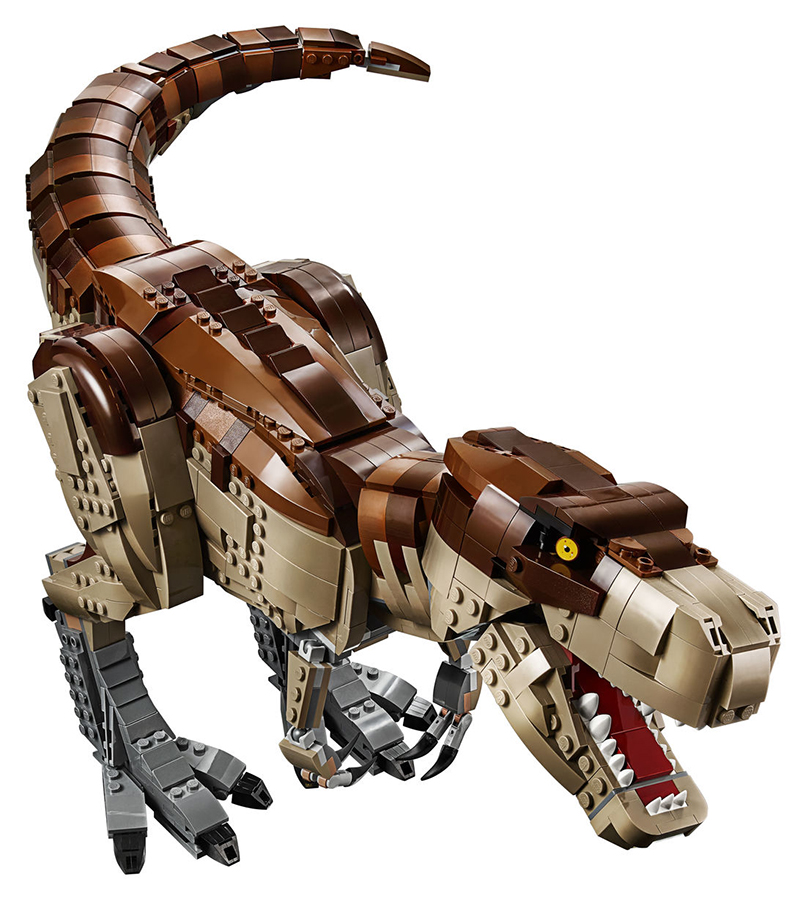
LEGO Introduces Classic "Jurassic Park" Gate and T. Rex

Wednesday, June 12, 2019

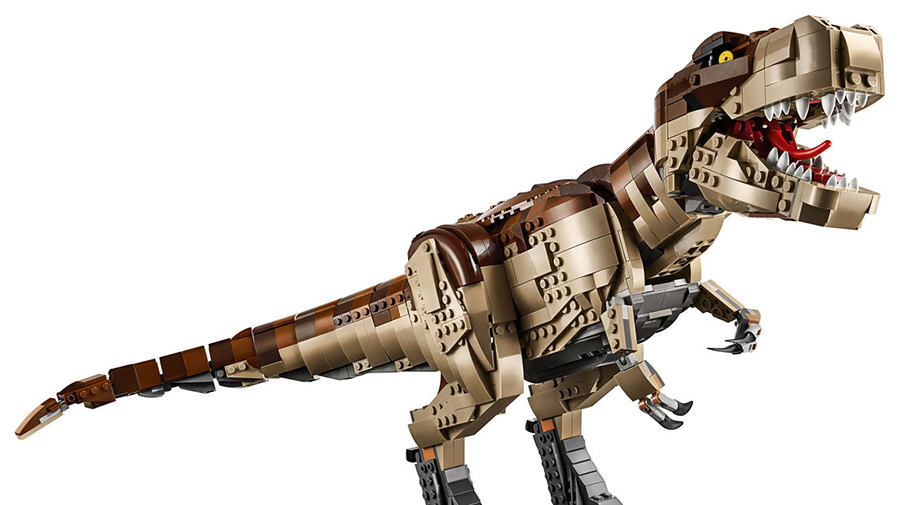
LEGO Jurassic Park T-Rex (Credit: LEGO)

That is one big pile of....classic Jurassic Park LEGO bricks! Featuring 3,120 building bricks, the upcoming LEGO Jurassic Park: T. rex Rampage set allows fans to build the iconic Jurassic Park gate and a buildable brick version of the apex predator, the T.rex.

Inside the massive gate are nifty little cubbies that recreate classic scenes from the 1993 film like Dr. Ellie Sattler trying to get the power restored, John Hammond enjoying tubs of melting ice cream in the dining room, and Ian Malcolm (with sexy, exposed chest) healing post dino attack.

LEGO Jurassic Park gate (Credit: LEGO)

For the first time, minifigures of Hammond (Richard Attenborough), Ray Arnold (Sam Jackson) and Dennis Nedry (Wayne Knight) have been created for this set, and join minifigures of the aforementioned Ian Malcolm (Jeff Goldblum), Ellie Sattler (Laura Dern), along with Alan Grant (Sam Neill) and a baby dino.

Lego Jurassic Park Minifigures (Credit: LEGO)

But arguably the clincher for this set is finally being able to build a fully posable LEGO T.rex (with terrifying snapping jaws to boot).

LEGO Jurassic Park T.Rex (Credit: LEGO)

LEGO Jurassic Park: T. rex Rampage is available directly from LEGO Stores & shop.LEGO.com on July 1, 2019 (June 19, 2019 for LEGO VIP members).

Source: www.syfy.com

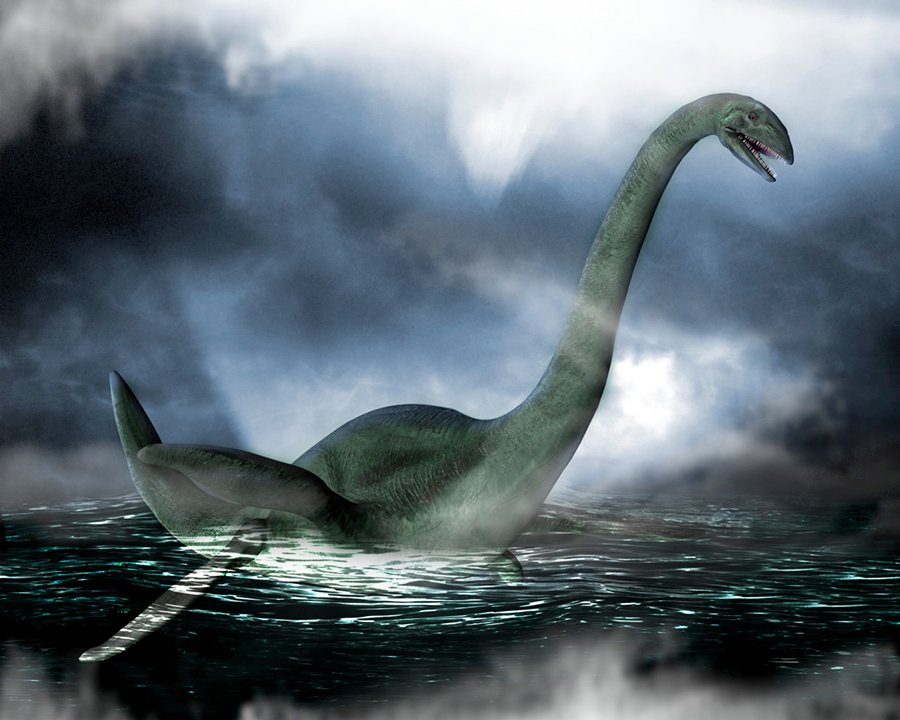
Fossil of ‘Real-Life Loch Ness Monster’ Found in Antarctica: The Biggest Sea Marine Reptile to Date

Tuesday, June 11, 2019

This illustration shows an elasmosaur believed to have gone extinct 65m years agoCredit: Science Photo Library - Getty

Fossil hunters have pieced together the remains of an enormous sea creature which is being labeled a real-life Loch Ness monster.

Researchers have uncovered the 70-million-year-old fossilized remains of a massive elasmosaur from the icy depths of Antarctica unlike anything ever seen before.

The animal would have once weighed as much as 15 tons, and it is now one of the most complete ancient reptile fossils ever discovered.

The marine giant is a terrifying member of the reptile family elasmosaurid and is the largest of its kind ever found.

They make up a family of the plesiosaurs, which represent some of the largest sea creatures of the Cretaceous period.

Some believe Nessie is a long-necked plesiosaur -like an elasmosaur- that somehow survived when all the other dinosaurs were wiped out.

They looked a little like large manatees with giraffe necks and snake-like heads, reports the National Geographic.

There are many theories to explain the incredible length of its neck, but most believe it was to help with hunting.

“For years it was a mystery ... we didn’t know if they were elasmosaurs or not,” revealed paleontologist Jose O'Gorman of Argentina's National Scientific and Technical Research Council.

“They were some kind of weird plesiosaurs that nobody knew.”

News of the startling discovery is bound to be welcomed by those who believe Nessie is for real and hiding out in the depths of Loch Ness.

However, most scientists point out the loch is only about 10,000 years old, and plesiosaurs went extinct more than 65m years ago.

For another thing, marine reptiles weren't equipped with gills, so even if Nessie is a plesiosaur, it would still have to surface for air numerous times every hour - making it easy to spot.

And, finally, there just isn't enough food in Loch Ness to support the needs of a 15-ton plus sea monster, say the experts.

This story originally appeared in The Sun.

The Incredible Animals that Once Roamed Prehistoric London Area

Tuesday, June 11, 2019

A large scale replica of a prehistoric woolly mammoth of the kind that would have roamed London thousands of years ago (Image: Getty Images)

The way London looks today, it's quite hard to imagine dinosaurs and massive prehistoric beasts lumbering, stomping and roaring through the City.

I guess if you've seen the Juarssic Park films, you might have a better idea of what it could be like, with a huge T. rex going on the loose in New York, bulging right out of the cinema screen.

Either way, it all seems pretty far fetched.

But let's close our eyes for a minute and imagine a London cleared of buildings and roads. Let's go way back to a prehistoric landscape of low undulating hills, bordering a wide river, edged with reeds and muddy swamps.

It was in this pre-London environment that London's prehistoric animals once truly roamed, slithered and stomped.

Under the sea...

Then let's go back even further than that. Back to a time when the site of the future capital was actually under water.

It's hard to believe, but fossils from that time actually still exist, buried way down in the rocks under our feet and etched deep into the stones that make up many of London's great buildings.

Incredibly, the Portland stone that was used to build the Customs House on Lower Thames street for example, still retains a wavy pattern that was once made by the flowing waters of the sea, and there are ancient oyster shells fossilised deep within the stones used to build the British Museum.

A diver collects shark teeth in the Sea Life Aquarium in central London. It's a sobering thought, but sharks actually once swam through what is now London

Seaweed can still be made out in the stone used to build Waterloo Station and the skeletons of sharks have also been found in the clay that makes up much of the bed on which London has been built - and into which it is very slowly sinking.

But once the oceans receded and the continents as we now know them began to take shape, the area of London would have been home to just about every prehistoric beast under the sun.

What's more, it would have been very easy for these beasts to lumber across from Europe, because Britain was still connected to the continent by a land bridge until some 8,000 years ago.

So what proof do we have for these ancient animals?

A dearth of dinos

Well strangely, while London's Natural History Museum is World famous for its dinosaur bones, and millions have flocked from around the world to see them, the irony is that no significant dinosaur finds have ever been made in the capital.

Adele Clark, aged 8, looks at an animatronic Gallimimus dinosaur at the Natural History Museum. People flock from around the world to see the museum's dinosaur exhibits but few significant dinosaur finds have actually been made in London itself

This is strange given that more than 500 dinosaur fossils have been found in the UK, and possibly 100 species of dinosaurs would have stalked these islands.

So the lack of finds here is probably more to do with the built-up nature of the area more than anything else and we can rest assured that everything from the two-metre high Iguanodon - one of the duck-billed dinosaurs - the armoured Hylaeosaurus and the massive Megalosaurus would have roamed the area we now call home.

If you want to find out more about these beasts a visit to the Natural History Museum is a must.

But for our very own London examples of Prehistoric animals, we have to fast forward a bit to some 200,000 years ago.

At this time, huge elephant-like animals called mammoths were stomping around the London landscape. Roughly the same size as an elephant and weighing up to six tonnes, these massive beasts roamed around using their tusks for fighting and moving objects. They would have grazed on grasses and no doubt drunk from the Thames.

What a spectacle it must have been for the early humans who were here at the time, the Neanderthals, to see.

These early humans were living a nomadic lifestyle in the London area, hunting animals with stone tools and probably moving their camps to fit in with the best hunting grounds and available food and water at any given time of the year.

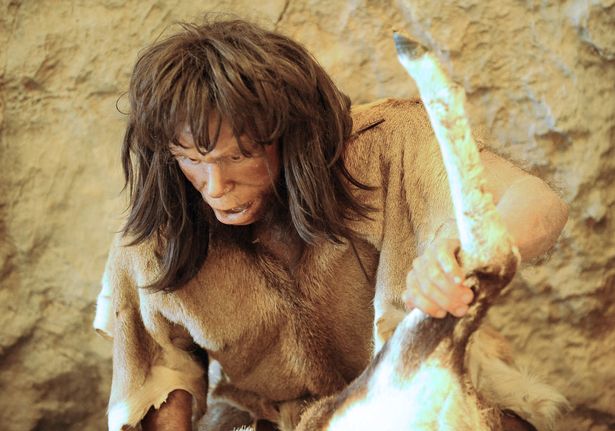
A reconstruction of Tautavel Man, an ancestor of the kind of Neanderthal humans that would have lived in London while prehistoric animals roamed here (Image: Getty Images)

Quite how these early humans got on with the mammoths is anyone's guess although it's probable they were too large to hunt with stone tools. Instead they may have scavenged them when they died and the hunters would have used the bones and tusks for making art and tools and the fur for clothing.

But how do we know mammoths were ever in London?

A mammoth discovery

Part of a mammoth's jaw found in London and now displayed in the Museum of London

It was in the 19th Century at a brickworks in Ilford when huge amounts of clay were being dug out of the soil to make bricks, that their remains first came to light.

In 1834 a senior civil servant named Antonio Brady started what was to become a 40-year long excavation of the area around Ilford.

He would, in that time, discover the remains of more than 300 elephants, and the area became known as the Ilford Elephant Ground.

His specimens even formed the nucleus of exhibits displayed in the Natural History Museum in South Kensington when it opened in 1881.

Eventually the remains of some 100 mammoths were found in the area. This means that back in the prehistoric period the place must have been overrun by herds of the huge beasts.

Among these incredible finds was the very rare discovery of a complete mammoth skull. It was found complete with tusks that were some 3ft long!

Ilford also turned up the remains of some other amazing beasts including elephant and hippopotamus teeth and the remains of oxon, so our mammoths definitely were not alone.

Triston Bradfield holds a West African Dwarf Crocodile at Heathrow Airport's Animal Reception Centre. Many imported animals pass through the centre's doors ranging from exotic animals such as Snow Leopards and elephants, snakes and crocodiles, but who knew many of these animals were at one time actually living wild in what is now London? (Image: Getty Images)

African giants...

Not alone indeed. Incredibly, the remains of crocodiles have been found buried in the clay of Islington, suggesting these scaly creatures would once have been slithering through the reed beds and tributaries at the edges of the Thames.

Just as amazingly, the remains of a Prehistoric rhinoceros were discovered underneath the law courts at the Old Bailey. The bones of this ancient beast dated back some 60,000 years to the Paleolithic period when England would have been a cold, dry landscape. It was the kind of woolly rhinoceros that would have roamed the area at the time. A shaggy kind of beast whose think wool would have protected it from the cold - not at all like the African ones we see on TV today.

A Prehistoric Woolly Rhinoceros from the pleistocene period is displayed at Sotheby's auction house in Paris. This kind of shaggy beast was also once stomping around London and its wool would have kept it warm from the freezing climate at the time (Image: Getty Images)

We're so used to seeing  hippos roaming around on the African mud flats on television wildlife programmes, that it's easy to think they could never live anywhere else.

Thug, a 17-year-old pygmy hippo, moves around in a new enclosure equipped with solar panels at London Zoo, but bones discovered in the ground under our feet show hippos were once roaming wild here thousands of years ago.

But go far enough back in time and they would have been here too. The remains of a hippo dating back some 120,000 years have been found under a quiet suburban street in Brentford. So where people now park their cars and commute too and from jobs in the City, herds of these massive and highly dangerous beasts must have been roaming. That is until brave early humans started to hunt them down with stone tools.

A herd of American bison. Evidence shows similar animals would have been roaming London in prehistoric times and would have been hunted for their hides, meat and bones.

Buffalo skeletons have been located beside St Martin in the Fields church, a brown bear near North Woolwich and reindeer, giant beavers and hyenas have also been uncoveerd. So London clearly was home to a complete menagerie of just about every kind of ancient animal you can think of.  

The skulls of wolves have even been found in Cheapside and Shepperton. They date to some 3,400 years ago, a time when wolves would have roamed all over England in packs. The skull dates from the Neolithic period, a time when the first farmers were starting to cultivate land for cattle in a settled way. They would have started to hunt the wolves at this time to keep them away from their livestock.

Beasts of London

Fast forward thousands of years and amidst the civilised chaos that is the City of London, a brand new exhibition at the Museum of London is celebrating London's prehistoric animals and all those beasts, large and small, which have inhabited the City ever since.

Beasts of London takes visitors on an amazing interactive tour through the ages to meet different animals from London's history in an incredibly imaginative show.

The animals all have characters and are voiced by some of London's best known performers.

There are Prehistoric woolly mammoths and Roman eagles, the fleas that carried the Great Plague, urban pigeons and 21st century pets. There are the leopards, lions and tigers that were brought to the City to parade in circuses.

Then there's the urban animals such as foxes which make unexpected homes in the City's streets and alleys and domestic animals like cats and dogs that we so love today.

Each animal has been inspired by objects that the museum has in its collection.

You can find out full details and opening times of the exhibition here .

The exhibition makes clear that teh animals and beasts we have shared our City with continue to fascinate and inspire us, and none more so than the amazing prehistoric beasts that once grazed and hunted where we now work rest and play.

Could there be a time in the future, among the broken down remains of the City as it sinks into the clay beneath, long after humans have left, when the beasts take over once again?

Source: www.mylondon.news

Netflix's Jurassic World Animated Series Could Be Better Than the Sequel

Sunday, June 9, 2019

Streaming service Netflix will collaborate with Dreamworks and Amblin on Jurassic World: Camp Cretaceous, an animated series focusing on a group of teenagers trying to survive being lost in the Isla Nublar park. By harkening back to the original film in the franchise, the animated Jurassic World series very well could be better than the actual Jurassic World films.

A WHOLE NEW WORLD

The Jurassic World films explore a universe where the dinosaur-centric park has become a huge success, allowing generations to see the extinct beasts. But, as always, ambition leads to humanity's ruin. In the first film, a new genetically modified dinosaur is unleashed, leading to outright chaos around the park. Many more dinosaurs get loose, and humans are quickly chased off the island or turned into food. The sequel broadens the scope of the series, destroying the island of Isla Nublar with a volcano but releasing dinosaurs back into the ecosystem.

Although the Jurassic World films have been major commercial successes, they haven't been particularly received well critically. The films have been overstuffed with plots about genetic tampering and the weapons applications of dinosaurs. The original Jurassic Park was much more focused on the terror that comes when dinosaurs target people, specifically children. That element was lost in the sequels, but the premise for Jurassic World: Camp Cretaceous puts that element front and center once again.

SCARING KIDS

The synopsis that's been revealed for Jurassic World: Camp Cretaceous says the series will focus on a group of teenagers who happen to be at an adventure camp on the island when the events of Jurassic World result in dinosaurs getting loose. While they manage to survive the initial surge of dinosaurs, they're not able to make it off the island. The group is trapped on the dinosaur-infested island and will have to try to adjust and adapt if they want to survive. The brief teaser for the series  really plays up the scariness of the situation. Even in broad daylight, a raptor could find you and attack, and it will be fast, brutal and terrifying.

This harkens back to the frightening tone of the original film, specifically the sequences where Tim (Joseph Mazzello) and his older sister Lex (Ariana Richards) are chased by raptors through the kitchen inside the Jurassic Park main building. The scene is one of the most memorable in the entire film, and among the most tense in any Steven Spielberg film. By refocusing the narrative onto kids of that same age group (which also happens to be the target demographic for this show), Jurassic World could bring the scope of the series back into focus.

WHERE IT CAN GO

The synopsis for the show reveals the unfortunate teens trapped on the island will begin the series as strangers. All brought to the titular Camp Cretaceous, this could allow the creators a lot of freedom in who they cast. Like a teen-targeted version of Lost, the characters could come from any number of places in the world. Even the single teaser image of the cast showcases a range of character types, and their forced cooperation will bring all their differences to the forefront. The synopsis also teases that the group will slowly transform from a group of strangers to a family willing to fight side by side, indicating the peril will bring them together.

The age-range of the characters also means there probably won't be any actual experts on dinosaurs. This means there won't be any Chris Pratt-esque raptor trainers leading a pack to save the day. Instead, they'll be learning as they go, making mistakes and surviving by the skin of their teeth. This will keep the tension ratcheted up throughout the series. The Jurassic World films have traded suspense for spectacle. They go bigger than anything in the original films, up to and including giant dinosaur duels and Toby Jones trying to auction off dinosaurs as living weapons. Instead, the series needs to embrace the horror and tension that were the best parts of the original beloved films. Jurassic World: Camp Cretaceous seems to be taking that to heart.

If the show manages to stick the landing and really deliver a tense series set in the Jurassic Park universe, it'll have succeeded where Jurassic World failed by replicating the tone of the original. Plus, it'll still have dinosaurs.

Jurassic World: Camp Cretaceous is set to premiere on Netflix sometime in 2020.

Source: www.cbr.com

Feathers Evolved Millions of Years Before Birds, And Maybe Even Before Dinosaurs

Monday, June 10, 2019

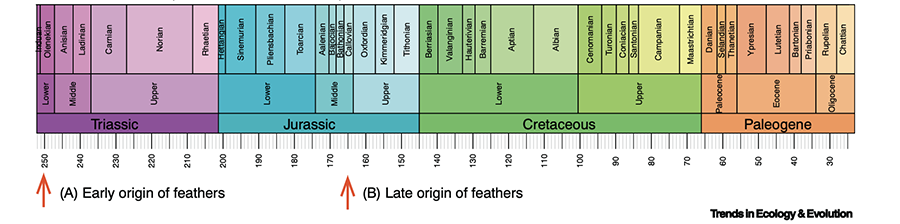
(Benton et al., Trends in Ecology and Evolution, 2019)

Feathers are not simply the domain of birds, nor did they arise solely for flight. New research on China's rich fossil record suggests instead that these structures arose 100 million years before birds, and maybe even before dinosaurs themselves.

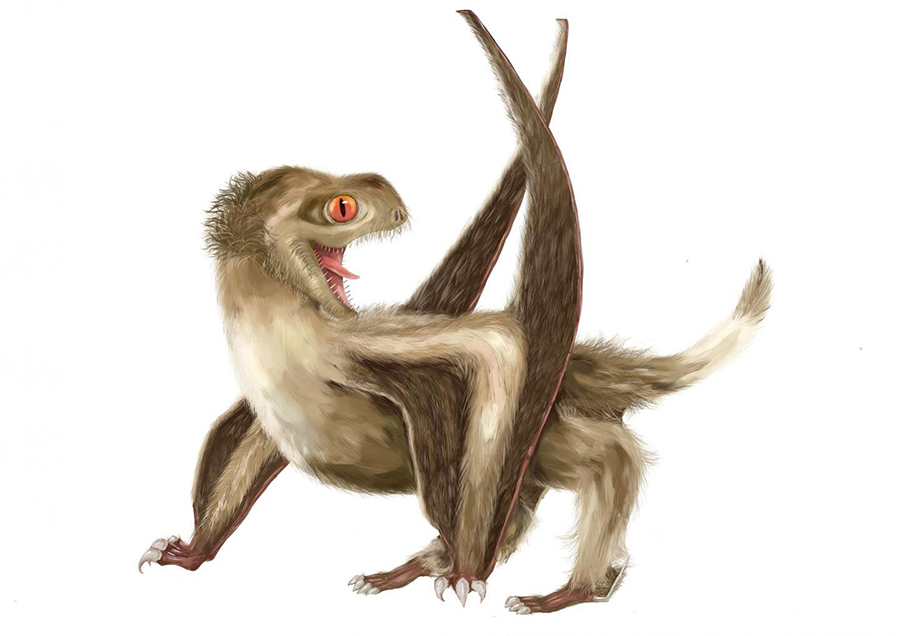
The breakthrough came late last year, when researchers were studying two new fossilised pterosaurs in China. Once considered scaly and reptilian, these prehistoric flying reptiles (closely related to dinosaurs)were covered in four kinds of tuft and down.

Pterosaurs, it would seem, had feathers remarkably similar to their dinosaur relatives. They must have had a common ancestor.

"This drives the origin of feathers back to 250 million years ago at least. The point of origin of pterosaurs, dinosaurs and their relatives," says lead author Mike Benton, a palaeontologist from the University of Bristol.

"The Early Triassic world then was recovering from the most devastating mass extinction ever, and life on land had come back from near-total wipe-out."

As this places the origin of feathers way back in the Early Triassic, it means feathers appeared long before the first birds, such as Archaeopteryx, came on the scene. This was a time of evolutionary turmoil, when the ancestors of dinosaurs, known as archosaurs, were in a fierce arms-race with the ancestors of mammals.

Feathers probably arose to help in the contest, providing insulation in the warm-blooded precursors of dinosaurs and pterosaurs. Only afterwards would these structures have been used for display or flight.

"[T]hus," they authors write, "the small dinosaurian ancestors of birds were pre-adapted for a life as active flyers."

(Yuan Zhang)

Ever since 1994, when thousands of dinosaur specimens from China were found with feathers, palaeontologists have been grappling with the revolutionary idea.

"At first, the dinosaurs with feathers were close to the origin of birds in the evolutionary tree," explains co-author Baoyu Jiang from the University of Nanjing.

"This was not so hard to believe. So, the origin of feathers was pushed back at least to the origin of those bird-like dinosaurs, maybe 200 million years ago."

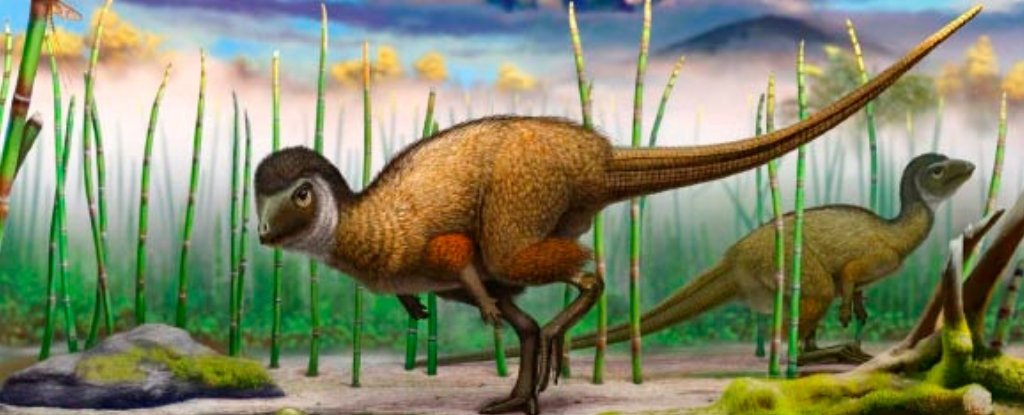
Then, a dinosaur from Russia named Kulindadromeus broke the main rule that glued this theory together.

"This dinosaur showed amazingly well-preserved skin covered with scales on the legs and tail, and strange whiskery feathers all over its body," recalls co-author Maria McNamara from University College Cork.

"What surprised people was that this was a dinosaur that was as far from birds in the evolutionary tree as could be imagined. Perhaps feathers were present in the very first dinosaurs."

(Benton et al., Trends in Ecology and Evolution, 2019)

Not all paleontologists agree that feathers come from a single origin. Some think they arose independently in both birds and dinosaurs. But the new analysis suggests otherwise.

Apart from recent palaeontology research, the findings are also bolstered by genetics. In 2017, a study found that the same genome regulatory network drove the development of reptile scales, bird feathers, and mammal hairs.

In other words, the root of all three structures may have been present in a common ancestor that existed up to 420 million years ago.

How exactly all three fit together in the evolutionary tree is still unclear. Scientists have shown that the scales on modern birds, such as the legs and necks of chickens, are feathers that have reversed to scales.

This suggests that feathers might have been a default condition for dinosaurs, which was only later suppressed in large, armoured members of the group.

"This does not diminish the importance of feathers as key to the success of birds," Benton and his co-authors write, "but shows that birds did not emerge rapidly from reptiles, but that their set of 30 or more adaptations accumulated stepwise over some 100 [million years]."

The research has been published in Trends in Ecology and Evolution.

Source: www.sciencealert.com

‘Jurassic Park’ Killed ‘Godzilla’ For Americans

Saturday, June 8, 2019

Photos: Everett Collection ; Illustration: Dillen Phelps

Godzilla is more than a monster at this point. He’s a dark myth, a cinematic icon, and according to Deadline, “tired IP.” Even though Hollywood’s latest take on the legend’s story, Godzilla: King of the Monsters, it’s still being hailed as summer’s first major dud. The movie’s $49 million open fell far short of its $60 million projections, and the steep drop off box office receipts suggested the film won’t be able to gain legs.

Essentially, American audiences seem to be over the great behemoth of the deep.

So what’s wrong with Godzilla? Why can’t the great Kaiju of yore spark the imaginations of Americans today? Sarah at LaineyGossip suggests it could be a cultural thing. “[M]aybe nothing is wrong with Godzilla. Maybe it’s just not our story to tell.” That makes a lot of sense. After all, Godzilla is a distinctly Japanese character. He originated as “Gorjira” in a 1954 Japanese film that was as concerned with the monsters lurking in the deep Pacific waters surrounding the island nation as it was with the literal (and emotional) fallout of nuclear catastrophe.

Photo: Everett Collection

That’s all true, and I would go further. I would argue there’s no way for Godzilla to thrive in a culture that has decided Jurassic Park is its great monster myth. Thanks to Steven Spielberg’s 1993 hit film, the Tyrannosaurus rex, Velociraptors, and their prehistoric ilk have toppled Godzilla in the hearts and minds of modern American filmgoers.

To understand Godzilla’s initial appeal, you have to put yourself in the mindset of a pre-CGI filmgoer. The effects in early Godzilla films were awe-inspiring. Whether you feared the great lizard king or were delighted by the carnage he wrought, it still looked badass. That is, until directors like James Cameron and Steven Spielberg started to understand the best way to use CGI on screen. Cameron, of course, revolutionized the way action film utilized computer generated imagery in The Abyss, his Terminator films, and later Titanic and Avatar. But in Jurassic Park, Spielberg figured out not only how to make it look like dinosaurs were walking the earth, but he did it with lyricism. After being blown away by the mere visual effects in Jurassic Park, you can’t blame audiences for feeling let down by Godzilla (especially since Hollywood’s 1996 attempt to resurrect him was less than stellar).

Photo: Everett Collection

Since Jurassic Park has debuted, dinosaurs have arguably taken up the role in the average American psyche that Godzilla, Mothra, and their pals hold in the Kaiju-loving quarters of the world. Most Millennials and Gen Z members know more about Velociraptors than they do about Kaiju, and as such, a showdown between a monstrous new Indominus dinosaur and a bunch of likable Raptors. Don’t believe me? Just compare the box office of 2015’s Jurassic Worldwith 2014’s Godzilla reboot. The 2014 film is the highest grossing Godzilla film stateside ever, raking in $200 million. Jurassic World made well over three times that figure. In fact, all but one film in the Jurassic Park franchise has made less.

Of course, there might be more to Jurassic Park‘s pull on the American psyche than just great effects. Unlike Japan, the United States is not an island nation, but a vast, colonized continent. We’re also a relatively young country, and we owe much of our success to aggressive exploration and innovations. Jurassic Park is a story about these concerns, not the concerns of a post-WWII Japan, still stinging from the attacks on Hiroshima and Nagasaki. We are a culture not-so-secretly wary of the technological Pandora’s Box we’ve opened, and subconsciously aware that there might be something dire and dangerous buried under the ground we’ve built our great cities on. It’s not necessarily that we think dinosaurs could walk again, but that our own avarice to push technology could birth our own destruction.

So if you’re asking yourself why Americans aren’t into giant lizard creatures fighting to the death in a mythic battle that represents deep-rooted cultural fears, well, we do. We just prefer our T. Rexes to our Kaiju. Jurassic Park is America’s Godzilla.

Source: https://decider.com

Feathers Evolved 80 Million Years Before Birds Appeared

Friday, June 7, 2019

Image: Reconstruction of the studied pterosaur, with four different feather types over its head, neck, body, and wings, and a generally ginger-brown color. Credit: Reconstruction by Yuan Zhang.

Scientists at the University of Bristol have found evidence of feathers in a dinosaur that existed 80 million years before birds, a discovery that changes how we look at dinosaurs, birds and feathers themselves.

The research, a combination of paleontology and molecular developmental biology, was published in the journal Trends in Ecology & Evolution.

A pair of pterosaur fossils—discovered earlier this year in China—showed signs of both down feathers over the body and long, vaned feathers on the wings. Pterosaurs, a group of bird-like flying reptiles commonly referred to as pterodactyls, lived 228 to 66 million years ago during the Triassic and Cretaceous periods.

The oldest known bird is Archaeopteryx, which is believed to have lived in southern Germany 150 million years ago during the late Jurassic period.

Feathers arose 250 to 230 million years ago, during the Early Triassic, when life was recovering after the end-Permian mass extinction and new species were evolving to fill ecological voids, the study revealed. This is nearly 80 million years before the first bird, a surprise to many researchers who believed that feathers helped drive the success of avian fauna.

"A combination of new fossil evidence and new thinking in genetics of development show us that feathers are not unique to birds, but to a much larger group that includes dinosaurs and pterosaurs. This means feathers actually originated much earlier than thought, and that the original function of feathers was insulation, not flight," Mike Benton, lead author of the study and a professor of Vertebrate Paleontology at the University of Bristol's School of Earth Sciences, explained to Laboratory Equipment. "We are keen to examine a greater range of dinosaurs and pterosaurs to see how widespread the different feather types are, and what we can learn about feather function and color from the fossils."

The findings add to the growing body of work suggesting that birds and dinosaurs are closely related on the evolutionary tree.

In the early 1990s, researchers discovered that some dinosaurs possessed feathers. The first dinosaur fossils to reveal evidence of feathers were approximately the same age as the earliest birds. Previously, it was believed that dinosaurs were most closely related to reptiles.

"This discovery means that the evolutionary selective pressure to evolve feathers was nothing to do with size reduction, raised warm bloodedness and activity levels for flight (which was happening in the Jurassic before Archaeopteryx emerged), but it was all about recovery of life from the devastating end-Permian mass extinction, and a re-tooling of the main land animals to walk upright, be warm-blooded and move faster," Benton said.

Source: www.laboratoryequipment.com

10 Things From Jurassic Park That Kids These Days Won't Understand

Thursday, June 6, 2019

In the summer of 1993, Steven Spielberg sent Jurassic Park stomping into theaters, and audiences weren’t prepared for its exciting mix of action, thrills, adventure, and horror. The king of blockbusters like E.T. and Jaws had managed to make a film that had heart as well as bite, and the movie based on Michael Crichton's best-selling novel about dino mutation became a mega hit.

But much like comparing a T-Rex to the Indominus Rex of Jurassic World, there are aspects of the first entry in the Jurassic Park franchise that seem a little antiquated and a little archaic when juxtaposed against their newer counterparts. Kids today, raised on blockbusters with non-stop action, excessive CGI, and mile-a-minute thrills may be confused by elements of this masterpiece for no other reason than it’s from a different time period in cinema history. Here are 10 things from Jurassic Park that kids these days won’t understand.

10 WHAT A COLOSSAL HIT IT WAS

Steven Spielberg, king of blockbusters had another hit on his hands when he welcomed visitors to Jurassic Park. He ushered in an era of colossal action movies that, unlike the bullet drenched versions of the 80s had heart and complex storytelling. Only James Cameron would match his similar stance on combining action with humanity.

In an era like today, where kids go to see every new Marvel movie that comes out, expecting to be blown away by movies that blow past the 1 billion dollar mark, the significance of a movie like Jurassic Park is lost. It was the first of its kinds, inspiring many duplicates, each never quite as good as the original.

THE SIGNIFICANCE OF EARLY CGI

Prior to Jurassic Park, Steven Spielberg had mostly dealt with practical effects and animatronics in his monster features. Jaws was not a CGI shark, he was an actual giant animatronic puppet. James Cameron had made some headway with Judgement Day, but CGI effects were still in their infancy.

But Spielberg wanted to try something new - him and his crew of practical effects wizards devoted themselves to learning the latest advancements in computer graphics, rendering some of the best early examples of CGI that still hold up to this day. It’s what lead to the majority of dinosaurs being entirely CGI in Jurassic World.

EMOTIONAL IMPACT VS VISUAL PAYOUT

The reason that Steven Spielberg is considered one of the greatest filmmakers of all time is for many of the techniques he used in Jurassic Park. He shot from the POV of the terrified visitors to the park, highlighting the epic scale of the dinosaurs. It also grounded the emotions of the reactions of the actors, even if all they were looking at was CGI.

Contrast this with Jurassic World  or Jurassic: Kingdom which, when given the option to either focus on the impact of dinosaurs on humans or the dinosaurs themselves, always went for the “cool” shot of dinosaurs, utilizing drone cameras to show the epic sprawl of a dino battle while completely eliminating any of the emotional repercussions. It’s certainly awesome, but the audience isn’t scared.

THE OUTDATED COMPUTER INTERFACES

Jurassic Park is controlled entirely by computers, which isn’t surprising to any kid today. They’re familiar with smart technology, and devices synced together to be controlled by a remote one.  What they won’t be as familiar with is the outdated computer interfaces throughout the film.

Characters operate big clunky Macintosh computers, with black screens and green lettering. The imaging is very primitive, with significant lag time as the images load. Kids won’t even be able to identify the technological goals of the characters simply because they aren’t using technology they recognize to accomplish them. When Lex uses her “hacking” skills to access the park’s central mainframe, kids today may be wondering if she’s playing a video game.

THE LACK OF DINO MUTATIONS

If kids today have grown up on a steady diet of Jurassic World and Jurassic Kingdom, chances are they’ve come to expect a little more from their dinosaurs. They’re expecting not just a simple T-Rex, but a T-Rex mixed with something else. As Bryce Dallas Howard so cavalierly says in Jurassic World, “No one’s impressed by dinosaurs anymore.”

It’s at this point that kids these days won’t find the velociraptors or the T-Rex terrifying because it isn’t an Indominus Rex, a dangerous cross between the two, and infused with other reptile DNA, not just frogs. This means it can turn itself invisible, which makes it a much scarier threat to them.

THE PHONE LINES BEING CUT

At a critical juncture in the film all systems go offline, courtesy of Dennis Nedry who needs the systems down so he can steal several dinosaur embryos to sell them for a big profit. Unfortunately, this cuts the power to the park and to the dinosaur paddocks, allowing the creatures to roam free unhindered.

The phones lines are nonoperational, which may make little sense to kids today who haven’t ever used a landline like the ones in the film. They’ve also probably never operated the payphone that Nedry uses to connect with his contact, or the significance of not being able to reach the satellite phones in the car (which incidentally don’t run on Bluetooth).

THE ABSENCE OF CELL PHONES

Like so many horror films where the heroes having cell phones might have prevented them from being slaughter, Jurassic Park doesn’t bank on your smartphone saving the day. But it isn’t just a narrative imperative to ensure the stakes of the victims are raised; it’s because cellphones weren’t nearly as common place back then, even for billionaires like John Hammond.

Versions of them existed, but they’re literally referred to as “dinosaurs” now, and were obnoxiously bulky and hard to use. Today, children might very well wonder the significance of phone lines being down in a movie when the presence of cell phones would make the anxiety levels dissipate considerably.

HOW BIG OF A DEAL THE T-REX REALLY WAS

The scene involving the two park cars and the T-Rex escaped from its paddock makes for some of the most tense filmmaking ever witnessed. Part of this is due to the film direction and the actors, and part of it’s due to the largest animatronic that had ever been made for cinema. Although not quite as large as a real T-Rex, the one made for the film was nearly as tall as a house.

What made the T-Rex so impressive wasn’t simply its size and detail, but the fact that it had eyes that actually dilated when light was pointed at them, such as the scene when Lex directs the beam of her flashlight at it.

THE VELOCIRAPTORS IN THE KITCHEN

One of the most iconic scenes in the film involves Tim and Lex, a kitchen, and two velociraptors. The children try to remain as quiet as possible without alerting the raptors to their presence, but the scene somehow makes you feel as though their every breath could seal their fate. Part of this is because some of the raptors are real animatronics and some of them are CGI.

The animatronic raptors are part machine, part puppet, and controlled by men with armatures in suits. They are involved for close up shots and anything that doesn’t involve fast movement. They’re perfectly blended with the CGI raptors, to the point where you can’t tell them apart, which was incredibly advanced for its time.

THE FACT THAT PEOPLE LOOKED LIKE PEOPLE

Kids these days watch any movie similar to Jurassic Park and take for granted the fact that every person in the film is coiffed and manicured to perfection. In Jurassic World, for instance, Bryce Dallas Howard is made up throughout the film (and remains in heels for the length of it), while Chris Pratt is chiseled from a piece of fossilized amber.

In Jurassic Park, people looked like people. Dr. Alan Grant was not a hunk. Dr. Sattler wasn't a dewy damsel. And the kids spend a lot more time looking completely frazzled than they do adorable or otherwise. Everyone wore functional clothing, and didn't mug for the camera (with the exception of Dr. Ian Malcolm, but they gave him a whole other movie to do that).

Source: https://screenrant.com

Why Giant Beavers Went Extinct 10,000 Years Ago

Thursday, June 6, 2019

Giant beavers, about as large as a modern-day bear, ate aquatic plants before they went extinct after the last Ice Age. Image credit: Luke Dickey.

Giant beavers (members of the genus Castoroides) inhabited North America throughout the mid- to late Pleistocene. They went extinct along with dozens of other megafaunal species at the end of the last Ice Age, approximately 10,000 years ago. Now a team of researchers in Canada has uncovered a possible reason of their extinction: vanishing food source. More importantly, the scientists have discovered that these enormous rodents did not eat wood — a distinct divergence from their dentally-endowed descendants.

Tessa Plint of Heriot-Watt University and her colleagues from the University of Western Ontario, Yukon Palaeontology Program and the Canadian Museum of Nature used stable isotopes of fossil bones and teeth to determine the diet of the now-extinct giant beavers.

The researchers found that the beavers ate submerged aquatic plants (macrophytes).

This diet made the rodents, which weighed approximately 100 kg, highly dependent on wetland habitat not only for shelter from predators but also for food.

“We did not find any evidence that the giant beaver cut down trees or ate trees for food,” Plint said.

“Giant beavers were not ‘ecosystem-engineers’ the way that the North American beaver is.”

Beavers (members of the genus Castor) and giant beavers actually co-existed for tens of thousands of years in North America during the Pleistocene epoch before the latter went extinct.

After the last Ice Age, the ice sheets retreated and the climate became much drier. This climate change was bad news for giant beavers.

“The ability to build dams and lodges may have actually given beavers a competitive advantage over giant beavers because it could alter the landscape to create suitable wetland habitat where required. Giant beavers couldn’t do this,” said Professor Fred Longstaffe, from the University of Western Ontario.

“When you look at the fossil record from the last million years, you repeatedly see regional giant beaver populations disappear with the onset of more arid climatic conditions.”

The findings were published in the journal Scientific Reports.

_____

Tessa Plint et al. 2019. Giant beaver palaeoecology inferred from stable isotopes.Scientific Reports 9, article number: 7179; doi: 10.1038/s41598-019-43710-9

Source: www.sci-news.com

Pages