Blogs

New Research Tracks Evolution of Extinct Straight-Tusked Elephants

Friday, January 24, 2020

Reconstructed life appearance of the straight-tusked elephant Palaeoloxodon antiquus in (top) side and (bottom) frontal view, based on remains uncovered from the Neumark-Nord 1 site in Saxony-Anhalt, Germany. Image credit: Hsu Shu-yu.

Palaeoloxodon is an extinct genus of straight-tusked elephants that lived throughout Europe and Asia during the Pleistocene and Holocene. It migrated out of Africa about 800,000 years ago and divided into many species, with distinct species in Japan, Central Asia and Europe, and even dwarf species on some Mediterranean islands. A new study, published in the journal Quaternary Science Reviews, enhances our understanding of all these Palaeoloxodon species.

The most intriguing feature of the straight-tusked elephant, apart from its absolutely enormous size, is the massive, headband-like crest on the skull roof — the so-called parieto-occipital crest — which projects down the forehead.

When the celebrated Victorian Scottish geologist Hugh Falconer studied the first fossil skull of Palaeoloxodon found in India, he remarked that the head seemed ‘so grotesquely constructed that it looks the caricature of an elephant’s head in a periwig.’

For a long time, palaeontologists thought that Palaeoloxodon antiquus from Europe had a rather slenderly built skull roof crest; whereas the Indian species Palaeoloxodon namadicus is characterised by an extremely robust skull crest that extends near to the base of the trunk from the top of the skull.

But some Palaeoloxodon skulls, found in Italy and Germany, with almost the same exaggerated skull crest as the Indian form, led a few scientists into suspecting these might all be single species.

“Just like modern elephants, Palaeoloxodon went through six sets of teeth in their lifetimes. This means we can tell the age of any individual with confidence by looking at its fossilised teeth,” said Dr. Hanwen Zhang, a paleontologist in the School of Earth Sciences at the University of Bristol and the Department of Earth Sciences at UK’s Natural History Museum.

“When we looked at a series of skulls from Italy, Germany and India, we found a consistent pattern: the skull crest developed from being very small, not protruding beyond the forehead in juveniles to being larger and more protruding in young adults, eventually becoming very stout in aged adults.”

“As I plotted various skull and limb bone measurements for these incredible prehistoric elephants, it became clear that the Indian Palaeoloxodon form a distinct group from the European ones; even in European skulls with quite pronounced crests, the skull roof never becomes as thickened as in the Indian specimens,” said Dr. Asier Larramendi, an independent researcher from Spain.

“This tells us we once had two separate species of these enormous elephants in Europe and India.”

“Besides the funky skull roof crest, the head of the straight-tusked elephant is also remarkable for being huge, the largest of any elephant ever — some 1.4 m (4.5 feet) from the top of the skull roof to the base of the tusk sheaths.”

“Therefore, the skull crest probably evolved to provide additional attachment areas for extra neck muscles, so the animal did not fall on its head.”

“Having gotten to the bottom of the antiquus/namadicus problem, it then became apparent that other fossil skull materials found in Asia and East Africa represent distinct, possibly more evolutionarily conservative species of Palaeoloxodon,” Dr. Zhang said.

“Even in fully mature adults with the last set of teeth in place, the skull roof crest remains comparatively unpronounced. This is the case with the earliest Palaeoloxodon from Africa, some Asian species retained this condition.”

_____

Asier Larramendi et al. 2020. The evolution of Palaeoloxodon skull structure: Disentangling phylogenetic, sexually dimorphic, ontogenetic, and allometric morphological signals. Quaternary Science Reviews 229: 106090; doi: 10.1016/j.quascirev.2019.106090

Source: www.sci-news.com/

U of C Paleontologist Explores How an Ancient Fish Came to Walk on Land

Friday, January 24, 2020

An illustration of Tiktaalik by Flick Ford. (Courtesy of the University of Chicago)

Around 375 million years ago, some fish began an extraordinary transformation that would change the history of life on Earth: their fins evolved into something like limbs that enabled them to walk on land.

Key to understanding that transition was the discovery in the Canadian Arctic of the fossilized remains of a now extinct species of fish that came to be called Tiktaalik.

Tiktaalik has a flattened head that resembles that of a crocodile and fins that appear to have been sturdy enough to allow it to support its body weight on land.

University of Chicago paleontologist Neil Shubin was one three scientists who discovered the fossil in 2004 on Ellesmere Island, Nunavut, in northern Canada.

“My team and I were looking for places in the world to find an intermediate between fish that live in water and creatures that walk on land. And we decided for a variety of reasons to go to the Canadian Arctic because the rocks were perfect to discover this kind of creature,” said Shubin.

And 16 years later, research by Shubin and his team continues to add to our understanding of this key transitional species – with the help of some advanced technology.

Using CT scans to examine the delicate structure of fossilized fins still encased in rock, Shubin and his colleagues were able to construct 3D models of the entire fin of Tiktaalik and some of its close relatives. They then were able to use those models to infer how those fins worked and changed over time as they evolved into limbs.

“This technology wasn’t available to us in 2004 when we originally discovered Tiktaalik,” said Shubin. “What it showed us, remarkably, is that this is a fin that’s built to support the animal … And we saw all that with a CT scanner. Such that when we put this thing together we could envision how this thing actually walked.”

Shubin was the senior author of the study published last month in the Proceedings of the National Academy of Sciences. Thomas Stewart, a postdoctoral researcher at the University of Chicago, led the study.

“If you want to understand how animals were evolving to use their fins in this part of history, this is an important data set,” said Stewart.

Stewart, Shubin and his colleagues studied three fish from the late Devonian period: Tiktaalik, Sauripterus and Eusthenopteron.

While Tiktaalik is believed to have been able to support most of its weight with its fins and make short trips on land, Sauripterus and Eusthenopteron are thought to have been fully aquatic but with fins that may have enabled them to prop themselves up on the bottom of lakes and streams.

“This provides further information that allows us to understand how an animal like Tiktaalik was using its fins in this transition,” said Stewart. “Animals went from swimming freely and using their fins to control the flow of water around them, to becoming adapted to pushing off against the surface at the bottom of the water.”

But what was the evolutionary driver that led Tiktaalik to first leave the water?

Shubin says that while on land there was only insect and plant life at that time, the water was full of predators and prey.

“It was a predator-rich world,” said Shubin. “What we see is that the world at this time about 375 million years ago, in water, was a fish-eat-fish world. So what Tiktaalik was doing was avoiding the fight by going on to land where there are no real predators and no real competitors and it had a whole world to explore.”

Source: https://news.wttw.com/

Jurassic World 3 to be Filmed in Malta

Thursday, January 23, 2020

Malta will be one of the locations where Jurassic World 3 will be filmed

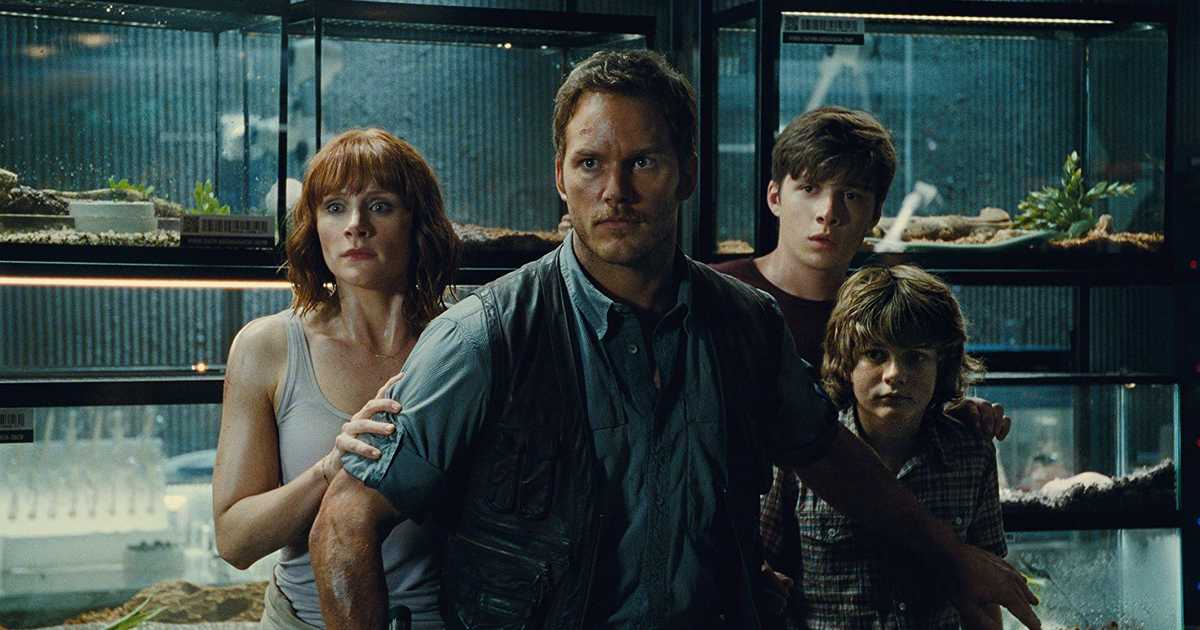
The Hollywood blockbuster Jurassic World will be partly shot in Malta in May.

Hollywood blockbuster film, Jurassic World 3 will be partly filmed in Malta in May, industry sources have confirmed.

The filmmakers will use various locations around the island, including the capital Valletta. 

The film is expected to be released in cinemas in June 2021 and will be filmed in Malta, Vancouver, Hawaii and London’s Pinewood studios.

Jurassic World will signal a return of large budget movies to the island. In 2016, Assassin’s Creed and 13 Hours: The Secret Soldiers of Benghazi were also partially filmed in Malta.

Colin Trevorrow will return as director for the third instalment of Jurassic World. The cast of the original 1993 Jurassic Park film, Jeff Goldblum, Laura Dern, and Sam Neill, will also return to start in this latest film.

Film Commissioner Johann Grech would neither confirm nor deny the news, when contacted on Wednesday.

“Malta’s new strategy in the sector has been attracting a lot of productions. Last year, there were 21 productions filmed in Malta. We had back-to-back productions between May and December, which left €40 million in the economy,” Grech said.

He noted that the package of incentives introduced last year has ensured Malta will continue to play an important role in the film industry.

It is unclear whether dinosaurs will be seen roaming the streets of Valletta but the return of a blockbuster movie is expected to generate business that will have a spill over effect on the communities where filming will take place.

Source: www.maltatoday.com.mt/

Part Of “Jurassic World 3” Will Be Filmed In Vancouver Next Month

Wednesday, January 22, 2020

Jurassic World | IMDb

The movie will be released next year!

The west coast of Canada is quickly heating up as a hot spot for movie and TV productions. Some of the most popular series are filmed there, bringing famous faces to the BC area. That will soon include the cast of Jurassic World 3 filming in Vancouver that begins in February 2020. 

According to What's Filming, the movie is under production with the name Arcadia. The website reported that filming will begin on February 24 and go until March 6. 

Only a portion of the movie will be recorded in BC and according to IMDb, in addition to Vancouver, "The Bridge Studios, Burnaby, British Columbia, Canada" will also be used.

IMDb reported that the other two filming locations are "Pinewood Studios, Iver Heath, Buckinghamshire, England, UK" and "O'ahu, Hawaii, USA". 

The first Jurassic World movie was filmed around Hawaii and the second one was in areas in England and Hawaii. 

The sixth film in the Jurassic Park franchise will merge the original cast members in the first 1993 movie with the new characters from the mid-2010 sequels. 

Jurassic Park saw Sam Neill, Laura Dern, and Jeff Goldblum as the stars, with only Goldblum returning for the second movie. The third film brought back Neill and Dern and didn't see a Goldblum appearance. 

Jurassic World premiered in 2015 with Chris Pratt and Bryce Dallas Howard as lead characters. Goldblum had a small appearance in Jurassic World: Fallen Kingdom in 2018 as his original character.

According to IMDb, the upcoming film will merge all five actors in the franchise. The order they're listed in starts with Dern playing Ellie Sattler, Howard playing Claire Dearing, Pratt as Owen Grady, Neill as Alan Grant, and Goldblum as Ian Malcolm.

According to Digital Spy, they wrote that "Chris Pratt has promised fans that they 'will not be disappointed' and teased that the movie could start after a time jump."

Digital Spy also reported that the trailers for the threequel will likely come in December 2020 and then in April 2021. 

Jurassic World 3 is set to hit theatres on June 11, 2021.

Source: www.narcity.com/

Parioscorpio venator: Fossils of Earliest Known Scorpion Discovered

Tuesday, January 21, 2020

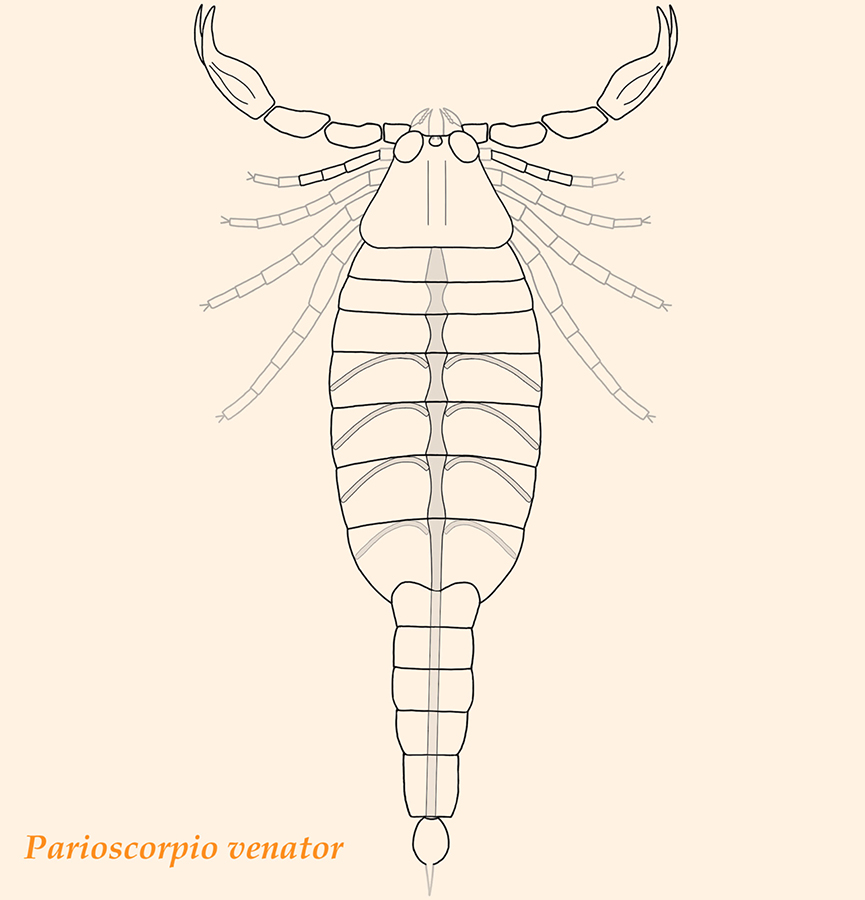
Reconstruction of Parioscorpio venator. Structures outlined in gray are inferred based on Proscorpius osborni. Structures highlighted with gray infilling are the preserved elements of the pulmonary-cardiovascular system. Image credit: Wendruff et al, doi: 10.1038/s41598-019-56010-z.

The exceptionally preserved fossils of the oldest species of scorpion ever found have been unearthed in Wisconsin, the United States.

The newly-discovered ancient scorpion lived around 437 million years ago during the early Silurian period.

Dubbed Parioscorpio venator, the animal was about 2.5 cm (one inch) long — about the same size as many extant scorpions.

The creature is the earliest scorpion yet reported, and it provides new information about how animals transitioned from living in the sea to living entirely on land.

Its respiratory and circulatory systems are almost identical to those of extant scorpions and operate similarly to those of a horseshoe crab.

Parioscorpio venator shows a crucial evolutionary link between the way ancient ancestors of scorpions respired under water, and the way modern-day scorpions breathe on land,” said Professor Loren Babcock, a paleontologist in the School of Earth Sciences at the Ohio State University.

“The inner workings of the respiratory-circulatory system in this animal are, shape-wise, identical to those of the arachnids and scorpions that breathe air exclusively,” he explained.

“But it also is incredibly similar to what we recognize in marine arthropods like horseshoe crabs.”

“So, it looks like this scorpion, this lineage, must have been pre-adapted to life on land, meaning they had the morphologic capability to make that transition, even before they first stepped onto land.”

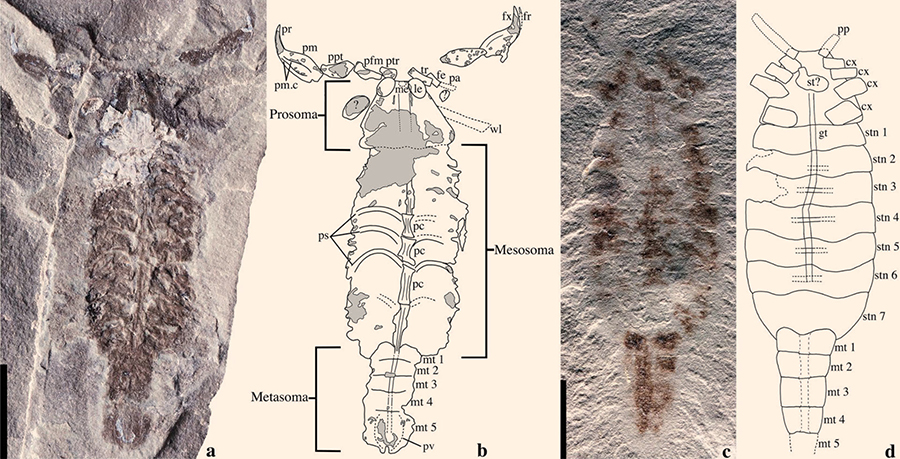
Parioscorpio venator from the Brandon Bridge Formation, Wisconsin, the United States. Scale bars – 5 mm. Image credit: Wendruff et al, doi: 10.1038/s41598-019-56010-z.

The fossilized remains of Parioscorpio venator were unearthed in 1985 from the Brandon Bridge Formation, a site in Wisconsin that was once a small pool at the base of an island cliff face.

The specimens belong to the so-called Waukesha Biota, and were recovered from layers older than those from Scotland yielding Dolichophonus loudonensis, which was previously accepted as the oldest known scorpion.

Professor Babcock, Otterbein University’s Dr. Andrew Wendruff and their colleagues examined the fossils under a microscope, and took detailed, high-resolution photographs of the fossils from different angles.

They were able to identify the appendages, a chamber where the animal would have stored its venom, and the remains of its respiratory and circulatory systems.

“We’re looking at the oldest known scorpion — the oldest known member of the arachnid lineage, which has been one of the most successful land-going creatures in all of Earth history,” Professor Babcock said.

“And beyond that, what is of even greater significance is that we’ve identified a mechanism by which animals made that critical transition from a marine habitat to a terrestrial habitat.”

“It provides a model for other kinds of animals that have made that transition including, potentially, vertebrate animals. It’s a groundbreaking discovery.”

The discovery is reported in a paper in the journal Scientific Reports.

_____

A.J. Wendruff et al. A Silurian ancestral scorpion with fossilised internal anatomy illustrating a pathway to arachnid terrestrialisation. Sci Rep 10, 14; doi: 10.1038/s41598-019-56010-z

Source: www.sci-news.com/

Cretaceous-Paleogene Extinction is Caused by Asteroids, Not Volcanic Activity

Tuesday, January 21, 2020

Cretaceous-tertiary Extinction Event by Richard Bizley

The extinction of the dinosaur is maybe one of the most exciting topics in paleontology wherein scientists offer various possible explanations as to why these apex predators disappeared. Two of the most popular theories on dinosaur extinction was one, an asteroid hit the Earth and two, volcanic activity. However, in a recent study conducted by researchers from Yale University, it is shown that volcanic activity did not play a direct role in the mass extinction of these apex predators. However, the asteroid did.

According to Pincelli Hull, an assistant professor of geology and geophysics and her colleagues at Yale University, the environmental impacts brought by the massive volcanic eruptions that have transpired in the Deccan Traps region happened before the Cretaceous-Paleogene extinction, also known as K-Pg, 66 million years ago, hence, not the primary reason (or even contributed) to the extinction of the dinosaurs. Hull explains that volcanic activity may contribute to mass extinctions because they release a lot of gases including sulfur dioxide and carbon dioxide. These gases alter the climate and may acidify the atmosphere. But the recent work of Hull and her colleagues, which is published in Science, focused on the timing of lava eruption more than the release of the gases.

To be able to pinpoint the timing of the emission of volcanic gas, the researchers compared the global temperature changes and the carbon isotopes from marine fossils to the models of the climatic effects of carbon dioxide. The researchers figured out that most of the gases were released well before the asteroid impact which strengthens their claim of the asteroid being the main reason for the extinction of the creatures of this period. Former Yale researcher (and compiler of the temperature records which they used for analysis) Michael Henehan said that volcanic activity in the late Cretaceous caused a gradual global warming event but only for about two degrees. It is not enough to cause a mass extinction. "A number of species moved toward the North and South poles and these species eventually moved back before the asteroid impact." He said. Hull adds that a lot of scientists speculated that volcanic activities mattered greatly during the Cretaceous-Paleogene extinction. "And we're saying 'no they didn't.'" She said.

It is also important to note that recent studies on the Deccan Traps located in modern-day India show evidence pointing to massive eruptions happening in the immediate aftermath of the Cretaceous-Paleogene extinction. Understandably, these results puzzled scientists since there is no warming event to match those massive eruptions. Luckily, the recent study done by Hull and her colleagues provided an answer to this mystery. According to the study's modeler and postdoctoral associate Donald Penman, since the Cretaceous-Paleogene extinction is a mass extinction, this already altered the global carbon cycle. The results of the study show that the changes allow the ocean to absorb enormous amounts of carbon dioxide for a very long time and this my have hidden the warming effects of the volcanic activities in the aftermath of the extinction.

Source: www.sciencetimes.com/

‘Tiny Titans: Dinosaur Eggs and Babies’ Exhibit Opens at Virginia Living Museum

Tuesday, January 21, 2020

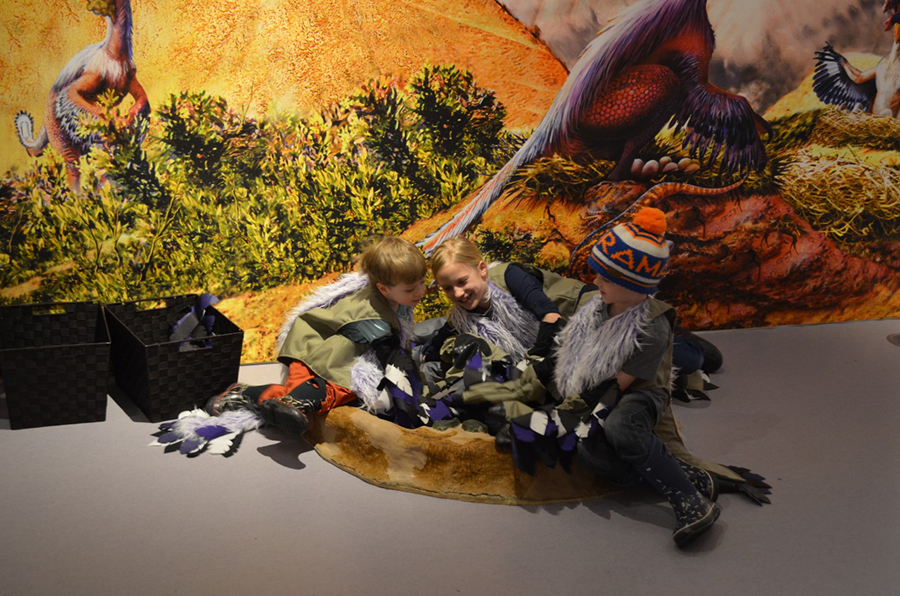
Photo provided by the Virginia Living Museum

For almost 30 years, the Virginia Living Museum has been the dinosaur destination for dinosaur lovers everywhere, and 2020 promises to be the biggest year yet!

The Museum will begin its dinosaur year with the travelling exhibit, Tiny Titans: Dinosaur Eggs and Babies – January 18 until May 3. Then, May 23 through September 7, the Museum will debut the largest dinosaur to ever be displayed at the VLM. Jurassic Giants will feature the Giganotosaurus, and will bring animatronic creatures of the Triassic, Jurassic and Cretaceous periods for summer 2020.

Developed by Charlie and Florence Magovern of The Stone Company in Boulder, Colorado in association with the Harvard Museum of Natural History, this remarkable hands-on exhibit offers an astounding array of authentic dinosaur eggs and nests collected from all over the globe – including those of each of the major plant and meat-eating dinosaur groups.

A central feature of the exhibit is a presentation about the discovery of “Baby Louie,” – the nearly complete skeleton of a dinosaur embryo. Charlie Magovern made this exceptional and rare discovery in 1993 when he was carefully cleaning a large block of eggs from China. He nicknamed the embryo after National Geographic photographer Louie Psihoyos. It was not until 2017 that this remarkable find was officially published.

Photo provided by the Virginia Living Museum

Each science-rich section of the exhibit is enhanced with exciting life-like models of embryos and hatchlings, colorful illustrations of dinosaur family life and stunning photographs of some of the world’s most renowned dinosaur hunters and their discoveries. Children can dig for eggs, dress up like a parent dinosaur to brood their nest, and feel the texture of dinosaur eggs. Cute babies and fun dinosaur facts will keep everyone entertained and educated. Babies grow fast, so make sure you catch them while they are here from January 18 through May 3, 2020.

But the dinosaur year continues this summer! After Tiny Titans closes May 3, the Museum will go from smallest – to tallest!  Coming summer 2020, roaring, stomping, animatronic dinosaurs are back with Jurassic Giants. Journey back millions of years to the Triassic, Jurassic, and Cretaceous periods and experience life-like dinosaurs around every turn. This exhibit will feature the Giganotosarus, the largest animatronic dinosaur the museum has ever displayed! He is so huge he will be featured outdoors in the Museum’s conservation garden.

Source: https://wtkr.com/

Large Theropod Dinosaur Fossil Found in Australia

Sunday, January 19, 2020

(Photo : "New theropod remains and implications for megaraptorid diversity in the Winton Formation (lower Upper Cretaceous), Queensland, Australia" (White, et.al.))

When it seems like we have had enough of dinosaurs, nature will always remind us that we have not yet fully mapped the phylogeny of all living beings in this world. A team of researchers from the University of New England, the Australian Age of Dinosaurs Natural History Museum, and the Swinburne University of Technology was able to identify fossils that were unearthed in Winton. The discovery is said to be the largest theropod dinosaur found in Australia.

The researchers detailed their findings in the scientific journal Royal Society Open Science including the discovery and the general description of the bones that were found. Three years ago, a farmer from the town of Winton (situated in the central-western part of Queensland) found fragments of bones in his property. He might have found the fragments to be unusual which led him to assume that it must be dinosaur bones and contacted the Australian Age of Dinosaurs Natural History Museum. The museum quickly assembled a team to investigate and establish a dig in the area and, indeed, the farmer was right in his assumption. It was a dinosaur and researchers not only found the fragments but unearthed 15 more limbs and vertebrate fossils.

According to their primary investigations, the fossils belong to a theropod dinosaur which closely resembles another theropod dinosaur discovered back in 2006, the Australoventor wintonensis. However, the newly-discovered fossils are larger than those of A. wintonensis making it a bit difficult for the scientists to determine whether the newly-discovered fossil is another A. wintonensis or not. 

Paleontologists described the creature as approximately two meters tall and five to seven meters long. They are also welcoming the possibility that what they have discovered might be the fossils of a new theropod species. 

These newly-discovered fossils include two partial vertebrae, an unspecified number of hands and feet, and unknown fragments. In their reports, scientists described the hand bones to have curved claws with sheath full of horns and large -- characteristics similar to modern birds. Its size and shape suggest that the reptile used their hands for grappling their prey strongly. It is most likely that this theropod dinosaur feeds on quadruped herbivores and possibly a scavenger, too. 

DINOSAURS IN AUSTRALIA

Australia has a rich natural history: it was formerly part of the Gondwanaland, a supercontinent that is situated south of Pangaea and contains what is now the continents of Australia, South America, Africa, and Antarctica. This history is proven by the fact that fossils found in these continents contain identical rocks. 

The presence of dinosaurs, especially in the eastern part of Australia in Queensland, New South Wales, and Victoria, is probably because of the supercontinent's shared space and when Gondwana broke off Pangaea 200 million years ago, it led to the emergence of the dinosaur species in the continent. Discoveries of dinosaurs from Queensland are opening up a new frontier for dinosaur research. The climate in prehistoric Australia is temperate and humid and maybe even experiencing snowfall in the parts of what is now Victoria. Meanwhile, Central Australia was submerged under an epicontinental sea, leaving areas in higher altitudes as large but isolated throughout the Cretaceous period.

Source: www.sciencetimes.com/

Wulong bohaiensis: New Feathered Dinosaur Species Identified in China

Saturday, January 18, 2020

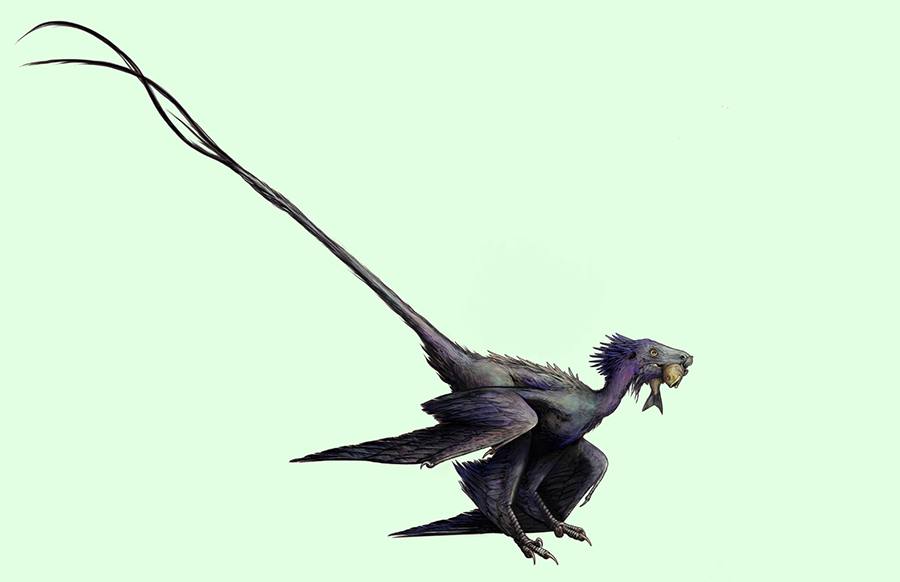
An artist’s rendering of what Wulong bohaiensis might have looked like. Image credit: Erick Toussaint.

Paleontologists in China have identified a new species of microraptorine dromaeosaur closely related to the famous dinosaur Velociraptor.

The newly-discovered dinosaur lived during the Cretaceous period, approximately 120 million years ago.

Named Wulong bohaiensis, the species was larger than a common crow but smaller than a raven.

It had a narrow face filled with sharp teeth and a long, bony tail which would have doubled its length.

Wulong bohaiensis was covered with feathers, including a wing-like array on both its arms and legs and two long plumes at the end of its tail.

The dinosaur is one of the earliest relatives of Velociraptor, the famous dromaeosaurid theropod that lived some 75 million years ago.

“The new dinosaur fits in with an incredible radiation of feathered, winged animals that are closely related to the origin of birds,” said Dr. Ashley Poust, a postdoctoral researcher at the San Diego Natural History Museum.

“Studying specimens like this not only shows us the sometimes-surprising paths that ancient life has taken, but also allows us to test ideas about how important bird characteristics, including flight, arose in the distant past.”

The skeleton of Wulong bohaiensis. Image credit: Ashley Poust.

The skeleton of Wulong bohaiensis was recovered from the Jiufotang Formation in China more than a decade ago by a local farmer.

“The specimen has feathers on its limbs and tail that we associate with adult birds, but it had other features that made us think it was a juvenile,” Dr. Poust said.

Dr. Poust and colleagues analyzed the dinosaur’s bones and found that this individual was a juvenile.

“This means that at least some dinosaurs were getting very mature looking feathers well before they were done growing,” they said.

“Birds grow up very fast and often don’t get their adult plumage until well after they are full sized.”

“Showy feathers, especially those used for mating, are particularly delayed. And yet here was an immature dinosaur with two long feathers extending beyond the tip of the tail.”

paper on the discovery of Wulong bohaiensis was published The Anatomical Record.

_____

Ashley W. Poust et al. A new microraptorine theropod from the Jehol Biota and growth in early dromaeosaurids. The Anatomical Record, published online January 15, 2020; doi: 10.1002/ar.24343

Source: www.sci-news.com/

Scientists Used Stem Cells to Create a New Life-Form: Organic Robots

Saturday, January 18, 2020

Credit: Douglas Blackiston, Tufts University

Straight out of the 1990s and the plot of Jurassic Park, a team of scientists have successfully created an entirely new life-form using stem cells derived from frog embryos.

The new species is called a xenobot and it’s unlike anything else in nature. The researchers call it a “living robot” because, though it’s made entirely of organic material, it’s not so much grown as “developed.”

Joshua Bongard, a researcher from University of Vermont who co-led the research, said:

These are novel living machines. They’re neither a traditional robot nor a known species of animal. It’s a new class of artifact: a living, programmable organism.

Xenobots are made using an artificial intelligence system that relies on, aptly enough, evolutionary algorithms. The scientists program the cells using a supercomputer at the University of Vermont and then researchers at Tufts assemble the creatures and… life finds a way.

Per a press release from University of Vermont:

Assembled into body forms never seen in nature, the cells began to work together. The skin cells formed a more passive architecture, while the once-random contractions of heart muscle cells were put to work creating ordered forward motion as guided by the computer’s design, and aided by spontaneous self-organizing patterns—allowing the robots to move on their own.

The robots can be assembled into numerous configurations and, according to the team’s research paper, they’re capable of self-healing, locomotion, and working together.

Theoretically, the xenobots could function as biodegradeable nanobots. This would make them useful for functions like delivering drugs inside the human body.

Here’s another theory: Jurassic Park. In the 1993 film (spoilers ahead, but it’s been almost 30 years) a team of scientists cobble together some dinosaur DNA with stem cells from modern creatures including, you guessed it: frogs.

All hell broke loose in the movie once the frog cells started going haywire.

However, we’re quite sure this won’t be the case here. Here’s the full study just in case you want to check for yourself.

Source: https://thenextweb.com/

Pages