nandi's blog

Horned Dinosaur Might Change the Way Paleontologists Identify New Species of Dinosaurs

Tuesday, November 26, 2019

Hannah’s skull. Credit: Scott Persons.

University of Alberta paleontologists uncover spiky skull--and overturn long-standing assumptions in identifying horned dinosaurs.

A team of researchers at the University of Alberta has unearthed a well-preserved Styracosaurus skull--and its facial imperfections have implications for how paleontologists identify new species of dinosaurs.

The skull was discovered by Scott Persons in 2015, then a graduate student in the Department of Biological Sciences, during an expedition in the badlands northwest of Dinosaur Provincial Park.

Nicknamed Hannah, the dinosaur was a Styracosaurus--a horned dinosaur over five metres in length with a fan of long horns. UAlberta paleontologists led by Robert Holmes, professor in the Department of Biological Sciences, have learned much from those horns--because they aren't symmetrical.

Hannah’s skull, seen from all sides. The jacket used to recover Hannah’s skull weighed 2500 kilograms—requiring a helicopter to retrieve from the field! Credit: Scott Persons.

"When parts of one side of the skull were missing, paleontologists have assumed that the missing side was symmetrical to the one that was preserved," explained Persons. "Turns out, it isn't necessarily. Today, deer often have left and right antlers that are different in terms of their branching patterns. Hannah shows dramatically that dinosaurs could be the same way."

The differences in the skull's left and right halves are so extreme that had the paleontologists found only isolated halves, they might have concluded that they belong to two different species

"The skull shows how much morphological variability there was in the genus," said Holmes. Like the antlers of modern deer and moose, Hannah shows that the pattern of dinosaur horns could vary significantly--meaning some fossils that were once assumed to be unique species will have to be reevaluated.

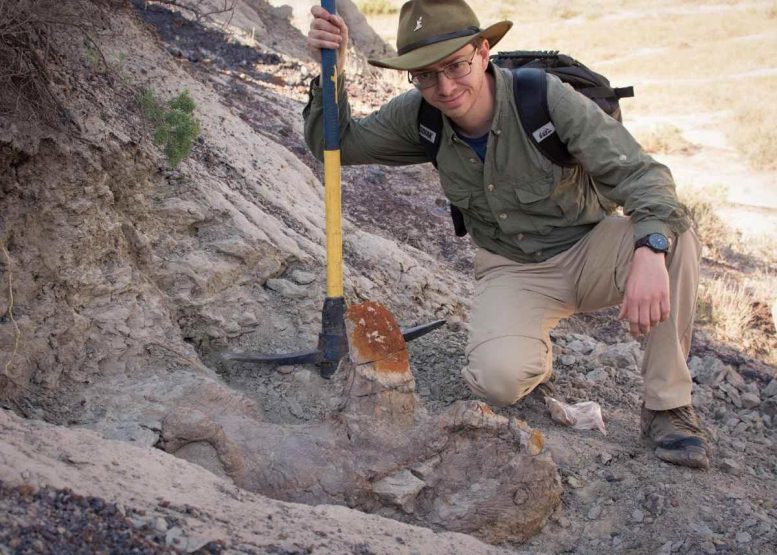
Paleontologist Scott Persons, pictured alongside the partially-uncovered skull. The Styracosaurus skull has implications for how horned dinosaurs are identified. Credit: Scott Persons.

Tradition dictates that the person who finds an important dinosaur specimen gets to give it a nickname. "Hannah the dinosaur is named after my dog," explained Persons, now a professor and museum curator at the College of Charleston. "She's a good dog, and I knew she was home missing me while I was away on the expedition."

Despite the nickname, paleontologists have no way of knowing if the dinosaur was female. But they have learned other details from the skull--from a partnership with researchers in the Faculty of Engineering.

"Ahmed Qureshi and graduate student Baltej Rupal in the Faculty of Engineering assisted us in performing a 3D laser scan of the skull," said Persons. "That let our publication to include a digital reconstruction, allowing scientists all over the world to download the 3D model and inspect it in detail."

"This is the future of paleontological collections: digital dinosaurs."

###

Reference: “Morphological variation and asymmetrical development in the skull of Styracosaurus albertensis” by Robert B. Holmes, Walter Scott Persons, Baltej Singh Rupal, Ahmed Jawad Qureshi and Philip J. Currie, 8 November 2019, Cretaceous Research. DOI: 10.1016/j.cretres.2019.104308

Source: www.eurekalert.org/

Jurassic World 3 Could Basically Be Dino-Riders

Thursday, November 28, 2019

Truthfully, where else can Jurassic Park, or Jurassic World, go anymore? There have been five films that have suggested humans messing around with dinosaurs is a bad idea. Yet, Jurassic World 3 is a go for 2021, with director Colin Trevorrow returning to helm the film.

Jurassic World: Fallen Kingdom ended with the prehistoric creatures let out into the world, so the sequel will likely follow the events from there. While this is a plot that was explored, briefly, in The Lost World: Jurassic Park, there’s another interesting angle that the last two Jurassic World movies introduced: the genetic modification and weaponising of the dinosaurs. In other words, the whole premise of Dino-Riders.

If you’re unfamiliar with Dino-Riders, it was a popular Tyco toyline in the late ’80s, which had its own short-lived animated series. The series pitted the good Valorians against the bad Rulon Alliance on prehistoric Earth. The Valorians and Rulons both used the dinosaurs in their battles, riding and attaching weapons to the creatures. The toys proved to be a sensation due to their high levels of detail, originality, and the rising of popularity of dinosaurs in popular culture (remember, this was even before Jurassic Park hit cinemas).

Unfortunately, Dino-Riders had a short lifespan, hanging around for three years on the shelves before making way for other toylines. It was a normal thing back then. Even so, fans never forgot about it, and Mattel was reportedly interested in developing a live-action film in 2015—though the news has gone cold on that front.

While a Dino-Riders film might be unlikely right now, its elements could find a way into Jurassic World 3. After all, would any fan be disappointed to see Chris Pratt’s Owen Grady riding around on the weaponised velociraptor Blue? It’s been teased for so long that it’s the only logical—if we can even call this franchise that at this point—progression. Maybe a big battle will be necessary to save the planet from truly becoming overrun by dinosaurs?

Jurassic World: Fallen Kingdom made over $1.3 billion at the global box office, but its reviews were negative to mixed for the best part. Undoubtedly, the studio Universal Pictures won’t care about bad reviews if Jurassic World 3 pulls in a similar haul, but it might want to give fans a little more this time, especially with the returns of Sam Neill and Laura Dern to the franchise. And what would be more outlandish and cinema-worthy than humans riding around on dinosaurs and doing battle?

Source: www.fortressofsolitude.co.za/

CofC Paleontologist Uncovers Massive Dinosaur Skull

Monday, November 25, 2019

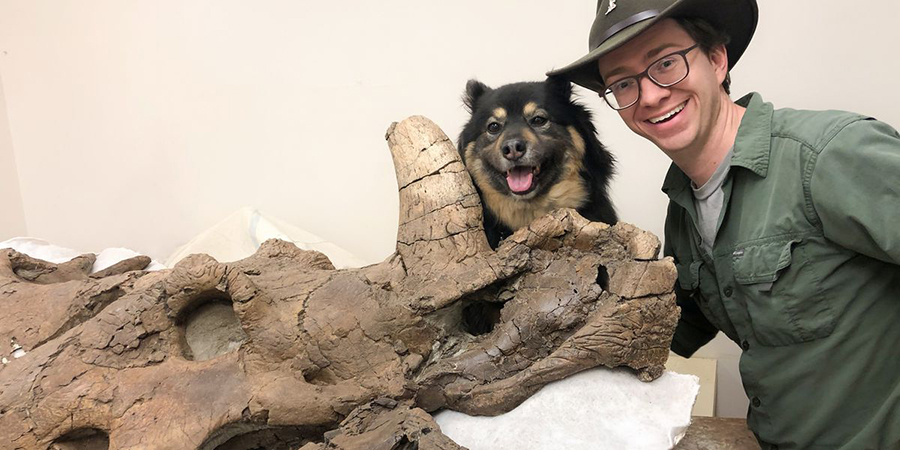
Hannah the dinosaur, Hannah the dog, and Dr. Scott Persons (photo source: College of Charleston)

Meet the dinosaur whose facial imperfections are changing what paleontologists thought they knew about horned dinosaurs.

The dinosaur is named “Hannah” after a dog.

In the summer of 2015, College of Charleston professor Scott Persons was looking for fossils in the badlands of southern Alberta. Hiking down a ridge, he says he spotted a fossil horn poking straight out of the hillside, and he began to dig around it. The horn, bigger around than a baseball bat, was not an isolated bone. It was still connected to a huge skull.

“That’s exactly how you want to find a dinosaur,” Persons said. “If much more of the skull had been exposed on the surface, it would have started to erode away and crumble. But only the tip of Hannah’s snout horn was protruding, and the skull was otherwise beautifully preserved.”

Traditionally, because Persons discovered a particularly important dinosaur specimen, he gets to give it a nickname. “Hannah the dinosaur is named after my dog Hannah,” he says. “She’s a good dog, and I knew she was home missing me while I was away on the expedition.”

Despite the chosen nickname, paleontologists have no way of knowing if the dinosaur was female.

Four years and a whole lot of chiseling later, an international research team has published a full scientific analysis of the skull. Even by the spikey standards of Styracosaurus, experts say Hannah has a lot of horns and some are much longer than in other Styracosaurus specimens.

“The skull shows how much morphological variability there was in the genus,” expert on horned dinosaurs and member of the research team Robert Holmes says. What is more, Hannah’s horns are apparently not symmetrical. The horns on Hannah’s left side are nearly all larger than those on Hannah’s right side. Researchers say they are still not sure why this is.

Hannah’s left side also shows evidence of an injury. “It looks like Hannah suffered from some kind of old wound or infection, or both,” Persons says. “Something happened to the left side of the face, probably when Hannah was young and the skull was still growing. It wasn’t lethal, Hannah lived through it, but afterward, the skull bones grew in a strange way.”

The right and left differences are so extreme that, had the paleontologists found only isolated bits of the right and bits of the left, they might have concluded that they belong to two different species. According to the research team’s findings, just published in the peer-reviewed scientific journal Cretaceous Research, this is one of the major lessons learned from Hannah’s skull. Like the branching prongs in the antlers of modern deer and moose, the pattern of horns in dinosaurs could be variable within a species.

As a result, experts say some of the horned dinosaur species that were once assumed unique will have to be reevaluated.

Source: www.live5news.com/

Jurassic Park: 10 Best Alan Grant Quotes

Sunday, November 24, 2019

There will be significant fan interest for Jurassic World 3 come 2021 when we get the main trio of Alan Grant, Ellie Sattler, and Ian Malcolm back together for the final film in the series. Alan’s inclusion has sparked particular interest due to his position as one of the main protagonists in the original Jurassic Park trilogy.

No matter how good or badly received the film he was in turned out, Alan has always been a favorite for the fans due to the coolness factor he brings and the definite genius he has when it comes to the subject of paleontology. To bring you up to speed on Alan’s character, here are 10 of his best quotes.

10 "YOU BRED RAPTORS...?"

Unlike Ian Malcolm, Alan seemed to be on board with the idea of Jurassic Park opening its doors, and was excited to see a brand new dinosaur hatching from her egg - until he was told what kind of dinosaur it was that he was holding. 

Being an expert in velociraptor paleontology, Alan saw the first signs of red flags flying when he realized InGen was messing about with raptors. The scene was sent into a chilling U-turn as Alan struggled with comprehending that advanced killers like raptors were now meant to co-exist with humanity.

"LIFE FOUND A WAY..."

The thought of more dinosaurs on the island was definitely scary to say the least, but Alan still had respect for nature and the life it brought with it. Earlier, Ian had claimed that “life finds a way” and was rather ridiculed for thinking so as the dinosaurs were engineered to be female.

However, Alan happened upon fresh dinosaur eggs out in the wild, meaning the hatchlings had become male due to their biological data granting them a way to “switch” their genders and eventually allow them to reproduce. Alan couldn’t help but smile at how nature took back control from humans as life did indeed find a way to thrive.

"IAN, FREEZE!"

That T-Rex entry was scarier than any horror movie we’ve seen or might see, as she tore apart the barrier containing her and signaled the destruction of Jurassic Park to come. Here, we learned that Ian and Alan were made of stern stuff as they took to rescuing the kids the T-Rex was attacking. 

Alan’s plan was working like a charm before Ian intervened. Although he meant well, Alan saw that Ian was needlessly putting himself in harm’s way and pleaded for him to freeze as the T-Rex wouldn’t be able to see him. For a few seconds, every viewer’s heart was in their throat as Alan said what they’d been thinking.

"...YOU WOULDN'T EVEN KNOW THEY WERE THERE."

The establishment of Alan’s characterization was set in his first scene as he was shown becoming annoyed by a young boy who scoffed at the idea of raptors being dangerous. Rather than play along, Alan took to antagonizing the kid to put him in his place. 

He explained, in excruciating detail, how the raptors took on a pack mentality when hunting their prey, and how the one who would actually initiate the attack pounced from the side. This left the boy scarred at the prospect of such a horrible death, although he did deserve to be scared for showing Alan such disrespect.

"ITS-IT'S A DINOSAUR!"

At various points in the movie, Alan was the audience surrogate as he perfectly illustrated how every one of us who watched Jurassic Park felt when the dinosaurs were introduced in all their glory for the first time. 

Here, Alan was left speechless as he saw his life’s work - which had generally been dead before him - was now walking right in front of his eyes. The sight of that enormous dinosaur did, at least for a few sweet hours, evoke the sense of wonder and awe that John Hammond desired from his audience.

"THERE ARE THOSE THAT WANT TO BE ASTRONOMERS AND THOSE THAT WANT TO BE ASTRONAUTS...THAT'S THE DIFFERENCE BETWEEN IMAGINING AND SEEING."

In a way you can sympathize with the people who made Jurassic Park even though it was playing with God’s work, as the prospect of seeing living and breathing dinosaurs is something no-one would want to pass up.

Alan also came to understand this, and devised a theory that there were two kinds of people: Those who were willing to study from a safe place, and those who wanted to experience these larger-than-life things on their own. Even though it was life-threatening to go with the latter option, at least in that scenario one got to experience the Jurassic world for what it was.

"HEY, WHAT DID I TOUCH?"

There was a running gag in the first film that technology didn’t seem to like Alan, and this was seen in effect too as whatever he seemed to touch would go haywire. For this reason, Alan was convinced he was the one responsible for things going awry before the T-Rex was released.

Of course, it was actually Dennis Nedry’s machinations that were causing the power failure, but Alan’s penchant for ruining technology was such that he was willing to blame himself. It just goes to show how out of touch he was with the progressing world.

"THEY'RE MOVING IN HERDS...THEY DO MOVE IN HERDS."

Nowadays, people in popular media associate “herds” with the zombies we see on The Walking Dead and other shows, but those of us who remember the feeling of the first Jurassic Park film’s experience will always hark back to Alan’s comment about dinosaur herds.

When he first laid eyes on them, the Brachiosaurus' were moving in herds as they grazed the land for food, which brought tears to Alan’s eyes as he found out he was right all along about these dinosaurs’ behavior of moving in herds. 65 million years’ worth of proof was grazing right in front of him.

"REVERSE DARWINISM: SURVIVAL OF THE MOST IDIOTIC."

After his adventures in Jurassic Park, Alan took on a more sarcastic and straight-to-business attitude in life and was disillusioned by the idea of taking needless risks. This is why he took on a snarky demeanor to Billy’s story about his near-death experience in New Zealand.

When Billy shared that he thought his bag strap was lucky because it saved his life during that freak accident, Alan wasn’t impressed in the slightest and claimed that “Reverse Darwinism” was in effect. Rather than the fittest surviving, the most idiotic got lucky, as far as Billy’s story was concerned.

"MR. HAMMOND, AFTER CAREFUL CONSIDERATION, I HAVE DECIDED NOT TO ENDORSE YOUR PARK."

The whole misadventure Alan had in the first movie was because John Hammond wanted an endorsement from the former to give Jurassic Park the go-ahead. Ellie and Ian had been apprehensive about giving their nods of approval, but Alan had remained undecided.

Once he’d been to hell during the events of the story, Alan had more than made up his mind and his last line in the film was to confirm to John that the answer from his end was a resounding “no.” This came in the form of him promising that he’d given it a “careful consideration” before coming to his decision. Almost being savaged by a T-Rex and raptors might have influenced that final decision.

Source: https://screenrant.com/

Cretaceous Legged Snake Fossils Shed New Light on Evolution of Modern Snake Body Plan

Friday, November 22, 2019

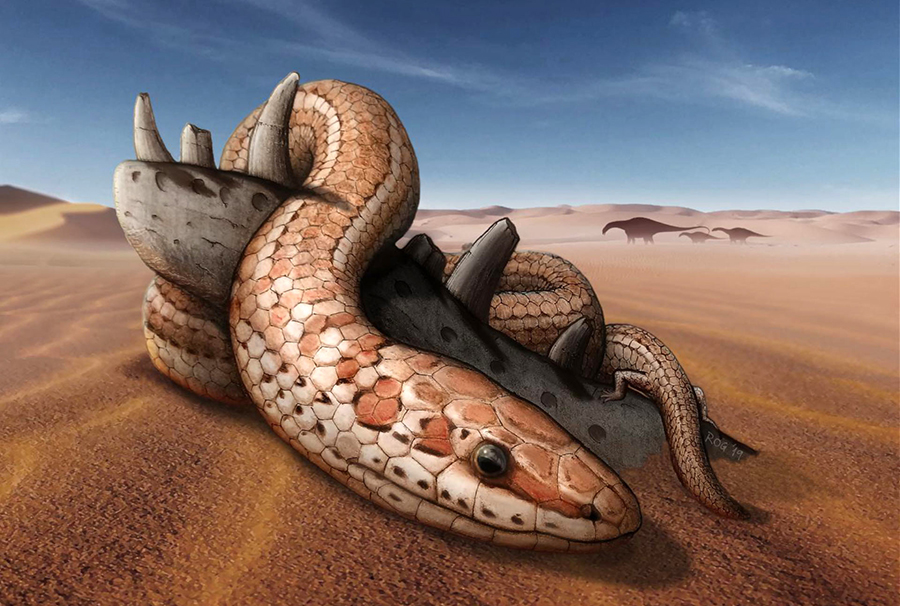
Najash rionegrina. Image credit: Raúl O. Gómez, Universidad de Buenos Aires.

An analysis of the first three-dimensionally preserved skulls and skeletons of the extinct legged snake Najash rionegrina shows that nearly 100 million years ago (Cretaceous period), legged snakes still had a cheekbone — also known as a jugal bone — that has all but disappeared in their modern descendants, and that snakes possessed hind legs during the first 70 million years of their evolution.

The evolution of the snake body has captivated researchers for a long time, representing one of the most dramatic examples of the vertebrate body’s ability to adapt. But a limited fossil record has obscured our understanding of their early evolution until now.

“Snakes are famously legless, but then so are many lizards,” said Dr. Alessandro Palci, a researcher at Flinders University.

“What truly sets snakes apart is their highly mobile skull, which allows them to swallow large prey items.”

“For a long time we have been lacking detailed information about the transition from the relatively rigid skull of a lizard to the super flexible skull of snakes.”

“Our findings support the idea that the ancestors of modern snakes were big-bodied and big-mouthed — instead of small burrowing forms as previously thought,” added Dr. Fernando Garberoglio, a scientist in the Fundación Azara at the Universidad Maimónides.

The specimens of Najash rionegrina from the La Buitrera Palaeontological Area in northern Patagonia, Argentina. Image credit: Garberoglio et al, doi: 10.1126/sciadv.aax5833.

Dr. Palci, Dr. Garberoglio and their colleagues performed high-resolution (CT) scanning and light microscopy of Najash rionegrina skulls from northern Patagonia, Argentina, to reveal substantial new anatomical data on the early evolution of snakes.

Najash has the most complete, three-dimensionally preserved skull of any ancient snake, and this is providing an amazing amount of new information on how the head of snakes evolved,” Dr. Palci said.

“It has some, but not all of the flexible joints found in the skull of modern snakes. Its middle ear is intermediate between that of lizards and living snakes, and unlike all living snakes it retains a well-developed cheekbone, which again is reminiscent of that of lizards.”

Najash shows how snakes evolved from lizards in incremental evolutionary steps, just like Darwin predicted,” added Professor Mike Lee, from Flinders University and South Australian Museum.

“This research revolutionizes our understanding of the jugal bone in snake and non-snake lizards,” said Professor Michael Caldwell, from the University of Alberta.

“After 160 years of getting it wrong, this paper corrects this very important feature based not on guesswork, but on empirical evidence.”

The new snake family tree created by the team also reveals that snakes possessed small but perfectly formed hind legs for the first 70 million years of their evolution.

“The study reveals that early snakes retained their hindlimbs for an extended period of time before the origin of modern snakes which are for the most part, completely limbless,” Dr. Garberoglio said.

“These primitive snakes with little legs weren’t just a transient evolutionary stage on the way to something better,” Professor Lee said.

“Rather, they had a highly successful body plan that persisted across many millions of years, and diversified into a range of terrestrial, burrowing and aquatic niches.”

The results were published in the November 20, 2019 issue of the journal Science Advances.

_____

Fernando F. Garberoglio et al. 2019. New skulls and skeletons of the Cretaceous legged snake Najash, and the evolution of the modern snake body plan. Science Advances 5 (11): eaax5833; doi: 10.1126/sciadv.aax5833

Source: www.sci-news.com/

Vayuraptor nongbualamphuensis: Fossils of Another Species of Dinosaur Found in Thailand

Wednesday, November 20, 2019

Vayuraptor nongbualamphuensis 3 0 38 (1 Today) BY  gogman

Researchers in northeastern Thailand have uncovered fossils belonging to a new species of dinosaur, bringing the number of dinosaur species known to have once roamed the area to eleven.

Paleontologists have named this most recently unearthed species the Vayuraptor nongbualamphuensis. The researchers said this raptor is a cousin of the Tyrannosaurus rex, although it is smaller in size. It had shark-like teeth and the reptile may have been the dominant predator in the area before its extinction.

Pladet Srisuk, a researcher at Maha Sarakham University, says the dinosaur’s name was taken from the Sanskrit name of the Hindu god Vayu, described as the Lord of the Winds.

Most raptor remains have been found in Africa and Europe, and so researchers said the find was surprising. Scientists have been discovering dinosaur fossils in Thailand since 1976. The first find was a bone from a sauropod discovered by government workers drilling for minerals in the Phu Wiang area of Khon Kaen province.

Virtually all of the fossils have been found on the Korat Plateau, an area spanning several problems in the northeast, known colloquially as Isan. The Vayuraptor bone was unearthed in Nong Bua Lamphu, a small province situated between Khon Kaen and Udon Thani.

Vayuraptors lived during the Cretaceous period, which began approximately 130 million ago and came to a close 65 millions years ago when about 95 percent of dinosaurs disappeared. Scientists generally believe the dinosaurs were wiped out when a meteor or comet struck the earth.

Thailand has established a dinosaur museum at Phu Wiang in Khon Kaen province where the first fossil was found.

Source: https://thaiembdc.org/

Vjushkovia triplicostata: Ancient Komodo Dragon-Like Animals Had Heads Proportionally Larger Than Dinosaurs

Thursday, November 21, 2019

Reconstruction of Erythrosuchus africanus. CZJ posing as scale. By Nobu Tamura

An international team of researchers has found evidence showing that the ancient meat-eating creature Vjushkovia triplicostata had a proportionally larger head than any known dinosaur. In their paper published in the journal Royal Society Open Science, the group describes their reexamination of V. triplicostata and what they learned about the large Komodo dragon-like creature.

V. triplicostata was a member of the Erythrosuchids family, which was of the clad archosauromorphs. The oldest known examples of Erythrosuchids are Garjainia, of which there are two known kinds: Garjainia prima, which has been found in South Africa, and V. triplicostata, which was found in Russia.

As a group, Erythrosuchids were known as "red crocodiles" because of their long bodies and huge, sharp teeth. They existed during the time after the Permo-Triassic mass extinction, just a few million years before dinosaurs arrived on the scene—as such, they were an apex predator. In this new effort, the researchers note that Garjainia prima has been extensively studied, but until now, little work has been conducted with V. triplicostata. To fill in the gap, the researchers took a close look at its fossilized skull.

They found that it and Garjainia prima were actually of the same species. They also found that taken together, the two had some of the largest heads, proportionally speaking, of any known reptile. They suggest the massive head likely came with equally massive muscles, which likely were useful for capturing prey. They noted also that archosauromorphs in general tended to have overly large heads compared to their body size, which they suggest was an indication of an invasion of hypercarnivorous creatures emerging after the largest mass extinction on record.

The researchers also found that both of the Garjainia creatures would have had a length of approximately 3 meters—and they would have looked similar to modern Komodo dragons. They further report that they plan to take a closer look at the V. triplicostata fossil, this time concentrating on the rest of its body, hoping to better understand why the creatures had such large heads. They expect to find that the large heads came about as their bodies grew larger in general, as part of carnivorous adaptations.


More information: Richard J. Butler et al. Cranial anatomy and taxonomy of the erythrosuchid archosauriform 'Vjushkovia triplicostata' Huene, 1960, from the Early Triassic of European Russia, Royal Society Open Science (2019). DOI: 10.1098/rsos.191289

© 2019 Science X Network

Source: https://phys.org/

14 Most Unusual Dinosaurs That Lived in What is Now Russia

Thursday, November 21, 2019

Orlov Paleontological Museum, Fred Wierum (CC BY-SA 4.0)

Long before woolly mammoths roamed Siberia, the territory of modern Russia was home to all kinds of dinosaurs. Some can even be seen on the coats-of-arms of Russian regions.

“Russian dinosaurs, like snakes in Ireland, are remarkable only because they don’t exist,” wrote the famous U.S. paleontologist Othniel Charles Marsh in the late 19th century. And for a long time there were indeed no dinosaur finds. How come? Four factors were in play against the “Russian dinosaurs” theory. 

First, in the Mesozoic Era, the age of the dinosaurs, a third of the modern territory of Russia was underwater, and dinosaurs, in the classical sense of the term, only lived on land. The remains of giant mosasauruses, ichthyosaurs, and plesiosaurs that lived underwater were also found in Russia, but they are categorized by scientists as sea reptiles, not dinosaurs.

Second, in order to find dinosaur remains, the creatures had to have died in so-called “areas of sediment accumulation” (lakes, swamps, coastlines) and to have been quickly covered with sediment before other animals and bacteria could eat them, or the wind, sun, and rain could destroy them. That is, the chances of fossils being preserved were fairly slim. 

Third, unlike America, which has many wastelands unsuitable for agriculture but great for dinosaur finders, the majority of Russia’s most promising “dinosaur territories” are covered with inaccessible forest, which makes it impossible to conduct searches.

And last but not least, there are simply not enough specialists. They have always been an elite club in Russia, but right now the country has fewer than ten (!) active paleontologists.

Yet despite all the difficulties, dinosaurs have been found on the territory of modern Russia. Although not all fossils have been identified, many different types of dinosaurs that once lived there are now known to science. Here are the 14 most weird and wonderful.

1. Nipponosaurus (Sakhalin Island)
Mariana Ruiz Villarreal

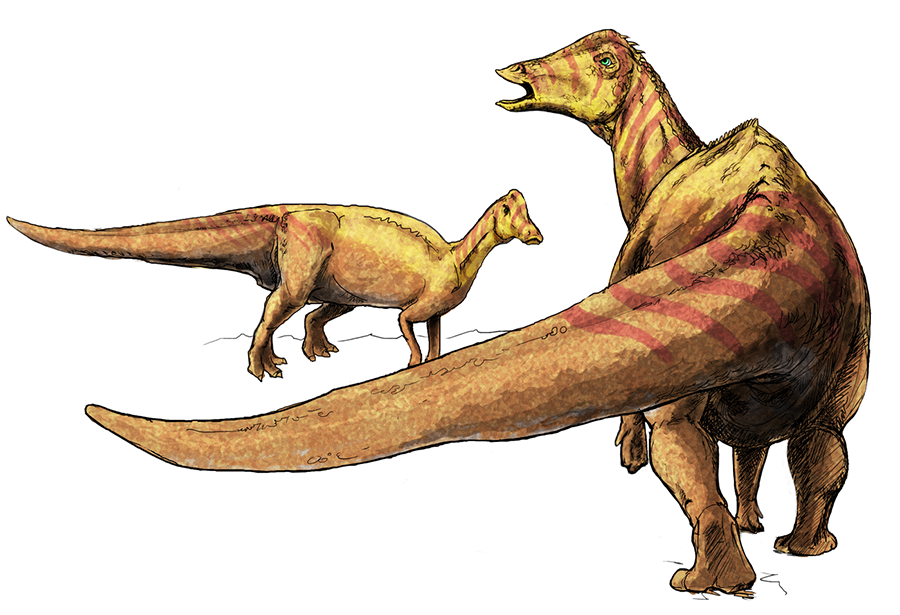
A herbivorous duckbill dinosaur that lived during the Upper Cretaceous Era (85-70 million years ago), Nipponosaurus was discovered in the southern part of Sakhalin Island in 1934, when the territory was still Japanese. It was documented and removed by Japanese scientists. When the island passed to Russia, no more specimens were found. But hope springs eternal!

2. Amurosaurus (Blagoveshchensk, Amur Region)
Debivort (CC BY-SA 3.0)

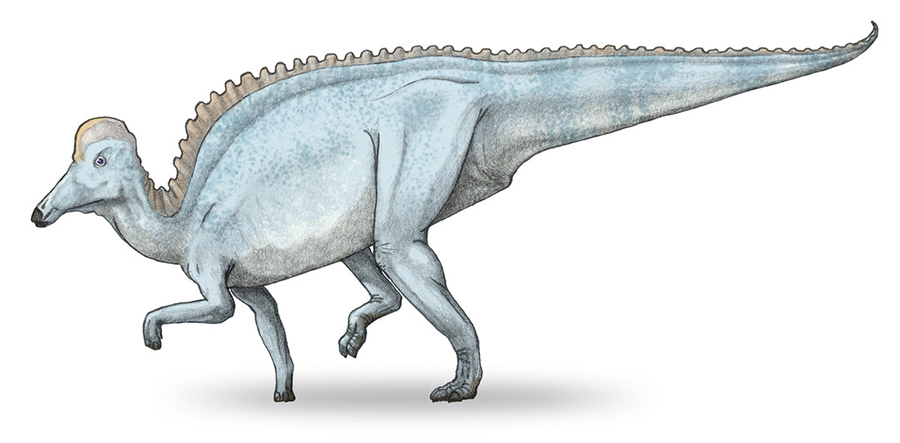
Another duckbill dinosaur that lived on the territory of Russia at around the same time, 70-66 million years ago, was documented in 1991 and given the name Amurosaurus in honor of the Amur River. The first bones of these dinosaurs were discovered by Russian scientists in the early 20th century, but for a long time they struggled to recreate the image of the prehistoric creature. Today it is known to have been a rather large herbivorous dinosaur (3 meters across the top of the shoulders) with a crest on its head and several thousand teeth, enabling it to grind almost any food. What’s more, they even found teeth processed by gastric acid, which means it could swallow its own old teeth! 

3. Olorotitan (Kundur, Amur Region)

ДиБгд (CC BY-SA 3.0)

Another large duckbill dinosaur, Olorotitan, was also found in these parts. It could reach 12 meters in length and had a larger hollow nasal crest, which it probably used to make trumpet sounds. Olorotitan fossils were found in 1991, followed by the discovery in 1999 of an almost complete and articulated skeleton, the first such find in Russia.

4. Kerberosaurus (Blagoveshchensk, Amur Region)

cisiopurple/deviantart.com

The herbivorous Kerberosaurus or Cerberosaurus, named after the three-headed guard dog of Hades in Greek mythology, was also found on the banks of the Amur River, on a site dating back 70-66 million years. According to paleontologists, it was a large reptile, about 10 meters long, and despite having no crest, still had various features marking it as a duckbill dinosaur, in particular: a wide beak and plentiful teeth for grinding food. 

5. Kulindadromeus (Kulinda, Trans-Baikal Territory)

The coat-of-arms of the Chernyshevsky District of the Trans-Baikal Territory. Anna Garcia

Nobu Tamura (CC BY-SA 4.0)

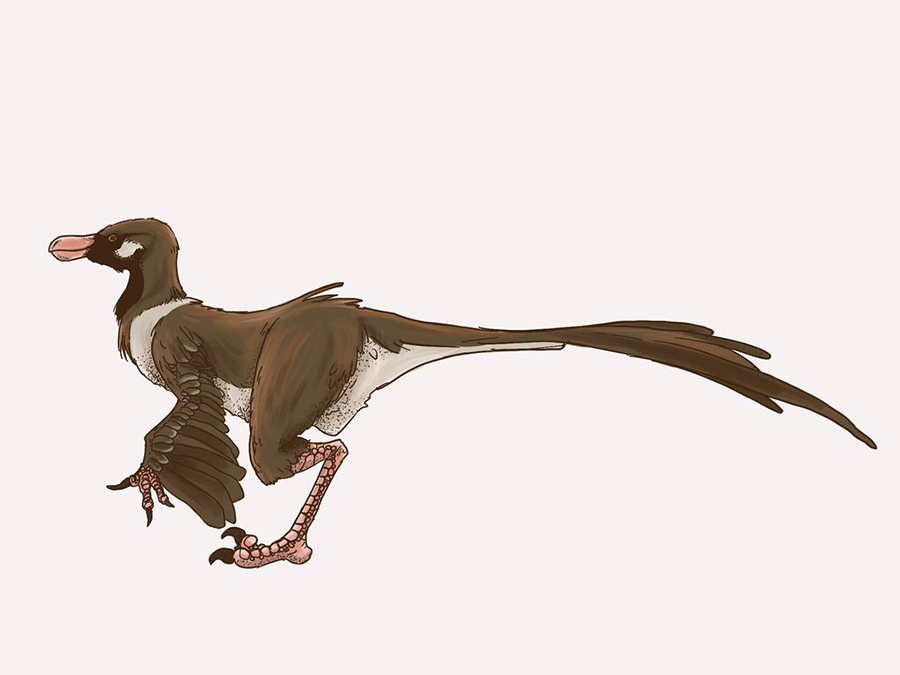
The herbivorous Kulindadromeus lived in the Trans-Baikal Territory about 150 million years ago, and was unearthed by Russian scientists in 2010. The almost complete skeleton with imprints of the skin covering was one of the most sensational finds in Russia. It was a two-legged dinosaur 1.5 meters long and with different skin on different parts of the body, including three types of scales on the hind limbs, tail, head, and chest area, and three types of feathers on the humerus, femur, and shin bones. The find was important not only for science, but for the local administration — the image of the first feathered dinosaur appeared on the coat-of-arms of the Chernyshevsky District of the Trans-Baikal Territory. 

6. Psittacosaurus (Shestakovo, Kemerovo Region)

The coat-of-arms of the Chebulinsky District of the Kemerovo Region

Nobu Tamura (CC BY-SA 4.0)

Another dinosaur that became part of a regional coat-of-arms, Psittacosaurus was discovered in Siberia in 1953. A herbivorous dinosaur of the Cretaceous Period (129-113 million years ago), described as the largest representative of its kind, the “Siberian Psittacosaurus” reached up to 185 cm in length and weighed up to 30 kg. It is also known as the “parrot dinosaur” because of its strange appearance: it had a beak, hornlike protuberances, and something resembling spikes or feathers on the tail.

7. Kileskus (Sharypovo, Krasnoyarsk Territory)

cisiopurple/deviantart.com

One of the most interesting finds in the Krasnoyarsk Territory, this predatory dinosaur was discovered by local historian and amateur paleontologist Sergei Krasnolutsky near the town of Sharypovo. The dinosaur, which was given the name Kileskus, lived about 168-166 million years ago, and was one of the oldest relatives of the famous Tyrannosaurus Rex. It reached 5-6 meters in length and 1.7 meters in height, and weighed up to 250 kg.

8. Stegosaurus (Sharypovo, Krasnoyarsk Territory)

Getty Images

In the same area, Krasnolutsky also found a giant skeleton of a herbivorous Stegosaurus about 175 million years old. This is one of the most complete skeletons ever found in Russia, and the oldest Stegosaurus skeleton in the world. Stegosaurus reached about 4 meters in height and 9 meters in length, and weighed up to 4.5 tons. But its brain weighed a mere 80 grams! However, the Siberian Stegosaurus had smaller dimensions (the size of a cow), and it could have been the progenitor of its later, larger relatives. Stegosaurus specimens were also found at the Teete stream in Yakutia — about 5-6 meters long and weighing around 3-4 tons. 

9. Allosaurus (Teete, Yakutia)
Fred Wierum (CC BY-SA 4.0)

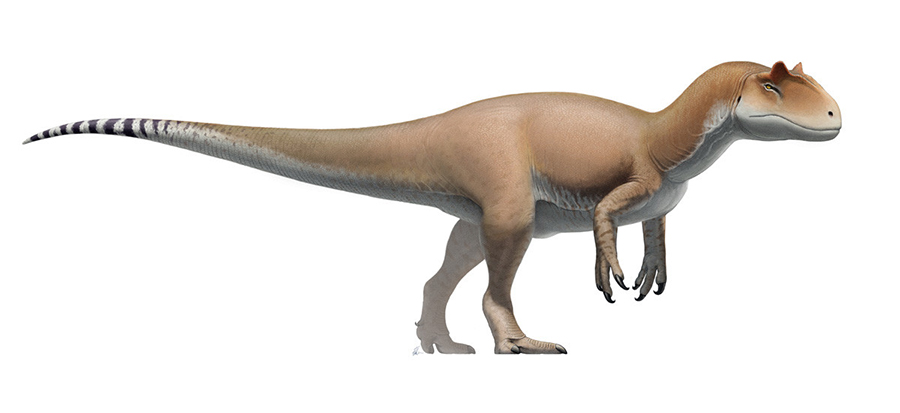
Besides Stegosaurus, the remains of one of the largest predators of the time — Allosaurus — were also found in Yakutia. These creatures reached about 7 meters in length and 2-2.5 meters in height, and weighed one ton. Despite its huge mouth with inward-bent teeth up to 10 cm long, scientists calculated that its bite was weaker than that of a modern lion. Its skull, meanwhile, could withstand a force 15 times as strong as its bite, so Allosaurus effectively used its head like an ax.

10. Ankylosaurus (Teete, Yakutia)
Mariana Ruiz Villarreal

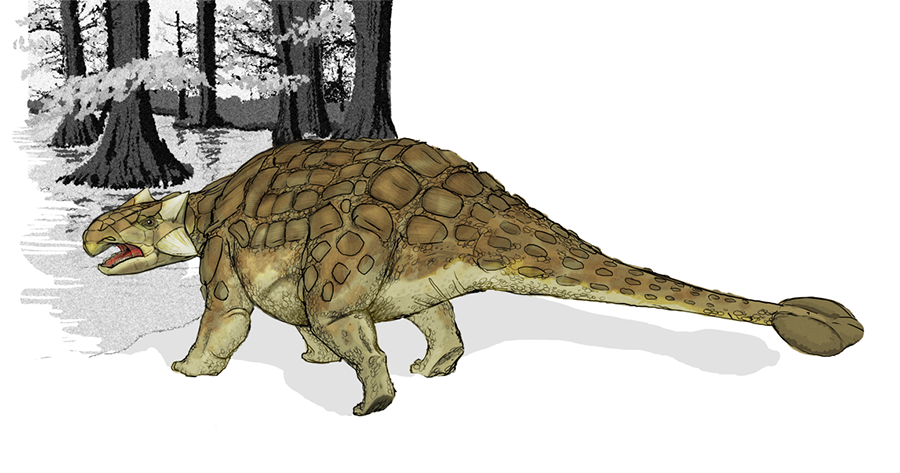
Armored herbivorous Ankylosaurus also inhabited the territory of present-day Yakutia. The remains of this ancient creature, which was approximately 3-4 meters long and 1-1.2 meters high, were found at Teete. It had very small teeth, and its back was partially or completely covered with bony armor. 80 million-year-old Ankylosaurus carapaces were also found in the Volgograd Region. According to scientists, they were impassive animals that lived on the shores of water bodies. They were well-protected from predators and, although heavy, did not sink into swamps thanks to the hooflike structure of the manus. 

11. Riabininohadros (Crimea)

Orlov Paleontological Museum

Some of the youngest (geologically speaking) dinosaur finds in Russia were made in Crimea. In 1934, the first dinosaur remains were discovered near the town of Bakhchysarai, and later the famous geologist Anatoly Ryabinin determined that the bones had belonged to an unknown species of duckbill dinosaur that lived 68-66 million years ago. According to scientists, the near-insular Crimea could have been a kind of refuge for Riabininohadros, which had to fight for survival. It was relatively small in size, 2.5 meters tall and up to 7 meters long. This typical herbivorous reptile also liked to graze near freshwater bodies.

12. Tengrisaurus (Gusinoozyorsk, Buryatia)

cisiopurple/deviantart.com

Named after Tengri, the chief deity in Mongolian-Turkic mythology, this herbivorous giant of the Cretaceous Period (120-100 million years ago) was documented by Russian scientists in 2017 on the basis of three tail vertebrae. It was the first Russian sauropod to receive a scientific designation. It reached a length of 12 meters and weighed up to 20 tons. 

13. Sibirotitan (Shestakovo, Kemerovo Region)

cisiopurple/deviantart.com

Another sauropod of impressive dimensions, officially recognized only in 2017, Sibirotitan lived on the territory of modern Russia about 120 million years ago. The new reptile was documented thanks to teeth, vertebrae, and a sacrum about half a meter long discovered over a period of time near the village of Shestakovo, Kemerovo Region, at one of Russia’s top dinosaur locations. It was not the largest representative of its group: Sibirotitan had a long, massive tail and an elongated neck, weighed approximately 10 tons, and reached about 12 meters in length from head to the tip of its tail. The four-legged Sibirotitan fed on plants and, due to its imposing size, was rarely attacked by predators. 

14. Volgatitan (Ulyanovsk)
cisiopurple/deviantart.com

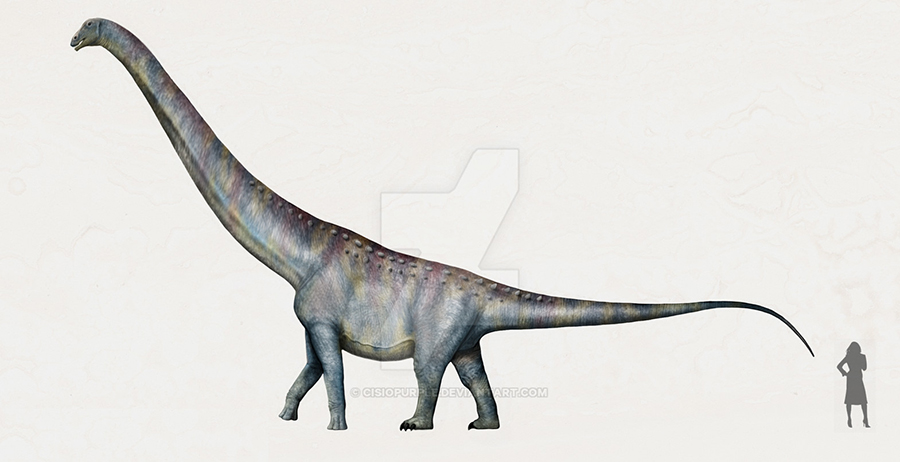
More recently, at the end of 2018, Russian scientists finished documenting a new dinosaur, the remains of which had lain in the ground on the banks of the Volga River for around 130 million years. Three giant vertebrae had been discovered back in 1982, and several more were found in the same place a few years later, but only recently were scientists able to determine that they belonged to a previously unknown titanosaur. It was designated Volgatitan simbirskiensis, or Volgatitan for short. This giant herbivorous dinosaur with an extended neck and tail lived approximately 65-200 million years ago. True, as scientists note, at 17 tons it was not the heaviest of its prehistoric reptile relatives found on the banks of the Volga.

Source: www.rbth.com/

Fossil Dig Leads to Unexpected Discovery of 91-Million-Year-Old Shark New to Science

Tuesday, November 19, 2019

Credit: Taylor & Francis

A 91-million-year-old fossil shark newly named Cretodus houghtonorum discovered in Kansas joins a list of large dinosaur-era animals. Preserved in sediments deposited in an ancient ocean called the Western Interior Seaway that covered the middle of North America during the Late Cretaceous period (144 million to 66 million years ago), Cretodus houghtonorum was an impressive shark estimated to be nearly 17 feet or slightly more than 5 meters long based on a new study appearing in the Journal of Vertebrate Paleontology.

The fossil shark was discovered and excavated in 2010 at a ranch near Tipton, Kansas, in Mitchell County by researchers Kenshu Shimada and Michael Everhart and two central Kansas residents, Fred Smith and Gail Pearson. Shimada is a professor of paleobiology at DePaul University in Chicago. He and Everhart are both adjunct research associates at the Sternberg Museum of Natural History, Fort Hays State University in Hays, Kansas. The species name houghtonorum is in honor of Keith and Deborah Houghton, the landowners who donated the specimen to the museum for science.

Although a largely disarticulated and incomplete skeleton, it represents the best Cretodus specimen discovered in North America, according to Shimada. The discovery consists of 134 teeth, 61 vertebrae, 23 placoid scales and fragments of calcified cartilage, which when analyzed by scientists provided a vast amount of biological information about the extinct shark. Besides its estimated large body size, anatomical data suggested that it was a rather sluggish shark, belonged to a shark group called Lamniformes that includes modern-day great white and sand tiger sharks as distant cousins, and had a rather distinct tooth pattern for a lamniform shark.

"Much of what we know about extinct sharks is based on isolated teeth, but an associated specimen representing a single shark individual like the one we describe provides a wealth of anatomical information that in turn offers better insights into its ecology," said Shimada, the lead author on the study.

"As important ecological components in marine ecosystems, understanding about sharks in the past and present is critical to evaluate the roles they have played in their environments and biodiversity through time, and more importantly how they may affect the future marine ecosystem if they become extinct," he said.

During the excavation, Shimada and Everhart believed they had a specimen of Cretodus crassidens, a species originally described from England and subsequently reported commonly from North America. However, not even a single tooth matched the tooth shape of the original Cretodus crassidens specimen or any other known species of Cretodus, Shimada said.

"That's when we realized that almost all the teeth from North America previously reported as Cretodus crassidens belong to a different species new to science," he noted.

The growth model of the shark calibrated from observed vertebral growth rings indicates that the shark could have theoretically reached up to about 22 feet (about 6.8 meters).

"What is more exciting is its inferred large size at birth, almost 4 feet or 1.2 meters in length, suggesting that the cannibalistic behavior for nurturing embryos commonly observed within the uteri of modern female lamniforms must have already evolved by the late Cretaceous period," Shimada added.

Furthermore, the Cretodus houghtonorum fossil intriguingly co-occurred with isolated teeth of another shark, Squalicorax, as well as with fragments of two fin spines of a yet another shark, a hybodont shark.

"Circumstantially, we think the shark possibly fed on the much smaller hybodont and was in turn scavenged by Squalicorax after its death," said Everhart.

Discoveries like this would not be possible without the cooperation and generosity of local landowners, and the local knowledge and enthusiasm of amateur fossil collectors, according to the authors.

"We believe that continued cooperation between paleontologists and those who are most familiar with the land is essential to improving our understanding of the geologic history of Kansas and Earth as a whole," said Everhart.

The new study, "A new large Late Cretaceous lamniform shark from North America with comments on the taxonomy, paleoecology, and evolution of the genus Cretodus," will appear in the forthcoming issue of the Journal of Vertebrate Paleontology.


More information: Kenshu Shimada et al. A New Large Late Cretaceous Lamniform Shark from North America, with Comments on the Taxonomy, Paleoecology, and Evolution of the Genus Cretodus, Journal of Vertebrate Paleontology (2019). DOI: 10.1080/02724634.2019.1673399

Provided by Taylor & Francis Source: https://phys.org/

Paleontologists Found Dinosaur Feathers

Tuesday, November 19, 2019

Image Source: Brandon Marshall/Shutterstock

We often think of dinosaurs as big lizards, with reptilian features. For decades, the common belief was that dinosaurs had smooth skin, much like reptiles we see today. That was likely true for a large portion of them, but more recent discoveries suggest that there were also many dinosaurs that sported feathers.

In a new paper published in Gondwana Research, paleontologists reveal fossils discovered over a century ago are actually proof that feather-wearing dinosaurs inhabited the South Pole. The investigation hints at the likelihood that dinosaurs may have adopted feathers as a way to combat cold weather in extreme climates.

The fossils, which were found in modern-day Australia, were unearthed in a deposit of material that was once a lake located much farther south. When the creatures died, they did so in a frigid environment.

It had long been believed that the development of feathers may have allowed some species of dinosaur to withstand certain environmental conditions. Dinosaur fossils with feathers, however, are rare in the Southern Hemisphere. That lack of evidence had made it difficult to argue that dinosaurs in the southern polar circle evolved feathers to combat the cold.

“Dinosaur skeletons and even the fragile bones of early birds have been found at ancient high-latitudes before. Yet, to date, no directly attributable integumentary remains have been discovered to show that dinosaurs used feathers to survive in extreme polar habitats”, Dr. Benjamin Kear, lead author of the study, explains. “These Australian fossil feathers are therefore highly significant because they came from dinosaurs and small birds that were living in a seasonally very cold environment with months of polar darkness every year”.

The feathers discovered in the fossils aren’t the same as the kind you’d see on modern birds. The scientists consider them “proto-feathers,” as they fall somewhere between hair and full-fledged feathers. Going forward, it’ll be interesting to see if researchers can paint a clearer picture of when and where dinosaur feathers spread.

Source: https://bgr.com/

Pages