Blogs

Before T. Rex, the Gnathovorax Was the King of Triassic Park
Saturday, December 21, 2019

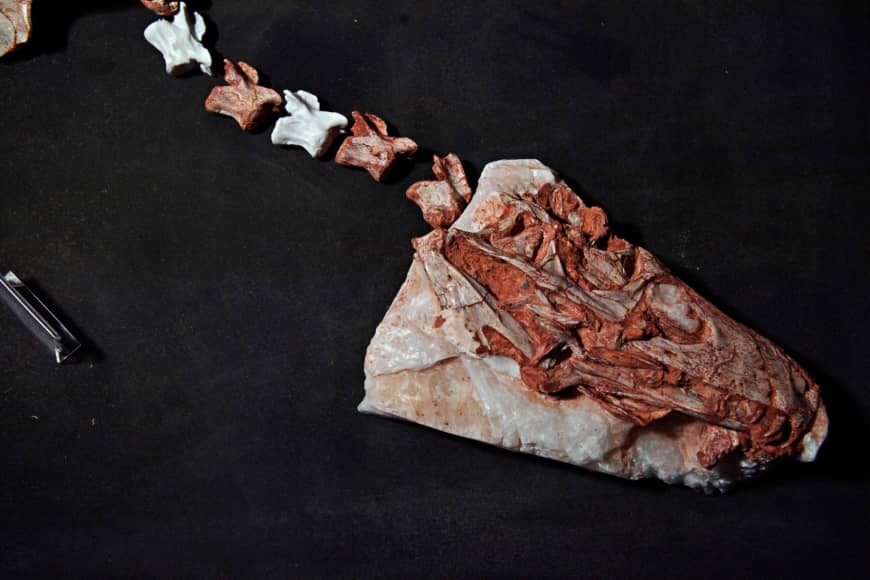
A Gnathovorax Cabreirai dinosaur fossil at CAPPA, a research support center for paleontology in Sao Joao do Polesine, Brazil | AFP-JIJI

Millions of years before the arrival of the mighty Tyrannosaurus rex, another fearsome dinosaur — the Gnathovorax — roamed what is now southern Brazil, ripping apart its prey with sharp teeth.

Measuring nearly 10 feet (3 meters) long, it was the biggest dinosaur of its time and also the most ferocious — placing it at the top of the food chain, as T. rex once was.

Basically, the Gnathovorax cabreirai was the king of Triassic Park, if you will, as the dominant creature of the pre-Jurassic period that began roughly 250 million years ago.

“In the Triassic ecosystem, it held a place similar to what lions have today,” says Rodrigo Temp Muller, a 26-year-old paleontologist at the Federal University of Santa Maria.

And the Gnathovorax’s stomping grounds were the Brazilian pampas — sprawling plains that were then a fertile jungle of trees, mosses and non-flowering plants, and now are a gold mine for paleontologists.

About 100 dig sites filled with fossils are located in Rio Grande do Sul state, on Brazil’s border with Argentina and Uruguay — and are yielding clues to help experts understand that long-ago era.

The first Gnathovorax skeleton was found in 2014 at Sao Joao do Polesine, a small town located about 300 kilometers (200 miles) west of the state capital, Porto Alegre.

Dating back more than 230 million years, it was one of the oldest and best preserved dinosaur fossils ever found — the skeleton was nearly complete.

It’s one of the oldest meat-eating dinosaurs ever identified.

“The fact that it is in such good condition allowed us to glean a large amount of information about its anatomy,” Muller told AFP.

“It was a bipedal dinosaur that walked on its hind legs and had hooked claws to trap its prey,” added the researcher, whose study was published last month in PeerJ — the Journal of Life and Environmental Sciences.

The Gnathovorax was only about 1.5 meters tall, and weighed about 70 to 80 kilograms (150 to 175 pounds), Muller said.

Some of those characteristics were similar to those of T. rex, which appeared more than 150 million years later in North America at the very end of the Cretaceous period.

That dino could grow to more than 12 meters, but it was not a distant cousin to the Gnathovorax, which instead belongs to the Herrerasauridae family of dinosaurs of the Triassic period.

It appears to be more closely linked to other species whose fossils were found in Brazil and Argentina.

During the Triassic era, the continents were not separated as they are now, and dinosaurs were smaller than those that would follow in the Jurassic and Cretaceous periods.

These dinosaurs eventually vanished in a massive flood plain.

“We’ve discovered numerous fossils across the region and there are surely more. The type of sediment that we have here is ideal for preserving fossils,” Muller said.

“The future is promising.”

At the Center for Paleontological Research at the Federal University of Santa Maria in Sao Joao do Polesine, the Gnathovorax skeleton is on display in a glass case.

The skull is particularly well preserved, and observers can easily see the dinosaur’s powerful jaw that gives it its name — Gnathovorax cabreirai means “ravenous jaws.”

Once the fossils were extracted from the soil, they were carefully examined with tools that look like a dentist’s drill. In some cases, the work can take years.

The Gnathovorax is not the only species studied by the Brazilian research team.

They also found impressive remains of the Macrocollum itaquii, the oldest long-necked dinosaur in the world, which lived about 225 million years ago.

Those fossils were found in 2012, on a vacant lot along a road in Agudo, about 20 kilometers outside Sao Joao do Polesine.

“It was also a biped, like the Gnathovorax, but it was a plant eater. Its teeth were adapted to eating plant matter, which it went to find high up because of its long neck,” Muller said.

“It was one of the first dinosaurs for which we found a full skeleton in Brazil,” he added.

These treasures are evidence of Brazil’s rich paleontological history — one that partially went up in smoke last year when the National Museum in Rio was devastated by fire.

Numerous valuable collections were destroyed, including an impressive group of dinosaur fossils.

Source: www.japantimes.co.jp/

The Coolest Paleontology Discoveries of the Decade (2010s)

Friday, December 20, 2019

Artist impression of Yutyrannus, by Brian Choo, via Nature

There have been countless amazing discoveries across the past decade in the field of paleontology. To try to narrow those down to a “best of” list is an asinine endeavor, one that I’ve undertaken out of some sort of masochistic delusion.

But really, take this more as a summary of the things I’ve found interesting.


1.) Yutyrannus huali

Dinosaurs are undeniably the “face” of paleontology. And when people think of dinosaurs, they think of Tyrannosaurus rex. So any discovery that alters what we think of T. rex in a dramatic way is going to be a big deal. Enter Yutyrannus huali.

First described and named in a 2012 paper by Xu Xing et alYutyrannus was a tyrannosauroid that measured nearly 30 feet in length, and was covered with feathers. While the existence of feathered dinosaurs was speculated about as far back as the 1960s (and was confirmed with the description of Sinosauropteryx in 1996), Yutyrannus dramatically increased the size range of known feathered dinosaurs.

Artist impression of Yutyrannus, by Brian Choo, via Nature

It further suggested that the most famed dinosaur of all may have also borne plumage. While we have no direct evidence of feathers on Tyrannosaurus rex itself, the fact that one of its earlier relatives had them allowed paleoartists to begin rendering the Tyrant Lizard King with varying degrees of “floof.” It’s now become fashionable to dress the face of paleontology in a coat of feathers, and for that, Yutyrannus earns a spot on this list.

2.) Cellular life is at least 3.9 billion years old

In 2018, Holly Betts et al published a paper proposing that the last universal common ancestor (LUCA) — a hypothetical ancestor of all cellular life — lived earlier than previously believed. The team used a combination of fossils, genetics, and molecular clock analyses to determine that the LUCA existed at least 3.9 billion years ago, still during the Late Heavy Bombardment (a time period during which it’s believed the Earth was pelted by an unusually high number of asteroids).

This is interesting for a number of reasons. Firstly, it pushes the origins of life back at least 100 million years from the previously oldest potential fossils, and about 500 million years back from the earliest confirmed fossils. Furthermore, it shows how resilient life is, that it may have emerged during a period in which scientists had previously speculated that Earth was sterile.

3.) Oh, the colors

One of the most notable discoveries of the decade arrived with a 1-2 punch combination of papers published in the beginning of 2010. Since the first discovery of dinosaurs, everyone from scientists to artists to toymakers to the general public have speculated as to what colors they might have been when alive.

Artist impression of Sinosauropteryx, by Robert Nicholls

Thanks to the work of two independent research teams, we’ve learned the color patterns for two species of feathered dinosaur – the aforementioned Sinosauropteryx, and the bird-like Anchiornis. By comparing the melanosomes (the cell organelles that contain pigment) in living bird feathers to fossilized structures, we now know that Sinosauropteryx bore colored rings on its tail, not entirely unlike a raccoon. The study of Anchiornis went further, giving us the first full-color view of a dinosaur’s entire body.

AIPT Science is co-presented by AIPT and the New York City Skeptics.

Source: www.adventuresinpoortaste.com/

Humans and Domestic Animals Will Dominate Anthropocene-Era Fossil Record, Paleontologists Say

Friday, December 20, 2019

Anthropocene-era Earth.

The terrestrial fossil record of the current geological epoch, the Anthropocene, will be unique in Earth history and will be dominated by humans, cows, pigs, sheep, goats, dogs, cats and other domestic mammals, according to a duo of U.S. paleontologists.

“The fossil record of mammals will provide a clear signal of the Anthropocene,” said University of Illinois at Chicago’s Professor Roy Plotnick and Missouri Western State University’s Dr. Karen Koy.

“The number of humans and their animals greatly exceeds that of wild animals,” they added.

“As an example, in the state of Michigan alone, humans and their animals compose about 96% of the total mass of animals. There are as many chickens as people in the state, and the same should be true in many places in the United States and the world.”

The chance of a wild animal becoming part of the Anthropocene-era fossil record has become very small, according to the scientists.

Instead, the future mammal record will be mostly cows, pigs, sheep, goats, dogs, cats, etc., and people themselves.

“Hunting and butchering produce distinctive bone fragments and assemblages,” they said.

“Use of large agricultural equipment and increased domestic animal density due to intensive animal farming likely increases the rate of and changes the kind of damage to bones.”

“Fossil mammals occur in caves, ancient lakebeds and river channels, and are usually only teeth and isolated bones,” Professor Plotnick added.

“Animals that die on farms or in mass deaths due to disease often end up as complete corpses in trenches or landfills, far from water.”

Consequently, the terrestrial mammalian fossil record of the modern era will be unique in the Earth’s history and unmistakable to paleontologists of the distant future.

“In the far future, the fossil record of today will have a huge number of complete hominid skeletons, all lined up in rows,” Professor Plotnick said.

The team’s paper will be published in the March 2020 issue of the journal Anthropocene.

_____

Roy E. Plotnick & Karen A.Koy. 2020. The Anthropocene fossil record of terrestrial mammals. Anthropocene 29: 100233; doi: 10.1016/j.ancene.2019.100233

Source: www.sci-news.com/

World’s Oldest Fossil Forest Unearthed

Friday, December 20, 2019

A Devonian root system at the Cairo fossil forest site. Image credit: Stein et al, doi: 10.1016/j.cub.2019.11.067.

Paleontologists have unearthed the extensive root system of 386-million-year-old (Devonian period) primitive trees in a sandstone quarry near Cairo, New York, the United States.

The Cairo fossil forest covered an area of at least 3,000 m2, and is one or two million years older than the Devonian fossil forest at Gilboa, also in New York and around 40 km away from the Cairo site.

“The Devonian period represents a time in which the first forest appeared on Earth,” said Binghamton University’s Professor William Stein.

“The effects were of first order magnitude, in terms of changes in ecosystems, what happens on the Earth’s surface and oceans, carbon dioxide concentration in the atmosphere, and global climate.”

“So many dramatic changes occurred at that time as a result of those original forests that basically, the world has never been the same since.”

Professor Stein and colleagues found that the Cairo forest was home to at least three unique root systems.

First, they identified a rooting system that they believe belonged to a palm tree-like plant called Eospermatopteris.

This tree, which was first discovered in the Gilboa forest, had relatively rudimentary roots. Like a weed, it likely occupied many environments, explaining its presence at both sites. But its roots had relatively limited range and probably lived only a year or two before dying and being replaced by other roots that would occupy the same space.

The paleontologists also found evidence of a tree species called Archaeopteris.

Although this tree behaved more like a fern during reproduction, by releasing spores into the air instead of forming seeds, it had early hints at what would one day become seed plants. Archaeopteris are the first known plants to form leaves, and were large woody plants formed from secondary tissues.

Archaeopteris seems to reveal the beginning of the future of what forests will ultimately become,” Professor Stein said.

“Based on what we know from the body fossil evidence of Archaeopteris prior to this, and now from the rooting evidence that we’ve added at Cairo, these plants are very modern compared to other Devonian plants.”

The researchers found an extensive network of Archaeopteris roots which were more than 11 m in length in some places.

They also found a third root system belonging to a tree thought to only exist during the Carboniferous period and later: ‘scale trees’ belonging to the class Lycopsida.

The team believes that the Cairo forest was wiped out by a flood due to the presence of many fish fossils that were also visible on the surface of the quarry.

“It is surprising to see plants which were previously thought to have had mutually exclusive habitat preferences growing together on the ancient Catskill delta,” said Dr. Chris Berry, a scientist in the School of Earth and Ocean Sciences at Cardiff University.

“This would have looked like a fairly open forest with small to moderate sized coniferous-looking trees with individual and clumped tree-fern like plants of possibly smaller size growing between them.”

The discovery is reported in a paper in the journal Current Biology.

_____

William E. Stein et al. Mid-Devonian Archaeopteris Roots Signal Revolutionary Change in Earliest Fossil Forests. Current Biology, published online December 19, 2019; doi: 10.1016/j.cub.2019.11.067

Source: www.sci-news.com/

75 Million-Year-Old Sea Turtle Fossil Discovery is a New Genus and Species that Sheds Light on the Evolution of Its Modern Relatives

Wednesday, December 18, 2019

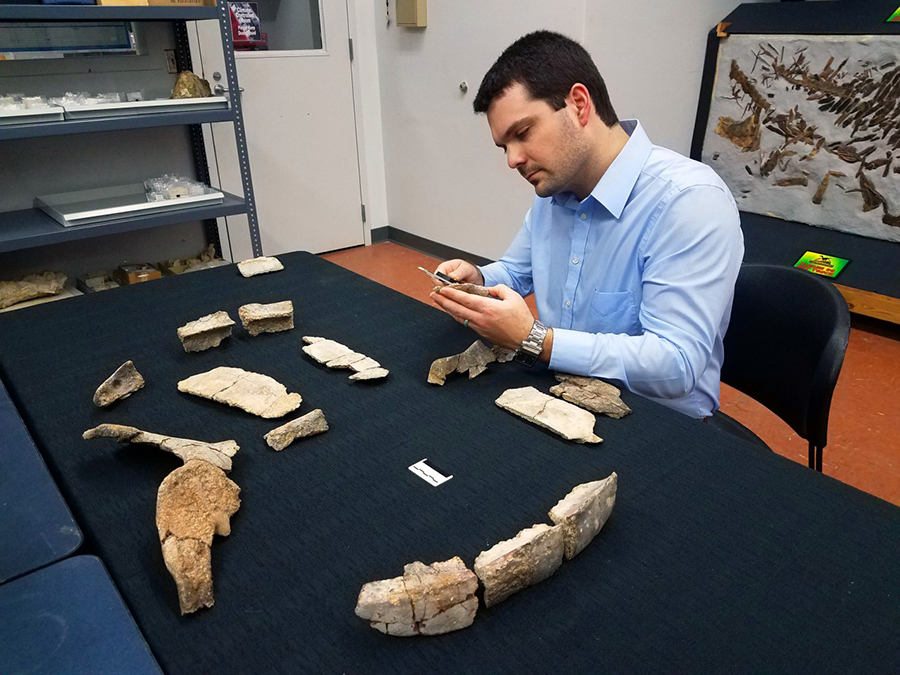
Drew Gentry, UAB Ph.D. candidate, examining the fossils of Asmodochelys parhami. Photograph courtesy of McWane Science Center.

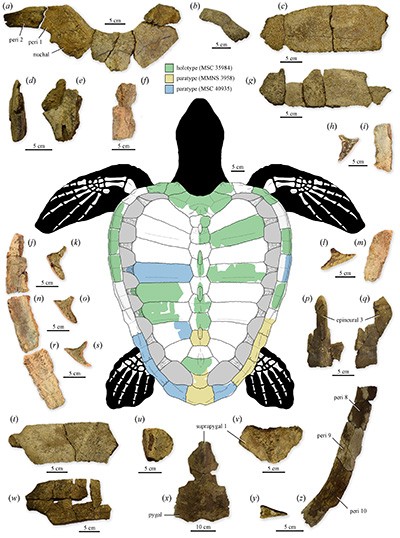
Paleontologists in Alabama have announced the discovery of a new genus and species of fossil sea turtle that may fill an important gap in the evolution of sea turtles.

Scientists named the animal Asmodochelys parhami for Asmodeus, a deity that, according to Islamic lore, was entombed in stone at the bottom of the sea, and ‘parhami’ in honor of James F. Parham, former curator of Paleontology at the Alabama Museum of Natural History, for his many contributions to Alabama paleontology.

According to the study, Asmodochelys parhami swam the oceans approximately 75 million years ago and may have been one of the most recent common ancestors of modern sea turtles.

“The origin story of sea turtles is one of the great unsolved mysteries in evolutionary biology,” said Drew Gentry, a College of Arts and Sciences Ph.D. candidate at the University of Alabama at Birmingham and lead author of the study. “There is a great deal of evidence indicating that turtles may have evolved to live in the ocean several times over the past 150 million years. The trick is determining which of those species are actually the direct ancestors of the species we see today.”

To determine how A. parhami is related to present-day sea turtles, scientists performed a phylogenetic analysis. It is a method that compares the features of many different species of turtle to figure out how closely or distantly related those species may be. The analysis results in a phylogenetic tree, or genealogy, of sea turtles.

According to the results of the study, A. parhami is one of the youngest species to fall just outside of the group containing every species of modern sea turtle. This makes A. parhami of particular interest in the study of the sea turtle origins.

75 Million-Year-Old Sea Turtle Fossil Discovery Is a New Genus and Species That Sheds Light on the Evolution of Its Modern Relatives

“Although it’s tempting to say ‘problem solved’ when we recover such a well resolved tree, this is only one hypothesis in a long line of suggested sea turtle genealogies,” Gentry said. “Right now, there are several distinct trees proposed by different groups of scientists that are the front-runners in the race to solve sea turtle evolution, each with its own unique arrangement of fossil and modern species. Determining which tree most accurately represents the evolutionary history of these animals can be challenging, to say the least.”

In an effort to test the accuracy of each tree, Gentry and his colleagues examined which of the currently proposed sea turtle genealogies most accurately fits the fossil record. That is to say, if the genealogy indicates that a certain species evolved first, does that species actually show up first in the fossil record?

Surprisingly, Gentry discovered that, although his proposed genealogy matched up relatively well with the fossil record, it was not the best fit. “Actually, a phylogeny proposed more than a decade ago matched nearly perfectly with the fossil record,” Gentry said. “The problem with that analysis was that it didn’t include nearly as many species as subsequent analyses, which may have influenced the results.”

Despite scientists around the world working on the problem of sea turtle evolution for more than a century, Gentry thinks there is still much to be learned.

“New methods for testing how fossil species are related to modern species are constantly being developed. Also, discoveries of new fossils have the potential to radically change our understanding of how certain features and species evolved in the history of life on our planet,” Gentry said. “Our study is just another piece of evidence in an ongoing mystery that shows no sign of being solved any time soon.”  

The study, titled “Asmodochelys parhami, a new fossil sea turtle from the Campanian Demopolis Chalk and the stratigraphic congruence of competing marine turtle phylogenies,” was published in the open access journal Royal Society Open Science.

Source: www.uab.edu/

340-Million-Year-Old Tetrapod Footprints Uncovered in UK

Wednesday, December 18, 2019

The 340-million-year-old Hardraw trackway. Image credit: Trustees of the Natural History Museum.

Paleontologists have discovered an ancient tetrapod (land vertebrate) trackway in North Yorkshire, England, dating back to the Carboniferous period. Made about 340 million years ago, it’s the oldest known tetrapod trackway ever found in the United Kingdom.

The Carboniferous trackway was first discovered in 1977 by S.J. Maude near the waterfall Hardraw Force in Wensleydale, the north Yorkshire Dales.

Assigned to the ichnogenus Palaeosauropus, the prints were made by an edpoid temnospondyl, a primitive semiaquatic amphibian.

Temnospondyls were highly successful animals, appearing during the Carboniferous period and evolving over the next 210 million years into a wide variety of forms,” the paleontologists explained.

“While some were about the same size as modern-day amphibians many grew to enormous sizes.”

“Some of these things were large crocodile-like animals at least two meters long with big heads,” said Dr. Angela Milner, a researcher in the Department of Earth Sciences at the Natural History Museum, London.

“They have been nicknamed by some of my colleagues as croco-manders, because they look like a crocodile but had the same lifestyle and walked the same way as salamanders.”

In order to better visualize the Hardraw trackway, Dr. Milner and colleagues 3D scanned the specimen.

“We used scanning and photography to make a 3D digital model, allowing us to better visualize and identify the footprints and invertebrate traces,” explained Hannah Bird, a researcher with Dudley Museum and assistant curator of Carboniferous specimens at the Virtual Natural History Museum.

“Determining whether individual prints were made by hands or feet, as well as the direction of movement, certainly proved troublesome at times but we were finally able to reconstruct how this amphibian might have moved in life.”

“It was revealed that the edpoid walked across the sandy bed of river delta along with contemporary invertebrate animals including arthropods, worms and mollusks.”

The team’s paper was published in the Journal of the Geological Society.

_____

Hannah C. Bird et al. A lower Carboniferous (Visean) tetrapod trackway represents the earliest record of an edopoid amphibian from the UK. Journal of the Geological Society, published online December 12, 2019; doi: 10.1144/jgs2019-149

Source: www.sci-news.com/

REVIEW: ‘Return to Jurassic Park’ DLC Offers More than Just Nostalgia

Tuesday, December 17, 2019

The magic of Frontier Developments’ Jurassic World Evolution is that you can create your own park with dinosaurs. By bringing back voices like Jeff Goldblum, the team at Frontier was able to throw you into a world that brought you back to the first time you saw dinosaurs on screen, even if it was through the setting of the Jurassic Park franchises most recent sequels and more advanced technology. But, with “Return to Jurassic Park” the devs at Frontier dial up the nostalgia as they welcome players back to Jurassic Park in the latest premium DLC.

Made in partnership with Universal Pictures and Amblin Entertainment, and created in collaboration with Universal Games and Digital Platforms, “Return to Jurassic Park” puts players directly in 1993 as the crew from the original film return to Isla Nublar and Isla Sorna to rebuild the park. After being charged to restore order to the islands, Dr. Hammond convinces Dr. Alan Grant (Sam Neill), Dr. Ellie Sattler (Laura Dern) and Dr. Ian Malcolm (Jeff Goldblum) to return, reclaim, and rebuild the destroyed Park and successfully open the towering Main Gates to the public.

If you’ve played Jurassic World Evolution before, then you know that when the game loads up you see the Universal Pictures opening and the score that we all know so well from the films. Well, when you click in to start the “Return to Jurassic Park” campaign, you’re greeted with the 1993 opening, immediately showing the attention to detail when putting you back in your childhood.

“Return to Jurassic Park” includes a new original campaign set after the events of Jurassic Park that makes you face external sabotage attempts, tailored missions that reflect the situations that Alan, Ellie, and Ian faced in the original film. When you begin the campaign, your first step is reclaiming both the park on Isla Nublar and Isla Sorna from the dinosaurs roaming free since Jurassic Park was sabotaged and they were let loose.

To do so, you must close enclosures, fix buildings, and make sure dinosaurs don’t have access to main facilities. After that, you complete a series of missions that have you add new buildings to the park and with that you have to manage power. The power plants work slightly different in the DLC and it’s a small challenge to figure out, pushing you to layout your park differently. You’re also in for some Easter egg surprises as the missions ask you to use your dinosaurs in ways that replicate events you’ve seen on screen.

Additionally, every guest amenity built is done to replicate what we see on Isla Nublar. From the visitor’s center where an adorable Rexy roared into the pop culture hall of fame, the iconic Jurassic Park gates and the Raptor Pin to the Park Tour tracks you lay for the green and yellow jeeps to follow to get your visitors up close and personal, you are recreating, or rather reimagining Hammond’s Jurassic Park. But the truly exciting thing about these additions isn’t the nostalgia, its that they create an entirely new sim to learn.

By placing you back in 1993, you don’t have access to the easy viewing decks that you simply place along enclosure fences, instead, you need to create a park tour, a system that works closely with the way you lay monorail tracks, that must run through your enclosures. As you lay the track you need to make sure that the visibility from the Jeeps will have enough coverage of the enclosure to improve your rating while also not overtaking too much of the enclosure. As you continue playing you can unlock additions like night vision which increases that visibility. This presents a big difference from the base game and adds a new challenge for park creators.

But it isn’t just the view of the enclosures that is different, the incubation and release of dinosaurs are also different. Instead of using Hammond Creation Labs attached to individual buildings to each pin for ease of release, “Return to Jurassic Park” uses both Isla Nublar, where your main park exists, and Isla Sorna, the mysterious site B. At the latter, you don’t only reclaim the park from the dinosaurs but you use it as your site to incubate, while you focus on your main park, Isla Nublar, using the helipad to deliver dinosaurs to their new locations like Hammond used and referenced in the original film.

But of course, the stars of the game aren’t just the 1993 designs, it’s the ability hatch all-new dinosaurs. Included in “Return to Jurassic Park” are the Compsognathus and Pteranodon, two dinosaurs that I’ve been waiting for since Jurassic World Evolution came out. Both of which are available to be used in the main campaign outside of the DLC once unlocked. With them, you’re also able to learn the Aviary which can also be used outside of the DLC campaign.

While the aviary seems like a small piece, the beauty comes when you use the Pteranodon camera. A world all of its own, the aviary has its own incubation system and can only house incubate the Pteranodons that are hatched in it, no more, no less. So, in order to have more than two Pteranodons, you need to buy more slots for the aviary hatchery, then once matured, the grown dinosaurs will use them as well.

Now, once you finish the campaign, which took me around 13 hours, you can replay all existing challenges and sandbox levels with a 1993-inspired inventory. Now, like any giant sims, I did have a few crashing issues on the PC, something that’s been a fairly common issue in Frontier Development’s newest sim Planet Zoo. That said, out of the 13 hours played, it only crashed three times, so it wasn’t a game-breaking issue, just something to note so that you save often during your play-through.

Overall, “Return to Jurassic Park” is a wonderful and expansive DLC. Instead of just dropping in nostalgic designs, this expansion goes above and beyond to craft a new gameplay experience for players. Which, at a $19.99 price, is the best thing about it. Learning the mechanics of “Return to Jurassic Park” was just like when I built my first park in Jurassic World Evolution, and honestly, there isn’t much you could ask for. With the voices of your childhood guiding you as you build, I can’t recommend this park building experience enough.

Jurassic World Evolution: Return to Jurassic Park is available now on PC, PlayStation 4 and Xbox One digital stores.

Source: https://butwhythopodcast.com/

Fossilized Brains Found in Ancient Bug-Like Creatures

Tuesday, December 17, 2019

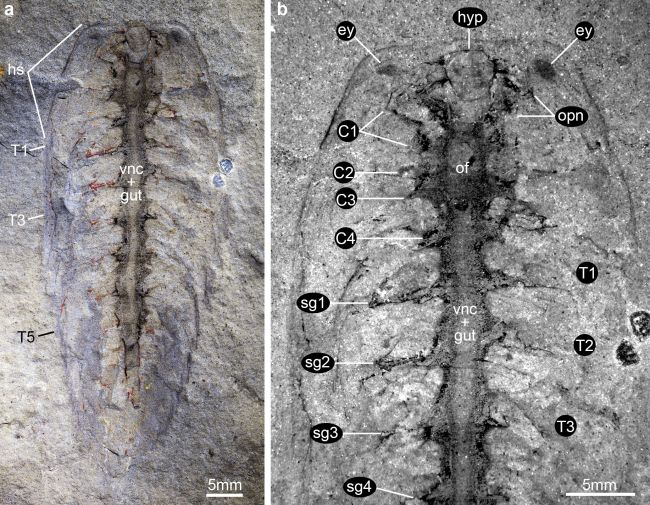
A newfound Alalcomenaeus fossil from the western U.S. contains remnants of a nervous system (black stain). (Image credit: Ortega-Hernández et al. 2019)

New evidence of preserved brain tissue from the Cambrian period counters arguments that nervous tissue cannot be fossilized.

Inky stains found in fossils of 500-million-year-old bug-like creatures may be beautifully preserved, symmetrical brain tissue. The fossil find may help lay a heated scientific controversy to rest — the question of whether brains can be fossilized.

Scientists discovered these splotchy marks in fossils of  the arthropod Alalcomenaeusan animal which shares its phylum with modern insects, spiders and crustaceans. The animals lived during the Cambrian period, which took place between about 543 million and 490 million years ago, and sported a tough exoskeleton that fossilized well. But the soft tissues of the creature's brain and nerves often decayed and therefore disappeared from the fossil record. 

Now, a new study, published Dec. 11 in the journal Proceedings of the Royal Society B, describes not one but two Alalcomenaeus fossils complete with brains and all their trimmings.   

"What we are dealing with in the fossil record are exceptional circumstances. This is not common — this is super, super rare," said co-author Javier Ortega-Hernández, an invertebrate paleobiologist at Harvard University and curator of the Harvard Museum of Comparative Zoology. Previously, paleontologists have identified only one other Alalcomenaeus specimen thought to have nervous tissue, but the finding was met with skepticism. With two more specimens in hand, scientists can now be confident that nervous tissue can in fact be fossilized and found in exceptional Cambrian arthropod fossils, Ortega-Hernández said.

This diagram depicts the basic layout of the Alalcomenaeus nervous system in relation to its gut. (Image credit: Ortega-Hernández et al. 2019)

Long-standing debate

Besides Ortega-Hernández and his team, only a handful of researchers have reported finding fossilized nervous tissue in Cambrian-period arthropods. In a 2012 paper, scientists described the first evidence of a fossilized arthropod brain, in a tiny creature called Fuxianhuia protensa. Although widely covered in the media, the report attracted critics.       

"They said, 'Rubbish, lot of nonsense,'" said Nicholas Strausfeld, a regents professor in the department of neuroscience at the University of Arizona and co-author of the 2012 study, as well as several others on brain-like features in arthropods. Some paleontologists argued that, based on our understanding of how animals decay, the stained specimens Strausfeld and others unearthed couldn't possibly contain nervous tissue, Strausfeld said. Some theorized that the brain stains must be either a strange fluke of fossilization or fossilized beds of bacteria, known as biofilms.  

But now, the new study by Ortega-Hernández and his colleagues serves as "a really pleasing validation of earlier work," Strausfeld told Live Science. "He's put to rest a lot of objections from people."

In their study, Ortega-Hernández and his co-authors uncovered a new Alalcomenaeus fossil buried in Utah within a region of geological depressions known as the American Great Basin. The authors noted symmetrical stains along the creature's midline that resembled nervous system structures found in some modern arthropods, including horseshoe crabs, spiders and scorpions. "The nervous system and the gut kind of cross each other, which is really funky but common in arthropods nowadays," Ortega-Hernández told Live Science. 

The stains also contained detectable levels of carbon, a key element in nervous tissue. The dark splotches also plugged into the animal's four eyes, as would be expected for nervous system tissue. Having checked all these criteria, Ortega-Hernández said that he could confidently report finding fossilized nervous tissue in the newfound specimen. 

But to double-check their findings, the authors also examined a second Alalcomenaeus fossil from the American Great Basin. Originally dug up in the 1990s, the specimen sported similar stains and carbon traces to the newfound fossil. What's more, both Great Basin fossils matched descriptions of another specimen that Strausfeld found in China. All three fossils had been found buried in similar deposits, indicating that a unique preservation process allowed all their brain matter to fossilize, Ortega-Hernández said.

An Alalcomenaeus fossil found in the 1990s shows a similar nervous system to another fossil found recently. (Image credit: Ortega-Hernández et al. 2019 )

Counterarguments

Although Ortega-Hernández and his colleagues checked and double-checked their work, the authors "generally have to be cautious about claiming to have found a genuine fossil brain," Jianni Liu, a professor at the Early Life Institute in the Department of Geology at Northwest University in Xi'an, China, told Live Science in an email. Liu argues that the blobby stains seen in Cambrian fossils might be a "slightly random effect of the decay process" rather than remnants of brain matter. 

In a 2018 study, Liu and her colleagues examined about 800 fossilized specimens and found that nearly 10% contained inky stains in the head region. The authors reviewed previous studies of animal decay and found that nervous tissue tends to decay quickly, but gut bacteria can stick around and "produce these so-called biofilms as radiating [stains] which look a bit like parts of a nervous system," Liu wrote.

Several paleontologists, including Strausfeld, pointed out that Liu failed to examine fossils that reportedly contained brain tissue, and that lack of primary evidence marks a "major shortcoming" in her study. What's more, the specimens Liu did examine contained asymmetric stains rather than symmetric ones, meaning they would not have been interpreted as brain tissue anyway, Strausfeld said.

Additionally, studies of decay often measure tissue breakdown in water, whereas buried fossils interact with a multitude of chemicals carried in the sediment around them, Ortega-Hernández said. For instance, some studies suggest that a combination of clay and water jump-starts a "chemical tanning" process that toughens soft tissues in the body, similar to how particular chemicals can transform supple cow hide into leather, Ortega-Hernández said.

More work must be done to clarify the role of sediment in fossil preservation, but as of now, ample evidence suggests that arthropod remains placed under intense pressure solidify over time, Strausfeld said. The brain and nerves within the animal flatten out in the process, and because nervous tissue contains lots of fat, the structures repel water and "have some resistance against decay," he said.

Despite the evidence in their favor, Ortega-Hernández, Strausfeld and their colleagues may need to dig up a lot more arthropod brain bits to convince naysayers that ancient brains can fossilize.         

"We appreciate the authors' efforts to justify their results as being genuine nervous tissue, but remain sceptical while the data comes from only two fossils," Liu said. "New data is always welcome, but as we noted previously, we would be more convinced if the anatomical features appeared in a consistent form across several specimens independently."

Originally published on Live Science.

Mesophthirus engeli: Cretaceous Feathered Dinosaurs Suffered from Lice

Tuesday, December 17, 2019

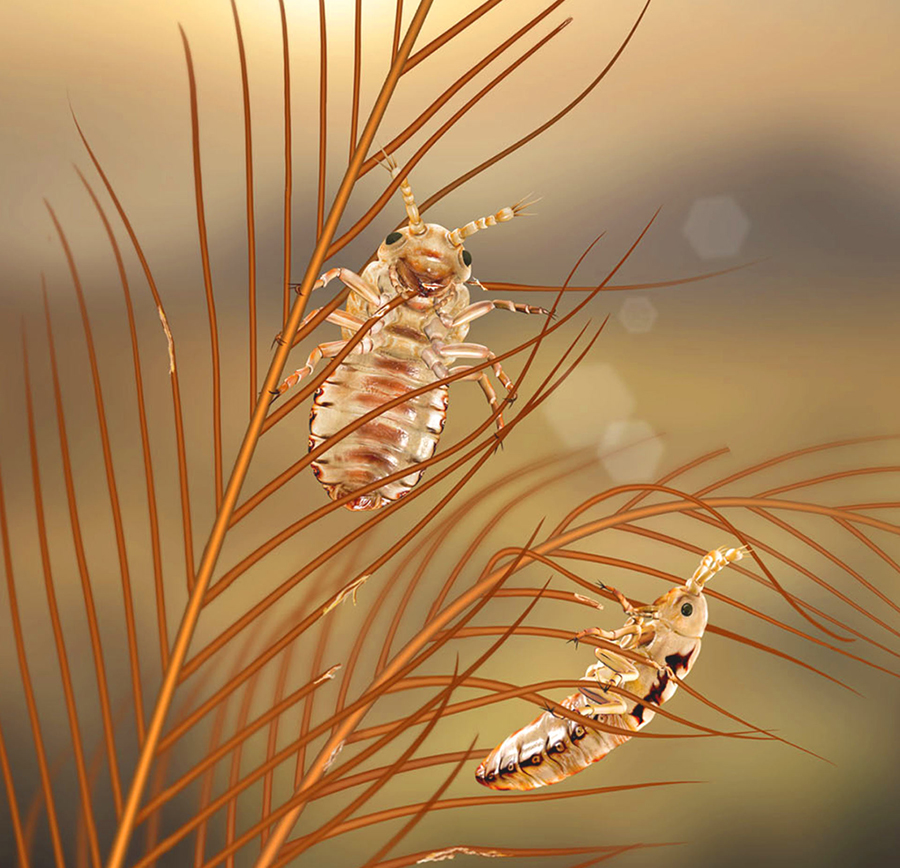
Mesophthirus engeli nymphs crawled and fed on dinosaur feathers. Image credit: Gao et al, doi: 10.1038/s41467-019-13516-4.

Paleontologists have found tiny nymphs of a previously unknown ancient insect species trapped in two pieces of 99-million-year-old (mid-Cretaceous period) Burmese amber, along with partially damaged dinosaur feathers, the damage of which was probably made by these insects’ feeding behaviors.

Named Mesophthirus engeli, the prehistoric parasitic insect was notably small — up to 0.5 mm for adults and 0.2 mm in the nymph stage.

It had wingless body, robust and short antennae, strong chewing mouthparts, and claws on its legs.

Mesophthirus engeli shares many features of ectoparasitic function, i.e., wingless and dorsoventrally compressed body, reduced eyes, short antennae, robust and short legs unsuitable for quick movement or jump, pretarsus very small with one single claw, etc., which suggest that the insect had an ectoparasitic lifestyle,” said Capital Normal University paleontologists Taiping Gao and Dong Ren and their colleagues from China, the United States and the United Kingdom.

“Most significantly, these insects are preserved with partially damaged dinosaur feathers, the damage of which was probably made by these insects’ integument-feeding behaviors.”

The researchers found ten individuals of Mesophthirus engeli in two pieces of 99-million-year-old amber from the Hukawng Valley of Kachin State, in northern Myanmar, a village named Noije Bum about 18 km (11.2 miles) southwest of the town of Tanai. One of the pieces contained nine specimens and the other had only one specimen.

A piece of amber with the specimens of Mesophthirus engeli from the mid-Cretaceous of Myanmar: (a) photo of the whole feather and the locations of the insects, (b-j) Mesophthirus engeli specimens, (k) parts of the feather show complete areas at basal part and adjacent largely damaged area between barbs; representative, star in white referring to relatively complete barbules, star in blank referring to large areas of damages. Scale bars – 1 mm (a), 100 μm (b–j), and 0.5 mm (k). Image credit: Gao et al, doi: 10.1038/s41467-019-13516-4.

“All these ten nymphs look very similar in morphology but have minor distinctions, and they may be easily divided to two different groups,” the scientists explained.

“The members of the first group have relatively smaller body size (under 145 μm), much wider abdomens than their thoraxes, horizontal terminals of abdomens and apex of heads and compressed 5th antennomere.”

“In contrast, the specimens within the second group possess bodies over 157 μm in length, heads with arched top and clavate and smooth 5th antennomere.”

“We identify these two groups as two different but adjoining developmental stages of Mesophthirus engeli, and their abdomens and antennae might grow to extend with age, same as the body size.”

“The new findings provide the earliest known evidence about the origin of ectoparasitic insects feeding on feathers, which strongly support that the integument-feeding behaviors of insects appeared during or before the mid-Cretaceous along with the radiations of feathered dinosaurs including birds,” the paleontologists concluded.

paper on the findings was published December 10, 2019 in the journal Nature Communications.

_____

T. Gao et al. 2019. New insects feeding on dinosaur feathers in mid-Cretaceous amber. Nat Commun 10, 5424; doi: 10.1038/s41467-019-13516-4

Source: www.sci-news.com/

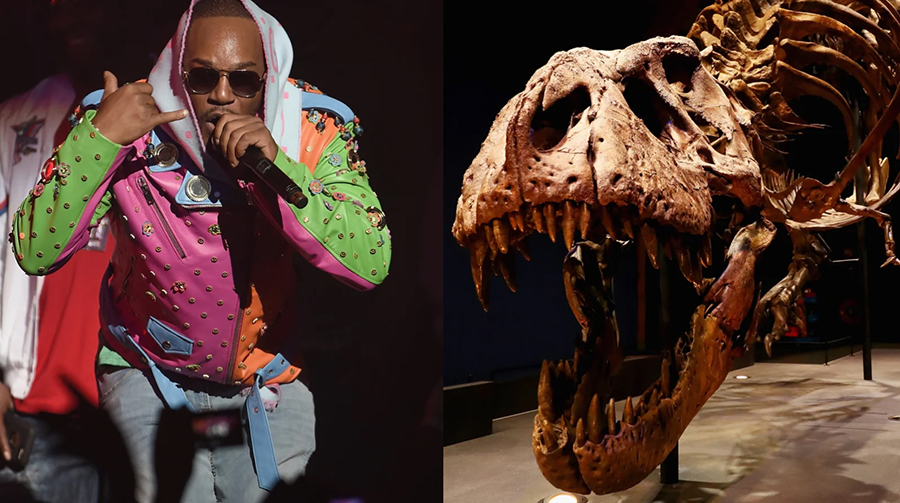
Paleontology is a Scam, According to Cam'ron!

Saturday, December 14, 2019

Photo: Getty Images

RIP to the dinosaurs, but humans are different. They may have been blessed with an early exit from this hellish plane of existence, but we’re still kicking, hanging their corpses in museums and gluing them back together so that some dude can remake Jurassic Park for the millionth time. But just because we can’t perceive them without the vastly complication science of Paleontology or 3D imaging technology, doesn’t mean dinosaurs never existed. I believe the phenomenon is known as “object permanence”—or, the understanding that physical objects don’t need human eyeballs on them to inhabit the material plane. Someone should sit Killa Cam down and explain this to him!

Page Six reports that on Thursday’s episode of podcast ItsTheReal, Cam’ron bravely explained to hosts Eric and Jeff Rosenthal: “I have fights with people about dinosaurs.” He went on to explain that the entire science of paleontology “sounds like a money maker,” questioning how some bones that have sat in the earth for millions and millions of years could be re-assembled by modern scientists. “They throw these big bones, pause, up in a museum, and then be like, ‘Yo, these are the people that were here before us …’ I mean, pardon me or whatever.”

“No, no see that is the proof,” Eric hilariously said in response to Cam’ron’s statement. 

In response, Cam’ron questioned whether dinosaur bones were strong enough to be displayed in museums and “not crumble.” 

“I’m not necessarily going for that,” he said. “If we get more proof on it, cool. I’m not going off museum facts. I been to every museum when I was young. I’m like, word? So they found all these bones and glued them together? Nah. I’m not sure I’m gonna go for that one. It sounds like more of a moneymaker to me.”

The hosts, still in shock from these surprising opinions also took the time to see whether he believes the Earth is flat or round. He did clarify that he does side with the majority of people who know our planet is round, but went back to further explain his statement on dinosaurs by emphasizing that he’s not depending on “museum facts” or “finding bones” to determine whether they actually existed.

 “Like, we need a little more proof and I don’t know whatever proof you could give me,” Cam’ron said. “But who found these bones? . . . I wish I could be an archaeologist and be like ‘I found some shit!’ I’ll be at the beach every day and be like ‘Yo, look what I discovered!’ and just make some shit up.”

Source: https://jezebel.com/ / https://thegrio.com/

Pages