Blogs

Rare Lizard Fossil Provides Important Clues on How Fossils Stay Preserved for Millions of Years

Saturday, March 7, 2020

A tiny lizard forefoot of the genus Anolis is trapped in amber that is about 15 to 20 million years old. Credit: © Jonas Barthel

Researchers at the University of Bonn are investigating the conservation status of the reptile, which is up to 20 million years old.

The tiny forefoot of a lizard of the genus Anolis was trapped in amber about 15 to 20 million years ago. Every detail of this rare fossil is visible under the microscope. But the seemingly very good condition is deceptive: The bone is largely decomposed and chemically transformed, very little of the original structure remains. The results, which are now presented in the journal “PLOS ONE,” provide important clues as to what exactly happens during fossilization.

How do fossils stay preserved for millions of years? Rapid embedding is an important prerequisite for protecting the organisms from access by scavengers, for example. Decomposition by microorganisms can for instance be prevented by extreme aridity. In addition, the original substance is gradually replaced by minerals. The pressure from the sediment on top of the fossil ensures that the fossil is solidified. “That’s the theory,” says Jonas Barthel, a doctoral student at the Institute for Geosciences at the University of Bonn. “How exactly fossilization proceeds is currently the subject of intensive scientific investigation.”

This is a chunk of amber which contains the forefoot of a lizard of the genus Anolis, fits into a thimble. Credit: © Volker Lannert/Uni Bonn

Amber is considered an excellent preservative. Small animals can be enclosed in a drop of tree resin that hardens over time. A team of geoscientists from the University of Bonn has now examined an unusual find from the Dominican Republic: The tiny forefoot of a lizard of the genus Anolis is enclosed in a piece of amber only about two cubic centimeters in size. Anolis species still exist today.

Vertebrate inclusions in amber are very rare

The Stuttgart State Museum of Natural History has entrusted the exhibit to the paleontologists of the University of Bonn for examination. “Vertebrate inclusions in amber are very rare, the majority are insect fossils,” says Barthel. The scientists used the opportunity to investigate the fossilization of the seemingly very well preserved vertebrate fragment. Since 2018 there is a joint research project of the University of Bonn with the German Research Foundation, which contributes to the understanding of fossilization using experimental and analytical approaches. The present study was also conducted within the framework of this project.

The researchers had thin sections prepared for microscopy at the Institute for Evolutionary Biology at the University of Bonn. The claws and toes are very clearly visible in the honey-brown amber mass, almost as if the tree resin had only recently dripped onto them — yet the tiny foot is about 15 to 20 million years old.

Scans in the micro-computer tomograph of the Institute for Geosciences revealed that the forefoot was broken in two places. One of the fractures is surrounded by a slight swelling. “This is an indication that the lizard had perhaps been injured by a predator,” says Barthel. The other fracture happened after the fossil was embedded — exactly at the place where a small crack runs through the amber.

Jonas Barthel from the Institute for Geosciences at the University of Bonn at the microscope. Credit: © Volker Lannert/Uni Bonn

Amber did not protect from environmental influences

The analysis of a thin section of bone tissue using Raman spectroscopy revealed the state of the bone tissue. The mineral hydroxyapatite in the bone had been transformed into fluoroapatite by the penetration of fluorine. Barthel: “This is surprising, because we assumed that the surrounding amber largely protects the fossil from environmental influences.” However, the small crack may have encouraged chemical transformation by allowing mineral-rich solutions to find their way in. In addition, Raman spectroscopy shows that collagen, the bone’s elastic component, had largely degraded. Despite the seemingly very good state of preservation, there was actually very little left of the original tissue structure.

“We have to expect that at least in amber from the Dominican Republic, macromolecules are no longer detectable,” says the supervisor of the study, Prof. Dr. Jes Rust from the Institute for Geosciences. It was not possible to detect more complex molecules such as proteins, but final analyses are still pending. The degradation processes in this amber deposit are therefore very advanced, and there is very little left of the original substance.

Acids in tree resin attack bone

Amber is normally considered an ideal preservative: Due to the tree resin, we have important insights into the insect world of millions of years. But in the lizard’s bone tissue, the resin might even have accelerated the degradation processes: Acids in the tree secretion have probably attacked the apatite in the bone — similar to tooth decay.

Reference: “Fluoridation of a lizard bone embedded in Dominican amber suggests open-system behavior” by H. Jonas Barthel, Denis Fougerouse, Thorsten Geisler and Jes Rust, 26 February 2020, PLOS ONE.
DOI: 10.1371/journal.pone.0228843

Source: https://scitechdaily.com/

Colin Trevorrow Shares Scale Model Sets From Jurassic World

Friday, March 6, 2020

Last week, Colin Trevorrow joined Instagram and announced that production for Jurassic World: Dominion has begun. Since the announcement, the director has been fairly active on the social media site, posting set photos and pointing out that "everyone matters" on set. The director is returning to helm Jurassic World: Dominion after stepping back for Jurassic World: Fallen Kingdom, which was directed by J. A. Bayona. That means it's been five years since the filmmaker's first movie in the franchise, Jurassic World, hit theaters. Now that Trevorrow is on Instagram, he's starting to share some throwback photos from the 2015 movie. The director's latest posts show some neat scale models that were used during production.

“Five years ago. Forced perspective of our scale model in Hawaii,” Trevorrow wrote. “All the best technology,” he wrote in the second post. Many people commented on the posts: “Omg I'm thrilled! Matchbox sized,” @baptistecoudertreviews wrote. “Ahhhhh the old Indominus paddock,” @the_red_hood_88 pointed out. “Remember, we need an art book of this trilogy,” @abraxasdraconius requested. “You’ll get it. Collab with JA Bayona,” Trevorrow replied. You can check out the scale models in the posts below:


View this post on Instagram


All the best technology.

A post shared by Colin Trevorrow (@colin.trevorrow) on

There are tons of exciting people involved with Jurassic World: Dominion, including the latest franchise leads Bryce Dallas Howard and Chris Pratt. The movie will also see the return of Jurassic Park stars Laura Dern, Sam Neill, and Jeff Goldblum, and feature Jake Johnson and Omar Sy, who appeared in Jurassic World but not Jurassic World: Fallen Kingdom. The new movie is also set to feature franchise newcomers DeWanda Wise, Mamoudou Athie, and Dichen Lachman. Recently, BD Wong teased his villainous return after appearing in the last two films. Trevorrow recently broke down how and why they finally decided to get the original gang back together, and why it didn't happen sooner.

“We’d have had to come up with a reason why Ellie, Malcolm and Grant all went to the theme park on the exact same day it broke down – again,” Trevorrow said regarding their absence in the first film. “The next film allows the legacy characters to be a part of the story in an organic way. Emily Carmichael and I call it Jurassic Park VI because it is."

“You start asking the most basic questions: who are these people now?" Trevorrow said. "What do they make of the new world they’re living in, and how do they feel about being part of its history? Ultimately it will be in collaboration with the actors. They know and love these characters. We’ll do it together.”

Jurassic World: Dominion hits theaters on June 11th, 2021.

Source: https://comicbook.com/

Why Steven Spielberg Didn’t Direct Jurassic Park 3

Friday, March 6, 2020

Though he directed the first two Jurassic Park movies, specific circumstances led to Steven Spielberg not returning for Jurassic Park 3.

Steven Spielberg didn't direct Jurassic Park III despite directing the first two Jurassic Park movies, and that's because he had a promise to keep. Instead, Jurassic Park III was helmed by Joe Johnston, a filmmaker known for his work directing acclaimed blockbusters like The Rocketeer and later Captain America: The First Avenger. Unfortunately, Jurassic Park III, which starred Sam Neill and William H. Macy, ended up making considerably less than its predecessors when it released in 2001, though it still amassed $368.8 million at the worldwide box office.

Since Jurassic Park III, the Jurassic Park franchise has seen multiple non-Spielberg directors helming individual installments. Colin Trevorrow, for instance, directed Jurassic World and is directing next year's Jurassic World: Dominion. Meanwhile, the 2018 entry, Jurassic World: Fallen Kingdom, was entrusted to J.A. Bayona, who was the fourth director ever to direct a Jurassic Park movie. While Spielberg is responsible for making the Jurassic Park franchise special to so many people around the world, the series has since expanded from that vision to new regions. But in order for that to have happened, he needed to step aside in the late 1990s.

As noted in numerous interviews, including in ones seen on the Jurassic Park III home video release, director Joe Johnston expressed interest in directing a Jurassic Park sequel shortly after the first movie released. Though Spielberg wanted to direct the first Jurassic Park sequel, he promised Johnston that he would get his chance to direct dinosaur mayhem should Jurassic Park III ever become a reality. Once that very first Jurassic Park sequel, The Lost World: Jurassic Park, became a box office sensation with $618.6 million worldwide, Jurassic Park III was inevitable, as was Spielberg getting to fulfill his promise to Johnston.

It wasn't just a promise to Johnston that kept Spielberg out of the director's chair of Jurassic Park III, though. Spielberg's own personal creative ambitions ensured he wouldn't be back for the third installment. In the wake of his Best Picture-winning production Schindler's List, Spielberg was looking to pursue darker dramas rather than lighter blockbuster fare. This pursuit was reflected in how, in the 14 months after The Lost World, Spielberg helmed the weighty movies Amistad and Saving Private Ryan. Considering his artistic mindset at this point in time, Spielberg wasn't keen on directing another Jurassic Park movie.

Furthermore, Spielberg not directing Jurassic Park III was also influenced by the draining experience he had endured on the previous Jurassic Park movies. In an interview with Chicago Tribune timed to the release of Jurassic Park III, Spielberg stated a key reason he didn't return as director was because of how immensely difficult it was directing the first two installments. Directing such expansive blockbusters, ones that juggled animatronics, CGI, tropical weather, and so forth, it wasn't something Spielberg was looking to undertake again in the near future. Given all of these factors, it shouldn't be a surprise, then, that Steven Spielberg handed over the reins to Joe Johnston when it came time for Jurassic Park III.

Source: https://screenrant.com/

Some Dinosaurs Might Have Had Fluorescent Horns or Feathers

Friday, March 6, 2020

An artist’s representation showing fluorescent features on a heterodontosaur Brian Engh/dontmesswithdinosaurs.com

As well as being brightly coloured in normal light, some dinosaurs may have had ultraviolet, fluorescing horns, frills or feathers – and a few species might even have used this glow to attract a mate.

Fluorescence is relatively common among amphibians and several species of bird have fluorescent features, which absorb ultraviolet light and re-emit it at a different wavelength. Those body parts glow under UV light. Puffins have fluorescent patches on their beaks, for instance, and budgerigars have some fluorescent feathers on their heads.

D. Cary Woodruff at the …

Continue reading

Jurassic Park Builder: Mobile Gaming’s Hidden Gem

Wednesday, March 4, 2020

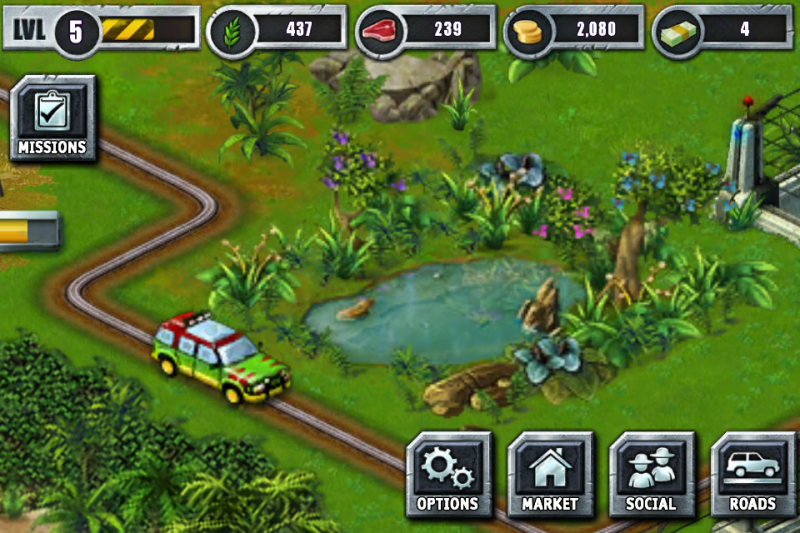
Steven Spielberg’s 1993 classic Jurassic Park gave rise to two great, great things: the “Weird Al” song and, almost two decades later, the creation of quite possibly the finest mobile game of all time.

That’s right, you heard me. There’s a game based on a film that doesn’t actually suck.

Ludia Inc. released Jurassic Park Builder in 2012. I was thirteen and, more importantly, had just been gifted a touchscreen phone for my birthday. A htc, I think it was. I’d been given the option of a BlackBerry but opted for the htc because, of course, I thought the latter would have better games.

I wasn’t wrong.

After several months of jumping from game to game (I confess, Angry Birds took up an absurd amount of time) I stumbled upon Jurassic Park Builder. And I was blown away. The game – a simulator in which you created and ran your own version of the infamous park – took up hours and hours of my time. I didn’t stop playing until I was seventeen – only because I’d accidentally cleared the data and hadn’t the heart to start over.

Years of my life. Gone. And I’d do it all again.

“THE DINOSAURS YOU’D REARED FROM BIRTH WERE MADE TO FIGHT TO THE DEATH FOR MONEY.”

You’re probably wondering why this had me so hooked, right? Can mobile games really be this good? Absolutely.

First thing’s first: the content. The game was packed with it. Not only could you build your own Jurassic Park but, once you’d reached the required levels, you could also construct both underwater and glaciated areas. Right there, you had hours of content at your fingertips. Another major component of the game was the arena, where the dinosaurs you’d reared from birth were made to fight to the death for money.

Moral conundrums aside, it was a pretty entertaining mini game with a simple but effective tournament system. Also, for fans of the original films, it really did hit home when Dr Grant and Ian Malcolm popped up onscreen to give you mission objectives. Nostalgia. Always a good tactic.

The interface was also easy to use, and the game was pretty addictive. And free. Didn’t I mention that? Free. That’s right. Four years of enjoyment and no charge. Not unless you count the optional purchases for in-game currency. Which I don’t. That’s just cheating.

“A MUST-PLAY FOR FANS OF THE FILMS”

But as much as I loved it, the game wasn’t without flaws. The building of certain structures, as well as the evolution of certain dinosaurs, would take days in real-world time. I understood why – it incentivised the purchase of in-game capital to speed up these processes – but still, it was always a sticking point for me.

Regardless, if I was reviewing the title, I’d give it 4.5/5 stars. A must-play for fans of the films and for those who fantasise about running (probably illegal) dinosaur fight pits.

I’d love to end on such a high note but here’s where things gets a little tricky. Strictly-speaking, the game I’m talking about doesn’t exist anymore. Ludia Inc. removed it from app stores a while back – probably with the intention of funnelling more gamers into playing their 2015 release, Jurassic World: The Game. A title that, much like the Jurassic World films, is okay, but not quite the original.

Still, I’ve played a few hours of this updated version and I would recommend that you check it out.

Source: https://impactnottingham.com/

'Jurassic World 3' Theory: What The Plot Could Focus On

Thursday, March 5, 2020

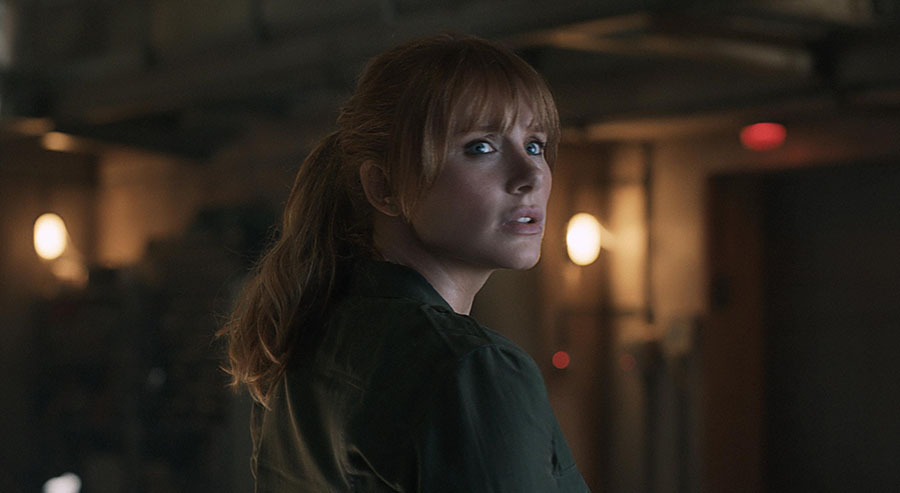
Bryce Dallas Howard loves starring in "Jurassic World." She is pictured in the second film, "Fallen Kingdom." (Photo: Universal/Amblin Entertainment/Legendary Pictures Productions)

Filming of “Jurassic World 3” started recently with the production crew ready with animatronics of the dinosaurs. A new theory has surfaced online that explores what storylines the fans can expect in the film.

After the volcanic eruption in the sequel, the dinosaurs are currently spreading to the main land across the globe. Governments will be involved in saving their citizens by killing this new threat. According to a theory by Screen Rant, the plot of the next movie could be about saving these endangered species from a worldwide purge.

One of the ways the heroes can save the dinosaurs is by capturing them alive and transporting them to a safe place. There could be a race against time to save these creatures before the governments kill them off.

The movie could move towards an ending where the dinosaurs replace humans as the dominant species of the planet. Alan Grant (Sam Neill), who will be returning in “Jurassic World 3,” previously said that the human species does not stand a chance against dinosaurs if the latter are given the opportunity to co-exist on earth.

To make the story personal, the plot could include Owen (Chris Pratt) searching for Blue. The velociraptor has been a big part of the first two films of the new trilogy and it is expected to return.

Colin Trevorrow is back in the director’s chair and he revealed the title of the film as “Dominion.” He also promised to share more photos from the production set while filming in the coming weeks. The director previously shared a photo of a baby triceratops dinosaur.

  TOP ARTICLES3/3READ MORECoronavirus Update: Scientists Link VitaminD Deficiencies To Higher Risk Of Dying From SARS-CoV-2

It remains to be seen what new dinosaurs the upcoming film will introduce to the franchise. The first two films have focused heavily on the concept of hybrid dinosaurs.

“Jurassic World 3” will be released on June 11, 2021.

Source: https://www.ibtimes.com/

Dinosaurs May Have Traveled Shorter Distances Than Previously Believed, New Study Suggests

Thursday, March 5, 2020

Certain duckbilled dinosaurs, known as hadrosaurs, lived in herds, new data show. They remained in the arctic year-round — even during dark winter months, the study suggests. COURTESY OF KAREN CARR

A new study suggests that dinosaurs traveled significantly shorter distances and had drastically different migration behavior than initially believed.

The research looked at fossilized teeth of a hadrosaur and concluded that its journeys were short, roughly 50 miles. The experts used strontium isotope ratios from fossilized enamel in teeth to come up with their conclusion.

"Results from this study are consistent with a range or migratory pattern between Dinosaur Provincial Park and a contemporaneous locality in the South Saskatchewan River area, Alberta, Canada," the researchers wrote in the study's abstract.

"These results suggest the continent-wide distribution of some hadrosaur species in the Late Cretaceous of North America is not the result of extremely long-range migratory behaviors," the researchers added in the abstract.

The study's lead author, David Terrill, said the findings suggest that the hadrosaur "was unlikely to have participated in continent-scale migrations," according to British news agency SWNS. Fossilized evidence of hadrosaurs has been found in places such as Mexico, Alaska, as well as the aforementioned Alberta, Canada.

In April 2019, a study was published that said duck-billed dinosaurs roamed the Arctic 69 million years ago.

Hadrosaurs were some of the most common dinosaurs, ranging in size between 10 and 65 feet. Their teeth, which were used for grinding needles, twigs and fruit, were regrown every six to 12 months, making them "an ideal target for dinosaur migration studies," Terrill added.

The amount of hadrosaur fossils that have been discovered in Dinosaur Provincial Park suggests that there was plenty of food for them to eat there, Terrill explained. "Biological productivity rates must have been quite high all year to support a large population of resident hadrosaurs. This ability to exploit different vegetation sources may have been key to the success of hadrosaurs in the area, allowing them to avoid large scale migrations."

The study has been published in the scientific journal Biology Letters.

In February, a type of cancer that still afflicts humans was found in a small hadrosaur that was "common in the world 66-80 million years ago," also discovered at the Dinosaur Provincial Park in southern Alberta.

Dinosaurs were wiped out 65 million years ago by an asteroid that hit Earth in what is now the Yucatan Peninsula in Mexico. It not only wiped out the dinosaurs but it also killed nearly 75 percent of all species on the planet. It may have also acidified Earth's oceans after impact, according to a study published in October 2019.

Another study published in September 2019 compared the impact of the asteroid to the power of 10 billion atomic bombs.

Source: https://www.foxnews.com/

Eggshells Support Idea That Dinosaurs Were Warm-Blooded

Thursday, March 5, 2020

A dinosaur eggshell fossil in cross-section under a microscope using cross-polarizing light. Notice the clusters of biomineralized calcite crystals radiating out from central nodes, along the interior margin of the shell at the bottom of the image. This, and the bumpy surface of the exterior margin (top of image) is usually indicative of titanosaur, sauropod dinosaurs. Image via Robin Dawson/ Yale University.

Were dinosaurs warm-blooded or cold-blooded? According to a new study that analyzed the chemistry of dinosaur eggshells, the answer is “warm.”

Warm-blooded animals (such as mammals and birds) produce their own heat and maintain a constant internal body temperature. Cold-blooded animals (such as reptiles and fish) don’t have internal mechanisms for regulating their body temperature; their body temperature depends on their environment. Where do dinosaurs fit in? Cold-blooded? Warm-blooded? Neither? Those are long-standing questions among scientists, but, so far, no evidence has unquestionably proven what dinosaur metabolisms were like. In February 2020, though, a new research study – an analysis of the chemistry of dinosaur eggshells – provides answers that fall into the warm-blooded camp.

Robin Dawson of University of Massachusetts-Amherst is lead author of the new study, which was published February 14, 2020 in the peer-reviewed journal Science Advances. She said in a statement:

Dinosaurs sit at an evolutionary point between birds, which are warm-blooded, and reptiles, which are cold-blooded. Our results suggest that all major groups of dinosaurs had warmer body temperatures than their environment.

The researchers tested eggshell fossils representing three major dinosaur groups, including ones more closely related to birds and more distantly related to birds.

The testing process is called clumped isotope paleothermometry. It’s based on the fact that the ordering of oxygen and carbon atoms in a fossil eggshell are determined by temperature. Once you know the ordering of those atoms, the researchers said, you can calculate the mother dinosaur’s internal body temperature.

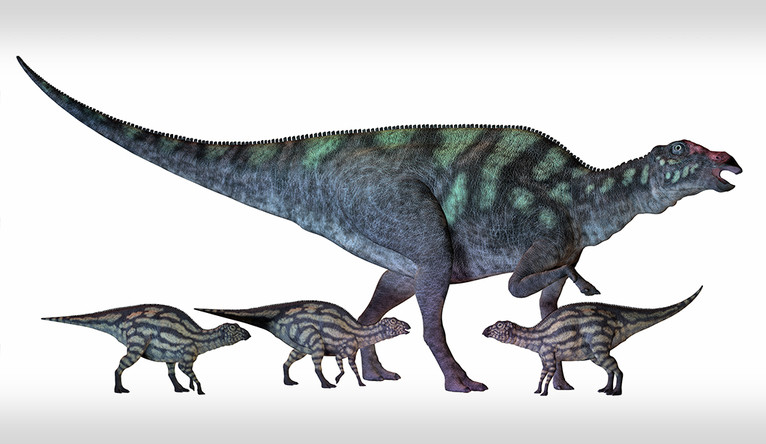
The Maiasaura were large duck-billed dinosaurs that lived in North America in the Cretaceous Era. An adult is shown here with several hatchlings. Image via Yale University.

The researchers tested fossilized eggshells from Troodons, a small, meat-eating theropod, from the large, duck-billed dinosaur Maiasaura in Alberta, Canada, and from Megaloolithus (a species classification limited to dinosaur eggs) from Romania.

The researchers conducted the same analysis on current cold-blooded invertebrate shells in the same locations as the dinosaur eggshells. This helped the researchers determine the temperature of the local environment, and whether dinosaur body temperatures were higher or lower.

Dawson said the Troodon samples were as much as 18 degrees F (10 degrees C) warmer than their environment, the Maiasaura samples were 27 degrees F (15 degrees C) warmer, and the Megaloolithus samples were 5.4-10.8 degrees F (3-6 degrees C) warmer. Dawson said:

What we found indicates that the ability to metabolically raise their temperatures above the environment was an early, evolved trait for dinosaurs.

The researchers also said their findings might add to the ongoing discussion about the role of feathers in early bird evolution. Dawson commented:

It’s possible that dense feathers were primarily selected for insulation, as body size decreased in theropod dinosaurs on the evolutionary pathway to modern birds.

Feathers could have then later been co-opted for sexual display or flying.

Bottom line: A new study that analyzed the chemistry of dinosaur eggshells suggests that dinosaurs were warm-blooded.

Source: Eggshell geochemistry reveals ancestral metabolic thermoregulation in Dinosauria

Via Yale University

Source: https://earthsky.org/

New Light Shed on Ancient NZ Fossils

Friday, March 6, 2020

Graptoloid fossils in a 16cm slab of rock. Image: Courtesy of the National Palaeontological Collections, GNS Science.

Ancient marine creatures once believed to have been mere ‘bit players’ in the fossil record have now found fame.

Using rare varieties of graptoloid fossils, research led by Professor James Crampton of Te Herenga Waka—Victoria University of Wellington’s School of Geography, Environment and Earth Sciences reveals new species actually came and went much more quickly than palaeontologists previously thought possible.

Their origination and extinction may have been accomplished in just 25,000 years.

In a paper in the journal Paleobiology, Crampton and his co-authors use the fossil history of these filter-feeders that floated through the Palaeozoic oceans between about 400 and 490 million years ago to argue that such ephemeral species can be recognised in the fossil record.

Crampton hopes their research will bring together the views of palaeontologists and biologists on evolution.

“There is ongoing debate and research to try and reconcile evolution, as palaeontologists see it, with how biologists see it. One part of that debate is that studies of living organisms, using genetics and so on, suggest new species are arising relatively frequently; in contrast, the fossil record suggests new species arise relatively infrequently.

“To explain this apparent discrepancy, biologists have proposed that many new species recognised in the living biota are in fact destined to be ‘ephemeral’ – to become extinct or hybridise out of existence within a geologically short period of time, perhaps a few tens or hundreds of thousands of years. In this way, such ephemeral species are thought to be effectively invisible in the fossil record.

“Our findings perhaps bring these two views together. So, rather than upsetting any apple carts, I hope our findings will in fact help bring researchers together.”

The rare species of the commonplace creatures have been known only from scattered and isolated fossil occurrences. As such they have generally played just a minor role in palaeontological research, compared with abundant or spectacular fossil forms.

“But now these ‘bit players’ are being given new significance,” says Crampton.

A hindrance to understanding the history of life on Earth is that many key evolutionary processes occur on timescales too long for biologists to observe directly, but too short to be easily seen in the fossil record.

“One example is the evolution of new species, which typically takes hundreds to thousands of generations.

“However, we have seen that pulses of extinction and speciation with these rare graptoloids were coordinated on timeframes of less than 50,000 years, or even as short as 25,000 years. These pulses apparently reflect the coordinated evolution and extinction of new, short-lived species, which we interpret to be the same thing as the ephemeral species of biologists.

“If correct, this interpretation provides a link between the highly detailed but ‘instantaneous’ observations from modern biology and the lower-resolution, but long-term observations from the fossil record,” says Crampton.

Graptoloid colonies ranged in size from less than a centimetre in length to more than a metre, and contained dozens to thousands of individual creatures.

They were largely extinct by about 400 million years ago but their rapid evolution and wide global distribution has made them important for dating Ordovician (485–444 million years ago) and Silurian (444–419 million years) rocks.

In New Zealand, their fossils can be found in rocks in the northwest of the South Island and in Fiordland.

Crampton says the work for the paper was made possible by the “remarkable” dataset co-authors Roger Cooper, of GNS Science, and Peter Sadler, of the University of California, Riverside, developed over many years.

“By using published literature, they collated information about the fossil record of all known graptoloid species in sequences of strata around the world. Then they used a sophisticated technique to infer what the ‘true’ time of origination and extinction was of each species.

“This crucial step is required because the fossil record is incomplete and biased – you cannot read it at face value. The important thing is that the resultant, rich timeline of species origination and extinction is very highly resolved in time – much more finely resolved than traditional paleontological time divisions.

“In many paleontological studies, one can only distinguish things that happened one million years or more apart. But in our dataset we can discriminate things that happened between 25 and 50 thousand years apart, which is a 20- to 40-fold increase in resolution.”

Source: https://www.newsroom.co.nz/

JURASSIC THUNDER Review: Here’s Your Dinosaurs With Machine Guns Movie, Technically

Wednesday, March 4, 2020

Birth.Movies.Death news editor Scott Wampler wants to see a Jurassic Park movie where the dinosaurs shoot machine guns. He really wants it. He wants it so bad he wrote an article exhorting Universal to produce such a film, and when Colin Trevorrow confirmed that it wouldn't happen, he wrote another in protest. Well, now he’s got his wish. Jurassic Thunder comes out on digital platforms next week, and it is, finally, the dinosaurs-with-machine-guns movie Scott has dreamed of.

Technically.

Here's the poster:

Not terrible! It promises a movie with multiple types of dinosaur invading a city - pteranodons flying around, the city in flames as they wreak their destruction. Hell, even I wrote an editorial hoping to see something like that. The dinosaurs on the poster look decent, too.

That is not what Jurassic Thunder is like at all. The actual movie features but one type of dinosaur, with guns mounted to their heads, and is set entirely in a jungle and a desert military base. It also looks like this:

Jurassic Thunder opens, incredibly, with a framing device: a couple of clueless girls in a comics store (whose logo appears in the same frame, and twice as big, as the movie's title) being lectured by the manager on how awesome the in-universe Jurassic Thunder comic book is. The whole movie is a fictional act of nerdsplaining, played out via the manager reading the books aloud over, I assume, an entire afternoon. Though it plays out with barely any nod to that device, the movie that follows is, appropriately, the kind of unironic testosterone-laden nonsense that would appeal to teenage boys who've only experienced the wider world through comics and action movies.

The story is so confusing and over the top, it reads like Axe Cop, but with a writer aged thirteen instead of a five. A rebel military leader, residing in “African Fortress, Dakar” and dressed like a Wal-Mart Idi Amin, threatens global war. Additionally but separately, a virus has turned most of Africa's population into cannibals, or zombies - it's unclear. The Americans want to nuke the entire region, but can’t risk World War III. So they make a deal with the Russians to purchase experimental "biologic" weapons technology designed “specifically for this situation”: dinosaurs with remote-controlled machine guns strapped to their heads.

So, Africa. If this were a piece of ‘80s trash like Raw Force, this would be simply a relic of its time. But Jurassic Thunder is a movie being released in 2020, full of pop culture references and clanging homage to an obviously limited palette of inspiration. Given the movie’s macho stupidity, it’s little wonder the movie engages in such careless literal and representational victimisation of Africa, but that doesn’t make it any less cringeworthy. The fact that the sole black good guy turns into a zombie then gets eaten by a dinosaur doesn’t help.

As for the rest of the movie: to quote True Lies, as I'm shocked this movie doesn't, it's all bad. The narrative devolves into utter senselessness, as the dinosaurs are sent to eat the zombies and blow up the rebels, then a crack squad of commandos is introduced, because the filmmakers wanted a crack squad of commandos. Even the actors who manage moderately convincing performances are done a disservice by the editing. The action scenes are staged with little geography or rhythm, and even dialogue scenes are staged clumsily, shot on what appears to be late-2000s consumer equipment. Worst of all, the pacing deadens whatever energy the trailer implied, through tedious running gags and airless scenes of strained banter: a character made up almost entirely of homophobic jokes, multiple eye-rolling cracks at a character named “Colonel Sanders"; a startlingly unconvincing Donald Trump impersonator. His improvised rants must have seemed hilarious onset, given how much screentime they’re proffered. They are not.

Jurassic Thunder’s visual effects are both terrible, and somewhat staggeringly, one of its best features. The compositing is glitchy and inconsistent, and none of the effects elements are tracked properly, leading to characters and objects sliding sickeningly around their digital environments whenever the camera moves. The dinosaurs are a mixture of rough CG animation and, custom hand puppets. In a scene where a character gets splattered with blood, the blood is jerkily hand-animated onto the actor’s face; then after several such shots, actual fake blood appears on his face. Why - how - would you splatter an actor with blood for a scene without shooting the actual splattering?!

All that said, the effects are actually kind of ambitious, in the sense that these filmmakers are attempting sequences that are well outside their reasonable capability. Nearly every shot that isn’t an awkwardly tight closeup features some kind of digital effects. Much of the movie was clearly shot against green screens; the filmmakers have built entire environments out of stock footage, CGI, and prefab FX elements that many would never even attempt to do. In spite of the poor quality of it all, there’s something adorable about these filmmakers attempting to create dinosaur fights, military destruction, blatantly Top Gun-referencing dogfights, and jungle warzones with the obviously meagre resources they had. Bless their hearts. They were clearly having fun, even if we're not.

Is Jurassic Thunder a masterpiece? No. Is it “so bad it’s good”? Also no. For the most part, it’s painful to watch, the result of consuming a diet exclusively of comics and blockbusters and never once paying attention to what makes them tick under the surface. Its story makes no sense, its characters don’t even register as archetypes, its sense of humour is the “grimace” emoji wrought large, and it features a whole rainbow of casual bigotry. At 84 minutes, it wears out its welcome well before its dancing-Trump credit cookie grates across the screen. With reviews like this, a common retort is “oh, like you could do better.” This is the first time I can actually state pretty confidently that I have. And that movie is no masterpiece either.

For what it’s worth, the girls end up loving the comic book, of course, presumably because it's so awesome and the comic-book store guy is so compelling.

But are you happy, Scott? Are you happy?

Source: https://birthmoviesdeath.com/

Pages